

Sun Path Analyzer
See exactly where the sun will travel across your home, plot, or window — today, on the longest day, and on the shortest. Point your phone for live AR, or use the static chart on desktop.
AR needs a phone with camera + compass. iOS needs one permission tap.
Sun facts
Bengaluru, Karnataka — 9 October 2026
All computations are done on your device. No data leaves your phone.
Sunrise
12:42 am
Solar noon
06:30 am
Sunset
12:30 pm
Day length
11h 48m
Peak altitude
70.7°
Peak direction
S
Latitude
12.972°
Longitude
77.595°
Sun position — Bengaluru, Karnataka
12:45 am · 1° above horizon · 96° ENE
Sun path chart
A bird's-eye view of the sun's day.
The solid red curve is today. Dashed lines show June solstice (longest day), December solstice (shortest) and the equinox. Center = sun overhead, edge = horizon.
Design recommendations
What this means for your home.
Based on latitude 12.97° and today's sun angles — tailored for Warm & Humid climate.
Shade the heat façades
South & West catch the most solar heat. A 35 cm deep overhang above south windows blocks the noon sun but lets winter light through.
Bedrooms
Place bedrooms on the North or East side. Morning light wakes gently; afternoons stay cool.
Living rooms
Living rooms work best facing South or East — generous daylight without the west-afternoon heat.
Kitchen
Kitchens do well on the East or South-East — morning light, cross-ventilation for cooking heat.
Today's quirk
Today the sun passes north of directly overhead at noon — shade north-facing windows too, a quirk most homes ignore.
Hour by hour
The sun's position through the day.
| Time | Altitude | Azimuth | Direction |
|---|---|---|---|
| 01:00 am | 4.2° | 97° | E |
| 02:00 am | 18.6° | 101° | E |
| 03:00 am | 32.8° | 106° | E |
| 04:00 am | 46.5° | 114° | SE |
| 05:00 am | 59.2° | 127° | SE |
| 06:00 am | 68.7° | 154° | SE |
| 07:00 am | 69.9° | 197° | S |
| 08:00 am | 61.8° | 228° | SW |
| 09:00 am | 49.6° | 244° | SW |
| 10:00 am | 36.0° | 252° | W |
| 11:00 am | 21.9° | 258° | W |
| 12:00 pm | 7.5° | 262° | W |
Walk your plot with the sun.
Open this page on your phone, tap Start AR Mode, and point anywhere — the sun's path floats on your screen in the correct position. Works on any building site, bare plot, or existing room.
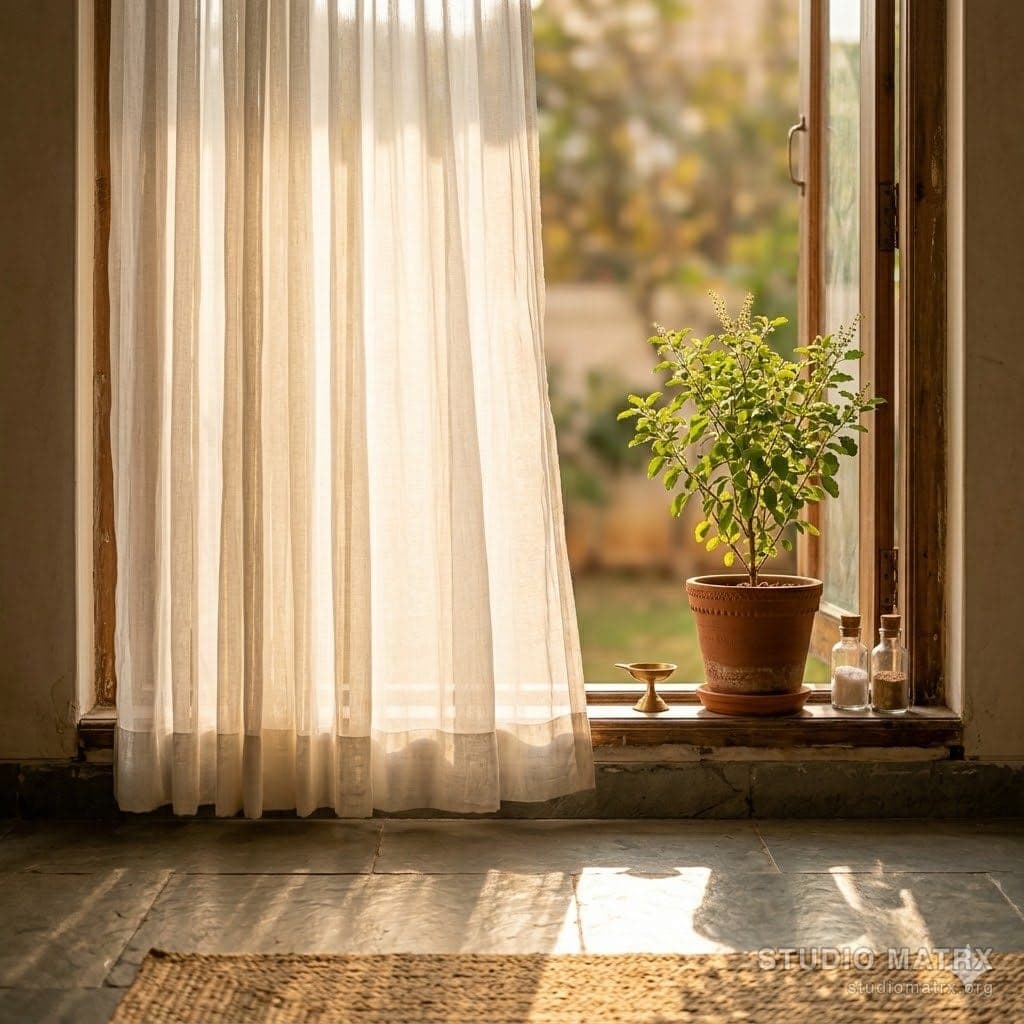
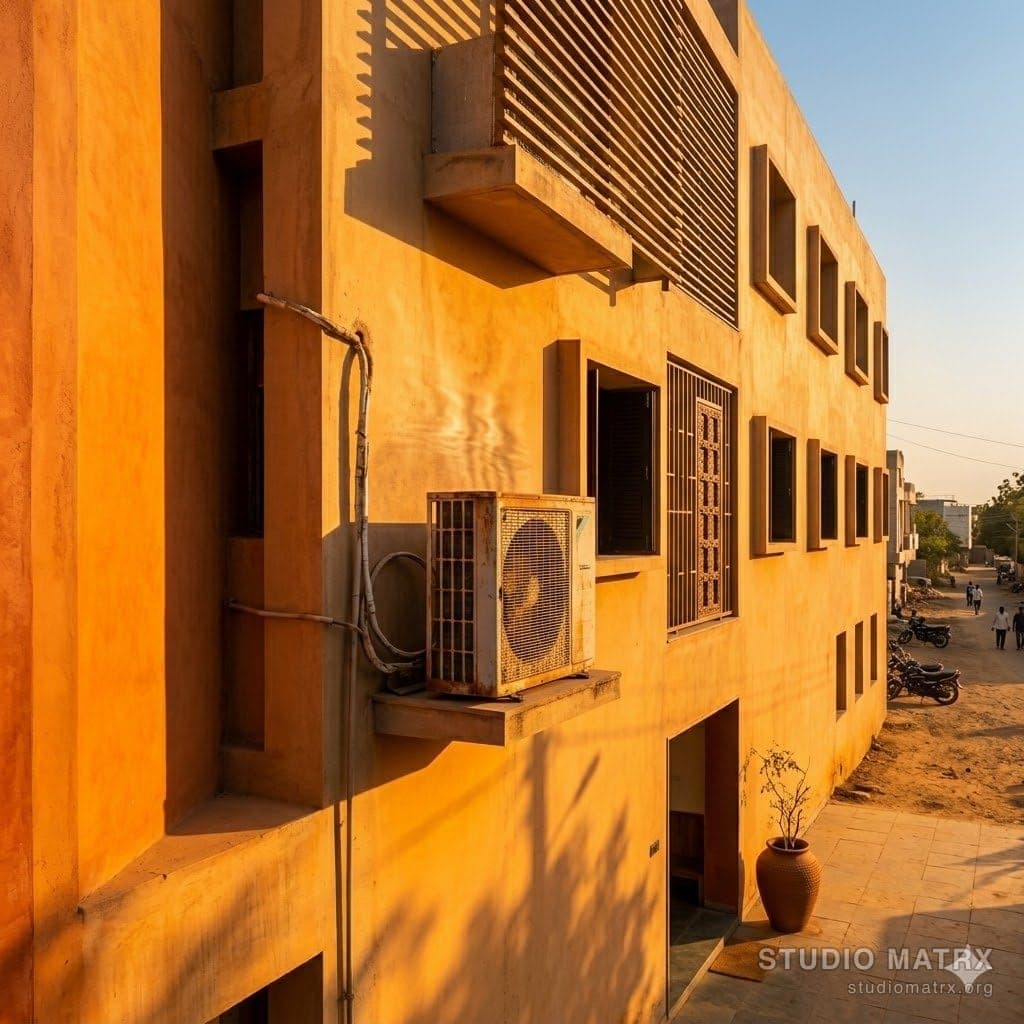
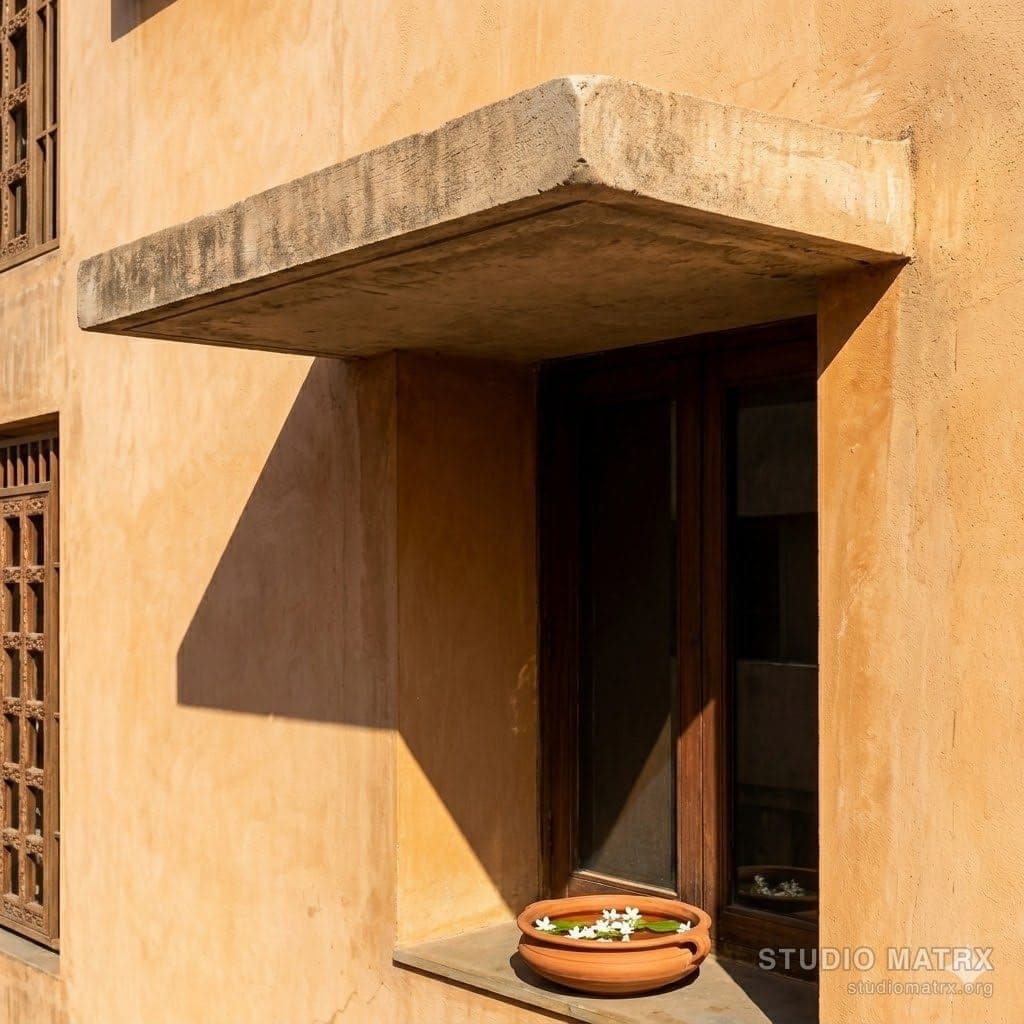
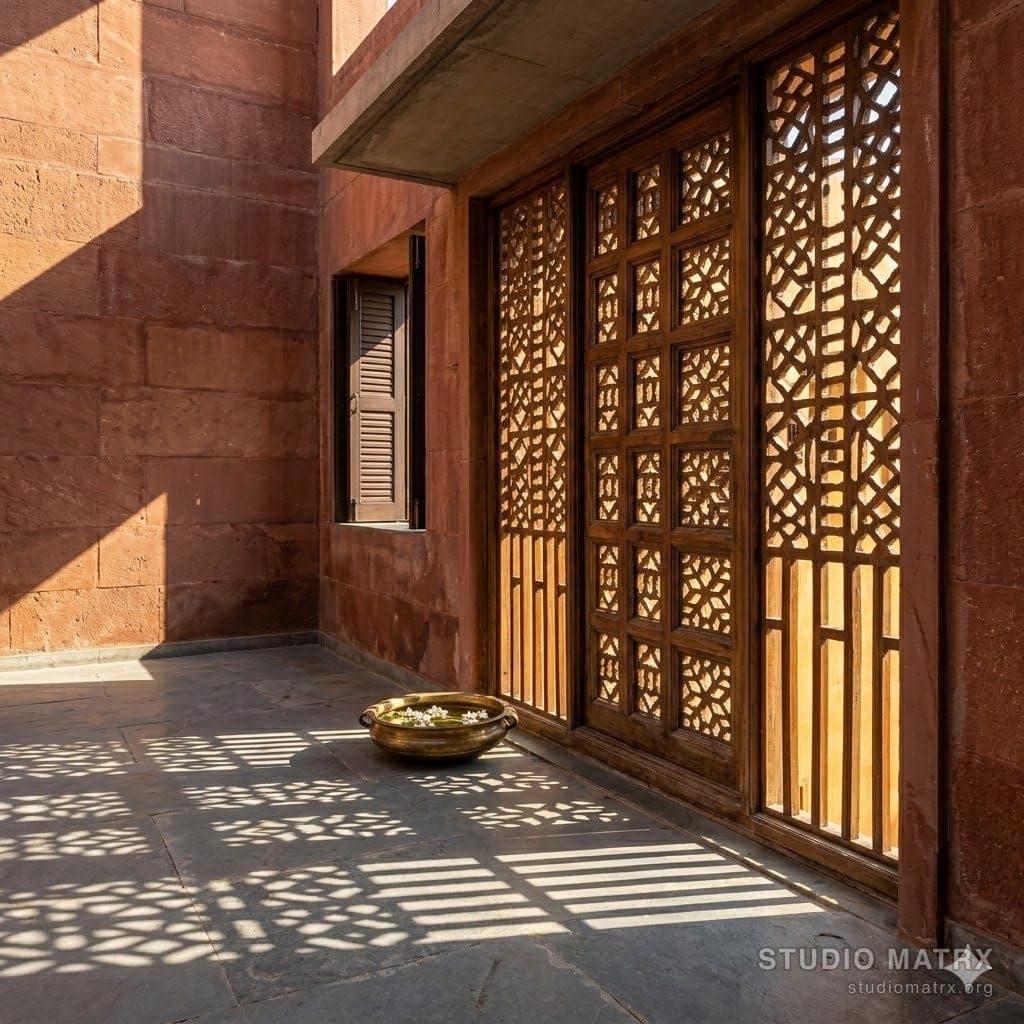
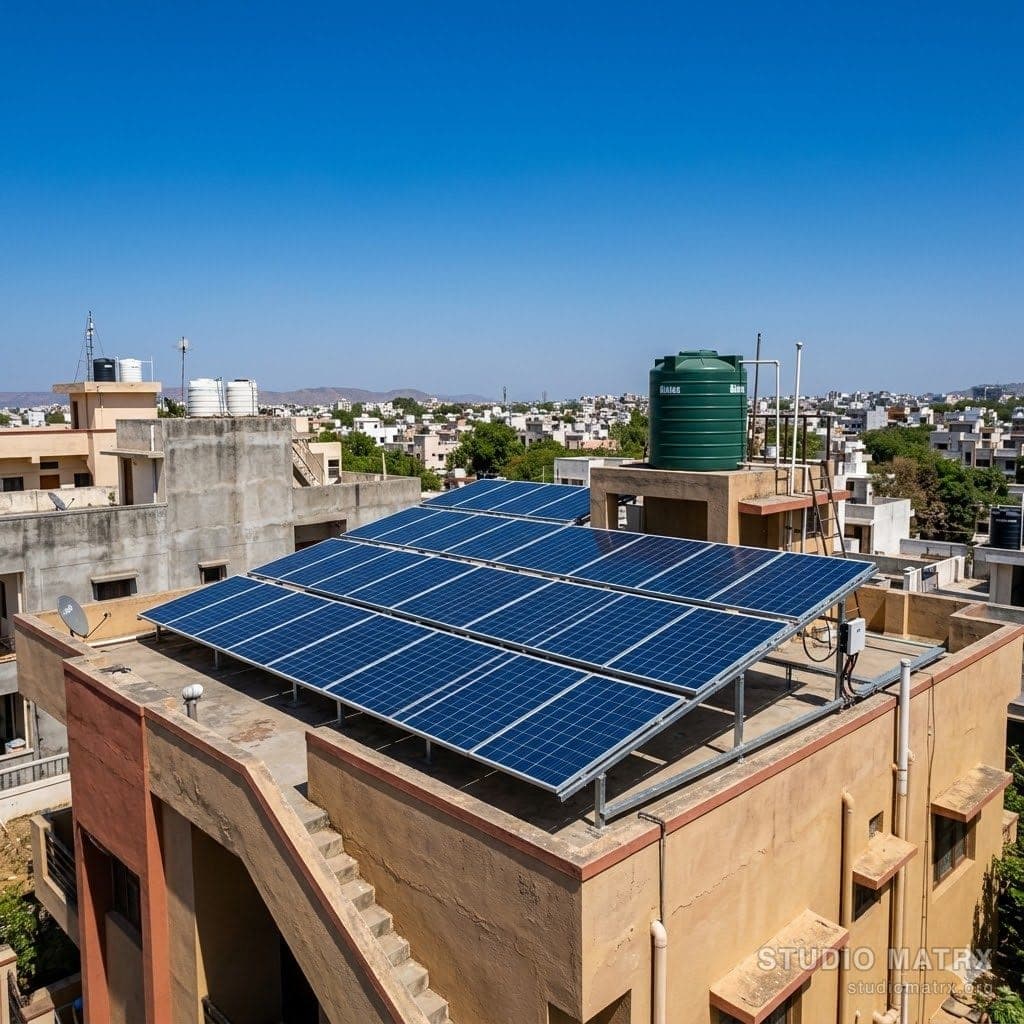
Sun, shadow, and shading in real Indian homes
Design with the sun
Hand the sun-path data to DesignAI for shading, glazing, and verandah placement decisions.
Sun Path & Orientation in Indian Climates — A Working Reference
Building orientation — which way each room and each window faces — is the single decision with the largest long-term impact on an Indian home's thermal comfort and energy cost. A well-oriented Indian home stays 4-6°C cooler in summer than a poorly-oriented one of identical construction; the difference compounds across two decades of summer cooling load. Yet most Indian residential plots are bought without sun-orientation analysis, and the home is designed to fit the plot rather than orient to the climate. The sun-path analyser above is the diagnostic instrument that lets you check orientation before you commit.
India's Solar Context
India spans latitudes 8°N (Kanyakumari) to 37°N (Kashmir). The sun stays predominantly to the south of overhead for most of the year (becoming directly overhead between the Tropic of Cancer at 23.5°N and the Equator only on specific days near the summer solstice). Solar noon altitude in most Indian cities ranges from 70-80° in summer (June) to 35-50° in winter (December — lower in northern India). This means south-facing surfaces receive predictable, manageable solar exposure that can be shaded with proper chajja design. East and west surfaces face the most extreme problem — the sun is at 5-30° altitude in mornings and evenings, producing high glare and deep heat penetration into rooms.
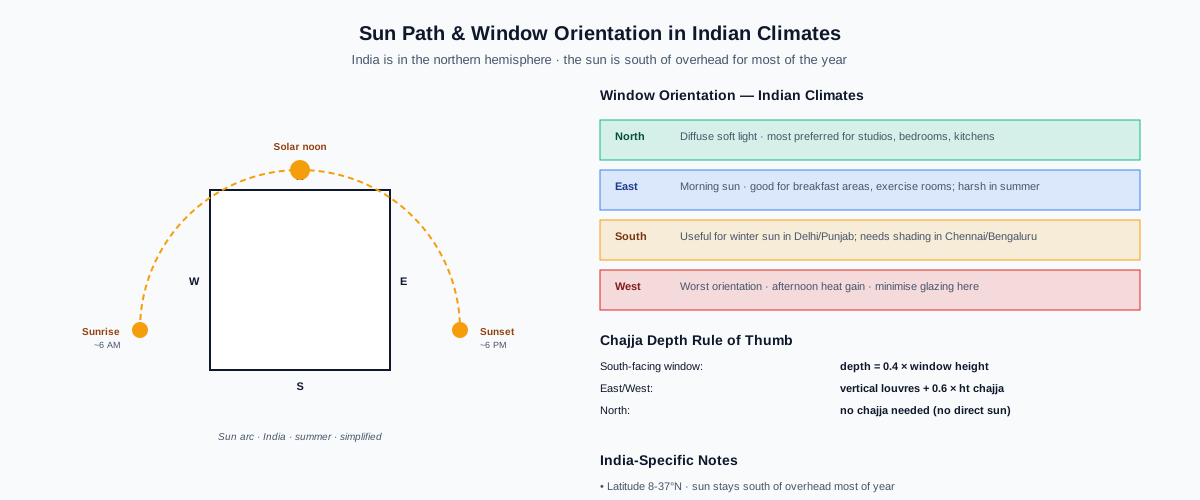
Latitude is the variable that decides whether your shading strategy from north India translates to south India — or doesn't. The further north you are, the bigger the gap between the summer-solstice sun (almost overhead) and the winter-solstice sun (genuinely low). That gap is what makes a single horizontal chajja work at both extremes.
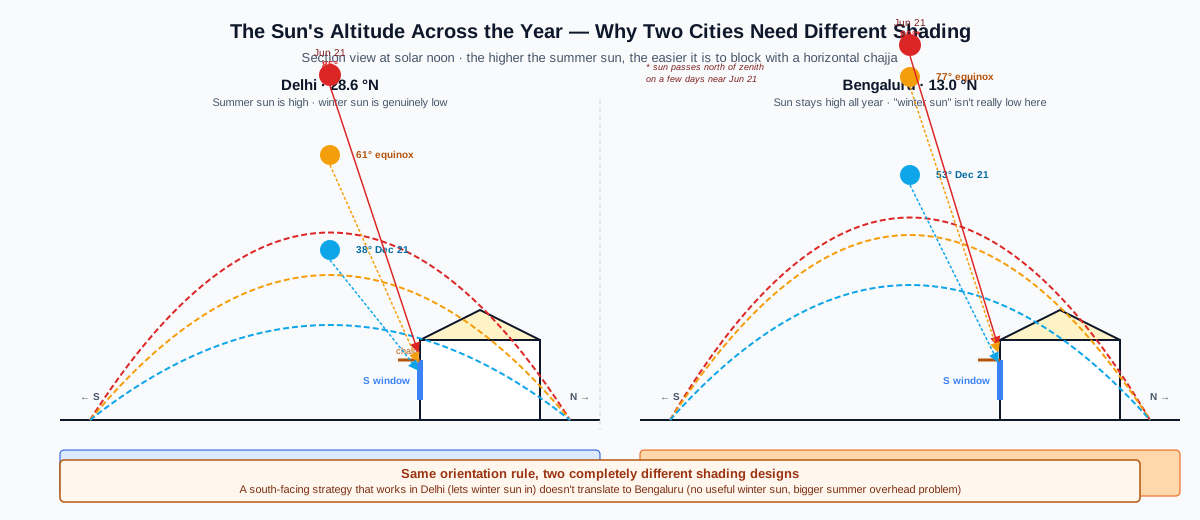
Window Orientation — A Working Set of Rules
- North — most universally useful in India. Diffuse soft daylight, no direct sun, ideal for bedrooms, study, kitchen, and any area requiring even illumination. Maximise glazing here.
- East — morning sun, useful for breakfast rooms and active spaces. Harsh in summer mornings (April-June); needs vertical louvres or deciduous tree planting for shading.
- South — most-discussed orientation. In northern India (Delhi, Punjab, UP), south-facing windows give usable winter sun (warming) and manageable summer sun with proper chajja. In southern India (Bengaluru, Chennai, Kerala) where summer is the dominant season, south-facing windows need deeper shading. Always plan with solstice diagrams.
- West — the most problematic orientation. Afternoon sun at low altitude penetrates deep into rooms and continues into the evening. Bedroom on west wall = poor sleep. Living room on west wall = afternoon heat gain that lingers. Minimise west-facing glazing; if unavoidable, use deep vertical louvres + horizontal chajja + double-glazing.
Chajja and Fin Design — The 0.4 × H Rule
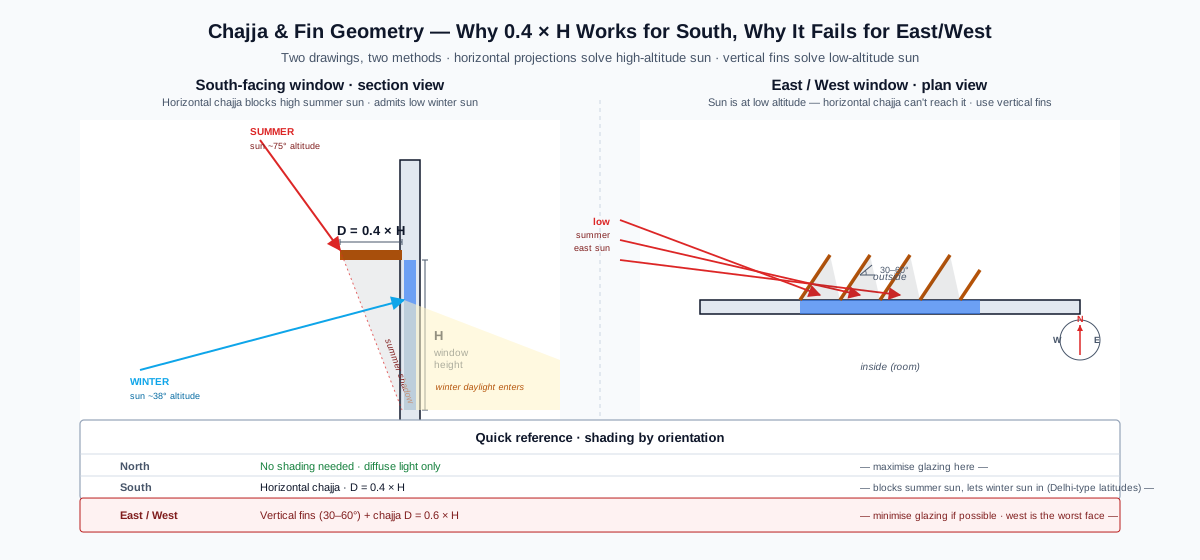
For south-facing windows in India, a chajja depth of approximately 0.4 × window height blocks the summer sun (when it's high) while letting in the winter sun (when it's low). For a typical 1.5 m tall window, that's a 600 mm chajja. The exact depth depends on latitude and the specific solstice extremes — the sun-path analyser computes this precisely for your site.
For east and west windows, horizontal chajja alone is insufficient — the sun is at low altitude and a horizontal projection cannot block it. Vertical fins (louvres) at 30-60° angles are the standard solution, supplemented by chajja of about 0.6 × height. For thesis/design students working with parametric tools, the analyser's data feeds Grasshopper / Ladybug for refined optimisation.
Cross-References
- Passive Design Strategies for Indian Climate Zones — comprehensive climate-responsive design reference
- Cross-Ventilation in Indian Homes — wind + sun integration
- Natural Light Planning — daylight design
- Cross-Ventilation Analyzer — wind-flow tool
Disclaimer: The sun-path analyser uses the NOAA solar position algorithm with sub-arcminute accuracy for the time and location specified. Site-specific obstructions (trees, neighbouring buildings, terrain) are not modelled — verify shading on site before finalising design. This page is for informational purposes only.
Related Guides — Deep-dive reading
Understanding Sun Path Analysis for Your Home
How the sun actually moves over an Indian site through the day and the year — and why that single fact quietly decides where your kitchen, bedroom and living room should sit.
Site PlanningSolar Heat Gain Through Glazed Doors Guide (India 2026)
How SHGC works on glazed, sliding and French doors in India — why low-SHGC Low-E and tinted glass cut AC load, and how to balance daylight against heat by orientation.
Home Doors & EntrancesDesigning a Naturally Energy-Efficient Indian Home
Comfort first, gadgets last — passive design, orientation, insulation, ventilation and the climate wisdom that cuts Indian energy bills
SustainabilityRelated Tools — You may also find these useful
Brise-Soleil Visualizer
Interactive horizontal-louvre cut-off angle calculator — sun altitude, louvre depth, and spacing inputs with a live shadow preview. Computes θ = arctan(spacing/depth) for façade shading, ECBC envelope compliance, hospital daylight design, and tropical sun-control detailing.
Sun Shading ToolSun-Path & Shadow Studio
Sun path, altitude and azimuth, building shadows and overhang sizing for any Indian city and date.
Solar ToolWindow Heat Gain Calculator
Estimate solar heat gain in watts, daily kWh and AC tonnage by window area, orientation, SHGC and shading.
Window Calculator