
Acoustic Comfort in Homes
Why hard, echoey Indian rooms quietly tire you out — and how rugs, curtains, layout and a few smart fixes turn noise into calm for better sleep, focus and lower stress.
In a new 2BHK in Bengaluru, the family loves their glossy vitrified-tile floors, the big glass balcony doors and the crisp white walls. But by 8pm something feels off. The television has to be turned up, conversation across the dining table needs repeating, the children's homework hour dissolves into snappiness, and everyone is vaguely tired in a way they cannot name. Nothing is broken. The room simply sounds hard — every voice, every clatter of steel utensils, every chair scrape bounces off the tile, the glass and the bare plaster and comes back at them, layered on top of itself.
This is one of the most common and least-noticed problems in the modern Indian home. We have swapped soft, sound-soaking materials — earthen floors, textile hangings, timber, thick masonry — for hard, reflective ones, and we have left walls bare in the name of clean minimalism. The result is rooms that are visually calm but acoustically exhausting. And it matters for far more than annoyance: chronic noise and acoustic strain are now well-documented contributors to stress, raised blood pressure, broken sleep and poorer concentration.
Acoustic comfort is not about making your home silent — it is about controlling how sound behaves so your nervous system can rest, your family can hear each other, and your rooms feel calm instead of clattering.
1. Why noise is a health problem, not just a nuisance
We treat noise as an irritation to be tolerated. The body treats it as a low-grade threat. The auditory system never switches off — even in sleep it monitors the environment — so a noisy home keeps the stress response quietly idling all day and night.
The World Health Organization's environmental noise guidance is unambiguous that long-term exposure to noise is associated with cardiovascular effects, sleep disturbance and impaired cognition, and it sets night-time noise targets specifically to protect sleep. The mechanisms are physiological, not just psychological: noise triggers small surges of cortisol and adrenaline, nudges up heart rate and blood pressure, and — crucially — fragments sleep even when you do not fully wake.
"Environmental noise is an important public health issue... it can trigger a range of health effects, including cardiovascular disease, cognitive impairment in children, sleep disturbance and annoyance." — World Health Organization, Environmental Noise Guidelines for the European Region (2018)
For Indian homes the everyday burdens are specific and relentless: traffic and horns on the road outside, generator sets and pumps, the neighbour's late-night television through a shared party wall, festival loudspeakers, construction next door, and — indoors — the hard-surface echo that makes ordinary domestic life louder than it needs to be. Two distinct things are going on, and they have completely different cures:
- Reverberation inside a room — your own sounds bouncing around and lingering. Cured by soft, absorptive surfaces.
- Noise transmission between spaces — sound crossing from outside, the neighbour or the floor above. Cured by mass, sealing gaps and isolation.
Most people reach for the second (heavy soundproofing) when the first (a rug and curtains) would transform the room. This guide focuses on the comfort and wellbeing levers; for the heavy structural fixes — soundproofing a party wall, a noisy slab, an apartment against street din — pair it with our problem-solving companion, noise-reduction strategies for apartments.
2. The hard-surface problem in the modern Indian home
Walk into most newly finished Indian flats and you meet the same palette: vitrified or marble floors, large glazed windows and balcony doors, painted-plaster or concrete walls, a tiled or stone kitchen, and minimal soft furnishing. Every one of those surfaces is acoustically reflective — sound hits it and bounces almost intact. With nothing to absorb the energy, sound waves ricochet between parallel hard walls dozens of times before fading. That lingering tail of sound is reverberation, and it is what makes a room feel echoey, tiring and hard to talk in.
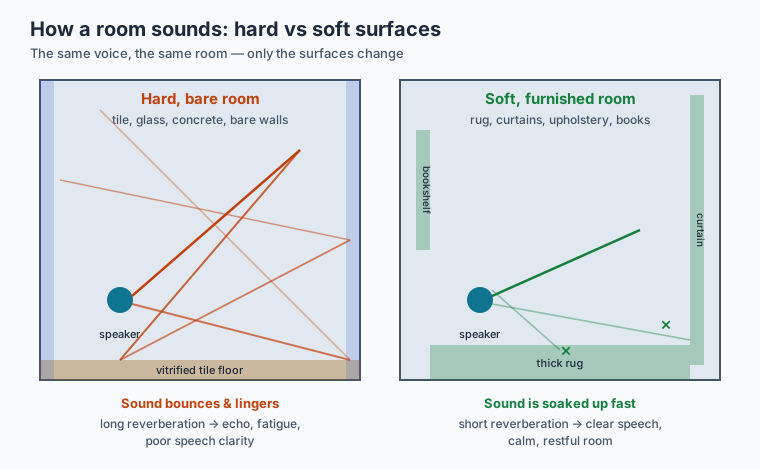
Figure 1: The same voice in the same room. Hard, bare surfaces (left) bounce sound for a long time — echo, fatigue and muddy speech. Soft, furnished surfaces (right) soak it up fast — clarity and calm.
The health cost of reverberation is subtle but real. When speech overlaps with its own echo, your brain has to work harder to separate the words it wants from the smear it does not — a continuous low-level cognitive tax that shows up as fatigue, irritability and, for children, measurably poorer comprehension. A reverberant room also has no privacy: voices carry and bounce, so a phone call or a difficult conversation is audible across the home.
| Hard, untreated room | Soft, treated room |
|---|---|
| Tile / marble / concrete floor, bare | Same floor + a thick rug or dhurrie |
| Bare painted or plastered walls | Bookshelf, fabric art, upholstered headboard |
| Plain glazed windows | Floor-length lined or layered curtains |
| Hard dining chairs, glass table | Upholstered seating, cushions, table runner |
| Long reverberation: echoey, voices smear | Short reverberation: words land crisply |
| Tiring, edgy, no speech privacy | Calm, restful, easy to talk and concentrate |
The good news: the cure is almost entirely furnishing, not construction. You are not fighting the building — you are simply putting back the soft surfaces that older homes had all along.
3. The levers of acoustic comfort inside a room
Think of every room as having three planes that can either reflect or absorb sound — the floor, the windows and the ceiling/walls. The goal is at least one generous soft surface in each plane. You rarely need expensive acoustic products; ordinary furnishing does most of the work.
- The floor — a rug. A thick rug or cotton dhurrie over tile or stone is the single highest-impact change in most Indian rooms, because the floor is the largest hard surface and reflects sound straight back up. Bigger and thicker is better; a generous rug under the seating or dining area transforms how a room sounds.
- The windows — curtains. Floor-length, full-width curtains in a heavier weave (or layered sheers plus drapes) absorb mid and high frequencies and stop sound skating off the glass. They double as light and heat control — a single intervention serving acoustics, glare and thermal comfort at once.
- Upholstery and cushions. Sofas, upholstered dining chairs, an upholstered bed headboard and scatter cushions all soak up sound where people actually sit and talk.
- Bookshelves and irregular surfaces. A full bookshelf both absorbs and scatters (diffuses) sound, breaking up the harsh parallel-wall reflections that cause flutter echo. Open shelving with books, baskets and objects works far better acoustically than a flat glossy cabinet.
- Acoustic panels and soft ceilings — where you need more. In a home theatre, a music or practice room, a noisy open-plan kitchen-living space or a study, fabric-wrapped acoustic panels on a wall or a soft/perforated false-ceiling tile add absorption without clutter. Treat the ceiling especially when the floor is hard and large.
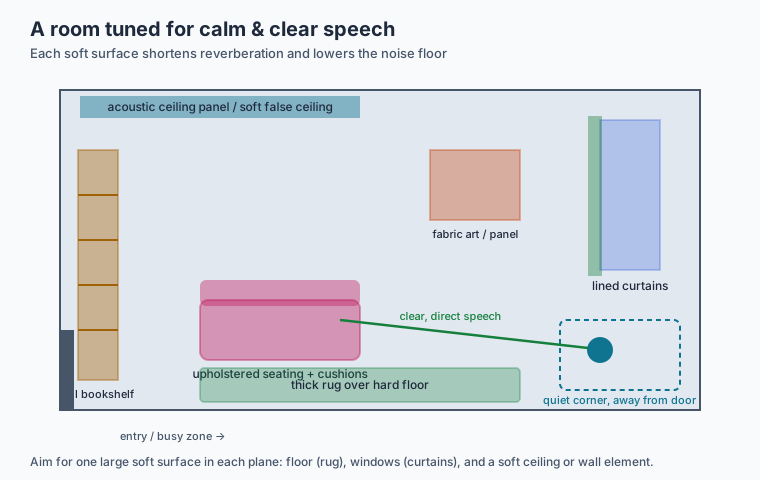
Figure 3: One large soft surface in each plane — floor (rug), windows (curtains), ceiling/walls (panel, bookshelf, fabric art) — plus a quiet corner zoned away from the busy entry.
A useful rule of thumb: if you clap your hands in the middle of a room and hear a sharp ringing tail, the room is too live. Add soft surfaces until the clap sounds dead and short. Most homes feel comfortable when a normal conversation needs no raised voices and the television sits at a low, relaxed volume.
4. Layout and zoning — separating the noisy from the quiet
Before you buy a single panel, the plan itself can do half the work. Sound respects geometry: the further a quiet activity sits from a noisy source, and the more solid mass between them, the calmer it will be. This is where acoustic comfort overlaps with the broader idea of zones of retreat, rest and privacy.
- Separate noisy and quiet zones. Keep bedrooms, the study and any meditation or pooja corner away from the kitchen, the television and the entrance. In an apartment, try not to share a wall between a bedroom and the neighbour's living room or the building's lift/stair shaft.
- Use buffer rooms. Bathrooms, store rooms, wardrobes and corridors make excellent acoustic buffers — place them between a noisy space and a quiet one so they absorb the transition.
- Mind the open plan. Open kitchen-dining-living layouts are wonderful for light and togetherness but acoustically merciless — there is nothing to stop the pressure-cooker whistle and the mixer-grinder reaching the sofa. Compensate with extra soft surfaces and, where possible, a partial screen, a tall bookcase or a planting screen to break the line of sound.
- Carve out a quiet corner. Every home benefits from one genuinely calm spot — a reading nook, a window seat — sited away from the front door and the kitchen, where someone can decompress. To check how speech and privacy play out across your specific layout before you build, our acoustic privacy visualizer lets you test which spaces will overhear which.
Good airflow and good acoustics sometimes pull in opposite directions — an open window that cools the room also lets street noise in. The art is timing and orientation: ventilate hardest when the street is quietest, and put openings on the calmer side of the plot where you can. Our cross-ventilation analyzer and the technical cross-ventilation reference help you keep air moving without inviting the road in.
5. The building envelope — keeping outside noise outside
When the problem is transmission — traffic, the neighbour, the floor above — soft furnishings will not help. Here you need mass, airtightness and, sometimes, isolation. It is worth understanding the two paths so you spend money in the right place.
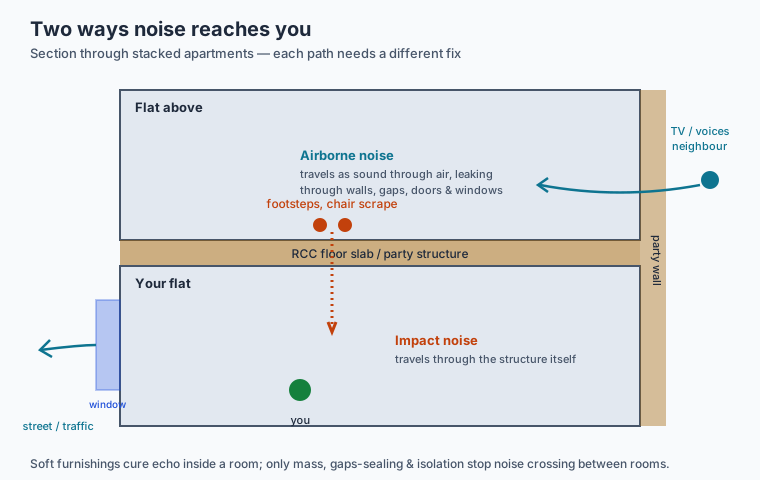
Figure 2: Airborne noise (voices, TV, traffic) leaks through air paths — walls, gaps, doors and windows. Impact noise (footsteps, dragged furniture) travels through the structure itself. Each needs a different fix.
Airborne noise travels as sound through the air and leaks through the weakest path it can find — and the weakest path is almost always a gap, not the wall itself. An undercut door, an unsealed window frame, an open ventilator or a gap around a pipe will let in more noise than a square metre of solid wall. So the cheapest, highest-yield fixes are sealing and weight:
- Seal gaps around doors and windows with weatherstripping and a door-bottom seal — this also improves dust and PM2.5 control, a real benefit in cities like Delhi.
- Upgrade single glazing to laminated or double glazing for rooms facing busy roads; the air gap and the laminate layer cut traffic noise markedly.
- Choose solid-core internal doors over hollow flush doors for bedrooms and studies — mass blocks sound, and a hollow door is nearly transparent to it.
Impact noise is footsteps, dragged chairs and dropped objects from the flat above, transmitted directly through the structure. No amount of ceiling decoration stops it because the sound is travelling through the concrete itself — the cure is at the source (carpet, rug or a resilient underlay on the floor above) or, for serious cases, a resilient suspended ceiling that decouples your ceiling from the slab. These are construction-stage decisions, which is exactly why the heavy fixes belong in our noise-reduction strategies for apartments guide.
| Noise type | Typical Indian source | Comfort-first fix |
|---|---|---|
| Reverberation / echo | Bare tiled, glazed, plastered room | Rug + curtains + upholstery + bookshelf |
| Airborne — outdoor | Traffic, horns, festival speakers | Seal gaps; laminated/double glazing on road side |
| Airborne — neighbour | Party-wall TV, voices, lift shaft | Solid-core doors, seal gaps; heavier party wall (construction) |
| Impact | Footsteps, furniture from flat above | Rug/underlay above; resilient ceiling (construction) |
| Mechanical hum | Pumps, gensets, mixer, AC outdoor unit | Site away from bedrooms; anti-vibration mounts |
| Plumbing / drainage noise | Shared stack behind bedroom wall | Lagged pipes; avoid bedroom-against-stack layout |
6. Sound masking — when you cannot remove the noise
Sometimes you cannot eliminate a noise — the road will always be there, the neighbour will always have a television. Here the goal shifts from blocking sound to making the remaining intrusion less noticeable by raising a gentle, steady, pleasant background level that the brain can ignore. This is sound masking, and it is one of the kindest, lowest-effort levers available.
A sharp, intermittent noise (a horn, a sudden voice) is far more disturbing against dead silence than against a soft continuous backdrop. Indian homes have a lovely, free version of this in the courtyard fountain, the wind through a balcony plant screen, or a small water feature — gentle natural sound that also supports the biophilic, restorative quality we explore in our biophilic and healing-space guides. A quiet ceiling fan, a soft instrumental playlist, or — at night — a simple white-noise source can smooth over a neighbour's television or street hum so it slips below conscious notice.
The trick is that the masking sound must be steady, low and benign. It is not about adding more noise; it is about removing the contrast that makes intrusive sound jarring. Many people who think they need expensive soundproofing actually just need their bedroom's silent contrast softened so a distant horn no longer jolts them awake.
7. A room-by-room acoustic comfort checklist
Different rooms have different acoustic jobs. Here is where to spend your attention.
| Room | Acoustic goal | Highest-value moves |
|---|---|---|
| Bedroom | Quiet for sleep, low contrast | Curtains, rug, solid-core door, seal gaps, gentle masking |
| Living / family | Clear speech, calm, low echo | Big rug, upholstered seating, bookshelf, curtains |
| Study / WFH | Speech clarity, privacy, focus | Soft surfaces + away from kitchen; a wall panel behind the desk |
| Kitchen-dining (open) | Tame clatter, stop it reaching living | Soft ceiling, rug in dining, partial screen, table runner |
| Pooja / meditation | Stillness, separation | Quiet zone, buffer rooms around it, soft floor |
| Children's room | Concentration + low sleep disturbance | Rug, curtains, away from TV and entry; books on open shelves |
The bedroom deserves special care, because acoustic comfort and sleep are tightly linked — even noise that does not wake you fragments deep sleep and blunts the next day. We cover the full sleep environment, of which sound is one of four pillars, in designing homes for better sleep. And because chronic noise is a steady drip-feed of stress hormones, taming a home's soundscape is one of the most direct things you can do for the calmer, lower-cortisol home described in designing low-stress living spaces.
"Buildings should be quiet enough to allow speech to be understood without strain and to permit rest and sleep undisturbed by noise." — paraphrasing the intent of the National Building Code of India's provisions on acoustics and the broader design literature.
You do not need a laboratory or a sound meter to get this right. Trust your ears and your body: a comfortable home is one where you can talk softly and be heard, concentrate without strain, and rest without a single sharp sound jolting you. Almost always, the path there runs through a rug, a pair of curtains, a full bookshelf and a thoughtful plan — not through demolition.
Sources & further reading
- World Health Organization, Environmental Noise Guidelines for the European Region (2018) — health effects of noise and night-time noise targets.
- World Health Organization, Burden of Disease from Environmental Noise (2011) — sleep disturbance, cardiovascular and cognitive impacts.
- Bureau of Indian Standards / National Building Code of India (NBC 2016), Part 8 — acoustics, sound insulation and noise control provisions for buildings.
- Central Pollution Control Board (CPCB), Noise Pollution (Regulation & Control) Rules — ambient noise standards for residential, commercial and silence zones in India.
- Stephen R. Kellert, Biophilic Design: The Theory, Science and Practice of Bringing Buildings to Life — restorative natural sound and sensory environments.
- Christopher Alexander et al., A Pattern Language — patterns on quiet zones, buffer spaces and the calm of a well-zoned home.
If this resonated, read its siblings in our Healthy Homes series: designing homes for better sleep for the full quiet-bedroom picture, designing low-stress living spaces for the wider calm-home toolkit, and the pillar what makes a home healthy for how acoustics fits alongside light, air and nature.
Export this guide
Related Guides — Deep-dive reading
The Architectural Psychology of Comfortable Spaces
Why some rooms feel right and others never do — the science of space and the human mind
Design EducationDesigning Low-Stress Living Spaces
The practical design moves that lower everyday stress at home — from hidden storage and a restrained palette to acoustic calm, soft light and a place to retreat — tuned for Indian flats, joint families and multi-use rooms.
Healthy HomesNoise Reduction Strategies for Apartments
How to quieten a flat with shared walls, floors and ceilings — what works, what does not, and what needs permission
Apartment LivingRelated Tools — Try Free
Acoustic Privacy (STC) Visualizer
Indian healthcare acoustic visualizer — compare wall assemblies and noise sources, see received SPL after STC attenuation, and check FGI 2018 / IS 1950 / NABH speech-privacy compliance with live dual-canvas waveform.
Acoustic ToolCross-Ventilation Analyzer
Estimate airflow and air changes per hour (ACH) from room size, window areas, layout, and local wind — with NBC 2016 Part 8 compliance check.
Ventilation CalculatorAcoustic Window Calculator
Estimate how much outside noise a window blocks and the resulting indoor dB level and comfort.
Window Tool