
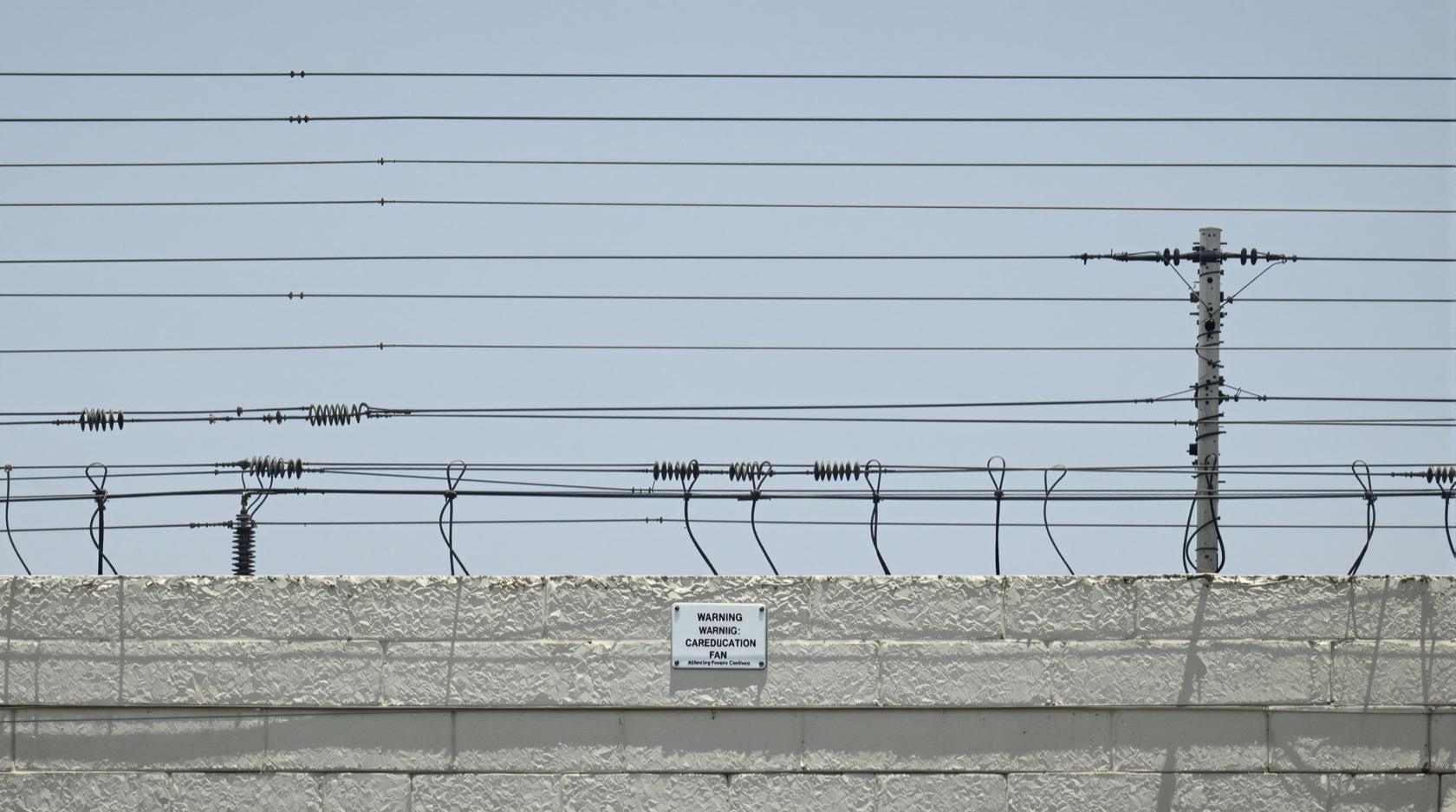
Electric Fencing for Security in India (2026): The Legal, Non-Lethal Way to Deter & Alert
How a certified, pulsed, non-lethal electric fence lawfully deters and alarms at your perimeter, why a mains-electrified lethal fence is illegal and deadly, and the compliance every installation must meet.
An electric fencing line at the top of a compound wall is one of the most misunderstood perimeter measures in India. Done one way, it is a lawful, humane deterrent that also doubles as an intrusion alarm. Done another way — the way that still gets improvised on farms and building sites every year — it is an illegal, mains-fed death trap that has killed intruders, passers-by, children, cattle and, tragically, the property's own occupants. This guide exists to draw that line sharply and keep you on the right side of it.
The only legitimate security electric fence is a certified, non-lethal, pulsed system: an approved energizer sends a brief high-voltage but very low-current pulse down insulated wires. Touch it and you get a sharp, memorable, safe shock that makes you let go and back off — it deters. The same energizer watches the wires and raises an alarm the instant they are cut, shorted or climbed — it detects. Deter plus detect, without killing anyone. Everything below is about specifying that system correctly, and never anything else. This guide sits in the Studio Matrx perimeter security library alongside the pillar guide; it is written for professionals — architects, facility managers, RWAs, factory and farm owners — who must decide, coordinate and comply, not do the wiring themselves.
Scope, honesty & the law. This is planning and compliance guidance, not a wiring how-to, and strictly defensive. Hold three things above everything: (1) a mains-electrified or continuously-live "lethal" fence is illegal in India, has killed people, and carries criminal liability — never build, wire or describe one; (2) the only lawful security fence uses a certified non-lethal pulsed energizer to the applicable IS/IEC electric-fence safety standard (verify the current number) with mandatory warning signage, proper earthing and a licensed installer; (3) it must never trap occupants inside during a fire or emergency. Some states, municipalities and police require permission or restrict residential electric fencing — check locally before you commit.
The one distinction that matters: pulsed and non-lethal, versus mains-live and lethal
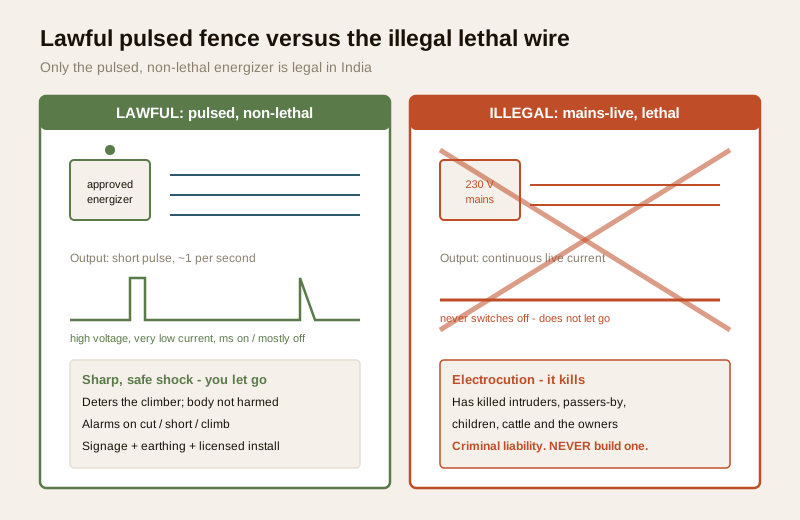
If you remember nothing else, remember this table. The difference is not a detail — it is the difference between a legal deterrent and a homicide.
| Lawful security fence | Illegal "lethal" fence — NEVER build | |
|---|---|---|
| Power source | A dedicated, approved energizer | Direct mains (230 V) tapped onto wire |
| Electrical output | Brief pulse — high voltage, very low current, milliseconds on, most of the time off | Continuous live current at mains frequency |
| Effect on a person | Sharp, safe, memorable shock — you let go and retreat | Electrocution — the current does not let go; it kills |
| Legality in India | Legal where permitted, with signage/earthing/permissions | Illegal; causes death; criminal liability for owner and installer |
| Function | Deter and alarm on cut/short/climb | Injure or kill anything that touches it |
| Who it has killed | Designed so it does not | Intruders, passers-by, children, cattle, and the owners themselves |
A pulsed energizer works by storing energy and releasing it as a very short pulse roughly once a second. Because current only flows for a few milliseconds and is strictly limited, the human body registers it as a hard, unpleasant jolt but is not harmed — the same principle used safely on livestock fences worldwide. A mains-tapped wire does the opposite: it holds a lethal current continuously, so a person who grabs it cannot release, and cardiac arrest or severe burns follow. There is no "careful" way to build the second kind. It is illegal, it is lethal, and no part of this guide will ever describe how to make one.
What a lawful pulsed fence actually does — deter and detect
A properly specified security electric fence earns its place because it does two jobs at once, which few single measures do.
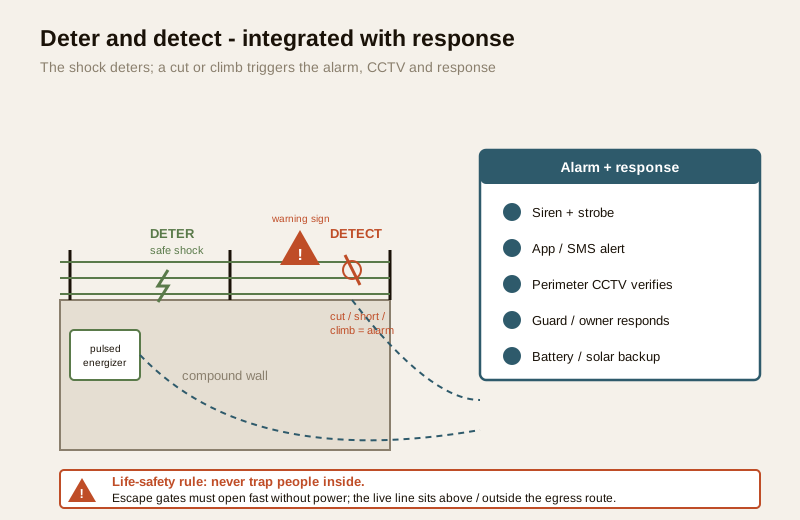
- Deter. The visible wires, insulated stand-off posts and warning signs tell an intruder before they even touch it that this boundary bites. If they try anyway, the shock is unpleasant enough to make them abandon the climb. It turns the top of a compound wall — the exact line people scale — into an active deterrent rather than a passive one.
- Detect. The energizer continuously monitors the loop. Cut a wire, short two wires together with a tool, or push the wires apart to climb through, and the electrical characteristics change; the energizer senses it and fires an alarm output — a siren, a strobe, an app alert, or a signal to your perimeter alarm system and monitoring. This is the feature that separates a security energizer from a plain agricultural one, and it is why the fence should be wired into your wider alarm and response plan, not left standing alone.
Because it both deters and detects, an electric fence fits the layered "deter, delay, detect, deny" thinking that runs through perimeter design. But it is one layer, never the whole answer: pair it with security fencing or a solid wall as the physical barrier, perimeter CCTV and alarms for verification and response, and lighting. On its own a shock line deters the casual and alarms on the determined — it does not physically stop a prepared intruder who is willing to take the jolt or bridge the wires.
Where it fits — and where it does not
Electric fencing is not a universal topping. It suits some settings and is inappropriate or unlawful in others.
| Setting | Fit | Why |
|---|---|---|
| Farms, agricultural plots, orchards | Good | Long boundaries, low public footfall, animal + intruder deterrence; livestock-fence heritage |
| Factories, warehouses, industrial yards | Good | High-value assets, controlled boundary, professional facilities team to maintain and comply |
| Substations, utility compounds, secured sites | Good | Restricted access, clear signage regime, staff-only frontage |
| Some villas / gated communities | Case by case | Only where local rules permit, boundary does not overhang public space, and children/pets are managed; RWA and municipal permission often needed |
| Boundaries directly on a public footpath or street | Poor / often barred | Shock risk to passers-by and children; many municipalities restrict or forbid residential electric fencing here |
| Any perimeter that is also an escape route | Never as a trap | Must not impede egress in a fire/emergency — see the life-safety rule below |
The honest reading: electric fencing is at its best on larger, controlled, low-public-contact perimeters — farms, factories, substations — where a facilities team can maintain it and enforce signage. On a tight urban plot whose wall abuts a busy footpath, the injury liability and legal friction usually outweigh the benefit, and a passive topping such as anti-climb fencing or mesh or, where lawful and well-mounted, razor wire, may be the more defensible choice. Assess your specific boundary with the site perimeter security assessment before deciding.
The compliance checklist — non-negotiable
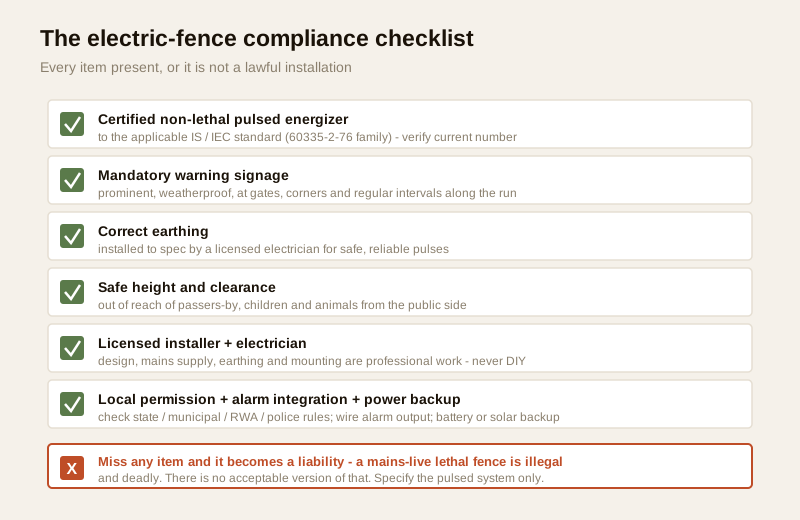
A lawful installation is not just "a fence that shocks." Every item below must be present. Miss one and you have moved from a compliant deterrent toward a liability — or an illegal one.
1. A certified, non-lethal pulsed energizer. Specify an energizer that meets the applicable IS/IEC electric-fence energizer safety standard — internationally this is the IEC 60335-2-76 family for the electrical safety of fence energizers; verify the current IS/IEC number and edition with BIS before you rely on it. The energizer, not the wire spec, is what makes the system safe. Never improvise power from the mains.
2. Mandatory, prominent warning signage. Clear, weatherproof warning signs must be fixed at regular intervals along the fence, at gates, and at corners — visible from both approaches — so no one can touch the fence without being warned. This is both a legal requirement in most regimes and a moral one. Signage is not optional decoration; it is part of what makes the fence lawful.
3. Correct earthing. A pulsed fence only works and stays safe with a proper earth system installed to specification. Poor earthing gives weak, unreliable pulses and unsafe fault behaviour. This is licensed-electrician work.
4. Safe height and clearance. Mount the live wires where casual passers-by, and especially children and animals, cannot reach them from a public side — typically as a wall-top topping set back and above head height on the property side, with clearance from anything a person would ordinarily touch. Keep vegetation and structures that could bridge or shorten reach cleared away.
5. A licensed installer plus a licensed electrician. Design, energizer mains supply, earthing and mounting at height are professional tasks. Use an experienced electric-fence installer working with a licensed electrician; see the electrical hub. Owner-DIY is exactly how the illegal, lethal jobs happen.
6. Integration with alarm and monitoring. Wire the energizer's alarm output into your perimeter alarm and monitoring so a cut or climb produces a response, not just a shock.
7. Backup for power cuts. The energizer and its alarm must ride through load-shedding on battery or solar backup, or the deterrent and the detection both switch off with the mains — precisely when an intruder would prefer them off.
8. Local permission and rules. Confirm what your state, municipality, development authority, RWA and local police require. Some restrict or prohibit residential electric fencing, some require permission or notification, and rules differ by city. Check before you install, not after.
Signage, in a little more detail
Warning signs are the single most visible sign of a lawful installation. They must be legible, durable against sun and monsoon, and placed so that anyone approaching the fence from any side reads a warning first. Fix them at gates, at corners, and at regular intervals along the run — never rely on a single sign at the entrance. Where the fence faces or is near any public space, dense and frequent signage is essential, because your duty of care extends to passers-by who never intended to touch the fence at all.
The life-safety rule: never trap people inside
This is the rule that overrides every security consideration. A perimeter must never trap occupants inside during a fire or other emergency. An electrified, spiked or locked boundary with no quick, unpowered way out is a death trap, not a security system.
- Gates and any pedestrian escape points must open quickly and without power, even when the fence is energized and even during a power cut.
- The electric fence must sit above and outside the escape route, never across it, and never in a way that people fleeing a fire would have to climb through or past a live line.
- Coordinate the whole boundary design with fire egress and your State Fire Services requirements. Security that blocks escape has failed at its most important job. Read this alongside the compound wall security guide, which covers gates and egress in more depth.
The same logic applies inside gated layouts: a society perimeter that is beautifully secured but slow to exit endangers the very residents it protects. Escape always wins over deterrence.
India realities to plan around
- Cheap, uncertified energizers and DIY jobs. The market has plenty of low-cost units and informal installers. This is the most dangerous corner to cut: an uncertified or mains-tapped setup is where the fatalities come from. Insist on a certified energizer and a licensed installer, in writing.
- The lethal-fence temptation. On some farms and sites, people still tap the mains directly for a "stronger" fence. It is illegal, it kills, and both the owner and whoever wired it face criminal liability. There is no acceptable version of this. Specify the pulsed system and refuse anything else.
- Monsoon, rust and vegetation. Wet weather, corroded connections and creepers growing into the wires all degrade a fence and cause nuisance alarms or dead sections. Build in a maintenance schedule and clear vegetation each season.
- Children, pets and cattle. Height, clearance and signage exist because of them. On any boundary where children or animals could reach the wires from a public side, the case for electric fencing weakens sharply.
- The gate is still the weak point. As with any perimeter, the main gate is where most entry happens; an electric-fenced wall with a poor gate is only as strong as that gate. Gate hardening comes later in this library.
Cost, maintenance and the honest limits
A security electric fence is a moderate-cost, ongoing-maintenance system: energizer, insulated posts, wire, earthing, signage, alarm integration and backup, plus periodic checks of tension, connections and pulse strength. Its limits are worth stating plainly. It deters the casual and alarms on the determined, but a prepared intruder can bridge or bypass wires, and a fence that is poorly maintained gives false alarms that erode trust in it. It is a layer that buys deterrence and early warning — not an impenetrable barrier, and never a substitute for the physical wall, lighting, cameras and a response plan around it.
The law, the liability, and when to bring in a professional. Treat electric fencing as legally sensitive from day one. Confirm your state/municipal/police rules and any permission needed before installing; use a certified non-lethal pulsed energizer to the applicable IS/IEC standard (verify the current number with BIS); fit mandatory warning signage; and hand the design, mains supply, earthing and mounting to a licensed installer and electrician. Never build or commission a mains-live lethal fence — it is illegal and kills, and liability falls on the owner as well as the installer. Above all, guarantee that no one can be trapped inside during a fire. This is educational guidance, not legal advice — verify everything locally.
Key takeaways
- Only a certified, non-lethal, pulsed energizer is lawful — a brief high-voltage low-current shock that deters, plus an alarm output when the wire is cut, shorted or climbed. A mains-live lethal fence is illegal, kills people, and carries criminal liability; never build or describe one.
- Deter and detect together — the fence discourages the casual climber and alarms the determined one, but only as one layer of a layered perimeter with a wall, lighting, CCTV and a response plan.
- Compliance is non-negotiable — certified energizer to the applicable IS/IEC standard (verify), mandatory warning signage at intervals, correct earthing, safe height and clearance, a licensed installer and electrician, alarm integration and power-cut backup.
- Life-safety overrides security — the fence must never trap occupants inside during a fire; escape points must open quickly without power, and the design must be coordinated with fire egress.
- Fit matters — good for farms, factories and substations; case-by-case and often permission-bound for villas and gated communities; inappropriate or barred over public footpaths. Check state, municipal, RWA and police rules first.
References
- Applicable IS/IEC electric-fence energizer safety standard for the electrical safety of fence energizers (internationally, the IEC 60335-2-76 family) — verify the current Indian Standard number and edition before relying on it, via the BIS catalogue: https://www.services.bis.gov.in/
- National Building Code of India (SP 7 : 2026), Bureau of Indian Standards, plus local municipal / development-authority building bye-laws for compound-wall height, boundary setbacks and any topping — verify the current edition and your city's rules: https://www.services.bis.gov.in/
- Local State Police, municipal and development-authority rules on the permission for, and any restriction of, electric fencing (especially residential) and warning-signage requirements — confirm with your local authority before installing.
- State Fire Services requirements for egress and escape, so a secured perimeter never impedes evacuation in a fire or emergency.
This is an educational planning and compliance overview, not legal or engineering advice, and it is strictly defensive. A mains-electrified lethal fence is illegal and deadly and is never described here. Use a certified non-lethal pulsed energizer, mandatory signage, correct earthing and a licensed installer and electrician; confirm your state, municipal and police rules and verify any standard's current status via the BIS catalogue before relying on it.
Export this guide
Related Guides — Deep-dive reading
Electric Fencing Legal Requirements in India (2026): Deterrent, Not Deadly
What separates a lawful security electric fence from a dangerous, illegal one. A plain-language guide for homeowners, farmhouses, societies and commercial sites to the safe pulsed energizer, warning signage, earthing, permissions and owner liability that decide whether your fence is legal.
SecurityThe Complete Guide to Perimeter Security in India (2026): Walls, Barriers, Detection & Response
The definitive overview of perimeter security for Indian homes, plots and gated communities — how to layer deterrence, delay, detection and response from the boundary line inward so a wall becomes a system, not just a barrier.
SecurityRazor Wire in India (2026): Security Use, Placement and the Legal & Liability Considerations
What razor wire and concertina coil really do as a perimeter topping, where it fits and where it does not, and the honest legal, injury-liability and humane trade-offs every Indian owner must weigh before stringing it up.
SecurityRelated Tools — Try Free
Access-Control Battery-Backup Calculator
Size the standby battery so an access system keeps running through a power cut, with an egress life-safety note.
Battery BackupElectrical Safety & Load Audit
Home electrical audit — 10 categories, 65+ checkpoints across earthing, RCCB, MCB, wiring, switchboards, appliance circuits, DG/inverter backup.
Safety AuditSecurity Backup Power Calculator
Size a UPS/inverter and battery to keep CCTV, NVR, router and alarm running through a power cut — load, Ah, VA and cost.
Backup Power