

Biological Culture Management in an STP: The Heart of Good O&M
The microbes in your aeration tank do the actual work of cleaning sewage. Keep them healthy — the right MLSS, food, oxygen and nutrients — and everything else falls into place. Here is how operators manage the living culture, diagnose bulking and foaming, and recover after a crash.
Every sewage treatment plant has a machine that does the real cleaning, and it is not the blower or the pump. It is the biological culture — the dense, living population of bacteria, protozoa and other microbes suspended in the aeration tank that eat the dissolved pollution in your sewage. Get the concrete, the diffusers and the electricals perfect, and the plant will still fail your outlet norms if that culture is starved, poisoned or washed out. Keep the culture healthy, and most of the plant looks after itself.
This is why experienced operators say biological culture management is the heart of STP operation and maintenance. It is also the part most often neglected, because the culture is invisible and forgiving right up to the day it collapses. This guide walks through what the microbes need, how to measure whether they are thriving, how to read the classic warning signs of bulking and foaming, and how to bring a dead tank back to life.
Your STP is a farm, not a filter. The blowers, pumps and tanks exist to keep one crop alive and well fed: the billions of microbes that actually clean the water. Manage the crop, not just the machinery.
If you are new to how the biology fits into the whole plant, read how does an STP work and the deep-dive on the activated sludge process alongside this one.
What a healthy culture needs
Microbes are living things, and like any livestock they need food, oxygen, a comfortable environment and the right balance of nutrients. Four levers control all of it.
- Food (the incoming BOD/COD). The organic load in the sewage is what the bugs eat. Too little and they starve; too much and they cannot keep up and the outlet BOD rises.
- Oxygen (dissolved oxygen, DO). The aerobic bacteria that do most of the work must breathe. Air from the blowers and diffusers keeps them supplied.
- Population (MLSS). You need enough microbes in the tank to eat the incoming load — measured as Mixed Liquor Suspended Solids.
- Nutrients and environment. Nitrogen, phosphorus and a near-neutral pH keep the culture building healthy cells rather than sickly, stringy ones.
Manage those four in balance and the culture stays what operators call a good "brown, earthy floc" that settles cleanly in the clarifier. Let any one drift and the trouble begins.
The three numbers every operator should track
You cannot manage what you do not measure. Three simple field tests, run regularly, tell you almost everything about the health of the culture.
| Parameter | Healthy range (domestic STP) | What it tells you | How to respond |
|---|---|---|---|
| MLSS (Mixed Liquor Suspended Solids) | ~2,500–4,000 mg/L | The size of your microbe population | Too low: reduce sludge wasting. Too high: waste more sludge to the holding tank |
| F/M ratio (Food-to-Microorganism) | ~0.2–0.5 kg BOD / kg MLSS·day | Whether the bugs are over- or under-fed | High F/M: build MLSS. Low F/M: waste sludge, watch for pin floc |
| DO (Dissolved Oxygen) | 1.5–2.5 mg/L in the aeration tank | Whether the culture can breathe | Below 1.5: increase aeration. Above 3: throttle the blower to save power |
A fourth test costs nothing and reveals a huge amount: the settleability test (SV30). Fill a one-litre cone with mixed liquor, let it stand 30 minutes, and read the settled sludge volume. Healthy sludge settles to roughly 250–350 mL with clear water above. Combine it with your MLSS to get the Sludge Volume Index (SVI) — an SVI comfortably under about 120 mL/g means good, dense floc; a climbing SVI is the earliest warning of bulking.
Run MLSS, DO and the settleability cone as part of your daily STP checklist, and calculate F/M and SVI weekly.
MLSS and F/M: the balancing act
Most day-to-day culture management comes down to keeping the population matched to the food. That balance is controlled by two operator actions: wasting sludge (removing excess biomass) and returning sludge (RAS — pumping settled sludge from the clarifier back to the aeration tank).
- If MLSS drifts too high, the tank becomes overcrowded, DO demand soars and the clarifier overloads. Waste more sludge.
- If MLSS drifts too low — often after wasting too aggressively, or a hydraulic washout — the few remaining bugs are overwhelmed by the incoming load and outlet BOD climbs. Waste less, and let the population rebuild.
The F/M ratio ties food and population together in one number, and it also sets your sludge age (SRT) — how many days, on average, a microbe stays in the system. A stable sludge age of around 8–15 days generally gives a mature, well-settling culture. Chasing MLSS blindly without watching F/M is the commonest operator mistake; the two must be read together. To keep numbers honest, cross-check your wasting rate against expected sludge quantities using the sludge generation calculator.
Dissolved oxygen: enough, but not wasteful
DO is where biology meets your electricity bill. Aeration is typically the largest single power consumer in an STP, so operators are pulled two ways: starve the bugs of oxygen and treatment fails; over-aerate and you burn money and can even shear the floc apart.
- Hold DO in the 1.5–2.5 mg/L band across the aeration tank.
- Dead spots with DO near zero breed the wrong organisms and cause odour — often a sign of choked diffusers needing diffuser cleaning.
- If DO is consistently high with the blower at minimum, you are over-aerating; trim it and check your energy benchmark against expected consumption.
For sizing and tuning the air supply properly, the blower size calculator and the guide on reducing STP electricity consumption are the natural companions here.
Diagnosing bulking and foaming
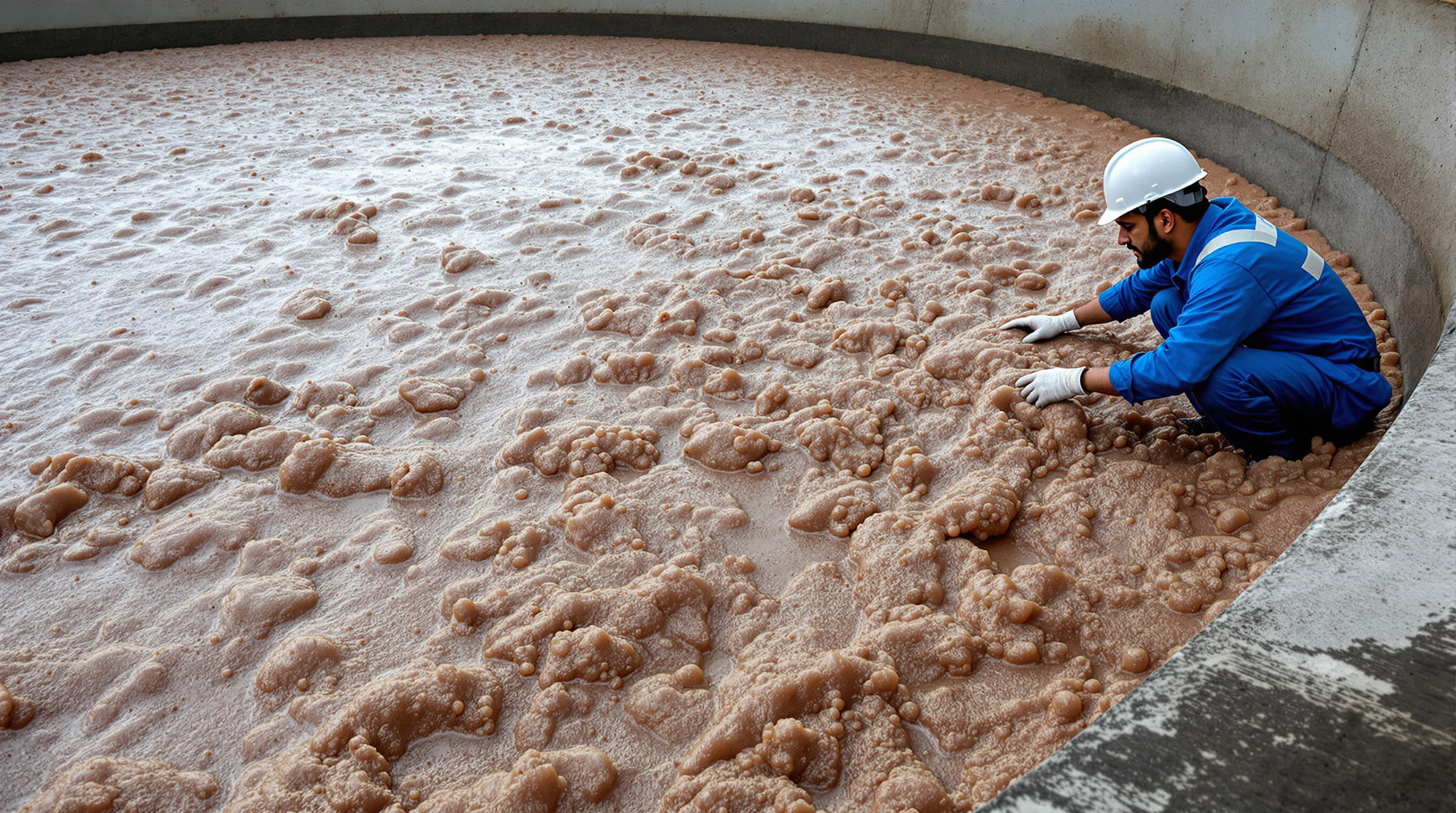
When the culture is unhappy it usually shows up as sludge that will not settle (bulking) or a blanket of foam on the tank. Both are almost always biological, not mechanical, and both point back to how the culture is being managed.
| Symptom | Likely cause | Fix |
|---|---|---|
| Sludge bulking — light, fluffy floc that will not settle, rising SVI, solids carrying over the clarifier weir | Filamentous bacteria overgrowth, usually from low DO, low F/M (over-aged sludge) or nutrient deficiency | Correct DO to 1.5–2.5, adjust F/M, dose missing N/P nutrients; short-term, chlorinate RAS carefully |
| Thick brown/chocolate foam on the aeration surface | Over-aged sludge / very low F/M; filamentous Nocardia-type organisms | Increase sludge wasting to lower sludge age; reduce MLSS |
| White, billowing foam | Young sludge (very high F/M), too little biomass, or surfactants after a start-up | Build MLSS, reduce wasting, allow the culture to mature |
| Pin floc — tiny dispersed particles, cloudy effluent | Over-oxidised, very low F/M sludge | Reduce aeration slightly, lower sludge age |
| Septic, black, rising sludge in the clarifier | Denitrification or sludge held too long in the clarifier | Increase RAS rate, waste sludge, check for sludge blanket build-up |
The single most useful diagnostic habit is the daily settleability cone plus, where possible, an occasional look under a microscope: a healthy culture shows active protozoa (stalked ciliates, rotifers) and compact floc; a bulking culture shows a haze of long filaments bridging the flocs apart. For a broader symptom index, see STP troubleshooting: common problems.
Nutrients and toxic shocks
Domestic sewage usually carries enough nitrogen and phosphorus for the bugs, following the rough rule of BOD : N : P of 100 : 5 : 1. But plants receiving diluted flows, heavy RO reject, or largely greywater can run nutrient-deficient — a classic hidden cause of filamentous bulking. If bulking persists with DO and F/M correct, suspect a nutrient shortfall and dose accordingly.
The faster killer is the toxic shock: a slug of something the culture cannot tolerate arriving in the inlet.
- Oil and grease in bulk from kitchens or a failed grease trap — coats the floc and starves it of oxygen.
- Bleach, acids, and floor-cleaning chemicals dumped down drains — swing the pH and disinfect the very bugs you are cultivating.
- RO reject or high-TDS discharge, and any accidental industrial or chemical dumping.
Defend the culture upstream: a functioning oil-and-grease trap, an equalisation tank that buffers slugs, and — this is management, not machinery — resident and housekeeping awareness that the drain is not a bin. A single careless drum of chemical can undo months of careful culture-building in an afternoon.
Re-seeding after a crash
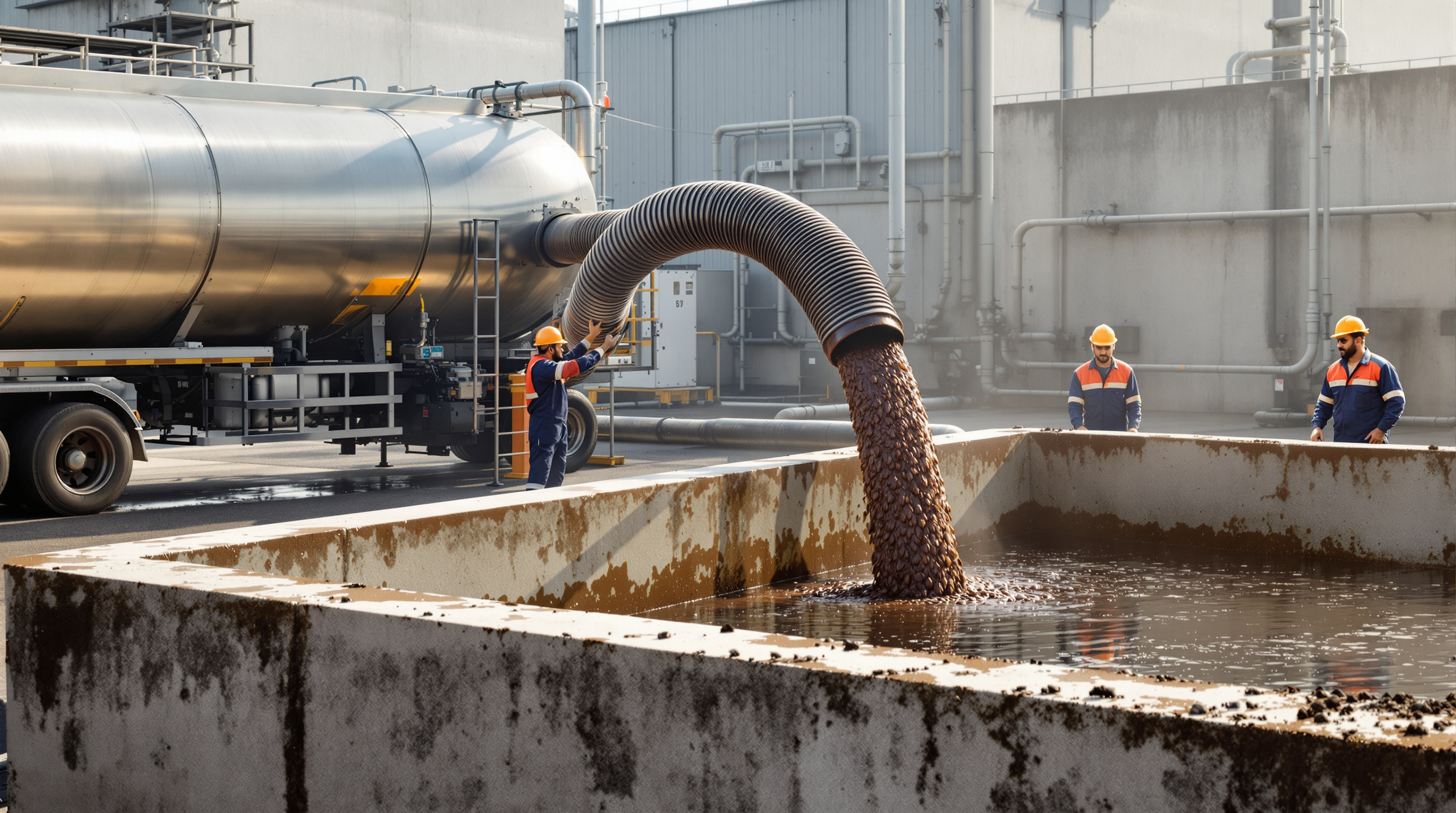
Sometimes the culture dies anyway — a long power cut with no aeration, a severe toxic shock, or a plant restarted after months lying idle. The tank goes grey, the settleability cone shows almost nothing, and outlet quality collapses. The culture must be re-seeded.
1. Fix the root cause first. Restore power and aeration, flush out the toxic slug, correct pH. Seeding into the same bad conditions just kills the new culture too.
2. Bring in a seed. The cheapest and best seed is a few tanker loads of healthy return sludge from a nearby working STP of similar type. Commercial bio-culture (dried bacterial consortia) can supplement but rarely replaces live sludge.
3. Feed gently and build slowly. Start with a reduced organic load, keep DO up, and hold sludge back (minimal wasting) so the population can multiply. A visible brown floc and a settling cone typically return over one to three weeks.
4. Watch the numbers climb. Track MLSS and settleability daily; only resume normal wasting once F/M is back in range and the sludge settles cleanly.
Recovery is slow because you are literally growing livestock back from a handful of survivors. Patience beats panic; over-feeding a young culture only produces white foam and washout.
The bottom line
An STP is a farm for microbes, and the operator is the farmer. Feed them steadily (F/M), keep the herd the right size (MLSS), let them breathe (DO), balance their diet (nutrients) and protect them from poison (no toxic shocks) — and read the daily settleability cone as your early-warning system. Do that, and bulking, foaming and crashes become rare events you catch early rather than emergencies that fail your outlet norms.
From here, keep the routine tight with the daily and weekly STP maintenance guides, and return to the Sewage Treatment Plants guide library for the machinery that keeps your culture alive.
Export this guide
Related Guides — Deep-dive reading
STP Troubleshooting: Common Problems & Fixes (Operator's Guide)
Odour, cloudy effluent, high BOD, sludge bulking, foaming, choked diffusers, pump trips and rising power bills — a practical symptom-to-cause-to-fix guide for facility managers running an Indian building STP.
Sewage Treatment PlantsAeration Tank: The Biological Heart of an STP
The tank where blowers push oxygen into billions of microbes that eat the sewage's organic load — how it works, what DO, MLSS, F/M and HRT mean, and why it quietly runs up the biggest electricity bill in the plant.
Sewage Treatment PlantsWeekly STP Maintenance Tasks: The Operator's Checklist
The seven jobs that keep a building STP healthy week after week — settleability testing, sludge wasting, diffuser checks, backwash review, chemical stock, calibration and cleaning — laid out as a practical routine for facility managers and operators.
Sewage Treatment PlantsRelated Tools — Try Free
Rainwater Tank Sizer
How big should your rainwater tank be? Computes annual harvest, recommended tank capacity in litres, water-bill savings, and payback — for 10 Indian cities.
RWH CalculatorDaily STP O&M Checklist Tool
An interactive daily operator round for a sewage treatment plant — tick off biology, flows, equipment and output checks and see a live completion score, per-section progress and shift readiness.
ChecklistPopulation Equivalent (PE) Calculator
Convert an organic pollution load into Population Equivalent from flow and BOD concentration — the BOD load in kg/day and equivalent number of people.
STP Calculator