
Types of Glass for Home Windows in India (2026): The Complete Guide
Clear, toughened, laminated, Low-E, reflective, DGU and smart glass compared on heat, light, safety, sound and cost, with a how-to-choose framework
A window is really three decisions, not one. You choose the shape (how it opens and frames a view), the frame material (uPVC, aluminium, wood, steel), and the glass (the pane itself). Most homeowners obsess over the first two and let the fabricator pick the glass by default. That is a mistake. In a country where summer wall temperatures touch 45 degrees Celsius and traffic noise is relentless, the glass is what actually decides how hot, how bright, how quiet and how safe your room is.
This is the buyer's decision guide for window glass in India. For the other two decisions, read the window-types pillar (shape and operation) and the frame-materials comparison (uPVC versus aluminium versus wood). Here we stay on the pane.
Glass is priced ON TOP of the frame. A fabricator quotes the window; upgrading the glass spec adds a per-square-foot premium on top. All prices below are indicative for June 2026, plus 18 per cent GST, and vary by city, brand and size. Confirm with itemised quotes.
The language of glass: SHGC, VLT, U-value, LSG
Before the table, learn five terms. They are printed on every performance glass spec sheet.
| Metric | What it measures | Which way is better in hot India |
|---|---|---|
| SHGC (Solar Heat Gain Coefficient) | Fraction of solar heat let through (0 to 1) | LOWER is cooler. Hot India wants low SHGC |
| VLT (Visible Light Transmittance) | Fraction of daylight let through (0 to 1) | HIGHER is brighter. The code sets a minimum |
| U-value | Heat conducted through the glass | LOWER insulates better (matters with AC and in cold regions) |
| LSG (Light to Solar Gain) | VLT divided by SHGC | HIGHER is the ideal: daylight in, heat out |
| dB reduction | Sound cut by the glazing | HIGHER is quieter (acoustic glass) |
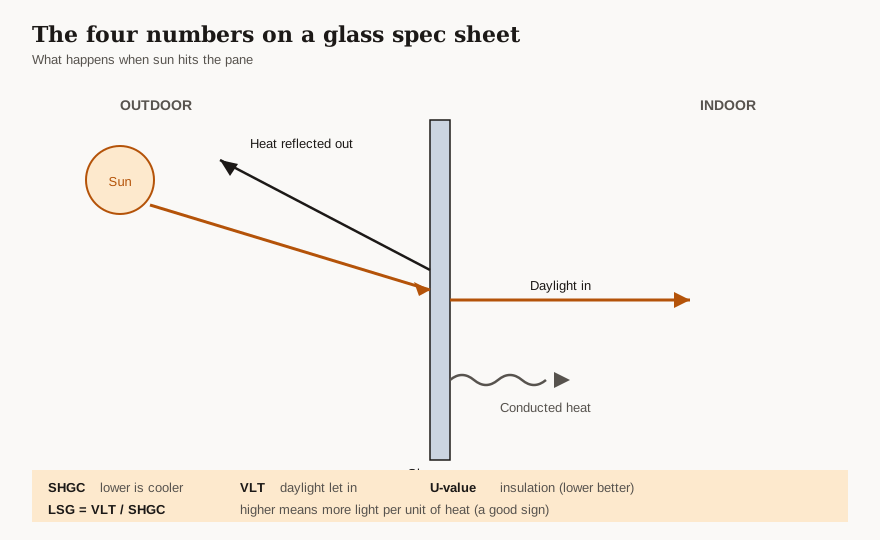
The single most useful number is LSG. A high-LSG glass is "spectrally selective": it passes the daylight you want while rejecting the invisible infrared heat you do not. That is the holy grail for Indian sun-facing windows.
The master comparison: every glass type
Here is the backbone of the decision. Read it across: pick the row whose "Best for" matches your room.
| Glass type | Heat control (SHGC) | Daylight (VLT) | Safety | Sound | Cost band (₹/sqft, on top of frame) | Best for |
|---|---|---|---|---|---|---|
| Clear / annealed | Poor (≈0.82) | Very high | Poor (sharp shards) | Poor | Baseline | Mild climate, non-AC, small interior windows |
| Toughened (tempered) | Same as clear | Same as clear | Good (blunt granules) | Same | +60 to 150 | Large, low or door panes; safety glass |
| Laminated (PVB) | Slight gain | Slight dip | Good (holds together) | Good | +120 to 300 | Security, overhead, low-level, UV cut |
| Tinted (body-tinted) | Better (≈0.5 to 0.6) | Lower (dimmer) | As base | Same | +40 to 120 | Glare and budget privacy; absorbs heat |
| Reflective | Good (≈0.3 to 0.5) | Lower | As base | Same | +80 to 200 | Big west glass, daytime one-way privacy |
| Low-E (spectrally selective) | Excellent (≈0.25 to 0.4) | High | As base | As base | +100 to 250 | The biggest energy lever; sun-facing glass |
| Solar control (family) | Excellent (high LSG) | High to moderate | As base | As base | +120 to 300 | Large or west or south windows in hot India |
| Acoustic (laminated DGU) | Good | High | Good | Excellent (up to ≈50 to 54 dB) | +350 to 700 | Homes near roads, railways, airports |
| DGU / IGU (double unit) | Good to excellent | High | As panes | Good (≈35 dB) | +250 to 500 | The energy default for AC homes |
| Smart / switchable (PDLC) | Varies | Switchable | As base | As base | +800 to 1,800 | Privacy on demand; premium feature |
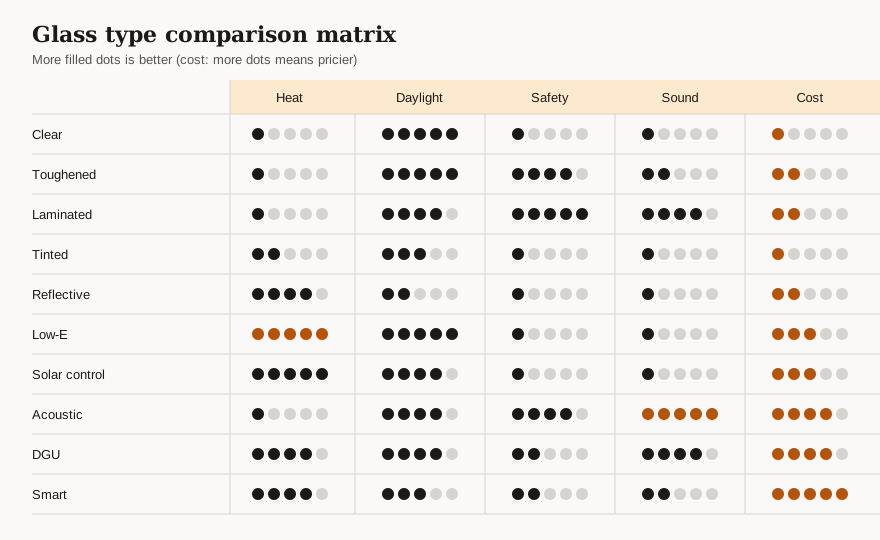
A clarification: toughened and laminated are safety treatments, Low-E, tinted, reflective and solar control are performance coatings or bodies, and DGU and acoustic are about how many panes and what interlayer. Real-world glass combines them, for example a "toughened Low-E DGU" or an "acoustic laminated DGU". They are layers of choice, not rival products.
Glazing layers: single, double, triple
The other axis is how many panes the unit has.
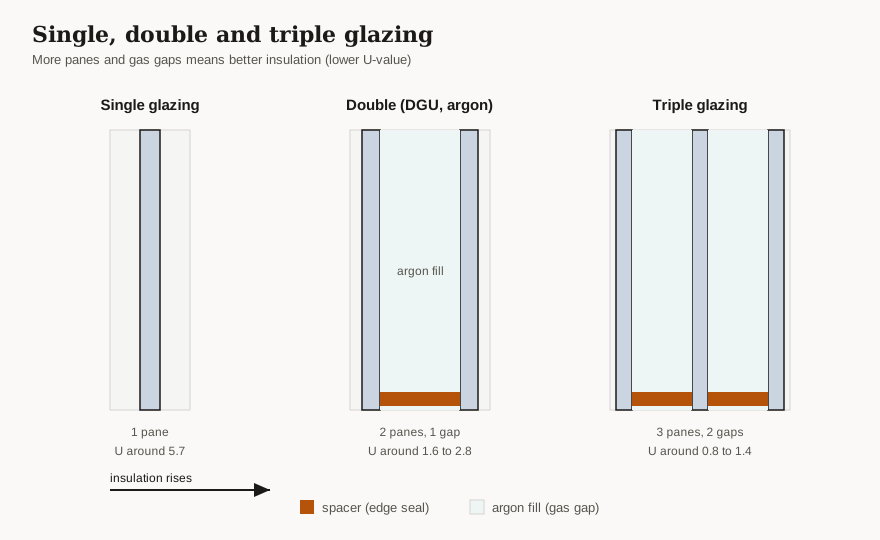
- Single glazing is one pane: cheapest, poor thermal and acoustic performance. Fine for mild climates and non-AC interior rooms.
- Double glazing (DGU / IGU) is two panes with a spacer and an air or argon gap. It is a big jump in insulation and noise control, and it is the energy default for any air-conditioned home. A warm-edge spacer and argon fill push the U-value down further.
- Triple glazing is three panes and two gaps: the best insulation, made for cold-heating climates. In most of hot India it is usually overkill (heavier, costlier), and the real Indian win comes from a Low-E coating and low SHGC, not from a third pane. It earns its place only in cold north and hill regions, or for extreme noise.
For noise specifically, an asymmetric acoustic-laminated DGU usually beats a plain triple. The acoustic PVB interlayer and differing pane thicknesses do more than a third sheet of glass. See the dedicated cousins: single versus double glazing, triple glazing in India and acoustic glass.
How to choose: a six-question framework
Walk your home window by window and answer six questions.
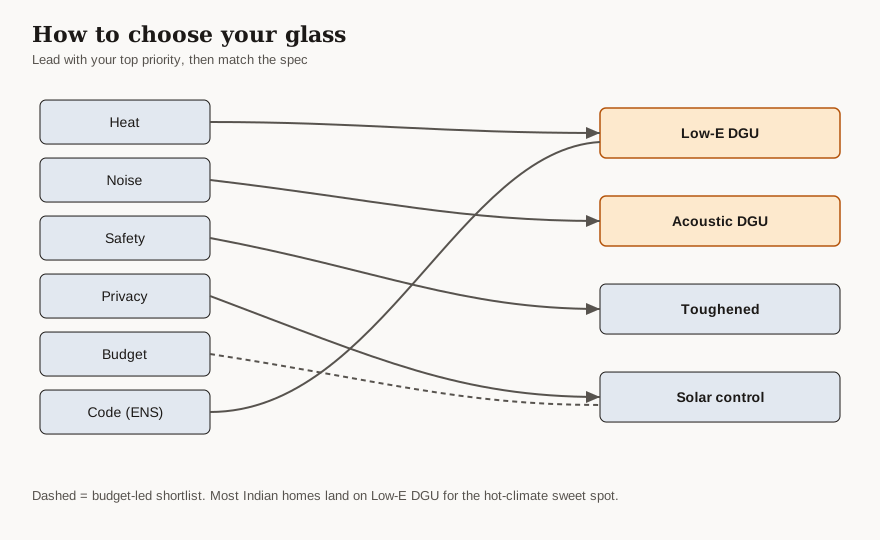
1. Heat. Is the window sun-facing (west or south) or large? Yes means low SHGC, high LSG: a spectrally selective Low-E or solar-control glass, ideally in a DGU. Extreme-heat regions get a focused recommendation in best glass for a hot climate and energy-efficient glass.
2. Noise. Near a road, railway or airport? Specify an acoustic laminated DGU. Sealing and lamination matter more than pane count.
3. Safety. Large, low-level or door pane? Use toughened glass (blunt granules) or laminated glass where you also want intruder resistance and UV cut.
4. Privacy. Need it permanent or on demand, day-only or 24 hours? The full menu, from frosted to switchable, is in privacy glass solutions, with reflective glass for daytime one-way privacy and smart glass for privacy at the flick of a switch.
5. Budget. Set the cost band per the bar below, and remember this premium sits on top of the frame plus 18 per cent GST.
6. Code (Eco-Niwas Samhita). This is non-negotiable for compliant homes.
The Eco-Niwas Samhita constraint
The Eco-Niwas Samhita 2018 (the residential energy code) caps the Residential Envelope Transmittance Value (RETV) at 15 W/m squared for composite, hot-dry, warm-humid and temperate zones, and windows are the biggest lever on that number. It also sets a minimum VLT by window-to-wall ratio (WWR) so rooms stay daylit:
| WWR band | Minimum VLT |
|---|---|
| 0 to 0.30 | 0.27 |
| 0.31 to 0.40 | 0.20 |
| 0.41 to 0.50 | 0.16 |
| 0.51 to 0.60 | 0.13 |
| 0.61 to 0.70 | 0.11 |
The takeaway: the more glass you have (higher WWR), the lower the SHGC the code demands, which is exactly why spectrally selective glass with a high LSG is the smart Indian default. More glass forces better glass.
Cost bands at a glance
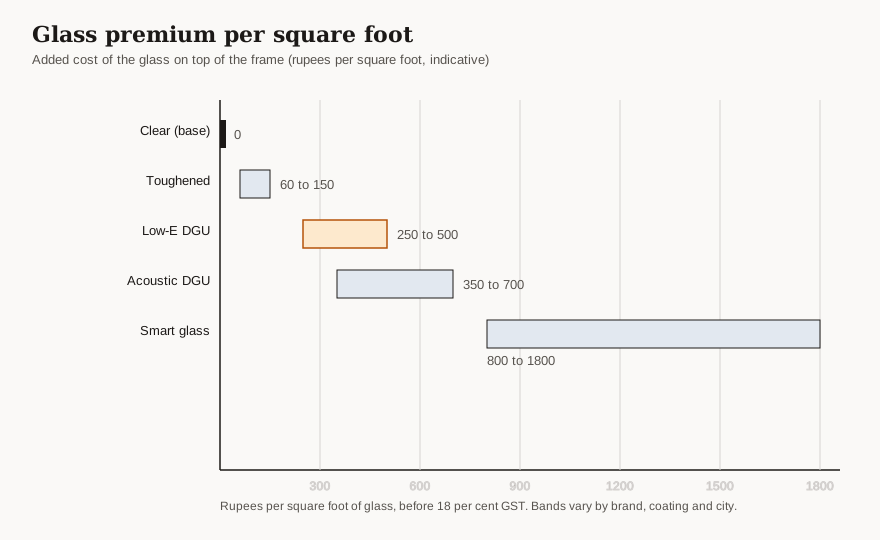
The premium you pay for glass, on top of the frame and before GST, roughly tiers as follows.
| Tier | Glass | Indicative premium (₹/sqft) |
|---|---|---|
| Entry | Clear annealed (baseline) | 0 |
| Safety | Toughened | 60 to 150 |
| Performance single | Tinted, reflective, hard-coat Low-E | 40 to 250 |
| Energy default | Low-E DGU (argon) | 250 to 500 |
| Acoustic | Acoustic laminated DGU | 350 to 700 |
| Premium | Smart / switchable (PDLC) | 800 to 1,800 |
These are indicative June 2026 numbers; add 18 per cent GST and confirm with fabricator quotes for your sizes and city.
The bottom line
For most Indian homes, the right answer is rarely "clear glass". Pick safety glass (toughened or laminated) wherever a pane is large, low or in a door; pick a spectrally selective Low-E in a DGU for sun-facing and air-conditioned rooms; and add an acoustic interlayer only where noise is a genuine problem. Then choose your frame and shape around it. Glass first, because it is the layer that decides how the room feels.
References
- Best glass for windows in India 2026 (IndiFrame): https://indiframe.com/blog/best-glass-for-windows-in-india
- Low-E glass and energy efficiency (Guardian Glass): https://www.guardianglass.com/eu/en/our-glass/glass-types/low-e-glass
- Types of Low-E and solar control glass (FG Glass India): https://fgglass.com/blogs-details/types-of-low-e-glass
- Glass and window solutions for homes (Saint-Gobain India): https://in.saint-gobain-glass.com/knowledge-center/glass-and-windows
- Eco-Niwas Samhita 2018 (BEE/ECBC): https://ecbc.in/econiwas.html
Export this guide
Related Guides — Deep-dive reading
Floor-to-Ceiling Windows (India): Maximum Light, and the Heat Trade-Off
Full-height glazing for Indian homes — how to win the daylight and view without losing the energy code, comfort or safety.
Windows & GlazingSolar Control Glass in India: Cutting Heat Without Killing the Daylight
The performance family that cuts solar heat while keeping daylight: spectrally selective Low-E, body-tinted and reflective glass, the SHGC, VLT and LSG that rank them, where it is essential, and the cost on top of your frame.
Windows & GlazingEnergy Efficient Windows Explained: The Whole-System Guide for Indian Homes
Treat the window as an energy device — frame, glass, seals, shading, install and rating — and learn why low SHGC and shading beat chasing a cold-climate U-value in hot India.
Windows & GlazingRelated Tools — Try Free
Window Material Comparison Tool
Compare uPVC, aluminium, wood, steel and composite windows on cost, life, upkeep and insulation.
CompareGlass Selection Tool
Single vs double (DGU) vs triple glazing and the right glass type for your climate, priority and sun.
Window ToolWindow-to-Wall Ratio Calculator
Compute WWR percent and check it against Eco-Niwas Samhita VLT and RETV limits and climate.
Window Tool