
Privacy Glass Solutions for Indian Homes: From Frosted to Switchable
Frosted, textured, films, reflective and switchable PDLC compared, with a room-by-room and budget framework for Indian homes
Privacy is the quiet anxiety behind half the window decisions in an Indian home. The ground-floor bedroom faces the street. The bathroom shares a wall with the neighbour's stairwell. The pooja room should feel sheltered. The good news is that privacy is a solved problem, and you have far more than one option. The trick is matching the method to the room, because the cheapest fix and the cleverest fix solve very different problems.
This is the umbrella guide to privacy glass. It sits on top of the glass pillar, Types of Glass for Windows in India, and connects to two close cousins you will meet below: reflective glass, which gives privacy only in daylight, and switchable smart glass, the premium privacy-on-demand option. Glass is priced on top of the frame; see window frame materials for that half of the budget. All prices are indicative for June 2026 and exclude 18 per cent GST.
The five families of privacy glass
There are five honest ways to stop people seeing in. They differ on three axes that matter more than anything else: how private (translucent blur versus full opacity), when (all day and night, or daytime only), and whether the privacy is permanent or on demand.
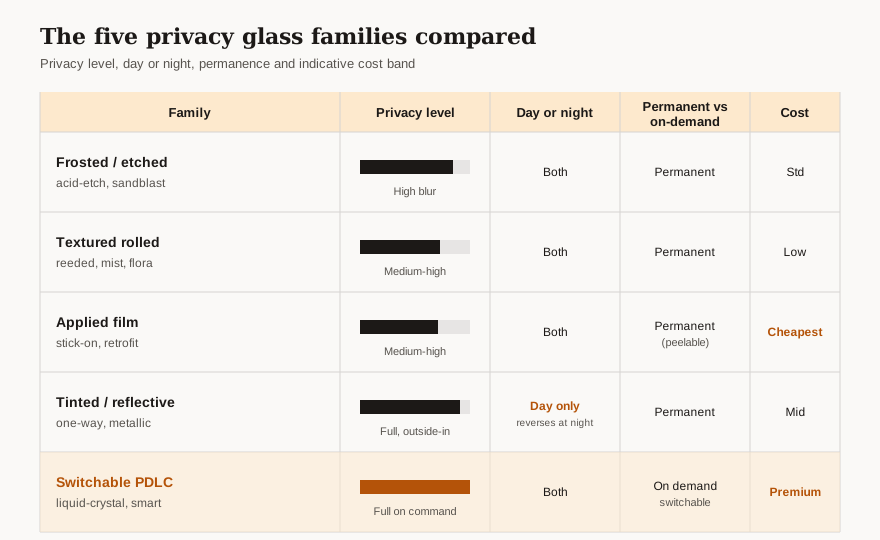
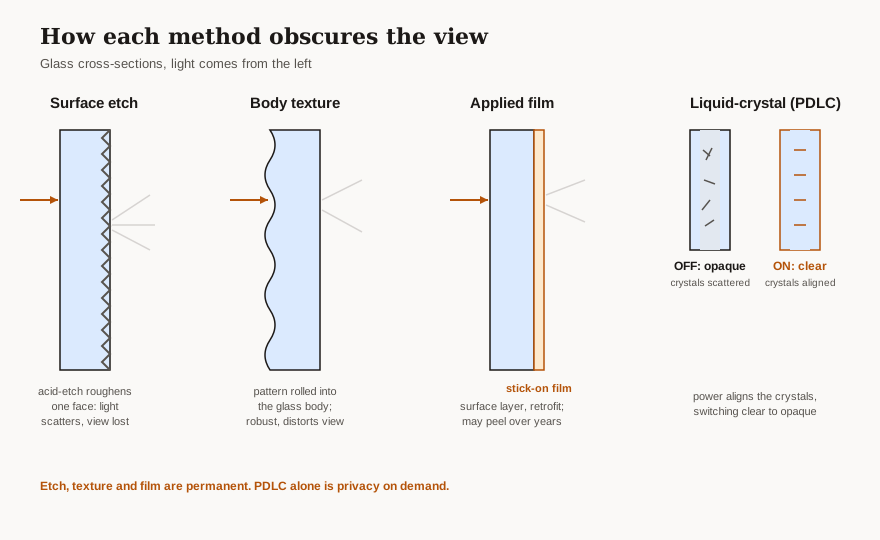
Frosted, acid-etched and sandblasted glass. These make the glass surface permanently translucent: light passes, the view does not. Acid-etching gives a smooth, even, premium finish that resists fingerprints; sandblasting is grittier and cheaper; a sprayed frosted coating is cheapest of all but can scratch. This is the default for bathroom windows and internal doors, and it works identically by day and night. The privacy is permanent, which is the point and also the limitation.
Textured or patterned rolled glass. Molten glass is rolled through a patterned roller (mist, flora, chequered, reeded) so it obscures the view through distortion rather than a coating. This is the classic Indian bathroom and staircase glass, and reeded or fluted versions have come roaring back as a design feature. It is permanent, works day and night, and is robust because the texture is in the glass body, not a surface layer.
Applied privacy films. A self-adhesive film stuck to existing glass: frosted, decorative-patterned, or so-called one-way film. This is the only retrofit option here that needs no glass change at all, which makes it the cheapest fix for a window you already own. Frosted film gives 24-hour blur; one-way film behaves like reflective glass and only works in daylight (see below). Films can bubble or peel over years and are best treated as a five-to-eight-year solution.
Tinted and reflective glass. Body-tinted glass (bronze, grey, green) and metallic-coated reflective glass both cut the view from outside, but only while it is brighter outside than inside, that is, in daylight. After dark, with your lights on, the effect reverses and you become visible. This is the single most important caveat in this guide, and it is why reflective glass earns its own deep-dive in reflective glass for windows; that guide covers the heat-and-glare angle, whereas here we judge it purely as a privacy tool, where it scores well only by day.
Reflective and tinted glass give you a mirror to the street at noon and a lit aquarium at night. For any room used after dark, treat their privacy as a daytime bonus, not the plan.
Switchable PDLC glass. A liquid-crystal interlayer turns the glass clear when powered and milky-opaque when off, at the flick of a switch. This is privacy on demand: a clear view when you want it, instant frosting when you do not. It is the premium answer for a conference-style partition, a bedroom that doubles as a view window, or a bathroom you want bright and open most of the time. PDLC glass runs around ₹800 to ₹1,800 per square foot, and retrofit smart film about ₹1,000 per square foot, both before GST. The mechanics, electrochromic alternatives and full economics live in smart glass windows; here it is simply the top of the privacy ladder.
How they compare
| Option | Privacy level | Day or night | Permanent or on-demand | Indicative cost per sqft (before GST) | Best for |
|---|---|---|---|---|---|
| Frosted / acid-etched / sandblasted | High blur, no view | Both | Permanent | ₹120 to ₹350 | Bathrooms, internal doors |
| Textured / patterned rolled | Medium-high blur | Both | Permanent | ₹90 to ₹250 | Bathroom, stair, feature walls |
| Applied frosted / decorative film | Medium-high blur | Both | Permanent (retrofit, peelable) | ₹40 to ₹150 | Cheap retrofit on existing glass |
| One-way film / tinted / reflective | Full block, but only outside-in | Day only (reverses at night) | Permanent | ₹80 to ₹400 | Street-facing rooms used by day |
| Switchable PDLC glass | Full opacity on command | Both (when switched) | On demand | ₹800 to ₹1,800 | Premium partitions, view-bedrooms |
A few cross-cutting points. Frosted and textured glass should still be toughened for any large, low or door-height pane, exactly as for clear glass, so it shatters safely. Privacy treatments do not change the energy numbers much on their own: frosting barely shifts SHGC or VLT, so if the same window also faces the sun, layer privacy with a low-SHGC solar-control or Low-E glass rather than expecting frosting to do thermal work. And remember the glass pillar point that glass sits on top of the frame cost.
A decision framework by room
Privacy is room-specific, so decide room by room rather than buying one product for the whole house.
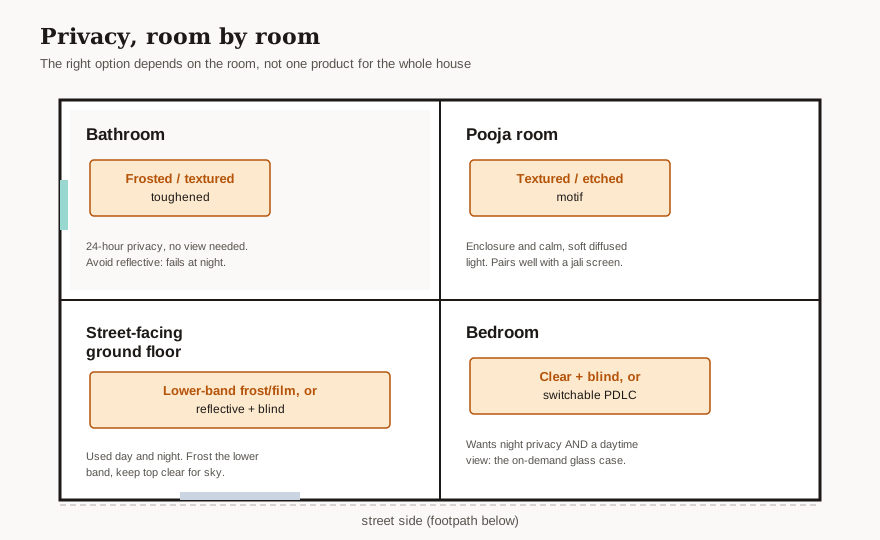
Bathrooms. You want 24-hour privacy and you do not need a view. Frosted or textured toughened glass is the standard, correct answer, cheap and permanent. Reeded glass is the design-forward version. Avoid reflective or tinted here: they fail the moment the bathroom light is on at night.
Ground-floor, street-facing rooms. This is the hardest case because the room is used day and night and you usually want some daylight and maybe a partial view. A lower band of frosted or applied film at sill height blocks the direct sightline from the footpath while leaving the top of the window clear for light and sky. Where you want a clean view by day and do not mind being seen after dark behind curtains, reflective glass works, but pair it with a curtain or blind for the evening. This is the room where switchable PDLC earns its premium if the budget allows.
Pooja rooms. The goal is a sense of enclosure and calm rather than total blackout. Textured or patterned glass, or a decorative etched motif, suits the room's character and diffuses light softly. Many homes pair this with a jali screen for the same effect in a traditional idiom.
Bedrooms. You want full privacy at night and ideally a view and daylight by day, which is exactly the conflict that on-demand glass was invented for. If the budget is tight, the honest answer is clear glass plus a good blackout blind or curtain, because no permanent privacy glass gives you both a clear view and night privacy. If the budget allows, switchable PDLC delivers both with no fabric.
Choosing by budget
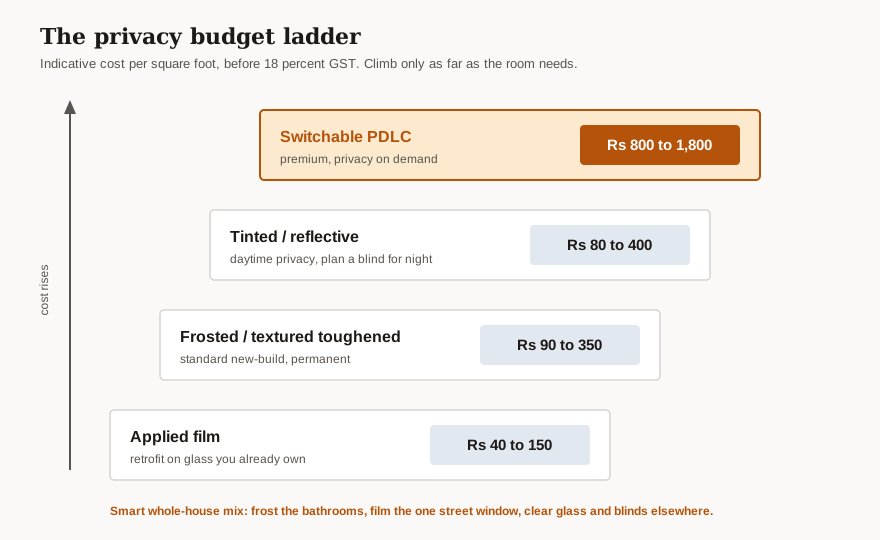
- Lowest cost, retrofit: applied frosted or decorative film on the glass you already have, around ₹40 to ₹150 per square foot. Best when you cannot or will not replace the pane.
- Standard new build: toughened frosted or textured rolled glass, ₹90 to ₹350 per square foot, permanent and maintenance-free.
- Daytime privacy with a view and heat control: tinted or reflective solar-control glass, ₹80 to ₹400 per square foot, but plan a blind for the night.
- Premium, on demand: switchable PDLC glass or film, ₹800 to ₹1,800 per square foot, for the few panes where instant clear-to-opaque is worth it.
The most cost-effective whole-house strategy is to mix: frosted toughened glass in bathrooms, a film or lower-band frost on the one or two problem street windows, and clear glass with blinds everywhere else, reserving switchable glass for a single showpiece pane if at all. As always with glazing, get an itemised quote: ask the fabricator to price the privacy treatment, toughening and any coating as separate lines, and confirm whether the figure includes 18 per cent GST.
References
Export this guide
Related Guides — Deep-dive reading
Curtains vs Blinds: The Complete Comparison for Indian Homes (2026)
Light, privacy, heat, noise, cleaning, cost and looks — a head-to-head verdict on curtains and blinds, plus the under-rated answer most good designers actually use: both.
Window TreatmentsFloor-to-Ceiling Windows (India): Maximum Light, and the Heat Trade-Off
Full-height glazing for Indian homes — how to win the daylight and view without losing the energy code, comfort or safety.
Windows & GlazingCost of Smart Windows in India (2026): Switchable Glass, Honestly Priced
What PDLC switchable glass, retrofit smart film and electrochromic windows really cost installed in an Indian home — glass plus the controller and wiring nobody quotes — and when a blind beats them.
Windows & GlazingRelated Tools — Try Free
Window Treatment Selector
Curtains, blinds or a layered system? Answer five questions about your room and get a specific recommendation.
SelectorBrise-Soleil Visualizer
Interactive horizontal-louvre cut-off angle calculator — sun altitude, louvre depth, and spacing inputs with a live shadow preview. Computes θ = arctan(spacing/depth) for façade shading, ECBC envelope compliance, hospital daylight design, and tropical sun-control detailing.
Sun Shading ToolSmart Window ROI Calculator
Estimate payback, annual saving and 15-year ROI of switchable smart glass vs ordinary glazing.
Window Calculator