

Energy-Efficient Glass Guide (India): Cut Your Cooling Bill at the Window
How double glazing, Low-E coatings, argon, low SHGC and low U-value combine to slash the AC load
In most Indian homes the window is the weakest link in the wall. A clear single pane lets in light, view and a punishing amount of heat, then your air conditioner spends the afternoon undoing the damage. The glass you choose is the single biggest lever you have over the cooling bill, and the good news is that the physics is simple once you learn four numbers. This is the umbrella guide that ties those numbers together and shows you how the energy features stack: double glazing, a Low-E coating, an argon fill, low solar heat gain, low heat conduction and enough daylight. Get the combination right and the same window that was bleeding cool air becomes one of the cheapest energy upgrades in the house.
The four numbers that decide your bill
Energy glass is sold on a small vocabulary. Learn it once and every quote becomes readable.
| Metric | What it measures | Which way is better | Why it matters in India |
|---|---|---|---|
| SHGC | Fraction of the sun's heat the glass lets through (0 to 1) | LOWER | The headline lever in a hot, cooling-dominated climate |
| VLT | Fraction of daylight the glass passes (0 to 1) | HIGHER (within reason) | Keeps rooms bright so you are not switching on lights |
| U-value | How fast heat conducts through the glass (W per m2K) | LOWER | Stops AC coolness leaking out; matters most in hill and north winters |
| LSG | Light-to-Solar-Gain, equals VLT divided by SHGC | HIGHER | The single number that says "bright but cool" |
The dream glass is high LSG: it lets daylight in while shutting solar heat out. That is exactly what a good spectrally-selective Low-E coating delivers, and it is why coatings beat tints.
SHGC is the number to obsess over in Chennai, Nagpur or Ahmedabad. U-value moves up the priority list in Shimla, Srinagar or any heavily AC-run sealed apartment, because there the job is to stop the temperature you have paid for from escaping.
How the energy features stack
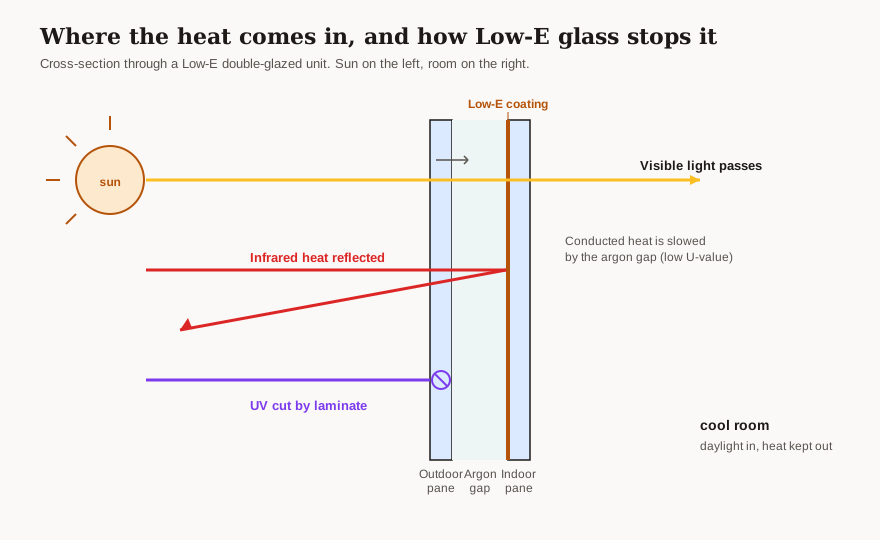
No single feature does the whole job. They combine, and each one targets a different path the heat takes.
- Double glazing (DGU/IGU) adds a second pane with a sealed gap, which slashes conducted heat (lower U-value) and adds acoustic comfort. This is the structural base.
- Argon fill in that gap conducts heat less readily than air, nudging the U-value down further for a small extra cost.
- A warm-edge spacer at the unit's edge cuts the cold bridge and condensation at the perimeter.
- Low-E coating is the heavy lifter: a microscopically thin metallic-oxide layer that reflects long-wave radiant (infrared) heat while passing visible light. It is the biggest single energy lever on glass.
- Spectral selectivity is a Low-E coating tuned for the sun, giving low SHGC with high VLT, that is, a high LSG.
A plain DGU mostly fixes conduction. A Low-E DGU fixes conduction AND radiant solar gain. That difference is why the spec ladder below matters more than simply "double versus single".
The good / better / best energy-glass ladder
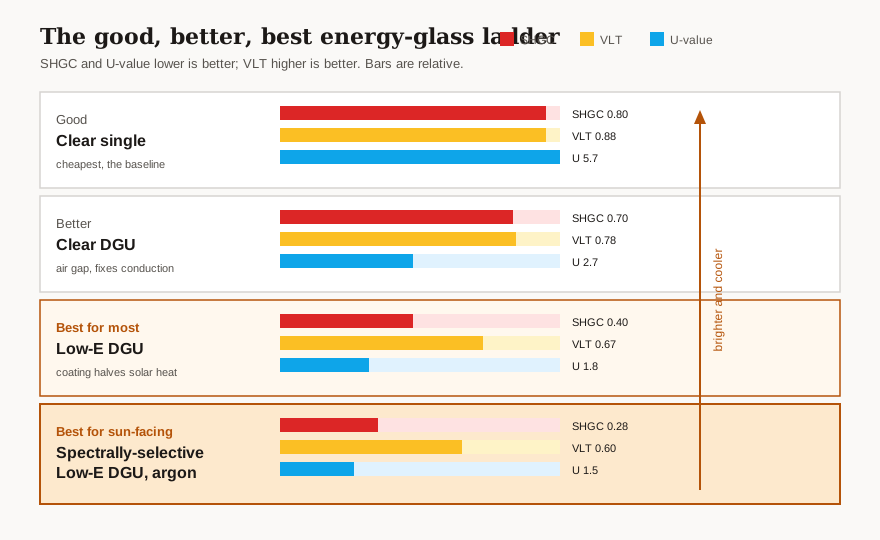
Walk up this ladder until the climate and the budget meet. For sun-facing and west-facing glass in hot India, start higher.
| Rung | Build-up | Typical SHGC | Typical VLT | Typical U-value | Indicative glass cost (on top of frame) |
|---|---|---|---|---|---|
| Good | Clear single pane | ~0.80 | ~0.88 | ~5.7 | baseline, cheapest |
| Better | Clear DGU (air gap) | ~0.70 | ~0.78 | ~2.7 | adds a moderate premium |
| Best for most | Low-E DGU | ~0.35 to 0.45 | ~0.65 to 0.70 | ~1.8 | Low-E coating from about ₹100 to 150 per sqft up |
| Best for sun-facing | Spectrally-selective Low-E DGU, argon fill | ~0.25 to 0.30 | ~0.55 to 0.65 | ~1.4 to 1.6 | premium coating plus argon |
All figures are indicative; values vary by brand, coating and unit build, and all glass prices sit on top of the frame and attract plus 18 per cent GST. Confirm exact ratings and pricing with itemised fabricator quotes.
The jump that pays for itself is from "Better" to "Best for most": adding the Low-E coating roughly halves the solar heat gain for a modest coating cost. The third pane (triple glazing) is usually overkill in hot India: the win here comes from Low-E and low SHGC, not from a third layer. Save triple glazing for cold hill regions or extreme noise.
Tying it to the energy code: Eco-Niwas Samhita
India already has a residential energy code, and windows are the biggest lever in it. The Eco-Niwas Samhita 2018 (ENS), the residential arm of the Energy Conservation Building Code, sets a Residential Envelope Transmittance Value (RETV) of 15 W per m2 or lower for composite, hot-dry, warm-humid and temperate zones. Because windows leak far more heat than walls, lower-SHGC glazing is how most homes hit that target.
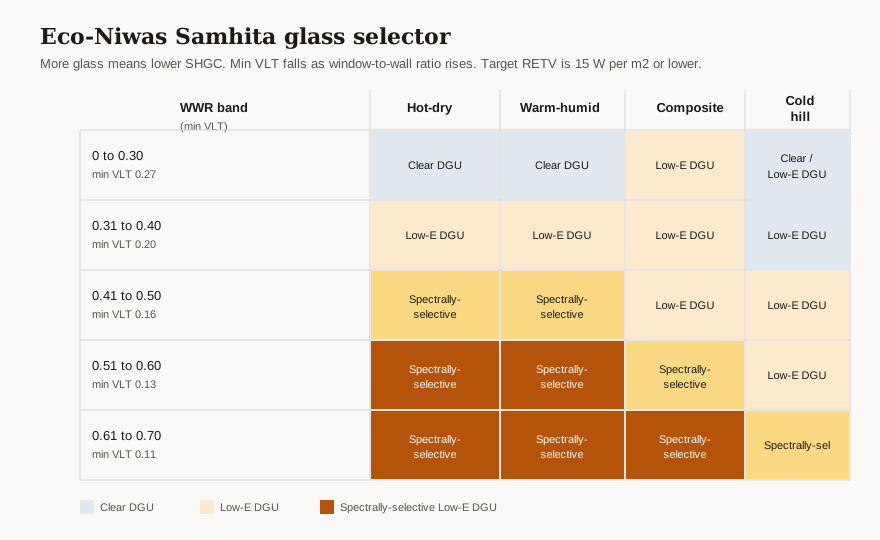
ENS also protects daylight by setting a minimum VLT that depends on your window-to-wall ratio (WWR), the share of the wall that is glass.
| WWR band | Minimum VLT |
|---|---|
| 0 to 0.30 | 0.27 |
| 0.31 to 0.40 | 0.20 |
| 0.41 to 0.50 | 0.16 |
| 0.51 to 0.60 | 0.13 |
| 0.61 to 0.70 | 0.11 |
The more glass you put in a wall, the harder the code pushes you toward low-SHGC, high-LSG glazing. A glassy modern facade is only allowed to stay cool, not dim.
What it saves, and roughly when it pays back
The savings come from cutting the cooling load. On a sun-exposed room, moving from clear single glazing (SHGC near 0.80) to a spectrally-selective Low-E DGU (SHGC near 0.28) cuts the solar heat through that glass by roughly two-thirds. Less heat in means the AC runs shorter and at a lower duty, trimming a meaningful slice off the summer electricity bill for that room.
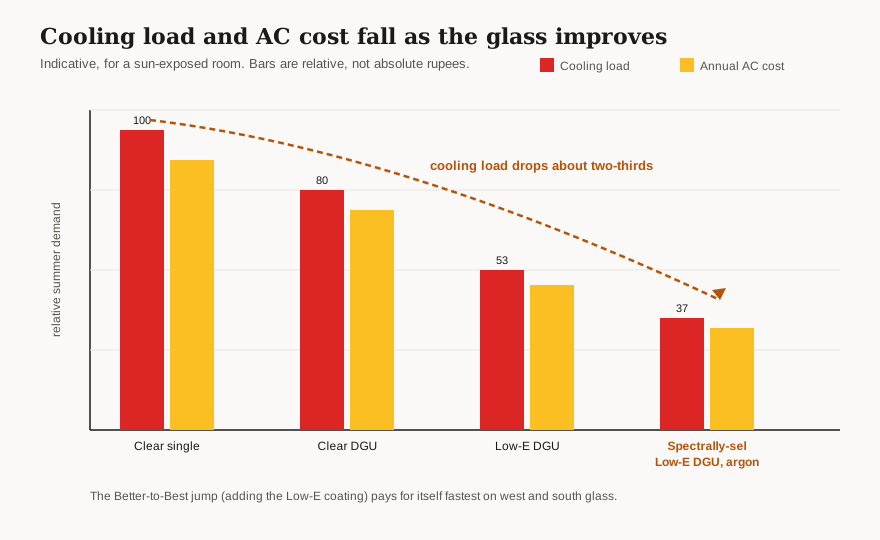
A simple way to frame payback: the extra cost of upgrading the glass (Low-E plus argon over a plain DGU) is paid back by the annual cooling saving on heavily sun-exposed glass over a few summers, and faster the more west and south glass you have and the more hours you run the AC. East and north glass save less, so spend the premium where the sun actually hits. Pair the glass with external shading (chajjas, fins, deep reveals) and the load drops further, because shading and low SHGC do complementary jobs.
Buying checklist
- Ask for the ratings, not adjectives. Get SHGC, VLT and U-value on paper for the exact unit, not "Low-E glass".
- Prioritise SHGC for hot rooms, U-value for cold or sealed-AC rooms. Match the metric to the climate.
- Demand a high LSG on big or sun-facing windows. Bright and cool is the goal; reject low-VLT tints that just make rooms dim.
- Specify the full build-up. Pane thicknesses, gap width, argon fill, warm-edge spacer and which surface carries the Low-E coating.
- Toughen or laminate large, low and door panes for safety, and remember laminated glass also cuts about 99 per cent of UV and adds acoustic damping.
- Check WWR against ENS. If your glass area is high, the code sets your minimum VLT; size the glass and coating to comply.
- Get itemised quotes. Glass is priced on top of the frame, plus 18 per cent GST; compare like with like.
Where to go deeper
This guide is the umbrella; each lever has its own deep-dive.
- The coating itself, soft-coat versus hard-coat, surfaces and ratings: see Low-E glass in India. This page tells you how the features combine; that one tells you how the coating works.
- The whole solar-control family (spectrally-selective, tinted, reflective) and when each fits: see solar control glass in India. Use it to choose among heat-cutting glass types; use this page to see where they sit on the energy ladder.
- Single versus double glazing, the layers and gap fill in detail: see single vs double glazing in India.
- The hot-climate pick for 45 degrees C summers: see the best glass for a hot climate in India, which lands on one recommendation; this umbrella explains the reasoning behind it.
- The glass pillar for the full menu of glass types: see types of glass for windows in India.
- Glass is only one of three window decisions; for the frame, see window frame materials compared, and for the shape, see types of home windows in India.
References
- Low-E glass and energy efficiency, Guardian Glass: https://www.guardianglass.com/eu/en/our-glass/glass-types/low-e-glass
- Low-E glass rating, U-factor, SHGC and VT explained: https://www.mannleecw.com/what-is-low-e-glass-rating/
- Glass and window solutions for homes, Saint-Gobain India: https://in.saint-gobain-glass.com/knowledge-center/glass-and-windows
- Best glass for windows in India 2026, IndiFrame: https://indiframe.com/blog/best-glass-for-windows-in-india
- Eco-Niwas Samhita 2018, BEE/ECBC: https://ecbc.in/econiwas.html
Export this guide
Related Guides — Deep-dive reading
Floor-to-Ceiling Windows (India): Maximum Light, and the Heat Trade-Off
Full-height glazing for Indian homes — how to win the daylight and view without losing the energy code, comfort or safety.
Windows & GlazingSolar Control Glass in India: Cutting Heat Without Killing the Daylight
The performance family that cuts solar heat while keeping daylight: spectrally selective Low-E, body-tinted and reflective glass, the SHGC, VLT and LSG that rank them, where it is essential, and the cost on top of your frame.
Windows & GlazingEnergy-Efficient Facades in India: How the Building Skin Cuts Your Cooling, Heating & Lighting Bills
How a building facade drives cooling, heating and lighting energy in India, the three levers of solar-heat-gain control, insulation and daylighting, U-value, SHGC, VLT and WWR in plain terms, ECBC and Eco-Niwas expectations, and real Indian green buildings.
Building FacadesRelated Tools — Try Free
Brise-Soleil Visualizer
Interactive horizontal-louvre cut-off angle calculator — sun altitude, louvre depth, and spacing inputs with a live shadow preview. Computes θ = arctan(spacing/depth) for façade shading, ECBC envelope compliance, hospital daylight design, and tropical sun-control detailing.
Sun Shading ToolWindow Energy Savings Calculator
Compare standard glazing vs Low-E and DGU windows — annual cooling savings, 10-year savings and payback.
Window CalculatorCross-Ventilation Analyzer
Estimate airflow and air changes per hour (ACH) from room size, window areas, layout, and local wind — with NBC 2016 Part 8 compliance check.
Ventilation Calculator