
Best Glass for Hot Indian Climates (2026): Beating 45-Degree Heat at the Window
Which window glass keeps the daylight but stops the heat in Delhi, Rajasthan, Telangana and the hot plains, by orientation, budget and payback.
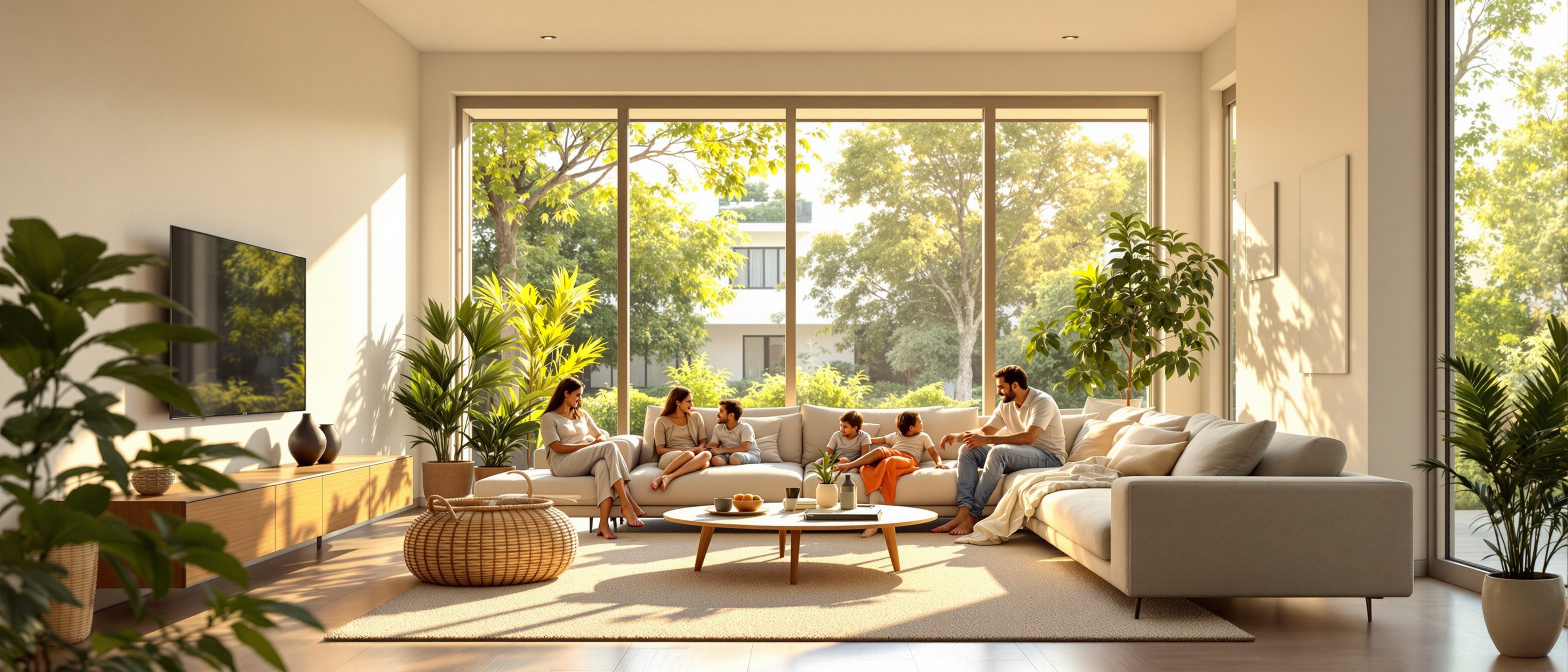
In Delhi, Jaipur, Hyderabad, Nagpur and across the dry plains, the window is where summer wins or loses. A bare clear pane on a west wall in May admits roughly four-fifths of the sun's heat straight into the room, and your air conditioner spends the evening fighting it. The good news: the glass itself is now the single biggest lever you have. Pick the right pane and you can keep the daylight and the view while cutting the heat that reaches the room by half or more.
This guide is the glass decision for hot Indian climates: which pane, in which build-up, on which wall, and what it pays back. It is the partner to two other choices. The best window material for hot climates decides the frame (uPVC or thermally broken aluminium, which stop the frame itself conducting heat); this guide decides the glass that fills it. Together they make the hot-climate window. For the full pane menu, start at the types of glass for windows pillar; and the solar control glass and low-E glass guides go deep on the two coatings named below.
The four numbers that decide everything
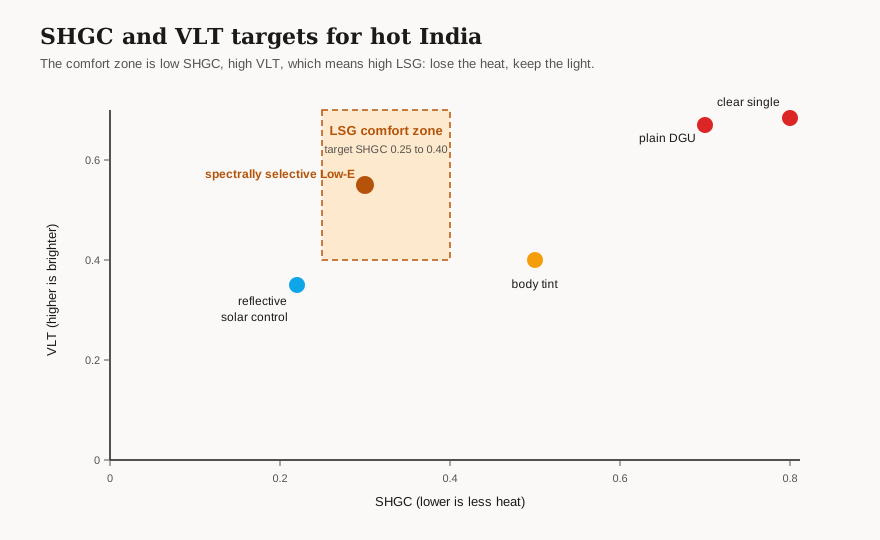
Glass is sold on a few performance ratings. In hot India, two of them matter most.
| Metric | What it measures | Hot-India target |
|---|---|---|
| SHGC (Solar Heat Gain Coefficient) | Fraction of solar heat admitted, 0 to 1. LOWER lets in less heat | 0.25 to 0.40 |
| VLT (Visible Light Transmittance) | Fraction of daylight admitted. HIGHER is brighter | keep above 0.40 if you can |
| LSG (Light to Solar Gain) = VLT divided by SHGC | How well the glass separates light from heat | above 1.25 (the higher the better) |
| U-value | Heat conduction. LOWER insulates better; matters most in AC rooms | below 3.0 W per square metre per kelvin |
The trap to avoid: cutting heat by simply darkening the glass. A heavy bronze tint lowers SHGC but kills daylight too, so the LSG stays low and rooms feel like a cave. The whole point of modern coated glass is a HIGH LSG: low heat, bright room.
Orientation is half the decision
The same glass behaves completely differently depending on which way the window faces, because the sun's angle changes through the day.
- West is the worst wall. The afternoon sun is low and beats straight into the glass through the hottest part of the day. West glazing needs the lowest SHGC you can buy, and ideally external shading too.
- South runs it close in the plains. The summer sun is high, so a modest overhang shades a lot of it, but unshaded south glass still gains heavily.
- East gets strong but cooler morning sun; a low-to-moderate SHGC is enough.
- North is the kind wall: soft, indirect light with little heat. Here you can use a higher-VLT, less aggressive glass and enjoy bright, glare-free daylight.
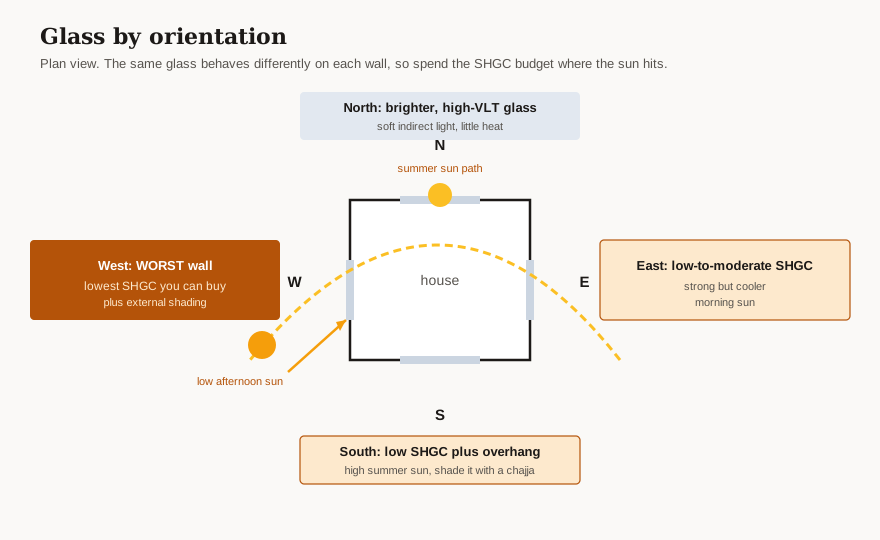
This is why a one-glass-fits-all order is wasteful. You can specify aggressive solar-control glass on the west and south elevations and a brighter, cheaper glass on the north, and pay less overall while being more comfortable.
How the build-up cuts the heat
A pane is only part of the story. The build-up, single or double, and the coating, decide the SHGC.
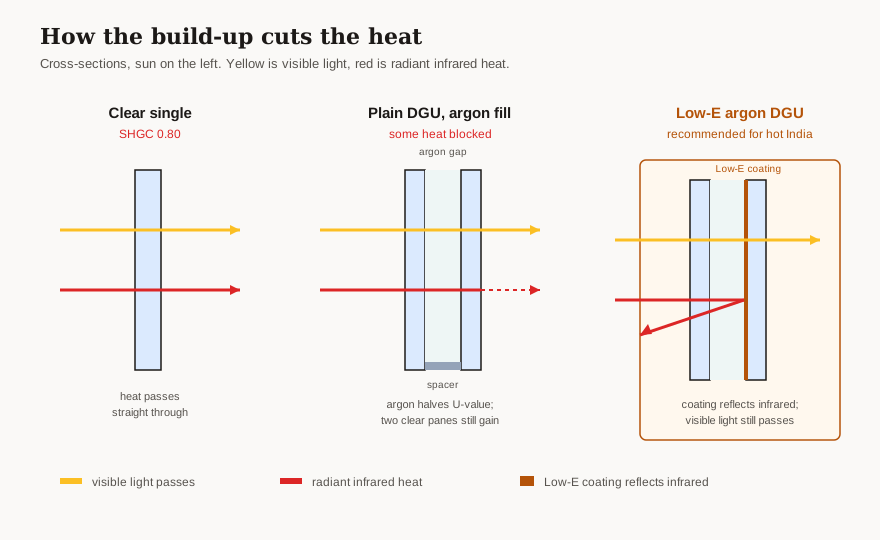
- Clear single glazing has an SHGC near 0.80. On a sun-facing wall in hot India it is the wrong choice, full stop. It also conducts heat freely and does little for noise.
- A double glazed unit (DGU) seals two panes around a spacer with an argon fill. The argon gap roughly halves the U-value versus single glass, so an AC room holds its cool far better, and it is much quieter. But two clear panes alone still admit a lot of solar heat.
- Low-E (low-emissivity) coating is the decisive move. A microscopically thin metallic-oxide layer reflects long-wave infrared, the radiant heat, while passing visible light. A spectrally selective Low-E is tuned to cut solar heat hard while keeping VLT high, which is exactly the high-LSG behaviour hot India wants. Soft-coat (sputtered) Low-E gives the best numbers and lives inside a DGU.
- Solar control glass is the broader family that cuts SHGC: spectrally selective Low-E, body tints and reflective coatings. For large west and south glazing, a reflective solar-control glass adds a mirror finish that bounces heat and glare away and gives daytime one-way privacy, useful but it can look dated and reverses after dark.
So the hot-India default reads: spectrally selective Low-E, soft-coat, in an argon-filled DGU. It hits a low SHGC with a high VLT, insulates the AC, and stays bright.
The ranked recommendation
Glass is priced on top of the frame, and all figures below are indicative for June 2026 and attract +18 per cent GST. Confirm with itemised fabricator quotes.
| Tier | Glass build-up | Typical SHGC / VLT | Glass cost (on top of frame) | Best for |
|---|---|---|---|---|
| Budget | Single glazing with hard-coat Low-E, or a body tint | 0.45 to 0.55 / 0.35 to 0.50 | from about ₹100 to 150 per sqft | non-AC rooms, small or shaded windows |
| Smart default | Spectrally selective Low-E in a clear DGU with argon | 0.27 to 0.38 / 0.45 to 0.60 | about ₹250 to 450 per sqft | most AC rooms, the all-round hot-India choice |
| West and big glass | Reflective or high-performance solar-control Low-E in an argon DGU | 0.20 to 0.30 / 0.30 to 0.45 | about ₹400 to 700 per sqft | large west and south windows, floor-to-ceiling |
| Overkill in the plains | Triple glazing | very low U-value | highest | cold north and hill regions, not hot plains |
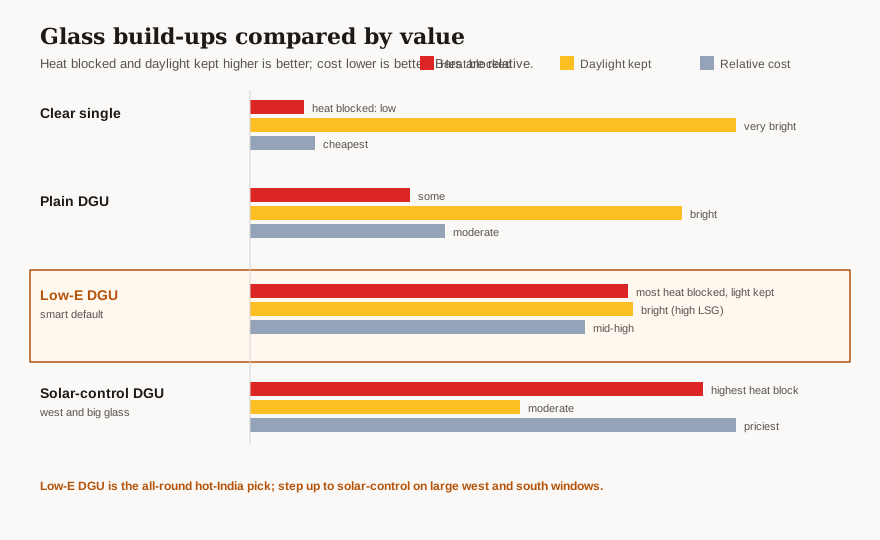
Note the last row. Triple glazing is usually overkill in hot India. The win here comes from the Low-E coating and a low SHGC, not from adding a third pane, which mostly adds weight and cost. Save triple glazing for genuinely cold hill stations or extreme road noise. And the obvious rule for sun-facing walls: never specify clear single glazing on a west or south elevation.
A quick orientation-and-budget recipe
- North windows, any budget: brighter Low-E DGU; let the soft light in.
- East windows: spectrally selective Low-E DGU is plenty.
- South windows: low-SHGC Low-E DGU, paired with a modest external overhang or chajja.
- West windows: the lowest-SHGC solar-control or reflective DGU you can afford, plus external shading; this is where money is best spent.
- Tight budget, no AC: a hard-coat Low-E single pane or a light body tint on sun walls beats plain clear, but plan to upgrade the west.
External shading still earns its keep. Glass that you shade before the sun reaches it always beats glass left fully exposed, so chajjas, fins, deep reveals and pergolas work alongside the coating, not instead of it.
The energy code, and the payback
India's Eco-Niwas Samhita 2018 pushes you the same way. It caps the Residential Envelope Transmittance Value (RETV) at 15 W per square metre for composite, hot-dry and warm-humid zones, and windows are the biggest single lever on that number. It also sets a minimum VLT that falls as your window-to-wall ratio (WWR) rises, from 0.27 at low WWR down to 0.11 for very glassy facades. The takeaway is blunt: the more glass you have, the lower the SHGC your code demands, and the more you need spectrally selective glazing to stay both compliant and bright.
Rule of thumb for the plains: more glass means lower SHGC. A glassy west elevation with clear glass is the fastest way to fail comfort and the energy code at once.
On running cost, the maths is friendly. Upgrading a sun-facing room's glazing from clear single to a Low-E argon DGU typically cuts that room's solar heat gain by roughly half. In a Delhi or Hyderabad home that runs AC for several months, the lower cooling load and gentler short-cycling commonly recover the glass premium within a handful of summers, after which it is pure saving, alongside a quieter, less glary, more even-feeling room every day.
The bottom line
For hot Indian climates the answer is consistent: spectrally selective, soft-coat Low-E in an argon DGU, stepping up to reflective or high-performance solar control on large west and south windows, with external shading wherever you can add it. Keep SHGC low and LSG high so you lose the heat but keep the light. Then pair that glass with the right frame for the heat and the right window shape from the window types pillar, and the 45-degree afternoon stops at the glass instead of inside your living room.
References
- Best glass for windows in India 2026, IndiFrame: https://indiframe.com/blog/best-glass-for-windows-in-india
- Low-E glass and energy efficiency, Guardian Glass: https://www.guardianglass.com/eu/en/our-glass/glass-types/low-e-glass
- Types of Low-E and solar control glass, FG Glass India: https://fgglass.com/blogs-details/types-of-low-e-glass
- Glass and window solutions for homes, Saint-Gobain India: https://in.saint-gobain-glass.com/knowledge-center/glass-and-windows
- Low-E glass rating, U-factor, SHGC and VT: https://www.mannleecw.com/what-is-low-e-glass-rating/
- Eco-Niwas Samhita 2018, BEE and ECBC: https://ecbc.in/econiwas.html
Export this guide
Related Guides — Deep-dive reading
Floor-to-Ceiling Windows (India): Maximum Light, and the Heat Trade-Off
Full-height glazing for Indian homes — how to win the daylight and view without losing the energy code, comfort or safety.
Windows & GlazingBest Window Material for Hot Climates (India): Keeping 45-Degree Heat Out
For Delhi, Rajasthan, Vidarbha and Telangana homes: thermally-broken aluminium or heat-stabilised uPVC, paired with a low-SHGC Low-E DGU and external shading.
Windows & GlazingEnergy-Efficient Facades in India: How the Building Skin Cuts Your Cooling, Heating & Lighting Bills
How a building facade drives cooling, heating and lighting energy in India, the three levers of solar-heat-gain control, insulation and daylighting, U-value, SHGC, VLT and WWR in plain terms, ECBC and Eco-Niwas expectations, and real Indian green buildings.
Building FacadesRelated Tools — Try Free
Brise-Soleil Visualizer
Interactive horizontal-louvre cut-off angle calculator — sun altitude, louvre depth, and spacing inputs with a live shadow preview. Computes θ = arctan(spacing/depth) for façade shading, ECBC envelope compliance, hospital daylight design, and tropical sun-control detailing.
Sun Shading ToolWindow Orientation Planner
Pick the best window type, glass and shading by wall direction — north, east, south and west.
Window ToolCross-Ventilation Analyzer
Estimate airflow and air changes per hour (ACH) from room size, window areas, layout, and local wind — with NBC 2016 Part 8 compliance check.
Ventilation Calculator