
Smart Glass Windows in India: Switchable, Self-Tinting Glass Explained
How PDLC, electrochromic, SPD and thermochromic glass work, what each one actually does, and which switchable technology to choose for privacy, heat and glare.
Smart glass, also called switchable glass, is a window pane that changes its appearance on command, going from clear to private, or from bright to tinted, without curtains or blinds. Flick a switch and a bathroom window turns frosted. Let a coating sense the afternoon sun and the west-facing glass darkens by itself to cut glare. It feels like science fiction, but four distinct technologies are quietly shipping in Indian homes today, each solving a different problem.
This guide explains how each one works, what it actually does, where it earns its place, and where an ordinary blind still wins. It is the how-it-works and which-tech-to-choose companion to two cousins:
- Smart windows cost in India is the pricing guide, the rupee-per-square-foot numbers, retrofit film versus laminated glass, and what drives the quote. This guide is the technology explainer; that one is the budget.
- Privacy glass solutions in India covers the full privacy ladder, from cheap frosted and patterned glass up to films. Switchable PDLC sits at the top of that ladder as the premium, on-demand option, and we explain why here.
For the wider picture of panes, coatings and glazing units, start at the glass pillar, types of glass for windows in India, and pair this glass decision with your frame choice in window frame materials compared. Glass, frame and window shape are three separate decisions.
The four smart-glass technologies
There are two jobs smart glass can do: control privacy (can people see through it) and control heat and glare (how much solar energy and brightness it lets in). No single technology does both perfectly. Knowing which job you are buying for is the whole decision.
PDLC, privacy on demand
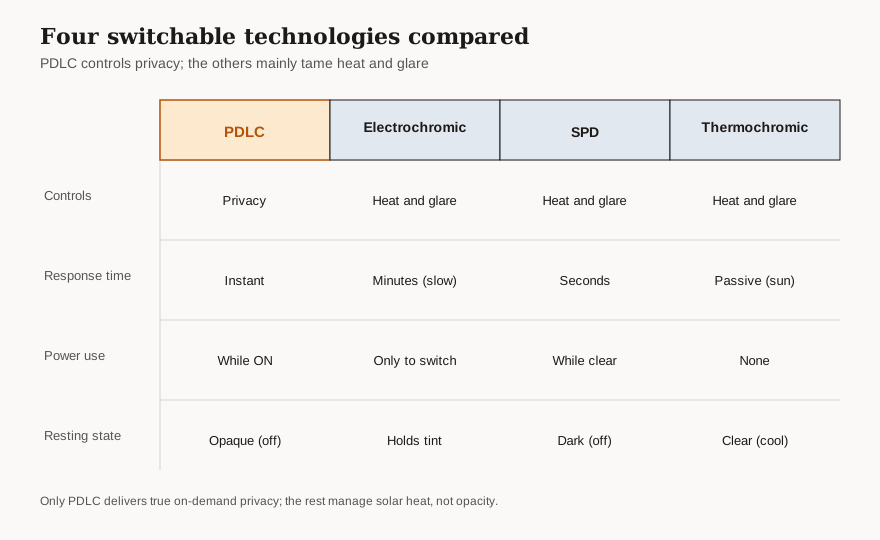
PDLC stands for Polymer Dispersed Liquid Crystal. A thin film of liquid-crystal droplets is laminated between two layers of glass with a transparent conductive coating on each face. With no power, the droplets are randomly scattered, so light bounces around and the glass looks milky and opaque, a clean frosted white you cannot see through. Apply a low-voltage AC current (typically 48 to 65 volts) and the crystals snap into alignment, the glass turns clear in well under a second.
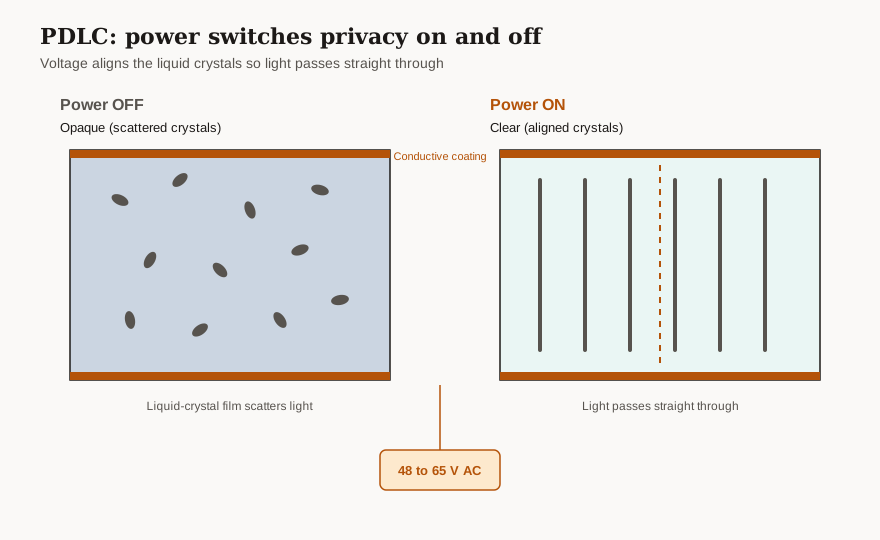
The key facts: PDLC is privacy on demand, clear-to-opaque, not a heat tool. Opaque PDLC blocks the view but still passes plenty of daylight, so a frosted bathroom window stays bright. Response is near instant. It draws power only while clear, a few watts per square metre, so the default resting state is private. This is the smart glass you see in conference rooms, glass partitions and the premium privacy window.
Electrochromic, self-tinting for heat and glare
Electrochromic glass tints itself. A multi-layer ceramic coating changes colour, a calm blue-grey, when a tiny voltage drives lithium ions across the layers. Crucially it is bistable, it holds its state once switched, drawing power only during the transition, so a window that has gone dark stays dark on essentially no energy.
Electrochromic is about heat and glare, not privacy. Even fully tinted you can still see through it, like good sunglasses, so it cuts solar heat gain and blinding light while keeping the view and a sense of daylight. The trade-off is speed: a full tint can take several minutes to complete, so it suits slow daily sun cycles, not instant on-off. This is the technology for west-facing glass, skylights and large picture windows where glare and afternoon heat are the enemy.
SPD, fast dimming
SPD, Suspended Particle Device, holds microscopic light-absorbing rod-shaped particles in a film. With no power they sit randomly and block most light, the glass looks deep blue-black. Apply voltage and they line up, letting light through. SPD's signature is speed and range, it dims in a second or two and can sweep across a wide spectrum from dark to fairly clear, often with a dimmer knob. Like electrochromic it manages heat and glare, you still see through it, and it needs continuous power to stay clear (its default is dark). Found in luxury cars, yachts and high-end glazing where instant, adjustable shading matters.
Thermochromic, passive and wireless
Thermochromic glass needs no wiring, no switch, no controller. A coating tints automatically as it heats up in sunlight and clears as it cools, like transition eyeglasses. Zero running cost and dead simple to fit. The catch is you have no control, it responds to temperature, not to your wishes, and it cannot give privacy. It is a passive heat-and-glare damper best suited to skylights and sunrooms where you simply always want less heat when the sun is strong.
| Technology | What it controls | Resting state | Response | Power | Privacy | Best use |
|---|---|---|---|---|---|---|
| PDLC | Privacy | Opaque (off) | Less than 1 second | Only when clear | Yes, full | Bathrooms, partitions, pooja rooms |
| Electrochromic | Heat and glare | Clear | 1 to several minutes | Only when switching | No (see-through) | West glass, skylights, picture windows |
| SPD | Heat and glare | Dark (off) | 1 to 2 seconds | Only when clear | No (see-through) | Luxury glazing, adjustable shading |
| Thermochromic | Heat and glare | Varies with heat | Gradual (passive) | None | No | Skylights, sunrooms |
The single most common mistake is buying PDLC expecting it to cut heat, or buying electrochromic expecting privacy. PDLC is a curtain you switch; electrochromic is a sunshade you switch. Decide which job first.
Where smart glass earns its place
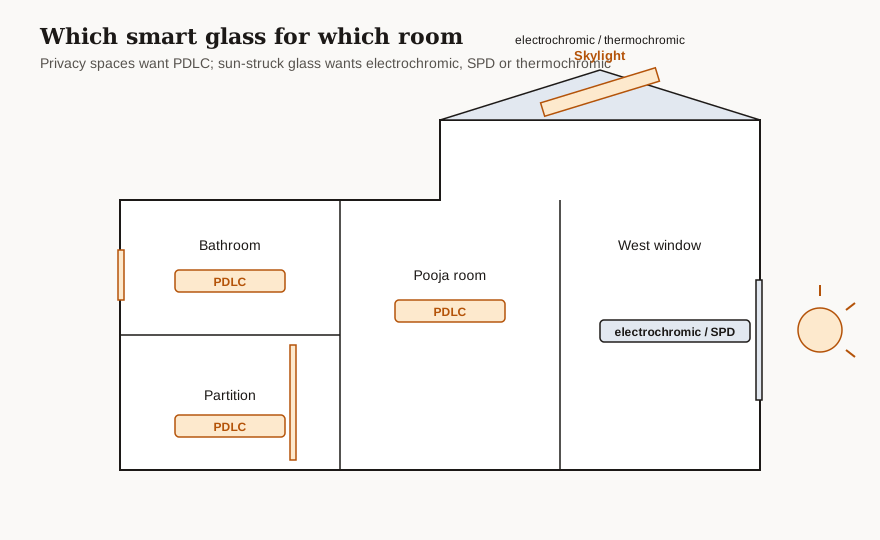
- Bathrooms and en-suites (PDLC). A clear window or shower screen that frosts at a tap. Bright when private, transparent when you want the view. The headline residential use in India.
- Conference, study or pooja-room partitions (PDLC). A glass wall that turns the room private during meetings or prayer, then opens up the space visually again. The home equivalent of a curtain you never have to wash.
- Skylights and roof glazing (electrochromic or thermochromic). Overhead glass is brutal for heat and glare; self-tinting glass cuts it without losing the daylight, and you cannot easily hang a blind on a roof anyway.
- West and south-facing picture windows (electrochromic or SPD). Where the afternoon sun is the problem and you want to keep the view, self-tinting beats a blackout blind that kills the outlook entirely.
The wiring, controller and lifespan caveats
Three of the four technologies are electrical products, not just glass. PDLC, electrochromic and SPD all need a low-voltage supply, a transformer or driver and a controller (wall switch, remote, app or even a sensor). This must be designed in: you need a concealed cable run to the window edge and a driver tucked nearby. Retrofitting a switch line into an existing wall is the awkward part, which is why PDLC retrofit film, applied to glass you already have with the wire run along the frame, is popular when rewiring is impractical. Only thermochromic needs nothing, no wire, no switch, which is its whole appeal.
Smart glass is also not forever. The PDLC and SPD films are organic layers that age, sun, heat and switching cycles gradually degrade them, and a realistic service life is roughly 10 to 15 years before the milky state yellows or the switching weakens, after which the laminated unit must be replaced. Electrochromic ceramic coatings tend to last longer. Treat smart glass as a premium fitting with a finite film life, not a permanent building element.
Smart glass versus a good blind
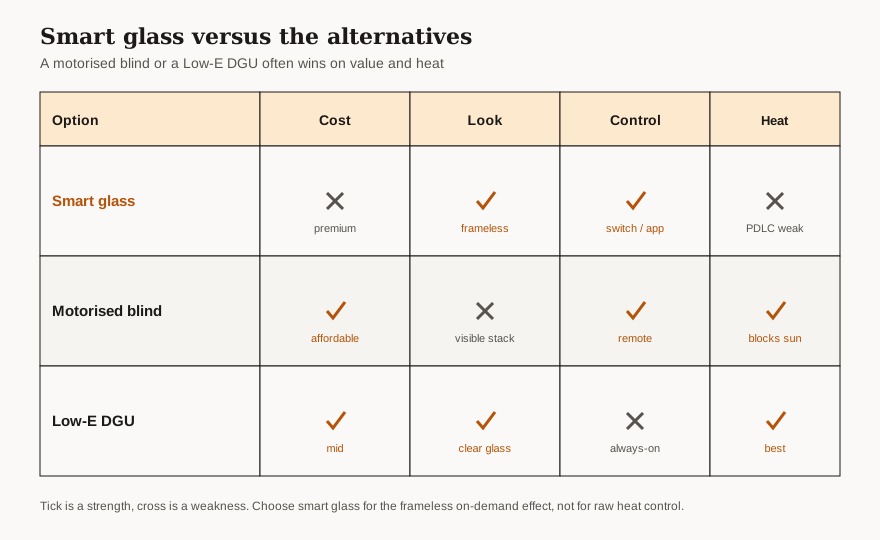
Be honest about the alternative. A motorised blind or a quality roller shade does most of what smart glass does, for a fraction of the cost, and it is trivially replaceable. Smart glass wins specifically when:
- you want a frameless, uncluttered, modern look with no fabric, tracks or dust traps,
- the opening is hard to dress (a skylight, a frameless partition, a curved or very tall pane), or
- you want instant, switch-or-sensor control integrated with home automation.
For ordinary heat control on a normal window, a low-SHGC, spectrally selective Low-E glass in a double-glazed unit plus external shading (covered in the glass pillar) does the heavy lifting far more cheaply than electrochromic, and stays compliant with Eco-Niwas Samhita's RETV and VLT-by-WWR rules. Smart glass is a comfort and design upgrade layered on top, not a substitute for getting the base glazing right.
For the actual numbers, PDLC laminated glass roughly ₹800 to ₹1,800 per square foot and retrofit film around ₹1,000 per square foot (indicative June 2026, plus 18 per cent GST, glass priced on top of the frame, confirm with fabricator quotes), see the dedicated smart windows cost guide.
References
- Smart and switchable glass for homes (Saint-Gobain India): https://in.saint-gobain-glass.com/knowledge-center/glass-and-windows
- Best glass for windows in India 2026 (IndiFrame): https://indiframe.com/blog/best-glass-for-windows-in-india
- Low-E glass and energy efficiency (Guardian Glass): https://www.guardianglass.com/eu/en/our-glass/glass-types/low-e-glass
- Eco-Niwas Samhita 2018 (BEE/ECBC): https://ecbc.in/econiwas.html
Export this guide
Related Guides — Deep-dive reading
Floor-to-Ceiling Windows (India): Maximum Light, and the Heat Trade-Off
Full-height glazing for Indian homes — how to win the daylight and view without losing the energy code, comfort or safety.
Windows & GlazingEnergy-Efficient Facades in India: How the Building Skin Cuts Your Cooling, Heating & Lighting Bills
How a building facade drives cooling, heating and lighting energy in India, the three levers of solar-heat-gain control, insulation and daylighting, U-value, SHGC, VLT and WWR in plain terms, ECBC and Eco-Niwas expectations, and real Indian green buildings.
Building FacadesLighting Controls & Dimming Design: Zones, Scenes & Switches (2026)
How to plan lighting control so an Indian home's light is flexible — split each room's layers onto separate switches, choose dimmers that actually work with LEDs, add two-way switching where you need it, and layer scenes on top. The design decisions you must settle before the electrician wires.
LightingRelated Tools — Try Free
Brise-Soleil Visualizer
Interactive horizontal-louvre cut-off angle calculator — sun altitude, louvre depth, and spacing inputs with a live shadow preview. Computes θ = arctan(spacing/depth) for façade shading, ECBC envelope compliance, hospital daylight design, and tropical sun-control detailing.
Sun Shading ToolCross-Ventilation Analyzer
Estimate airflow and air changes per hour (ACH) from room size, window areas, layout, and local wind — with NBC 2016 Part 8 compliance check.
Ventilation CalculatorWindow Treatment Selector
Curtains, blinds or a layered system? Answer five questions about your room and get a specific recommendation.
Selector