

Single vs Double Glazing (India): Is the DGU Upgrade Worth It?
Single pane versus DGU head-to-head — when one pane is fine, when the double-glazed argon upgrade pays back in cooling bills, comfort and quiet.
A salesman quotes you two numbers for the same window: one with a single pane, one with a Double Glazed Unit (DGU). The DGU costs noticeably more. Is the second pane worth it, or is it a margin-padding upsell? The honest answer in India is: it depends on whether you run air-conditioning, how hot or cold your city gets, and how much noise sits outside your wall. This guide is the head-to-head that tells you when single glass is perfectly fine and when the DGU genuinely pays you back.
This is the layer story. Single becomes double here; double becomes triple in our companion Triple-Glazed Windows in India guide. For the whole performance-glass family, start at the pillar Types of Glass for Windows in India; for energy strategy across all coatings, see Energy-Efficient Glass in India.
What single and double glazing actually are
- Single glazing is one sheet of glass in the frame. It is the cheapest option and the historical default in India. Its weakness is physics: a single 4 to 6 mm pane conducts heat readily and stops very little sound.
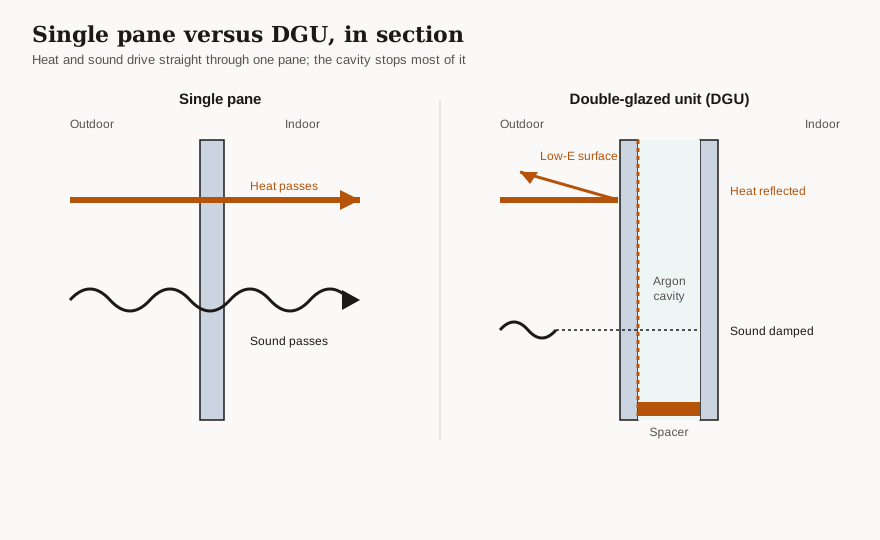
- Double glazing (DGU, also called IGU) is two panes separated by a sealed spacer, with the gap filled with dry air or, better, argon. That trapped gas is a poor conductor of heat, so a DGU dramatically slows heat moving through the window, and the air gap plus extra mass cuts noise.
The jargon you need is small. U-value measures how fast heat conducts through the glass (lower is better insulation). SHGC is the fraction of the sun's heat let in (lower is better in hot India). VLT is how much daylight passes (higher is brighter). A second pane mainly improves U-value and sound; a Low-E coating is what slashes SHGC. Most of India's real energy win comes from Low-E plus a low-SHGC glass, and a DGU is the carrier that lets that coating live on a protected internal surface.
A DGU is not magic glass. It is a sealed sandwich of two ordinary panes and a column of still gas. The still gas is the whole point.
Head-to-head: the numbers
| Metric | Single glazing | Double glazing (DGU) |
|---|---|---|
| Construction | 1 pane | 2 panes + spacer + air or argon |
| U-value (indicative) | 5.0 to 5.8 W/m2K | 1.8 to 2.8 W/m2K (lower with argon plus Low-E) |
| Acoustic reduction | about 20 to 25 dB | about 30 to 35 dB |
| Thermal comfort near glass | Cold or hot to the touch | Stays closer to room temperature |
| Condensation risk | High in AC or winter rooms | Much lower |
| Indicative glass cost on top of frame | from about ₹70 to 150 per sqft | from about ₹250 to 500+ per sqft |
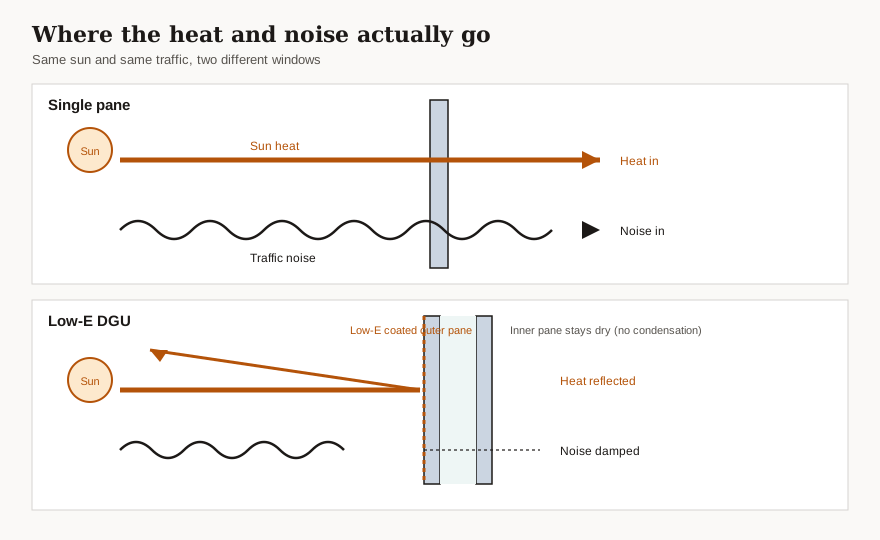
Two practical effects matter as much as the table. First, a single pane in an air-conditioned room runs cold and sweats with condensation; a DGU keeps the inner pane nearer room temperature, so it stays dry and the AC works less hard. Second, a single pane radiates the day's heat at you after sundown; a DGU with Low-E reflects much of that radiant heat back outside.
When single glazing is genuinely fine
Do not over-buy. Single glass is the sensible choice when:
- The room is not air-conditioned and the climate is mild — a hill-station, a coastal Goa verandah room, or a temperate Bengaluru bedroom that you simply ventilate.
- The window is small or in a low-traffic, quiet location — a utility, a store, a stair landing.
- Budget is tight and you would rather spend on shading — a deep chajja, a pergola or external louvers can cut more heat off a sun-facing single-glazed window, rupee for rupee, than upgrading the glass alone.
- You can pair single glazing with a Low-E or solar-control coating — a single pane with a hard-coat Low-E or a body tint still cuts heat far better than plain clear single, at a fraction of DGU cost.
When the DGU pays back
The upgrade earns its premium when one or more of these is true:
- You run AC for many hours — the DGU cuts the cooling load through the glass, so the payback is the daily electricity bill, not a vague comfort claim.
- Your city swings hot or cold — Delhi, Jaipur, Nagpur summers above 45 degrees Celsius and cold winters; the DGU works both seasons.
- Noise is the problem — roadside, near a railway line, a flight path or a busy market. A DGU jumps you from roughly 20 to 25 dB to roughly 30 to 35 dB; an acoustic-laminated asymmetric DGU (two different pane thicknesses so they resonate differently) pushes toward 50 dB.
- You have large or floor-to-ceiling glass — big panes mean big heat and big heat loss, so the per-window saving is largest exactly where glass area is highest.
Argon fill and the warm-edge spacer — the two upgrades inside the DGU
Two small additions make a DGU meaningfully better and are worth specifying by name on your quote:
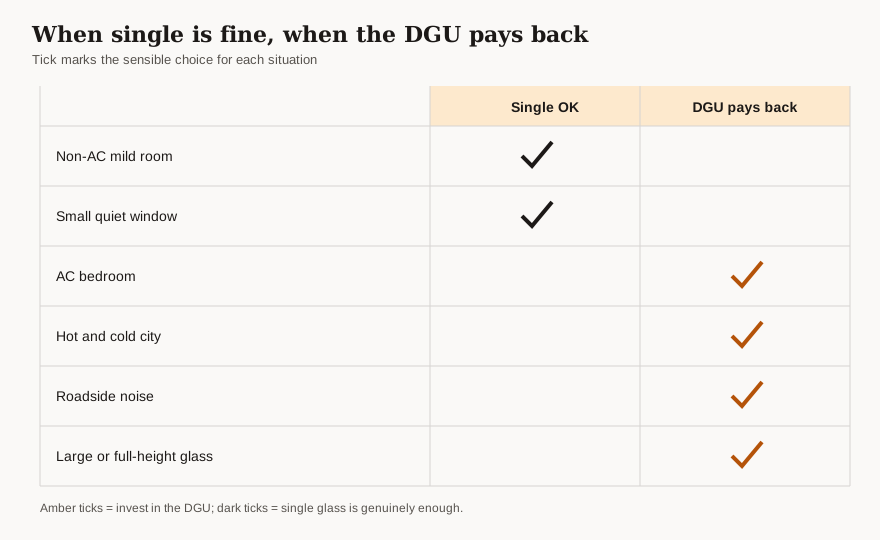
- Argon fill. Argon is denser and less conductive than air, lowering the U-value further for a small premium. It is invisible and standard on better units; ask the fabricator to confirm it.
- Warm-edge spacer. The spacer bar around the cavity edge is a heat shortcut. A traditional aluminium spacer conducts; a warm-edge spacer (structural foam or stainless) cuts that edge loss, reduces edge condensation and improves the whole-window number. Pair these two with a soft-coat Low-E and you have the energy-default glass for most Indian AC homes.
Cost, GST and payback framing
Glass is priced on top of the frame (uPVC or aluminium). As an indicative June 2026 picture, the glass delta to go from clear single to a Low-E argon DGU is often ₹180 to 400 per sqft of glass, plus 18 per cent GST. On a typical 4 ft by 4 ft (16 sqft) window that is roughly ₹2,900 to ₹6,400 of glass delta plus 18 per cent GST — confirm against itemised fabricator quotes, as price varies by city, brand, size and coating.
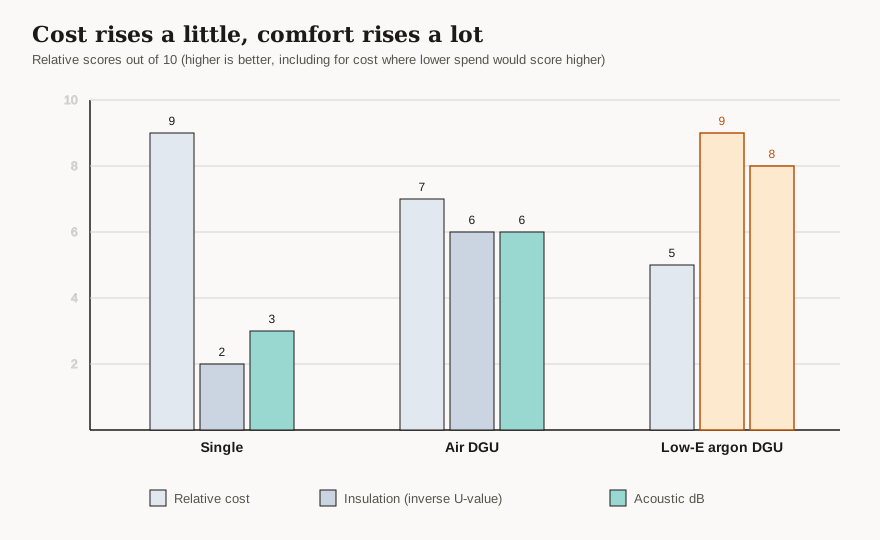
How to think about payback honestly:
| Driver | Single OK? | DGU payback path |
|---|---|---|
| Mild climate, no AC | Yes | Slow or none |
| Heavy AC use | No | Cooling kWh saved every day |
| 45 degrees Celsius summers, cold winters | No | Two-season comfort plus bills |
| Traffic or railway noise | No | Sleep and quiet (hard to value, real) |
| Large or full-height glass | No | Biggest per-window saving |
The bill saving is real but not instant; the comfort and quiet are immediate. Treat noise reduction and the absence of a cold, sweating pane as part of the return, not just the electricity meter.
Tie to the energy code: Eco-Niwas Samhita
India's residential energy code, Eco-Niwas Samhita 2018 (ENS), makes the upgrade a compliance question, not just a comfort one. ENS asks the wall envelope to meet a Residential Envelope Transmittance Value (RETV) of 15 W/m2 or lower in composite, hot-dry, warm-humid and temperate zones, and windows are the single biggest lever on RETV. ENS also sets a minimum VLT by window-to-wall ratio (WWR) — for example VLT at least 0.27 at low WWR, tightening as glass area rises.
The takeaway: the more glass you design in (higher WWR), the harder it is to stay under RETV 15 with plain single glazing — the code effectively pushes you toward a low-SHGC, low-U DGU. If you are chasing ENS or simply want a future-proof home, the DGU stops being optional on sun-facing or large windows.
The verdict
Buy single glazing for small, quiet, non-AC rooms in a mild climate — and spend the saving on shading and a Low-E coating. Buy a Low-E argon DGU with a warm-edge spacer wherever you run AC, face real heat or cold, fight noise, or build large glass. For most new Indian homes with at least one AC bedroom, the DGU is the right default on the main living and sleeping windows, and single glazing is fine for the rest.
Next in the layer story: when does a third pane make sense? Almost never in hot India — see Triple-Glazed Windows in India, where we explain why Low-E beats a third pane here. For the coating strategy, read Energy-Efficient Glass in India; for the full glass menu, the pillar Types of Glass for Windows in India; and remember the frame is a separate decision — see Window Frame Materials Compared.
References
- Eco-Niwas Samhita 2018 (BEE/ECBC): https://ecbc.in/econiwas.html
- Low-E glass and energy efficiency (Guardian Glass): https://www.guardianglass.com/eu/en/our-glass/glass-types/low-e-glass
- Glass and window solutions for homes (Saint-Gobain India): https://in.saint-gobain-glass.com/knowledge-center/glass-and-windows
- Best glass for windows in India 2026 (IndiFrame): https://indiframe.com/blog/best-glass-for-windows-in-india
- Low-E glass rating, U-factor, SHGC, VT (Mann Lee): https://www.mannleecw.com/what-is-low-e-glass-rating/
Export this guide
Related Guides — Deep-dive reading
Energy Efficient Windows Explained: The Whole-System Guide for Indian Homes
Treat the window as an energy device — frame, glass, seals, shading, install and rating — and learn why low SHGC and shading beat chasing a cold-climate U-value in hot India.
Windows & GlazingEnergy-Efficient Facades in India: How the Building Skin Cuts Your Cooling, Heating & Lighting Bills
How a building facade drives cooling, heating and lighting energy in India, the three levers of solar-heat-gain control, insulation and daylighting, U-value, SHGC, VLT and WWR in plain terms, ECBC and Eco-Niwas expectations, and real Indian green buildings.
Building FacadesDesigning a Naturally Energy-Efficient Indian Home
Comfort first, gadgets last — passive design, orientation, insulation, ventilation and the climate wisdom that cuts Indian energy bills
SustainabilityRelated Tools — Try Free
Brise-Soleil Visualizer
Interactive horizontal-louvre cut-off angle calculator — sun altitude, louvre depth, and spacing inputs with a live shadow preview. Computes θ = arctan(spacing/depth) for façade shading, ECBC envelope compliance, hospital daylight design, and tropical sun-control detailing.
Sun Shading ToolGlass Selection Tool
Single vs double (DGU) vs triple glazing and the right glass type for your climate, priority and sun.
Window ToolFuture Home Comfort Score
Score your home 0 to 100 on daylight, ventilation, thermal and acoustic comfort and find the weak link.
Window Tool