

Triple Glazed Windows Explained (India): Is It Overkill for Our Climate?
Three panes, two gaps, the best U-value going — but in hot India the real win is Low-E and low SHGC, not a third sheet of glass. An honest deep-dive.
Triple glazing is the gold standard of window insulation in the cold countries it was invented for. Three panes of glass, two sealed gaps, the best U-value money can buy. So when an Indian fabricator offers it as the "premium upgrade", it sounds like the obvious top choice. Before you pay for it, here is the honest question almost nobody asks you: for most Indian homes, does that third pane actually do anything you can feel or measure on your electricity bill?
For the great majority of India, the answer is no. This guide explains what triple glazing genuinely does, why it is usually overkill in our climate, the handful of places where it is the right call, and the one thing it is most often mistakenly bought to fix: noise.
What triple glazing actually is
A triple-glazed unit (a triple IGU) stacks three panes of glass separated by two sealed gaps, each gap filled with dry air or, better, argon. Compare that with the two layers below it:
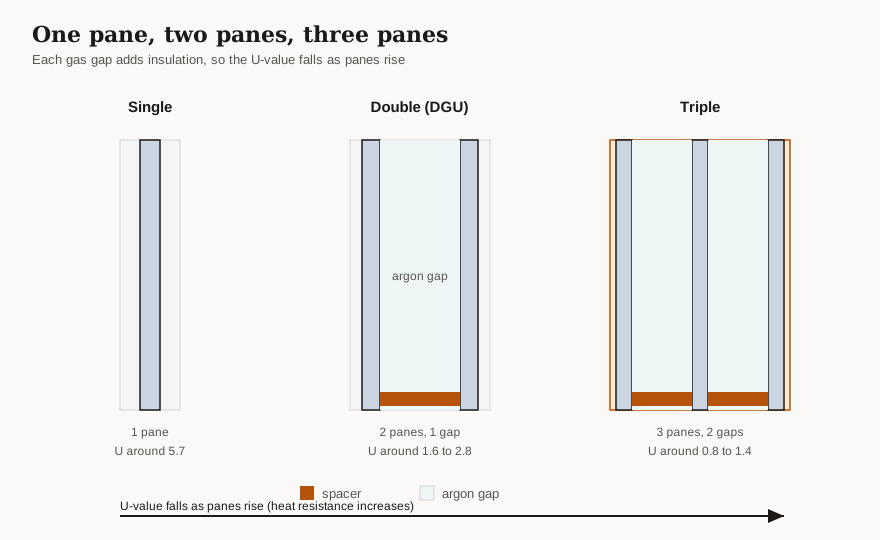
The metric it wins on is U-value — heat conduction, where lower is better insulation. Each extra pane and gap adds resistance, so a good triple unit can reach a U-value around 0.6 to 1.0 W per square metre per kelvin, against roughly 1.4 to 2.0 for a quality double and 5 to 6 for bare single glazing. In a place where the question is "how do I stop heat leaking out of a heated room in winter", that is a meaningful gain. That is exactly the question homes in northern Europe are asking — and exactly the question most Indian homes are not.
Triple glazing optimises for keeping conducted heat in. Most of India's problem is keeping radiant solar heat out — a different job, solved by a coating, not a third pane.
The India reality: usually overkill
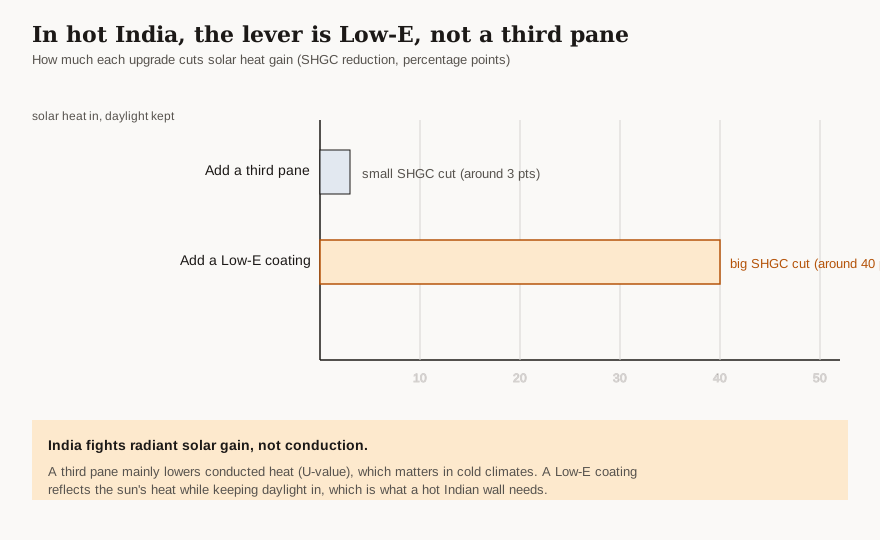
In hot-dry, warm-humid and composite India, the dominant load on a window is not conduction through the glass — it is solar heat gain: sunlight pouring through the pane and radiantly heating the room. The metric that governs that is SHGC (Solar Heat Gain Coefficient, lower equals less heat), not U-value.
A third pane barely moves SHGC. What slashes SHGC is a Low-E (low-emissivity) coating and a spectrally-selective solar-control glass — a thin metallic layer that reflects infrared heat while letting daylight through. You can put that coating on a double-glazed unit (or even single glass) and get most of the heat-rejection benefit, at a fraction of the weight and cost of a triple.
So the third pane in hot India usually buys you:
- A small U-value improvement you will rarely notice when the outdoor air is 38 degrees and the sun, not the air, is your enemy.
- A heavier sash that stresses hardware and hinges, needing beefier (costlier) frames.
- A 40 to 70 per cent price premium over an equivalent double-glazed unit.
The Eco-Niwas Samhita 2018, India's residential energy code, makes the point indirectly: it caps the Residential Envelope Transmittance Value (RETV) at 15 W per square metre for composite, hot-dry, warm-humid and temperate zones, and sets a minimum VLT by window-to-wall ratio. You hit RETV compliance in our climate with low-SHGC, decent-VLT glazing — almost always achievable with a Low-E double-glazed unit. The code does not need, and does not reward, a third pane.
Where triple glazing does make sense in India
It is not a gimmick everywhere. Triple glazing earns its place in these specific situations:
| Situation | Why triple helps |
|---|---|
| Cold north and hill regions (Ladakh, Himachal, parts of J&K, Uttarakhand hills, high Sikkim) | Genuine heating demand all winter; low U-value keeps heat in and stops condensation |
| Passive-house / net-zero ambitions | Targets demand the lowest possible envelope U-value; triple is part of the spec |
| Heavily air-conditioned glass-heavy homes in extreme heat | A secondary insulation gain on top of low-SHGC glass, if budget is no object |
| Extreme, broadband noise exposure | A third mass layer can add acoustic damping — but read the next section first |
If you live on the plains and run fans more than heaters, you are almost certainly not in this table.
For noise, look elsewhere first
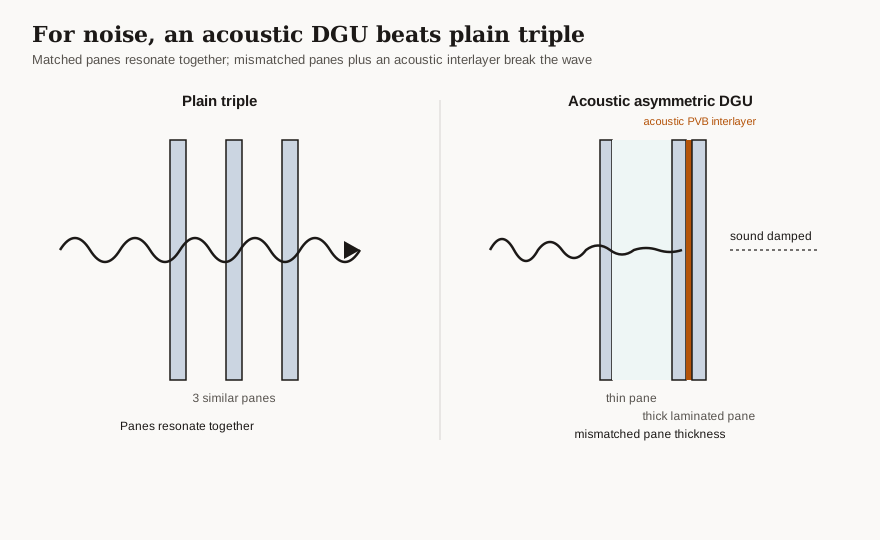
The most common reason homeowners ask for triple glazing is noise — and here the conventional wisdom is wrong. More panes is not the cleanest path to a quiet room. Pane mass, lamination and asymmetry matter more than pane count.
A plain triple unit often has three similar panes, which can resonate together and even create a "coincidence dip" at certain frequencies. An acoustic-laminated asymmetric double-glazed unit — two panes of different thicknesses, at least one of them laminated with a special acoustic PVB interlayer — defeats traffic and railway noise more effectively, because the mismatched panes refuse to resonate at the same frequency and the PVB layer damps vibration.
Indicative noise reduction (the higher the dB cut, the quieter):
| Glazing | Approx. noise reduction |
|---|---|
| Single glazing | 20 to 25 dB |
| Standard double-glazed unit | around 35 dB |
| Plain triple glazing | 40 to 54 dB |
| Acoustic-laminated asymmetric DGU | up to 50 to 54 dB |
A well-built acoustic double-glazed unit reaches the top of that range at lower weight and cost than a triple — and tighter frame sealing matters as much as the glass. So if your driver is the flyover outside your bedroom, an acoustic DGU is usually the smarter buy. We cover that fully in our guide to acoustic glass windows; this guide is about whether the third pane is worth it, and for noise alone it usually is not.
What it costs
Glass is priced on top of the frame, and all figures attract +18 per cent GST. Indicative June 2026 rates, to confirm with itemised fabricator quotes:
| Glazing build | Indicative glass premium |
|---|---|
| Single (clear) | Baseline, lowest |
| Double-glazed unit (air) | Big jump over single |
| Low-E double-glazed unit (argon) | The hot-India sweet spot |
| Acoustic-laminated asymmetric DGU | Premium, noise-driven |
| Triple-glazed unit | Roughly 40 to 70 per cent above an equivalent double |
The hidden cost is structural: triple units are heavy, so they often force a stronger, pricier frame and hardware. That compounds the premium beyond the glass line item alone.
Honest verdict
- Most of India (plains, hot-dry, warm-humid, composite): triple glazing is overkill. Spend the money on a Low-E, low-SHGC double-glazed unit plus external shading — that is the real lever on heat and your bill.
- Cold north and hill regions, or a genuine passive-house build: triple glazing is justified and worth it.
- Noise is the problem: choose an acoustic-laminated asymmetric DGU, not a triple, and seal the frame well.
Start one step back if you have not chosen between one and two panes yet: single versus double glazing in India. To understand the coating that actually wins our climate, read Low-E glass in India. For the full menu of glass options, see the pillar, types of glass for windows in India, and remember the glass is only one of three window decisions — pair it with the right window type and frame.
References
- Low-E glass and energy efficiency, Guardian Glass: https://www.guardianglass.com/eu/en/our-glass/glass-types/low-e-glass
- Types of Low-E and solar control glass, FG Glass India: https://fgglass.com/blogs-details/types-of-low-e-glass
- Glass and window solutions for homes, Saint-Gobain India: https://in.saint-gobain-glass.com/knowledge-center/glass-and-windows
- Low-E glass rating, U-factor, SHGC, VT: https://www.mannleecw.com/what-is-low-e-glass-rating/
- Eco-Niwas Samhita 2018 (BEE/ECBC): https://ecbc.in/econiwas.html
- Best glass for windows in India 2026, IndiFrame: https://indiframe.com/blog/best-glass-for-windows-in-india
Export this guide
Related Guides — Deep-dive reading
Energy-Efficient Facades in India: How the Building Skin Cuts Your Cooling, Heating & Lighting Bills
How a building facade drives cooling, heating and lighting energy in India, the three levers of solar-heat-gain control, insulation and daylighting, U-value, SHGC, VLT and WWR in plain terms, ECBC and Eco-Niwas expectations, and real Indian green buildings.
Building FacadesFloor-to-Ceiling Windows (India): Maximum Light, and the Heat Trade-Off
Full-height glazing for Indian homes — how to win the daylight and view without losing the energy code, comfort or safety.
Windows & GlazingLow-E Glass Guide (India): The Single Biggest Energy Upgrade for Your Windows
How a microscopic metallic-oxide coating reflects radiant heat while passing daylight, soft-coat versus hard-coat, the metrics it moves, and what it costs on top of your frame.
Windows & GlazingRelated Tools — Try Free
Cross-Ventilation Analyzer
Estimate airflow and air changes per hour (ACH) from room size, window areas, layout, and local wind — with NBC 2016 Part 8 compliance check.
Ventilation CalculatorGlass Selection Tool
Single vs double (DGU) vs triple glazing and the right glass type for your climate, priority and sun.
Window ToolBrise-Soleil Visualizer
Interactive horizontal-louvre cut-off angle calculator — sun altitude, louvre depth, and spacing inputs with a live shadow preview. Computes θ = arctan(spacing/depth) for façade shading, ECBC envelope compliance, hospital daylight design, and tropical sun-control detailing.
Sun Shading Tool