

Window Frame Materials in India (2026): uPVC vs Aluminium vs Wood vs Steel vs Composite
The buyer's decision guide for choosing a window frame material by budget, climate, thermal priority, look, maintenance and lifespan.
When you plan a window, you are actually making two separate decisions that you take together: the type (which shape and how it opens) and the material (what the frame is made of). Our window types pillar answers the first question. This guide answers the second: should the frame be uPVC, aluminium, wood, steel or composite — and which one fits your budget, your climate and how much maintenance you are willing to do? For the bigger picture of how windows and doors knit into a home, see the broad overview at windows and doors design in India.
The frame is the part you live with for decades. It decides how much heat enters, how much noise it blocks, whether it rusts on the coast, how slim the sightlines look, and how often you must repaint. Get it right and the window quietly performs for thirty to a hundred years. Get it wrong and you fight swelling, warping, rust or warped profiles every monsoon.
Type is how the window works. Material is how long it lasts and how it feels. Decide both, but never confuse one for the other.
The master comparison at a glance
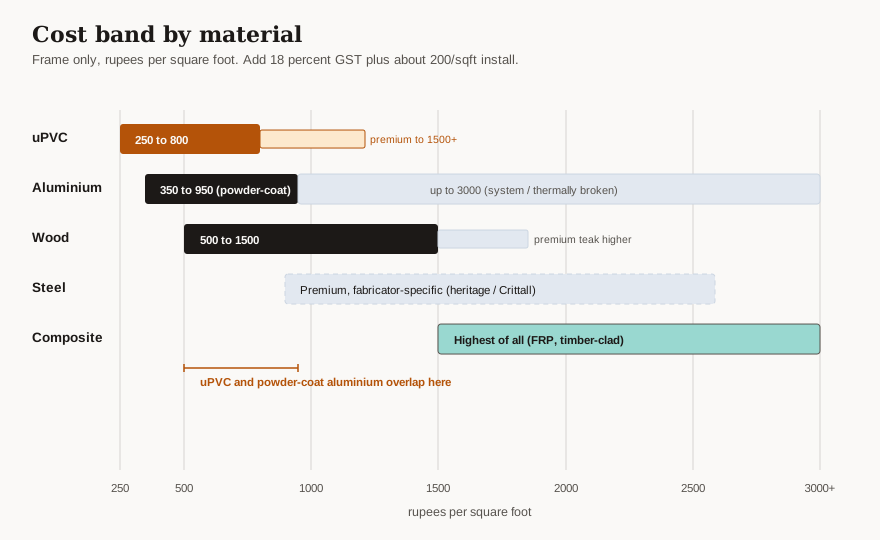
Here is every material side by side. All prices are indicative for June 2026 in rupees per square foot of window — add 18 percent GST and roughly ₹200 per square foot for installation. Always confirm against itemised fabricator quotes.
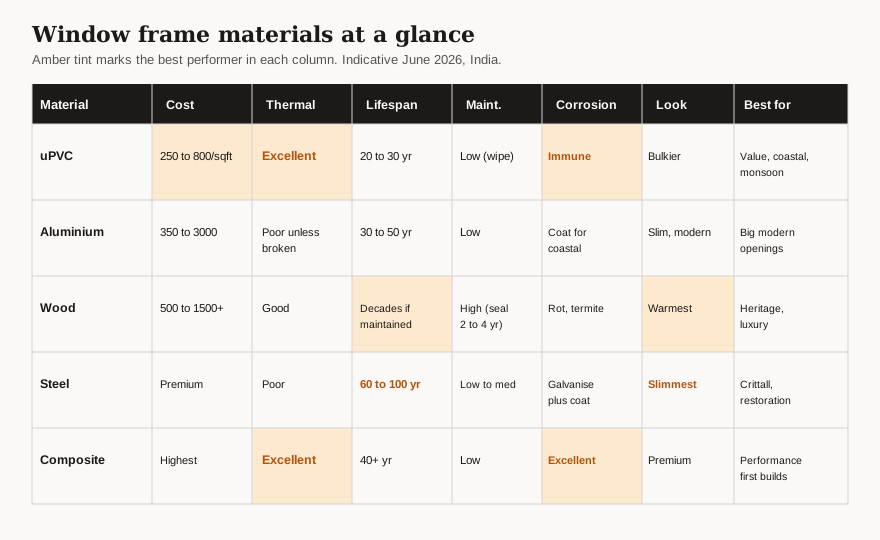
| Material | Cost (₹/sqft) | Thermal insulation | Lifespan | Maintenance | Corrosion / rot | Look and sightlines | Best for |
|---|---|---|---|---|---|---|---|
| uPVC | 250 to 800 (premium 900 to 1,500+) | Excellent | 20 to 30 yr | Low (just wipe) | Corrosion-proof, non-metallic | Good, bulkier frames | Budget plus thermal priority, coastal, monsoon |
| Aluminium | 350 to 3,000 (powder-coat 450 to 950) | Poor unless thermally broken | 30 to 50 yr | Low | Needs coating in coastal | Slimmest after steel, modern, largest glass | Big openings, modern look, durability |
| Wood (timber) | 500 to 1,500+ (premium teak much higher) | Good | Decades if maintained | High (seal or paint every 2 to 4 yr) | Rot and termite risk | Warmest, classic, premium | Heritage, luxury, where look leads |
| Steel (galvanised) | Premium, fabricator-specific | Poor (conducts) | 60 to 100 yr | Low to medium | Must galvanise plus coat | Slimmest of all, heritage or industrial | Restoration, Crittall-style, max glass |
| Composite / FRP | Highest | Excellent | 40+ yr | Low | Excellent | Premium, stable | Long-horizon, performance-first builds |
Read the cost column as a band, not a fixed price. uPVC and powder-coated aluminium overlap heavily in the mid range; the gap only opens at the premium end.
What each material actually is
uPVC is an unplasticised PVC profile with multiple hollow chambers, steel-reinforced inside for larger spans. Those air chambers are why it insulates so well against heat and noise, and being non-metallic it simply cannot rust or react with salt — which is why coastal Goa and monsoon Kerala love it. Its weaknesses are real but manageable: low-grade profiles can expand or warp above 45 degrees Celsius, and cheap formulations degrade in UV. Insist on lead-free, high-UV-stabiliser, heat-stabilised grades and a known brand (Fenesta, Weatherseal, AIS, Veka, Koemmerling). Lifespan 20 to 30 years. Full depth at uPVC windows in India.
Aluminium is slim, very strong and lets you span the largest openings with the least visible frame — the modern look. The catch is physics: bare aluminium conducts heat and cold, so for hot climates you need a thermal break (a polyamide strip splitting the profile) plus a double-glazed unit. Finishes are powder-coat or anodised; on the coast specify marine-grade. Lifespan 30 to 50 years. See aluminium windows in India.
Wood is the warm, classic, traditional Indian frame. It does not rust, but it swells, warps, rots and fades under rain and sun, and termites like it — so it needs sealing, polishing or repainting every two to four years. Teak is the gold standard (natural oils, water-resistant, humidity-tolerant); Sal, Deodar and Meranti trade some performance for price. Well-maintained teak outlasts generations; neglected wood fails in a few monsoons. See wooden windows in India.
Steel gives the slimmest sightlines of all — the heritage and industrial "Crittall" look with maximum glass. Mild steel rusts, so it must be hot-dip galvanised then powder-coated; done right it lasts 60 to 100 years. It is heavy, conducts heat, and few fabricators make it well. Niche but spectacular. See steel windows in India.
Composite means engineered combinations: timber-aluminium clad (warm wood inside, weatherproof aluminium outside), uPVC-aluminium, or pultruded fibreglass / FRP (glass-fibre plus resin — no rot, no warp, no thermal break needed, 40+ year life). It delivers the best of durability and insulation but costs the most and has the fewest Indian fabricators. See composite windows in India.
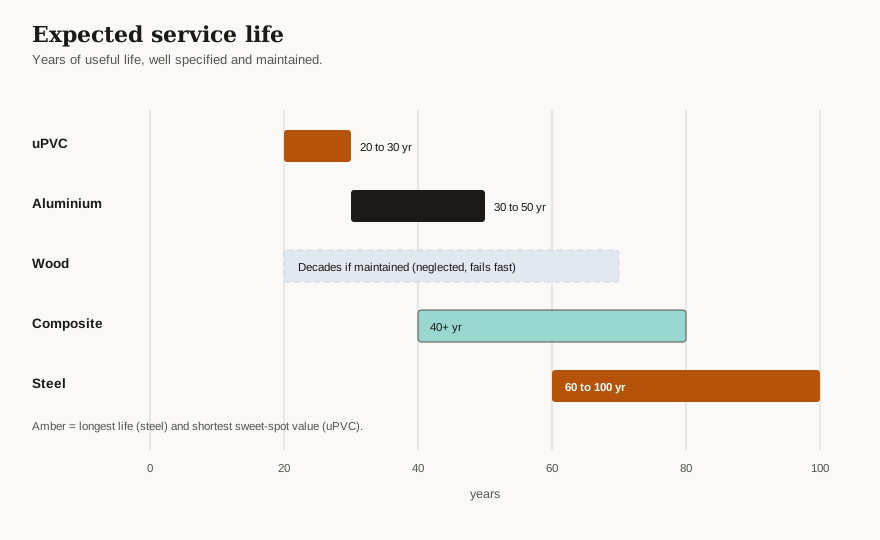
| Material | Lifespan | Maintenance cadence | Corrosion / rot |
|---|---|---|---|
| uPVC | 20 to 30 yr | Wipe clean, no refinishing | Immune |
| Aluminium | 30 to 50 yr | Wipe; recoat decades out | Pits in coastal salt if uncoated |
| Wood | Decades if maintained | Seal or paint every 2 to 4 yr | Rots and warps; termite risk |
| Steel | 60 to 100 yr | Touch up coating | Rusts fast if galvanising fails |
| Composite | 40+ yr | Minimal | Excellent |
A deeper head-to-head on durability lives at window material durability comparison.
The decision framework
No single material wins outright — the right answer depends on six levers.
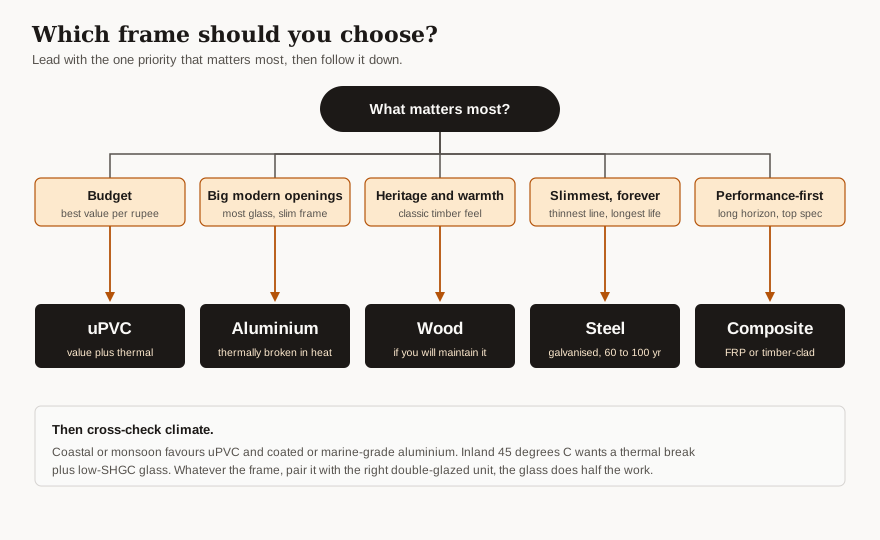
By budget. uPVC is the value champion for thermal performance per rupee. Powder-coated aluminium overlaps for modern looks. Wood, steel and composite are premium. Note that wood's true cost over ten years runs 2.5 to 4 times uPVC once you add repainting — the sticker price hides the maintenance bill.
By climate. This is the lever most people underrate.
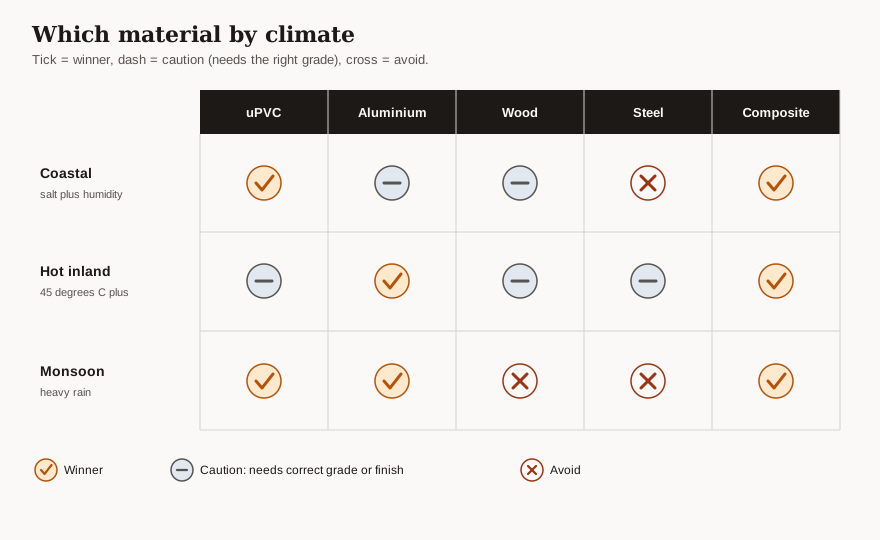
| Climate | Winners | Avoid | Why |
|---|---|---|---|
| Coastal (salt plus humidity) | uPVC; marine-grade powder-coated or anodised aluminium | Bare aluminium, un-galvanised steel | Salt corrodes metal; uPVC is non-metallic |
| Hot inland (45 C+) | Thermally-broken aluminium plus low-SHGC DGU; heat-grade uPVC | Low-grade uPVC (warps); bare aluminium | Need thermal control and structural heat tolerance |
| Monsoon (heavy rain) | uPVC; coated aluminium | Untreated wood (swells); un-galvanised steel | Water ingress, swelling and rust are the enemies |
Material-specific climate guides go deeper: best window material for coastal India, best window material for hot climate, and best window material for monsoon.
By thermal priority. If a low electricity bill matters most, uPVC and composite insulate best by frame, but remember the glass does at least half the work. Under the Eco-Niwas Samhita 2018, your wall-envelope RETV must stay at or below 15 W/m2 for composite, hot-dry, warm-humid and temperate zones, and windows are the biggest lever on that number. More glass (higher window-to-wall ratio) forces you toward lower-SHGC, spectrally selective glazing — so pair any frame with the right DGU.
By look. Steel gives the slimmest profile, aluminium the next slimmest with the biggest glass, wood the warmest character, composite a clean premium finish, and uPVC the bulkiest sightlines.
By maintenance appetite. uPVC, aluminium and composite are near zero-effort. Steel needs occasional coating care. Wood demands genuine, ongoing commitment.
By lifespan horizon. For a forever home, steel (60 to 100 years) and composite (40+) reward patient budgets. For a 20 to 30 year horizon, uPVC is the sweet spot. Aluminium sits comfortably in the middle at 30 to 50.
Two close calls people ask about
The two most common toss-ups each have a dedicated guide, because the verdict flips with priorities:
- uPVC vs aluminium — thermal and value versus span and slimness. See uPVC vs aluminium windows.
- Wood vs aluminium — warmth and tradition versus low maintenance and strength. See wooden vs aluminium windows.
Standards to quote to your fabricator
- IS 1948:2024 governs aluminium doors, windows and ventilators — design, materials, construction, performance and durability. Ask whether the system conforms.
- Eco-Niwas Samhita 2018 sets the residential energy envelope: RETV at or below 15 W/m2 and minimum VLT by window-to-wall ratio band.
- The National Building Code 2016 rule of thumb wants openable inlet area of at least one-tenth of floor area for habitable rooms — a type decision, but it constrains which materials suit which opening.
Choose the material for the next thirty years, not the next thirty days. The cheapest frame at install is rarely the cheapest over its life.
The bottom line
Pick uPVC for the best all-round value, thermal comfort and coastal or monsoon resilience. Pick aluminium for big modern openings and slim strength, thermally broken in the heat. Pick wood when warmth and heritage lead and you will maintain it. Pick steel for slimmest-of-all heritage glamour and a near-permanent life. Pick composite when performance and longevity outrank price. Then go back to the window types pillar to choose the shape and operation that fits each room — material and type, decided together.
References
- uPVC windows price per square foot 2026 cost guide (Building and Interiors): https://buildingandinteriors.com/upvc-windows-price-per-sq-ft-india-2026-cost-guide/
- Window frame material comparison, wood vs uPVC vs aluminium (PlyPrice): https://www.plyprice.com/blog/window-frame-material-comparison
- Types of wood for windows in India (GreenFortune): https://thegreenfortune.com/types-of-wood-for-windows/
- uPVC windows vs aluminium for coastal homes (Aparna Enterprises): https://www.aparnaenterprisesltd.com/blog/upvc-windows-vs-aluminium-for-coastal-homes/
- IS 1948, aluminium doors, windows and ventilators (BIS): https://law.resource.org/pub/in/bis/S03/is.1948.1961.pdf
- Eco-Niwas Samhita 2018 (BEE / ECBC): https://ecbc.in/econiwas.html
Export this guide
Related Guides — Deep-dive reading
Aluminium Windows Guide (India): Slim, Strong, and the Thermal-Break Question
Why aluminium gives you the most glass and least frame, why bare metal conducts heat, and how a polyamide thermal break plus DGU fixes it.
Windows & GlazingWooden vs Aluminium Windows (India): Warmth and Tradition vs Strength and Low Upkeep
A direct duel between timber and aluminium, side-by-side on cost, warmth, thermal, spans, lifespan, maintenance and climate fit, with choose-if verdicts.
Windows & GlazingAluminium Doors in India: Profiles, Glazing, Cost & uPVC vs Steel (2026)
Framed glazed aluminium doors — sliding, openable and French-style — for balconies, utility and modern facades: powder-coat vs anodised vs wood-finish profiles, IS 733/1285 sections, thermal-break options and ₹/sq ft costs.
Home Doors & EntrancesRelated Tools — Try Free
Window Material Comparison Tool
Compare uPVC, aluminium, wood, steel and composite windows on cost, life, upkeep and insulation.
CompareDoor Material Comparison Tool
Compare 2–4 door materials on cost, durability, maintenance, security and moisture resistance.
Comparison ToolWindow Maintenance Cost Calculator
Estimate annual window upkeep by frame material — yearly, per-window and 5-year cost.
Window Calculator