
Solar Control Glass in India: Cutting Heat Without Killing the Daylight
The performance family that cuts solar heat while keeping daylight: spectrally selective Low-E, body-tinted and reflective glass, the SHGC, VLT and LSG that rank them, where it is essential, and the cost on top of your frame.
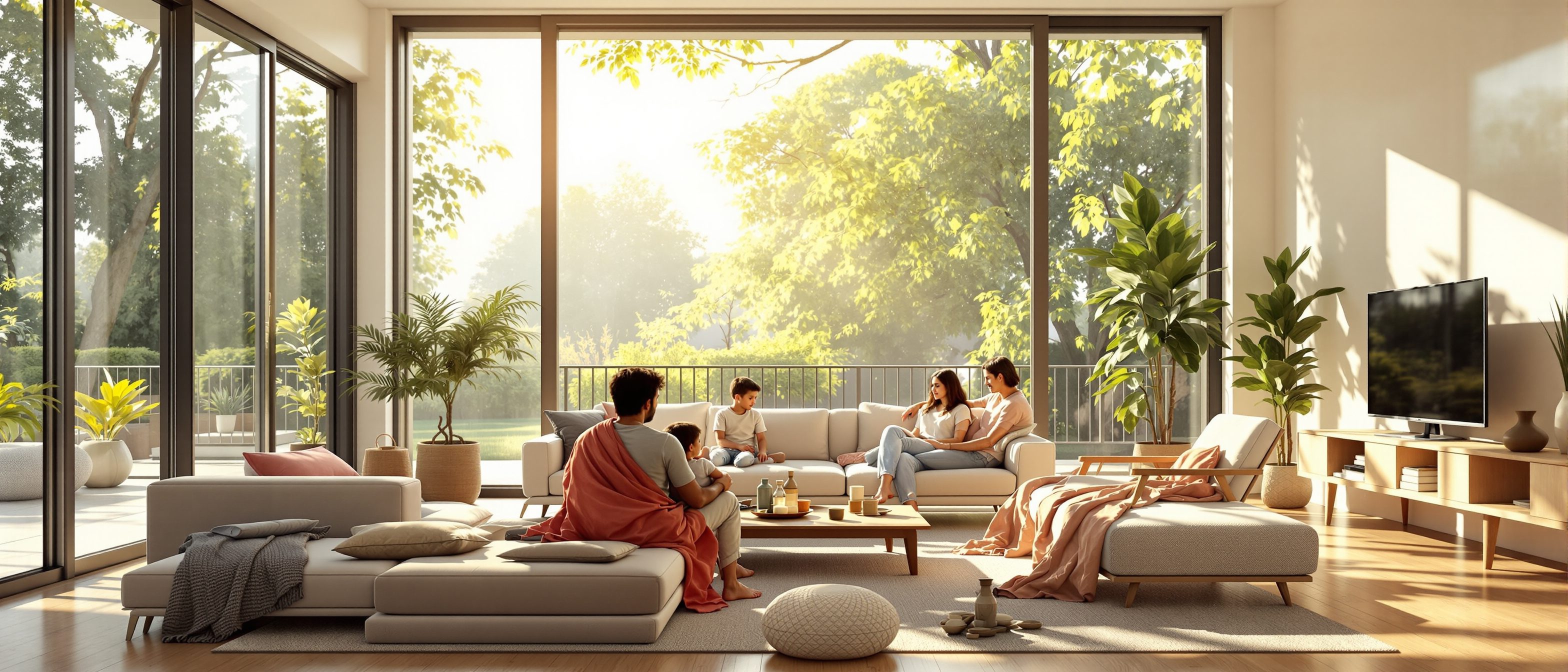
In an Indian summer the question is never whether the sun is strong, it is whether your glass lets the heat in but keeps the light. Those are two different things, and ordinary glass cannot tell them apart. Solar-control glass is the family of glazing engineered to do exactly that split: cut the solar heat that bakes a room while still passing the daylight that makes it pleasant.
This guide is the category overview. It explains the goal solar-control glass chases, the three members of the family, how the good ones differ from a plain dark tint, and where the spend is essential in a 45-degree-C climate. For each member there is a deeper guide; this is the map of the whole family.
The goal: cut the heat, keep the light
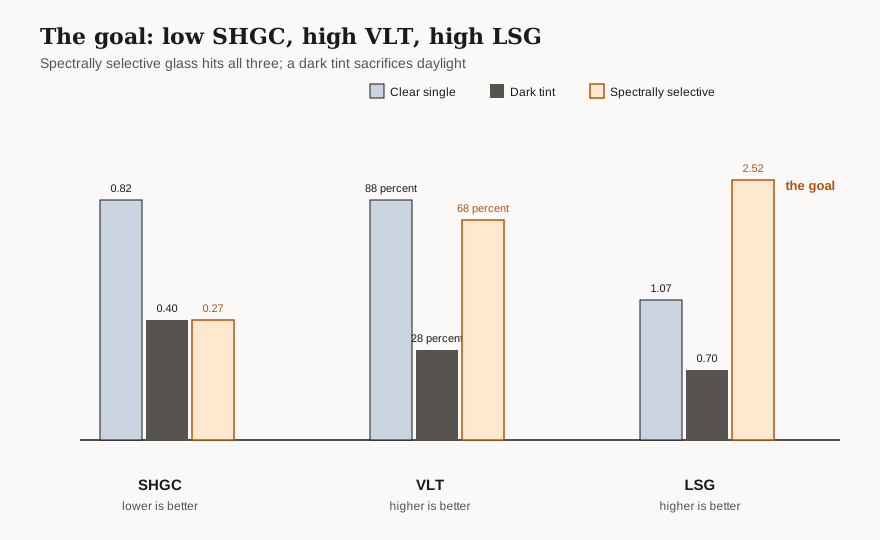
Glass performance is a four-number language, and solar control is about pulling two of those numbers in opposite directions at once.
| Metric | What it means | Direction you want in hot India |
|---|---|---|
| SHGC | Solar Heat Gain Coefficient (0 to 1): fraction of solar heat admitted | LOWER |
| VLT | Visible Light Transmittance (0 to 1): daylight passing | HIGH enough for a bright room and to clear the code |
| U-value | Heat conduction; insulation | LOWER (matters more with AC) |
| LSG | Light-to-Solar-Gain (VLT divided by SHGC) | HIGHER |
The single number that captures the whole ambition is LSG. A high LSG means a lot of daylight admitted for every unit of solar heat let in. That is the spectrally selective ideal: a bright room that is not a hot room.
Anyone can cut heat by making the glass darker. The skill of solar-control glass is cutting heat while keeping the room bright, and LSG is the score that tells you whether the glass actually managed both.
How solar control differs from a plain tint
This is the distinction that decides whether you spend well or badly, so it is worth being precise about.
A plain body-tint absorbs the sun. Bronze, grey, green or blue glass soaks up part of the solar spectrum, which does cut the heat reaching the room, but the absorbed energy heats the glass itself, and a hot pane re-radiates warmth inwards. Worse, a tint dims everything equally: it takes daylight down by roughly the same amount it takes heat down, so its LSG stays low. You get a darker, dimmer room that is only partly cooler.
A spectrally selective coating reflects the right part of the spectrum. Sunlight is not one thing: it is visible light (the daylight you want) plus near-infrared (heat you do not). A spectrally selective Low-E coating is tuned to bounce the infrared back outdoors while letting visible light through. So heat is rejected without the daylight being sacrificed, and LSG stays high.
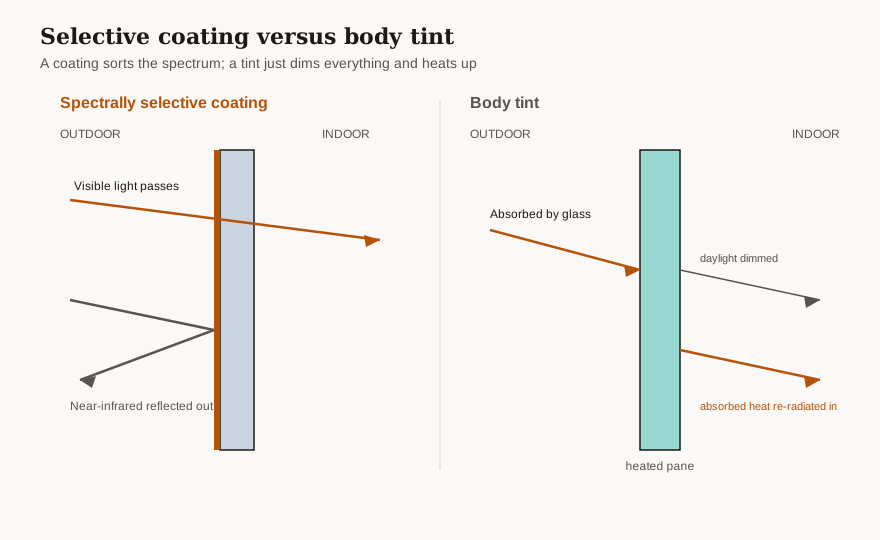
That is the core idea: a tint subtracts, a selective coating sorts. Both reduce heat, but only the coating does it without killing the daylight.
The three members of the family
Solar control is a family, not a single product. Three approaches live under the heading, and they are not equal.
1. Spectrally selective Low-E (solar)
The performer. A microscopically thin metallic-oxide coating, the same Low-E technology used for insulation, but tuned for the solar spectrum so it reflects near-infrared heat while passing visible light. It delivers the lowest SHGC for the highest LSG, and it keeps the glass looking like clear glass. This is what people mean by "high-performance solar-control glass." It belongs sealed inside a DGU. For the full explainer on emissivity, soft-coat versus hard-coat, and the four metrics, see Low-E glass; that guide is the deep dive on the coating, while this one places it in the solar-control family.
2. Body-tinted
The budget member. Coloured-through glass that absorbs heat and glare and adds a measure of daytime privacy. Cheaper than any coating, but it dims the room, the pane heats up and re-radiates inward, and its LSG is poor. Useful where budget is tight or where a degree of glare control and tint colour is wanted on a less critical face.
3. Reflective
The look-and-glare member. A metallic coating gives a mirror finish that reflects heat and glare and provides daytime one-way privacy, because the side that is brighter sees a mirror. It cuts heat well, but it cuts daylight too, can look dated, and the privacy reverses at night: once the inside is lit and the outside is dark, people can see in. A subset of solar control driven as much by appearance as by performance. For the full treatment of finishes, the night-reversal trap and where reflective earns its place, see reflective glass for windows; this guide only positions it among the alternatives.
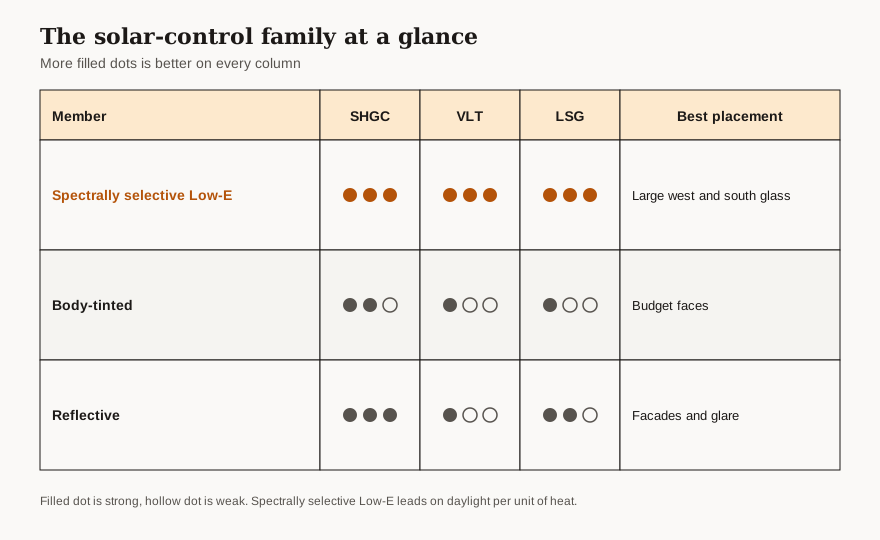
| Member | How it works | SHGC | VLT | LSG | Best for |
|---|---|---|---|---|---|
| Spectrally selective Low-E (solar) | Reflects near-infrared, passes visible | Lowest | High | Highest | Large, west and south glass; the default high-performance pick |
| Body-tinted | Absorbs heat and glare | Medium | Lowered | Low | Tight budgets; glare control on minor faces |
| Reflective | Mirror coating reflects heat and glare | Low | Lowered | Medium | Facades, glare-heavy west glass, daytime privacy |
Where solar control is essential
Not every window needs it, but some windows are not optional.
- Large glass areas. A small north window admits little heat; a floor-to-ceiling or picture window on a sun-facing wall is a heater. The bigger the glass, the more the SHGC matters.
- West and south orientation. West glass catches the brutal low afternoon sun that overhangs cannot block; south glass takes the long midday load. These faces are where solar control pays back fastest.
- Hot-dry and composite India. Where summer hits the mid-40s, clear single glazing on a sun-facing wall is a mistake you feel by 3 pm. The decision glass for that climate is a low-SHGC spectrally selective Low-E in a DGU. The named recommendation, with shading and orientation advice, lives in the best glass for a hot climate; this guide explains the category that the pick belongs to.
External shading still helps and should be used alongside, not instead of, good glass: an overhang blocks the high summer sun, but only the glass works on the low western sun and on every orientation at once.
Pair it with a DGU
Solar-control glass and double glazing are a package, not a choice. The best member, soft-coat spectrally selective Low-E, is delicate and must sit sealed inside a Double Glazed Unit (DGU), with the coating facing the air gap. The DGU also adds the insulation (lower U-value) that the coating alone does not, and an argon fill with a warm-edge spacer pushes the U-value lower still. In a hot AC-run home this combination both rejects the sun and slows conduction, so the cooling holds. For where single, double and triple glazing each pay back, see single versus double glazing.
Eco-Niwas Samhita: why bigger glass forces solar control
This is not only comfort, it is code. Eco-Niwas Samhita 2018 (ENS), India's residential energy code, requires the wall envelope to hit an RETV (Residential Envelope Transmittance Value) of 15 W per m2 or less in composite, hot-dry, warm-humid and temperate zones. Windows are the biggest single lever on RETV. ENS also sets a minimum VLT that falls as your window-to-wall ratio (WWR) rises:
| WWR band | Minimum VLT |
|---|---|
| 0.00 to 0.30 | 0.27 |
| 0.31 to 0.40 | 0.20 |
| 0.41 to 0.50 | 0.16 |
| 0.51 to 0.60 | 0.13 |
| 0.61 to 0.70 | 0.11 |
The tension is the whole reason solar control exists. The more glass you have, the lower the SHGC you must hit to stay under RETV, yet you must still clear the VLT floor. A dark tint or a heavy reflective can cut SHGC but pushes VLT below the line; only a high-LSG spectrally selective glass cuts heat hard while keeping daylight above the minimum. As glazing area grows, solar control stops being a comfort upgrade and becomes the way to stay compliant.
What it costs
Glass is priced on top of the frame, never instead of it. Indicative June 2026 figures, before brand and size effects:
| Member | What you get | Indicative add (per sqft) |
|---|---|---|
| Body-tinted | Coloured-through glass, absorbs heat | Modest add over plain glass |
| Reflective | Mirror coating, heat and glare cut | Moderate add |
| Spectrally selective Low-E (solar) | The high-performance pick; sits in a DGU | From around ₹100 to ₹150, rising with grade and DGU build |
A few cost notes:
- All glass prices attract 18 per cent GST on top.
- The Low-E member is sold as part of a DGU, so price the unit, not the coating alone; an argon fill is a small premium for a real U-value gain.
- These are indicative figures. Confirm with itemised quotes from fabricators, because city, brand, pane thickness and size all move the number.
The window is three decisions stacked: the frame material, the window type, and the glass. Solar control is the glass decision for any large or sun-facing pane in hot India, and it sits on top of whatever frame and shape you have already chosen.
How to choose, and where this guide sits
Start the glass decision at the types of glass for windows pillar, then pair it with your window frame material and window type choices. Within solar control:
- For the coating science (emissivity, soft versus hard coat, the four metrics), read Low-E glass; the solar Low-E is the family's best member.
- For the mirror finish, daytime privacy and the night-reversal trap, read reflective glass.
- For the named hot-climate recommendation, read the best glass for a hot climate.
- For glazing as a whole energy system across single, double and triple builds, read energy-efficient glass, the umbrella above this category.
The bottom line
Solar-control glass is the family that cuts solar heat while keeping daylight, scored by LSG. A plain tint subtracts both heat and light; a spectrally selective Low-E coating sorts them, rejecting infrared while passing visible light. For any large, west or south window in hot India, fit a low-SHGC, high-LSG spectrally selective Low-E in a DGU, add external shading, and you satisfy both comfort and Eco-Niwas Samhita, for a glass add starting around ₹100 to ₹150 per sqft, plus GST, on top of your frame.
References
- Best glass for windows in India 2026 (IndiFrame): https://indiframe.com/blog/best-glass-for-windows-in-india
- Types of Low-E and solar control glass (FG Glass India): https://fgglass.com/blogs-details/types-of-low-e-glass
- Glass and window solutions for homes (Saint-Gobain India): https://in.saint-gobain-glass.com/knowledge-center/glass-and-windows
- Low-E glass and energy efficiency (Guardian Glass): https://www.guardianglass.com/eu/en/our-glass/glass-types/low-e-glass
- Low-E glass rating, U-factor, SHGC, VT (Mannlee): https://www.mannleecw.com/what-is-low-e-glass-rating/
- Eco-Niwas Samhita 2018 (BEE/ECBC): https://ecbc.in/econiwas.html
Export this guide
Related Guides — Deep-dive reading
Energy-Efficient Facades in India: How the Building Skin Cuts Your Cooling, Heating & Lighting Bills
How a building facade drives cooling, heating and lighting energy in India, the three levers of solar-heat-gain control, insulation and daylighting, U-value, SHGC, VLT and WWR in plain terms, ECBC and Eco-Niwas expectations, and real Indian green buildings.
Building FacadesFloor-to-Ceiling Windows (India): Maximum Light, and the Heat Trade-Off
Full-height glazing for Indian homes — how to win the daylight and view without losing the energy code, comfort or safety.
Windows & GlazingLow-E Glass Guide (India): The Single Biggest Energy Upgrade for Your Windows
How a microscopic metallic-oxide coating reflects radiant heat while passing daylight, soft-coat versus hard-coat, the metrics it moves, and what it costs on top of your frame.
Windows & GlazingRelated Tools — Try Free
Brise-Soleil Visualizer
Interactive horizontal-louvre cut-off angle calculator — sun altitude, louvre depth, and spacing inputs with a live shadow preview. Computes θ = arctan(spacing/depth) for façade shading, ECBC envelope compliance, hospital daylight design, and tropical sun-control detailing.
Sun Shading ToolCross-Ventilation Analyzer
Estimate airflow and air changes per hour (ACH) from room size, window areas, layout, and local wind — with NBC 2016 Part 8 compliance check.
Ventilation CalculatorWindow Energy Savings Calculator
Compare standard glazing vs Low-E and DGU windows — annual cooling savings, 10-year savings and payback.
Window Calculator