
Reflective Glass Windows in India: Mirror Looks, Heat and Daytime Privacy
How mirror-finish glass rejects heat and glare, gives daytime one-way privacy, and why that privacy reverses at night
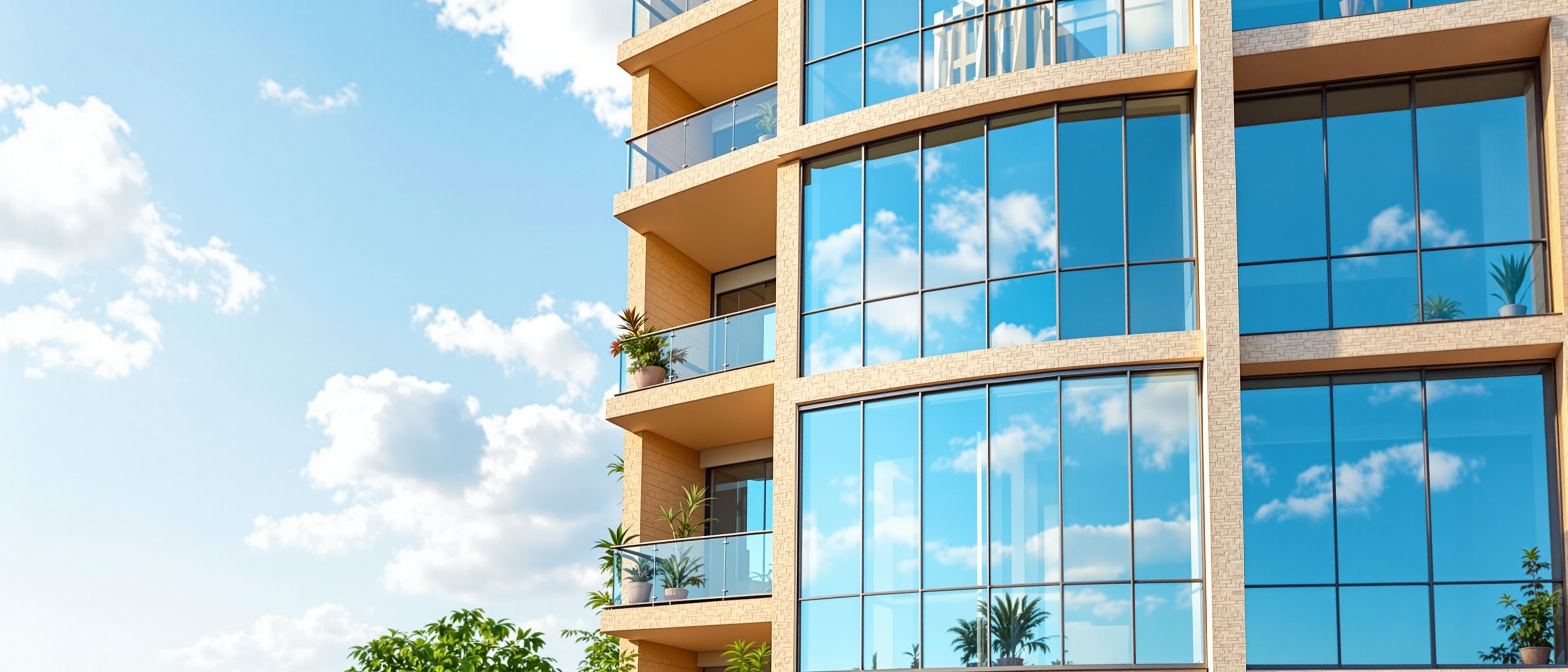
Reflective glass is the mirror-finish glazing you see on shop fronts, office towers and increasingly on west-facing homes. A wafer-thin metallic coating turns the pane into a one-way mirror in daylight: it bounces back solar heat and glare, and from outside it reads as a silvery, bronze or blue mirror while you see out clearly. It is the most visually distinctive member of the solar-control family. But it comes with one rule every homeowner must understand before buying: the privacy effect reverses after dark.
This guide explains how reflective glass works, where it earns its place in an Indian home, what it costs, and the night-time catch that surprises people.
What reflective glass actually is
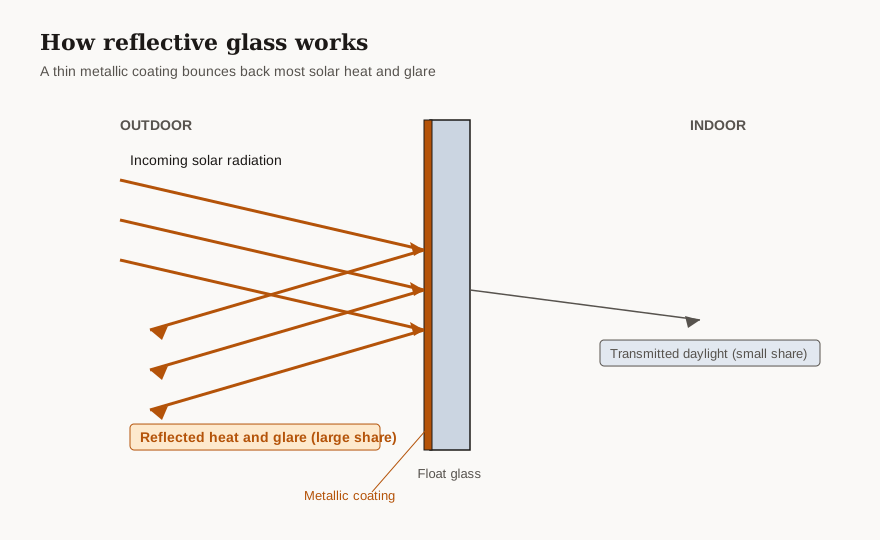
Reflective glass is float glass with a metallic or metal-oxide coating applied either during manufacture (pyrolytic hard-coat) or by sputtering in a vacuum (soft-coat). That coating reflects a large share of incoming solar radiation instead of letting it pass through or absorbing it. The result is lower SHGC (less solar heat admitted) and a strong cut in glare, paired with a mirrored exterior appearance.
Reflective glass is a subset of solar-control glass, not a separate category. It is the specific mirrored, metallic-coated member of the family.
This matters for how you shop. Solar-control glass is the umbrella term for any glazing that cuts solar heat while keeping daylight, and it includes spectrally selective Low-E glass and body-tinted glass as well as reflective. Our broader explainer on solar-control glass for India covers the whole family and the performance metrics; this guide drills into reflective specifically, because its mirror finish and one-way-privacy behaviour deserve their own treatment.
The daytime one-way mirror — and the night reversal
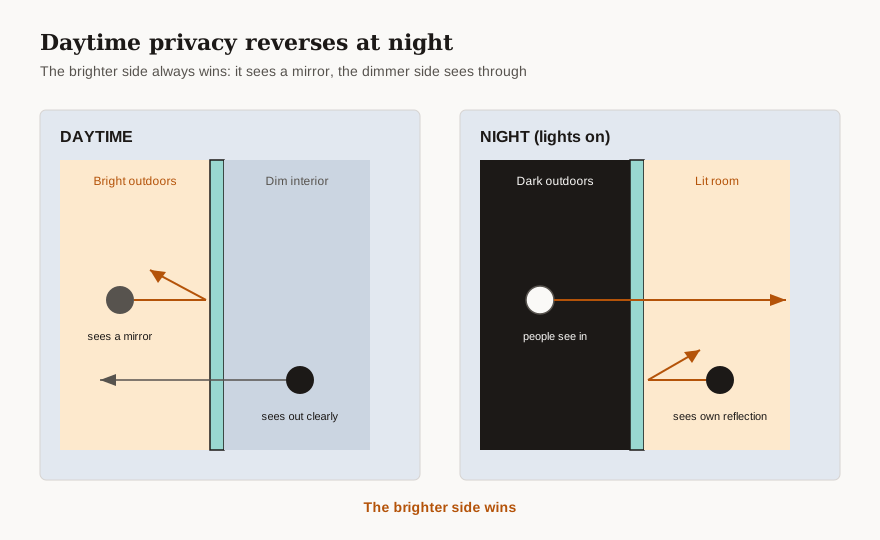
The mirror effect is not magic; it is brightness. A coated pane reflects a fixed fraction of the light hitting it. During the day, the outdoor side is far brighter than your indoor side, so an outside viewer mostly sees the strong reflected daylight (a mirror), while you, looking from the dimmer interior toward the bright outdoors, see straight through.
After sunset this flips. Once your interior lights are on and the outdoors is dark, the indoor side becomes the brighter side. Now the reflection works against you: from the street, a lit room behind reflective glass is clearly visible, while you see mostly your own reflection.
Reflective glass gives daytime privacy only. At night, with lights on, people outside can see in — it is a one-way mirror that points the other way after dark.
That is why reflective glass is day-only privacy. If you need round-the-clock privacy in a bedroom or bathroom, reflective glass alone will not do it — pair it with blinds or curtains, or choose a 24-hour solution. Our guide to privacy glass solutions for India compares the full menu: frosted and textured glass (permanent, 24-hour), applied films, and switchable PDLC (privacy on demand at a switch). Reflective sits in the day-only tinted-and-reflective bracket there; come to this guide for its heat-and-look story, and to that one to choose across all privacy options.
Heat, glare and daylight — the trade-offs
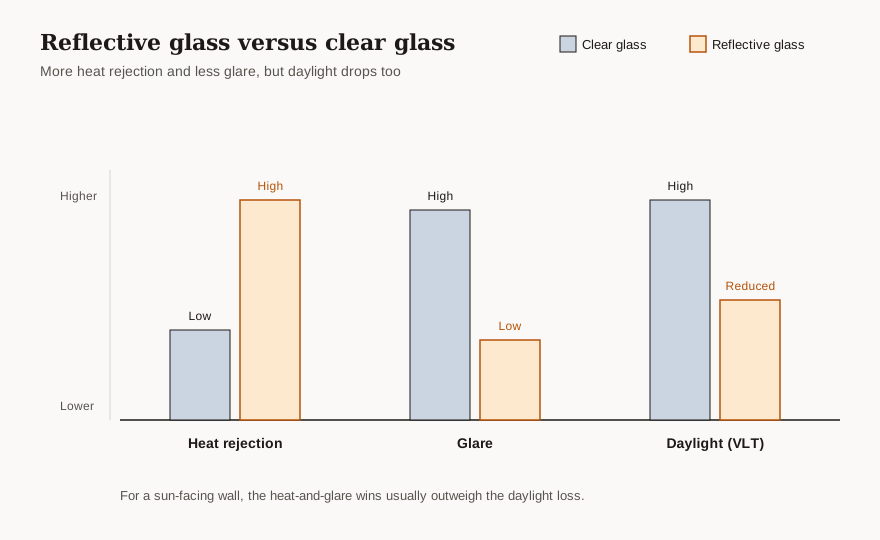
Reflective glass is genuinely good at rejecting solar heat and killing glare, which is why it suits harsh sun-facing elevations. The trade-off is daylight: by reflecting so much, it also reduces VLT (visible light transmittance), so interiors can feel darker, and heavier mirror finishes can look gloomy or dated.
The metric that captures the balance is LSG (Light-to-Solar-Gain) = VLT divided by SHGC. A higher LSG means more daylight per unit of heat let in — the spectrally selective ideal. Many reflective glasses have a modest LSG (they cut heat and light together), whereas a good spectrally selective Low-E can deliver a higher LSG. So if daylight matters and the look is secondary, Low-E may serve you better; if you want the mirror appearance and strong glare control on a glary west wall, reflective is the pick.
| Property | What it means | Reflective glass tendency |
|---|---|---|
| SHGC | Solar heat admitted (lower is better in heat) | Low — strong heat rejection |
| VLT | Daylight passing through | Reduced — interiors can feel darker |
| LSG (VLT/SHGC) | Daylight per unit of heat | Modest — often lower than spectrally selective Low-E |
| Glare | Brightness discomfort | Strongly cut |
| Privacy | View blocking | Daytime only — reverses at night |
Finishes and types
Reflective glass comes in several tints, set by the coating chemistry. The choice is mostly aesthetic, with small performance differences.
| Finish | Look | Notes |
|---|---|---|
| Silver | Strong mirror, classic | Highest reflectivity; can look corporate or dated on homes |
| Blue | Cool, contemporary | Popular on residential facades; softer than silver |
| Green | Natural, calm | Good colour rendering; reads less "office" |
| Bronze / gold | Warm, traditional | Older look; pairs with stone and warm cladding |
Coating type also matters: hard-coat (pyrolytic) reflective is tougher and can be used single-glazed; soft-coat (sputtered) generally performs better but is best sealed inside a double-glazed unit (DGU) to protect the coating. For a hot Indian west facade, reflective glass set in a DGU with an air or argon gap adds insulation and acoustics on top of the heat rejection.
Where reflective glass suits an Indian home
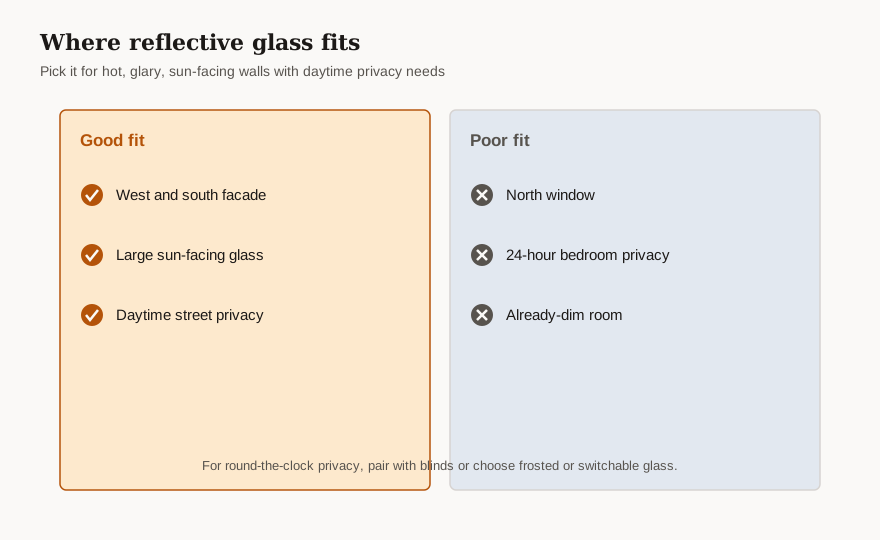
Reflective glass earns its keep on the harshest, glariest, most exposed glazing — and on windows where daytime street privacy is welcome.
- West and south-west facades that take brutal afternoon sun and glare.
- Large picture or floor-to-ceiling windows on sun-facing walls, where the heat and glare load is highest.
- Privacy-sensitive rooms facing the street or a neighbour — living rooms, studies — where daytime mirror privacy is a bonus (remember to add blinds for night).
- Contemporary facades where the mirror look is a deliberate design choice.
It is a poor fit for north-facing windows (little solar gain to reject, and you lose daylight for nothing), for bedrooms and bathrooms needing 24-hour privacy, and for rooms that are already dim. For the full picture-by-climate logic on choosing glass for 45-degree-C heat, the decision glass is usually low-SHGC spectrally selective Low-E in a DGU; reflective and solar-control are the call for big west and south glass.
Reflective glass is one of three separate window decisions. The shape and operation (casement, sliding, fixed) is covered in our types of home windows guide; the frame material (uPVC, aluminium, wood) is its own choice; and the glass itself — including reflective — is anchored by our pillar on types of glass for windows in India. Get all three right rather than over-spending on one.
Cost
Reflective glass is priced on top of the frame, like all performance glass. It is more affordable than Low-E or smart glass, sitting in a similar band to body-tinted glass with a modest premium for the coating. Single-glazed reflective is cheaper; a reflective DGU costs more but adds insulation and acoustics. All figures attract plus 18 per cent GST and are indicative for June 2026 — confirm with itemised quotes from fabricators.
| Option | Indicative add-on (glass only) | Notes |
|---|---|---|
| Reflective single glazing | Low premium over clear | Day privacy, heat and glare cut; least insulation |
| Reflective in DGU (air) | Moderate | Adds thermal and acoustic insulation |
| Reflective in DGU (argon, Low-E hybrid) | Higher | Best all-round on hot west facades |
The verdict
Reflective glass is a strong, affordable heat-and-glare rejecter with a distinctive mirror look and a useful daytime-privacy bonus — best deployed on hot, glary west and south facades and large sun-facing windows. Just buy it with eyes open: it dims your daylight, the mirror look can date, and the privacy reverses the moment you switch the lights on at night. Match the finish to your facade, set it in a DGU on hot walls, and add blinds where you need privacy after dark.
References
- Types of Low-E and solar control glass (FG Glass India): https://fgglass.com/blogs-details/types-of-low-e-glass
- Glass and window solutions for homes (Saint-Gobain India): https://in.saint-gobain-glass.com/knowledge-center/glass-and-windows
- Best glass for windows in India 2026 (IndiFrame): https://indiframe.com/blog/best-glass-for-windows-in-india
- Low-E glass and energy efficiency (Guardian Glass): https://www.guardianglass.com/eu/en/our-glass/glass-types/low-e-glass
- Eco-Niwas Samhita 2018 (BEE/ECBC): https://ecbc.in/econiwas.html
Export this guide
Related Guides — Deep-dive reading
Floor-to-Ceiling Windows (India): Maximum Light, and the Heat Trade-Off
Full-height glazing for Indian homes — how to win the daylight and view without losing the energy code, comfort or safety.
Windows & GlazingLow-E Glass Guide (India): The Single Biggest Energy Upgrade for Your Windows
How a microscopic metallic-oxide coating reflects radiant heat while passing daylight, soft-coat versus hard-coat, the metrics it moves, and what it costs on top of your frame.
Windows & GlazingSolar Control Glass in India: Cutting Heat Without Killing the Daylight
The performance family that cuts solar heat while keeping daylight: spectrally selective Low-E, body-tinted and reflective glass, the SHGC, VLT and LSG that rank them, where it is essential, and the cost on top of your frame.
Windows & GlazingRelated Tools — Try Free
Glass Selection Tool
Single vs double (DGU) vs triple glazing and the right glass type for your climate, priority and sun.
Window ToolBrise-Soleil Visualizer
Interactive horizontal-louvre cut-off angle calculator — sun altitude, louvre depth, and spacing inputs with a live shadow preview. Computes θ = arctan(spacing/depth) for façade shading, ECBC envelope compliance, hospital daylight design, and tropical sun-control detailing.
Sun Shading ToolWindow Treatment Selector
Curtains, blinds or a layered system? Answer five questions about your room and get a specific recommendation.
Selector