

STP for Villas: Do You Need One, and Which Type Fits a Single Home?
When an individual villa actually needs a sewage treatment plant instead of a septic tank, the tiny capacities involved, and how to choose a compact MBBR or extended-aeration package that fits the plot, the budget and the garden.
Ask ten villa owners whether their home needs a sewage treatment plant and you will get ten different answers — most of them wrong. For decades a single independent house in India dealt with its sewage the way its grandparents did: a septic tank buried in the yard and a soak pit beside it. That quiet arrangement is now colliding with two new realities — pollution-control rules that reach further down the size ladder every year, and villa plots that sit inside gated layouts where a septic tank is simply not permitted. So the honest answer to "do I need an STP for villas?" is: it depends, and this guide is about knowing which side of the line your home falls on.
A septic tank stores and partly digests your sewage; an STP actually cleans the water. For a standalone villa the real question is not "which is better" but "which one am I allowed to use, and can I put the treated water to work?"
The wastewater a single villa actually produces
Before choosing any technology, it helps to picture the flow. A villa is a small, spiky, intermittent source of sewage — nothing like the steady river an apartment block produces.
- Low volume. A family of four to six generates roughly 135 litres per person per day of water use, of which about 80% returns as sewage. That lands most villas between 0.5 and 3 kilolitres a day (KLD) — a tiny plant by any standard. You can pin down your own number in a minute with the Sewage Generation Calculator or the Water Consumption Calculator.
- Sharp peaks. Everyone showers between 6 and 9 a.m. and the kitchen runs at night. A villa's flow is not smooth — it arrives in short surges with long idle gaps, which matters enormously for equipment sizing.
- High greywater fraction. Bathing, laundry and kitchen water dominate; the toilet (blackwater) share is smaller. That makes villa sewage relatively dilute but rich in soap, detergent and kitchen oil and grease.
- Intermittent occupancy. Weekend homes, travel, empty guest rooms — a villa's microbes can be left with nothing to eat for days, which some technologies survive far better than others.
If you want the deeper vocabulary behind BOD, COD and TSS, the guide on wastewater characteristics unpacks the numbers a designer will quote you.
Do you even need an STP? Septic tank vs STP for a villa
This is the decision that saves or wastes lakhs. A septic tank is cheap, silent and needs no power — but it does not produce reusable water and, crucially, it is increasingly not allowed. Here is the practical test.
| Your situation | What you probably need |
|---|---|
| Standalone villa, own plot, municipal sewer available | Connect to sewer; no on-site treatment needed |
| Standalone villa, no sewer, large plot, rural/peri-urban | Septic tank + soak pit is often still legal and adequate |
| Villa inside a gated layout / plotted development | A compact STP — layout approvals almost always mandate it |
| Villa where you want to reuse water for a large garden | An STP, so the water is safe to irrigate with |
| Plot with high water table or near a lake/borewell | An STP — soak pits risk contaminating groundwater |
In short: if your villa sits in a gated community, has no sewer connection, or you genuinely want to water a garden with the output, you are in STP territory. If it is a remote house on a big plot with a deep water table, a well-built septic tank may still be the sensible, lawful choice. The STP vs septic tank guide walks through the trade-offs in full, and why every modern building needs an STP explains the regulatory drift that keeps pulling smaller homes into the net.
Which STP technology suits a villa — and why
Villa-scale treatment is dominated by two families of packaged plants: pre-engineered units, often in FRP (fibre-reinforced plastic) or a small civil tank set, delivered close to plug-and-play. Two processes fit the tiny, intermittent load best.
Extended aeration (the workhorse)
A simplified activated sludge process run at long detention times. It is forgiving, cheap to buy, and tolerates the on-off nature of a home reasonably well. The catch: it carries more sludge and needs steadier feeding, so it prefers a house that is occupied most of the time.
MBBR — moving bed biofilm reactor (the villa favourite)
For most villas, MBBR is the sweet spot. Plastic carrier media grow a resilient biofilm that clings on even when the house is empty for a week, so the culture recovers quickly after you return from holiday. MBBR packs a lot of treatment into a small tank, produces less sludge than plain aeration, and handles surges gracefully — exactly the villa problem. The aeration tank sits at the heart of both these systems.
A quick word on the fancier options: MBR gives near-drinking-clarity output but is overkill and maintenance-heavy for a single home, and SBR shines at larger, controlled flows. For a villa, keep it simple. To see how the stages hang together end to end, how an STP works and the sewage treatment process flow are the two guides to read.
Sizing: think small, and design for the gaps
The classic villa mistake is oversizing. A salesman quotes a "10 KLD" plant for a house that makes 2. The result costs more, and — worse — runs half-empty, so the microbes starve and the plant stinks. Right-sizing matters more at villa scale than anywhere else.
- Start from real occupancy, not bedroom count. Use the STP Capacity Calculator to convert headcount into a KLD figure.
- Round up modestly for guests, then stop — most villas need a 1, 2 or 3 KLD unit, full stop.
- Insist on a proper equalisation tank. Because villa flow is so spiky and intermittent, the buffer that smooths surges into a steady trickle is not optional — it is what keeps a small plant alive.
- Prefer a timer or level-controlled blower so aeration follows the actual load instead of running flat-out into an empty tank at 3 a.m.
Siting a plant on a villa plot
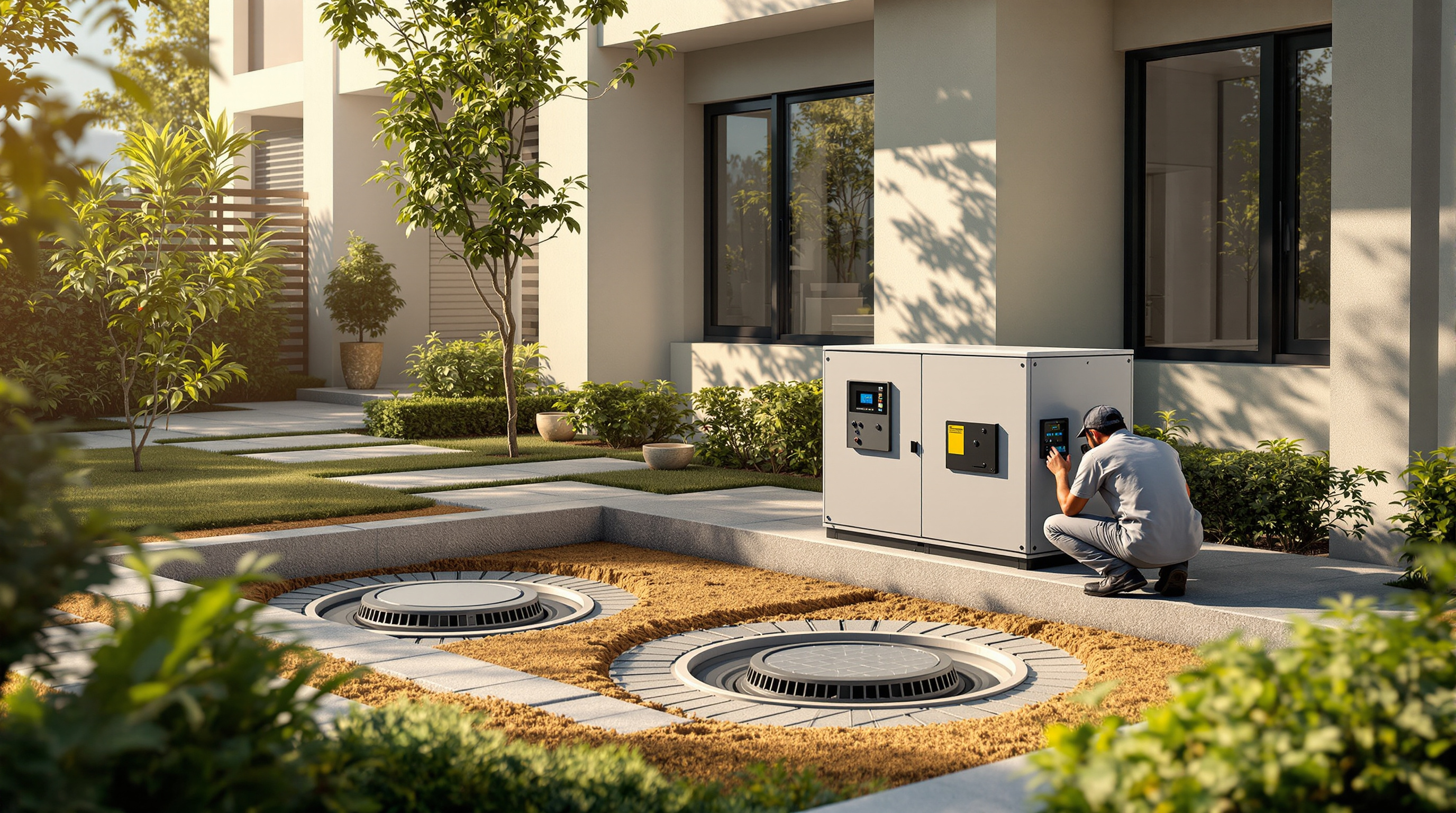
The plant is compact but not invisible, and three nuisances decide where it goes.
- Odour. A well-run STP does not smell, but keep it away from the porch, kitchen window and neighbour's boundary anyway — setbacks are cheap insurance.
- Noise. The air blower is the only moving, humming part. House it in a small acoustic cabinet or a below-grade chamber, well clear of bedrooms.
- Access. Leave room for a desludging tanker to reach the tank once or twice a year, and keep the control panel dry and reachable.
Most villa units are set underground in a garden corner or under the driveway, with only manhole covers and a discreet blower cabinet showing. FRP packages make this genuinely tidy.
Reuse: the payoff is your garden
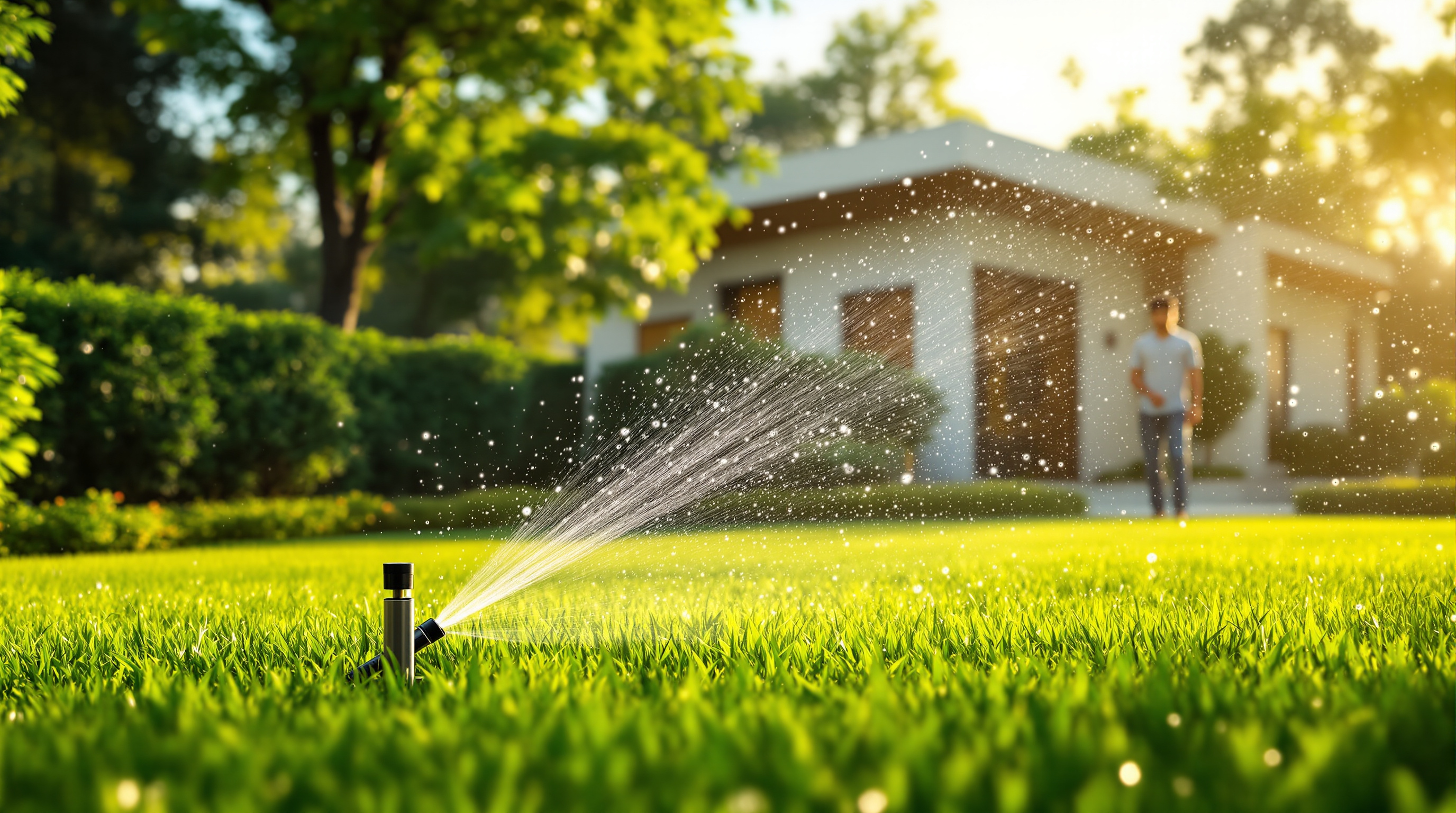
Here is where a villa STP quietly earns its keep. The treated water — clear, odourless, safe — is a resource, not a disposal problem, and a villa usually has the perfect sink for it: the landscape.
- Garden and lawn irrigation is the number-one villa reuse; the mild nutrient content is a bonus for plants.
- Toilet flushing, via a small dual-plumbing line, cuts fresh-water demand further.
- Washing driveways and vehicles, and topping up water features.
- Groundwater recharge for the surplus, instead of a wet, contaminating soak pit.
For homes leaning more towards bath-and-kitchen reuse than full sewage treatment, the home greywater recycling and rooftop water recycling guides cover lighter-touch alternatives worth weighing first.
Compliance, in plain terms
For a single villa the rules are directional rather than a fixed federal mandate: it is usually your layout approval, local planning bylaw and state pollution-control board that decide whether an STP is required and to what standard the treated water must be cleaned — CPCB and NBC set the direction, the local authority sets the specifics. The safe move is to confirm the requirement with your architect or the layout developer before you build, not after. Do not rely on a vendor's word alone that "no permission is needed."
The common villa mistakes
- Buying a plant three times too big — starves the biology and wastes money.
- Skipping the equalisation tank because "it's only a house" — then wondering why the plant chokes on the morning surge.
- Ignoring the empty-house problem — pick MBBR or plan to feed the plant, or the culture dies during travel.
- Treating it as fit-and-forget — even a tiny STP needs a monthly glance, blower checks and an annual desludge.
- Putting the blower under a bedroom — a fixable design sin that ruins otherwise good plants.
The bottom line
For an individual villa the decision reduces to a simple chain: if you are on a municipal sewer you likely need nothing; if you are remote with a deep water table a septic tank may still serve; but if you sit in a gated layout, lack a sewer, or want to irrigate a real garden, you need a compact 1–3 KLD packaged STP — and MBBR is usually the right heart for it. Size it small, buffer the surges, hide the blower, and point the clean water at your lawn.
From here, browse the full Sewage Treatment Plants library for the technology deep-dives, compare notes with the closely related STP for luxury villas and STP for farmhouses guides, and spend a minute with the STP Capacity Calculator to turn your household into the one number every design starts from.
Export this guide
Related Guides — Deep-dive reading
STP for Farmhouses: Off-Grid Wastewater Treatment & Reuse Guide
Farmhouses sit on big plots far from any municipal sewer, are used in bursts, and often run on weak or intermittent power. This guide covers the low-maintenance STP options that actually suit that reality — and how to reuse every drop for irrigation.
Sewage Treatment PlantsThe Sewage Treatment Process Flow, Explained: Every Stage From Inlet to Reuse
Follow a drop of sewage through a typical STP — inlet, screening, aeration, clarifier, filtration, disinfection and reuse — as one connected flow, with a block diagram and a unit-by-unit table, in plain language.
Sewage Treatment PlantsHome Greywater Recycling Systems: Simple Reuse at Home
How a single house can recycle its bath, basin and laundry water for flushing and gardens — without a full sewage treatment plant. What to build, how to size it, where to reuse it, and the mistakes that turn a clever system into a smelly one.
Sewage Treatment PlantsRelated Tools — Try Free
Rainwater Tank Sizer
How big should your rainwater tank be? Computes annual harvest, recommended tank capacity in litres, water-bill savings, and payback — for 10 Indian cities.
RWH CalculatorLandscape Cost Calculator
Estimate a garden's cost — hardscape, softscape, lawn, irrigation, lighting and annual upkeep — by area, tier and city.
Budget CalculatorApartment STP Planner
Plan an apartment complex sewage treatment plant from flats and occupancy — get population load, sewage flow, recommended STP capacity in KLD, treatment technology and approximate space.
Planner