
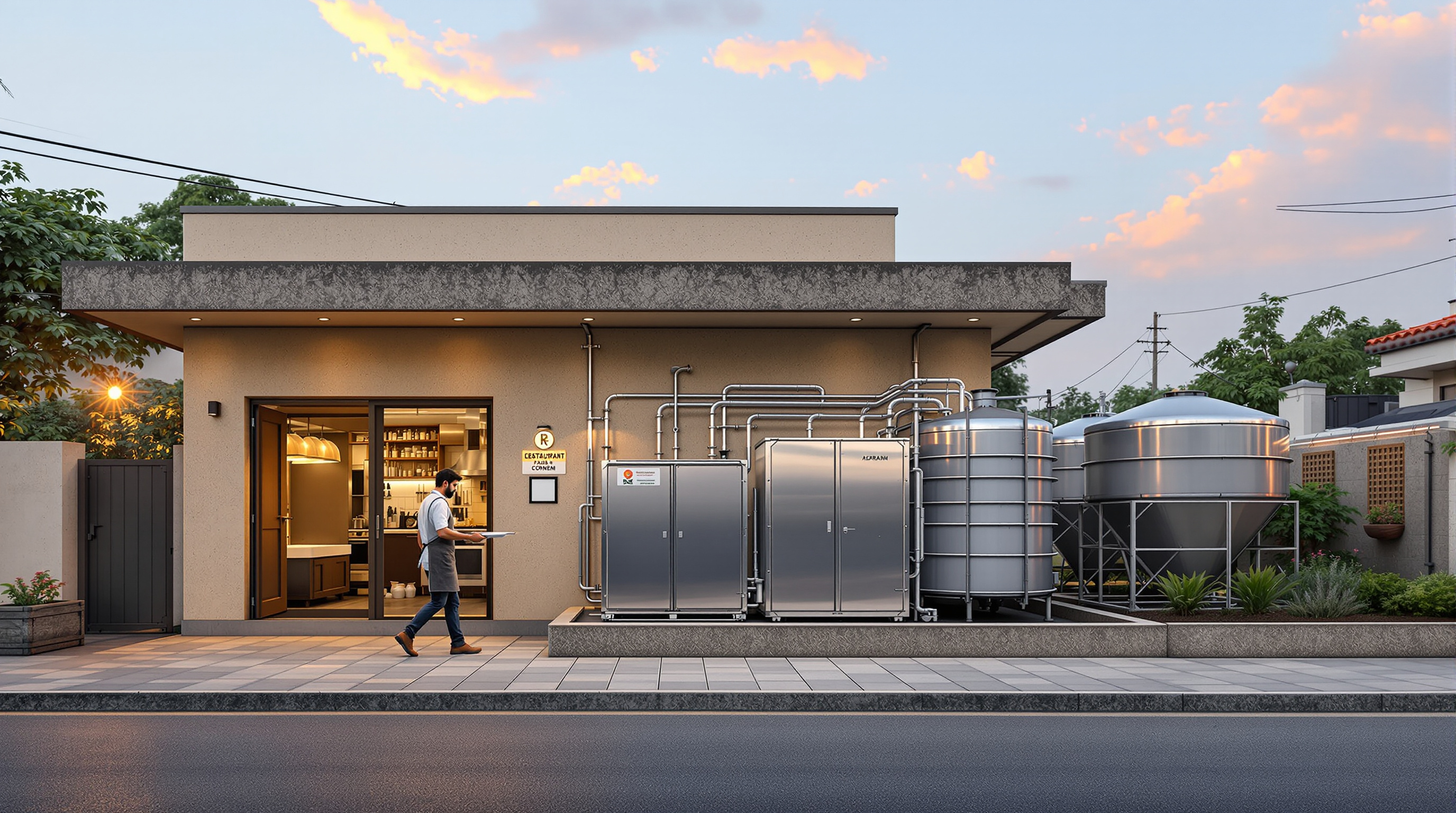
STP for Restaurants & Kitchens: Grease, Effluent Treatment & Compliance Guide
Restaurant wastewater is a different animal — thick with fats, oils and grease and a heavy organic load. This guide explains how to trap the grease, whether you need a full STP or just pretreatment before the sewer, and how a standalone eatery stays compliant in India.
Walk behind almost any busy restaurant in India and you will find the same problem hiding in the drains: a thick, greasy sludge that hardens like candle wax, blocks pipes, and turns the air sour. Restaurant wastewater is not like the wastewater from an apartment or an office. It is smaller in volume but far more concentrated — dominated by fats, oils and grease (FOG) and a very heavy organic load from food scraps, sauces, dairy and cooking oil. Treating it, or even just preparing it for the municipal sewer, is a specialised job that trips up more standalone eateries than any other single utility.
This guide is for the restaurateur, kitchen consultant or developer trying to answer three practical questions: what makes restaurant effluent so difficult, whether you actually need a full STP for restaurants or just proper pretreatment before the sewer, and how a standalone kitchen stays on the right side of the pollution-control board.
A restaurant produces a fraction of the water an apartment block does, but drop for drop it is some of the strongest wastewater any small building generates — grease-choked, high in BOD, and merciless on any system that was not built to expect it.
The restaurant wastewater profile
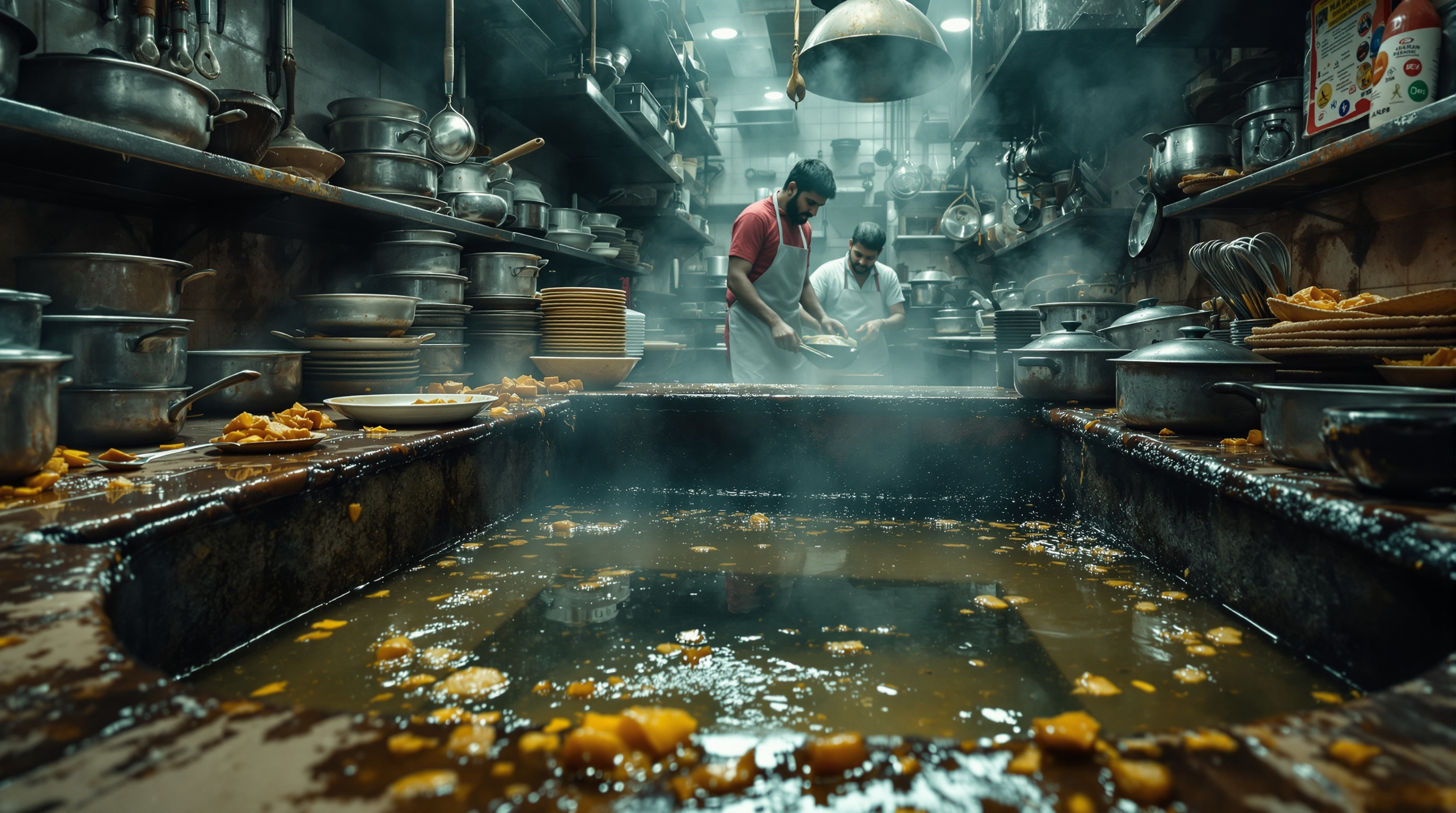
To design anything sensible, first understand what is coming down the drain. Restaurant effluent has a signature that sets it apart from ordinary domestic sewage on three counts.
Fats, oils and grease dominate. Cooking oil, ghee, butter, meat fat and dairy all wash off plates, pans and floors. In water they emulsify while warm, then congeal as they cool — coating pipe walls, smothering microbes, and forming the notorious "fatberg" blockages. Domestic sewage carries maybe 50–100 mg/L of oil and grease; raw kitchen wastewater can run several times that.
The organic load is brutal. Food waste, starches and sugars push the BOD (Biochemical Oxygen Demand) of kitchen effluent far above domestic strength — often 600–1,200 mg/L against the 250–350 mg/L of a typical apartment. If you are hazy on what BOD, COD and TSS actually mean, the primer on wastewater characteristics is worth five minutes before you go further.
The flow is spiky, not steady. A restaurant does most of its damage in two or three service peaks a day — lunch and dinner rushes and the deep-clean afterwards — then sits nearly idle. That surge-and-idle rhythm is very different from the round-the-clock trickle of a residence, and it heavily influences how you buffer the flow.
| Parameter | Domestic sewage | Restaurant / kitchen wastewater |
|---|---|---|
| Oil & grease | 50–100 mg/L | 200–800+ mg/L |
| BOD | 250–350 mg/L | 600–1,200 mg/L |
| COD | 500–700 mg/L | 1,200–2,500 mg/L |
| Flow pattern | Steady, two mild peaks | Sharp lunch/dinner surges, long idle gaps |
| Chief villain | General organics | FOG plus concentrated organics |
The numbers above are directional, not legal figures — measure your own stream where you can — but they explain why a restaurant cannot be treated like a scaled-down apartment.
Step one, always: trap the grease
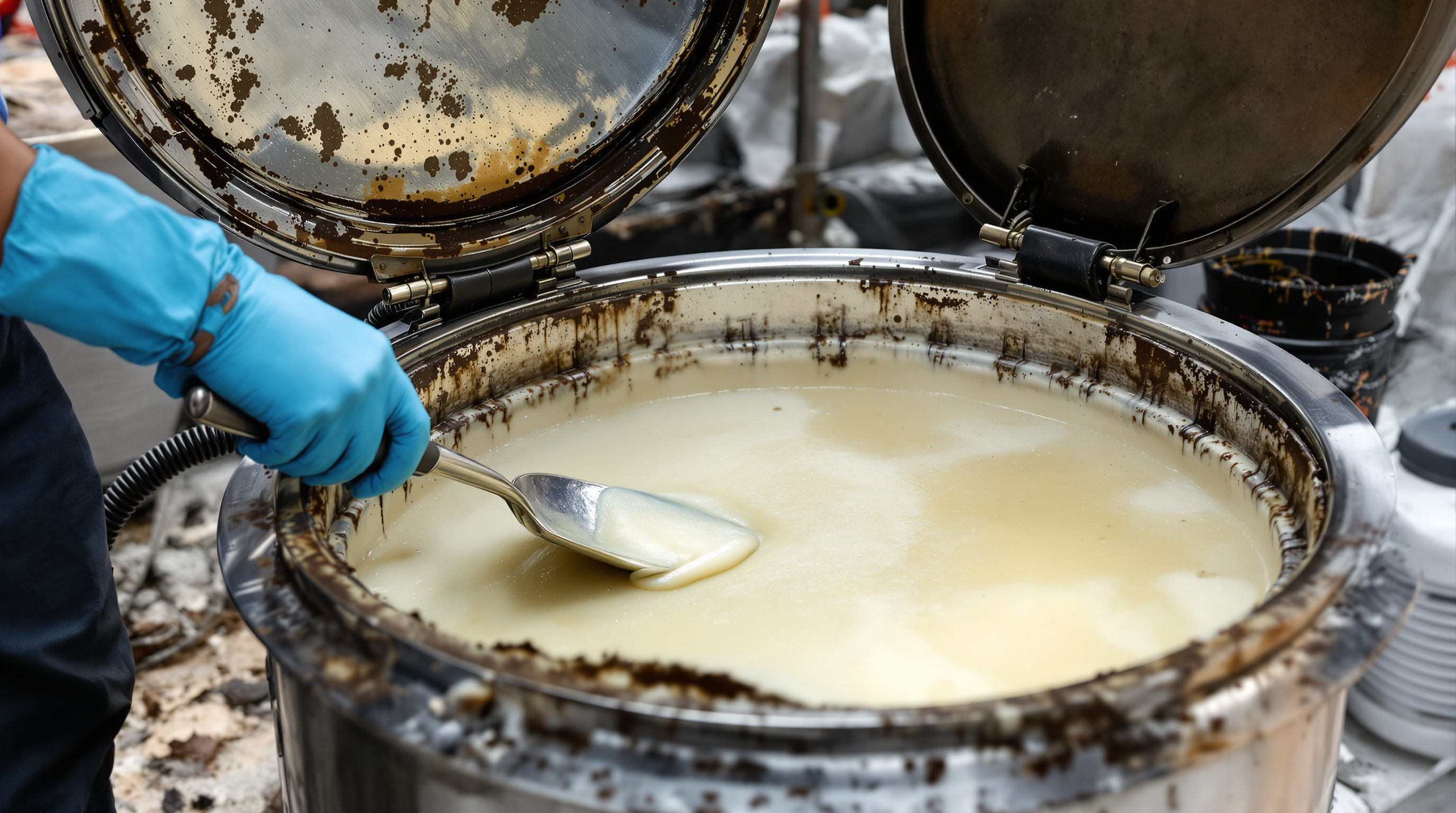
Whatever you build downstream, nothing works if the grease is not removed first. FOG is the single biggest reason restaurant treatment systems fail, and the fix is the humble but non-negotiable grease trap (or grease interceptor).
A grease trap is a baffled chamber that slows the wastewater down so that the warm grease floats to the top and food solids settle to the bottom, letting the cleaner water in the middle pass on. It is low-tech, but sizing and discipline are everything:
- Size it for the meal peak, not the daily average — the trap must hold the flow long enough for grease to separate during the busiest 30 minutes of service, not the quiet afternoon.
- Separate kitchen and toilet lines. Send only the greasy kitchen and dishwash water through the trap; keep toilet (blackwater) on its own line so you are not pumping sewage through a grease chamber.
- Clean it religiously. A trap that is not skimmed weekly overflows its captured grease straight into whatever follows. This is an operations habit, not a one-time install.
The oil and grease trap fundamentals are covered in depth in the STP library. Treat the grease trap as the foundation everything else stands on — an undersized or unmaintained trap will destroy a downstream STP within weeks.
The real question: full STP, or pretreatment before the sewer?
This is the decision that defines your project, and it hinges on one thing: where does your wastewater ultimately go?
If a municipal sewer is available and permitted, many standalone restaurants do not need a full sewage treatment plant. What they need is robust pretreatment — a properly sized grease trap, solids screening, and sometimes a small equalisation and pH-correction step — so that what enters the public sewer meets the local "trade effluent" or sewer-discharge limits (especially the oil-and-grease cap). The city plant then does the biological treatment. This is cheaper, simpler and often the right answer for a single eatery in a well-sewered city. The trade-offs between treating on-site and hooking to the public network are laid out in STP vs municipal sewer connection.
If there is no sewer, or discharge norms require it, you need a full STP that brings the water to a reusable or safely-dischargeable standard on your own plot — grease trap, equalisation, biological treatment, clarification, filtration and disinfection. This is standard for restaurants inside malls, resorts and highway plazas, or any standalone kitchen on a septic-only plot. To understand the full journey the water takes, see how an STP works and the stage-by-stage treatment process flow.
A quick rule of thumb: a restaurant in a large building (mall, hotel, IT park) almost always ties into that building's central STP — you contribute pretreated kitchen effluent to it. A standalone roadside eatery is the one that has to make the build-versus-connect decision on its own.
Which STP technology suits — and why
When a restaurant does need on-site biological treatment, the constraints are always the same: tiny footprint, high strength, swinging load. That points to a short list.
- MBBR (Moving Bed Biofilm Reactor) is the workhorse choice. Its carrier media pack a large, resilient bacterial population into a small tank, it shrugs off the shock loads of a lunch rush, and its compact footprint fits behind a kitchen. See MBBR.
- SBR (Sequential Batch Reactor) suits the batchy, surge-then-idle flow of a restaurant well, treating a tankful at a time. See SBR.
- MBR (Membrane Bioreactor) gives the smallest footprint and the cleanest output — worth it where treated water will be reused inside the premises or where space is genuinely scarce, at a higher cost and O&M skill. See MBR.
Whatever the biology, a generous equalisation tank matters more here than almost anywhere else: it swallows the lunch-and-dinner surges and feeds the microbes a steady diet through the idle hours, which is the difference between a stable plant and one that crashes daily.
Sizing, reuse and compliance
Sizing. Restaurant flow is best estimated per seat or per meal served rather than per resident — a common planning figure is roughly 15–25 litres per cover, plus kitchen and washing loads. Because the water is so strong, size the biological stage for the organic load (BOD), not just the hydraulic flow — a plant sized only on litres will be badly under-built for the pollution it must digest. Run your headcount and covers through the sewage generation calculator and the STP capacity calculator to get a defensible starting number, and sanity-check intake with the water consumption calculator.
Reuse. Treated restaurant water, once past tertiary polishing, is well suited to toilet flushing, floor and yard washing, and landscape irrigation. The volumes are modest, but for a restaurant paying for tanker water every reused litre counts.
Compliance. India's pollution-control framework (CPCB directionally, plus your State board and the NBC for plumbing) expects that no untreated grease-laden effluent reaches a drain or waterbody. For a standalone eatery that usually means: a consent to operate, a compliant grease trap, and either treated-water quality within discharge norms or a permitted sewer connection meeting the oil-and-grease and organic limits. Do not treat the grease trap as optional decoration — it is frequently the specific thing an inspector checks first.
Common mistakes with restaurant STPs
- No grease trap, or an undersized one. The number-one failure. Grease reaches the biology, coats everything, and the plant dies.
- Sizing on flow alone. The water is strong; a plant sized only on litres per day cannot digest the BOD and will chronically under-perform.
- Skipping equalisation. Without a buffer, the lunch surge slams the biology and the idle hours starve it. Restaurants need generous equalisation more than steady-flow buildings do.
- Ignoring maintenance discipline. Grease traps skimmed weekly, drying beds cleared, blowers serviced — a restaurant kitchen is a demanding, greasy environment and the plant needs an owner who treats O&M as routine, not emergency.
- Assuming a domestic STP will "just work." A packaged unit sized for an apartment block, dropped behind a kitchen, is a recipe for blockages and odour. Specify for the profile.
The bottom line
Restaurant effluent is small in volume but heavy in grease and organic strength, and that single fact drives every decision. Trap the grease first, decide honestly whether you need a full STP or clean pretreatment before the sewer, size for the load and not just the litres, and commit to the maintenance. Get those right and a standalone kitchen stays unblocked, odour-free and compliant. For the wider picture — technologies, stages and other building types — start with the Sewage Treatment Plants guide library, and if you have not yet, read what an STP actually is to ground the vocabulary this guide has been using.
Export this guide
Related Guides — Deep-dive reading
The Sewage Treatment Process Flow, Explained: Every Stage From Inlet to Reuse
Follow a drop of sewage through a typical STP — inlet, screening, aeration, clarifier, filtration, disinfection and reuse — as one connected flow, with a block diagram and a unit-by-unit table, in plain language.
Sewage Treatment PlantsSTP for IT Parks & Campuses: Central-Plant Design, Reuse & Redundancy Guide
How to plan a campus-scale sewage treatment plant for a multi-building IT park in India — the daytime flow pattern, the right technology, sizing for a central plant, and a reuse network feeding landscape, flushing and cooling towers.
Sewage Treatment PlantsSTP for Office Buildings & IT Offices: Sizing, Reuse & Design Guide
Why office STPs need lower per-person LPCD, a weekday-only flow strategy and a generous equalisation tank — plus which technology suits, how to size it, and where flushing and cooling-tower reuse pay for themselves.
Sewage Treatment PlantsRelated Tools — Try Free
Rainwater Tank Sizer
How big should your rainwater tank be? Computes annual harvest, recommended tank capacity in litres, water-bill savings, and payback — for 10 Indian cities.
RWH CalculatorPopulation Equivalent (PE) Calculator
Convert an organic pollution load into Population Equivalent from flow and BOD concentration — the BOD load in kg/day and equivalent number of people.
STP CalculatorSTP Capacity Calculator
Size a sewage treatment plant in KLD from your building's occupancy — water demand, sewage generated and recommended STP capacity.
STP Calculator