
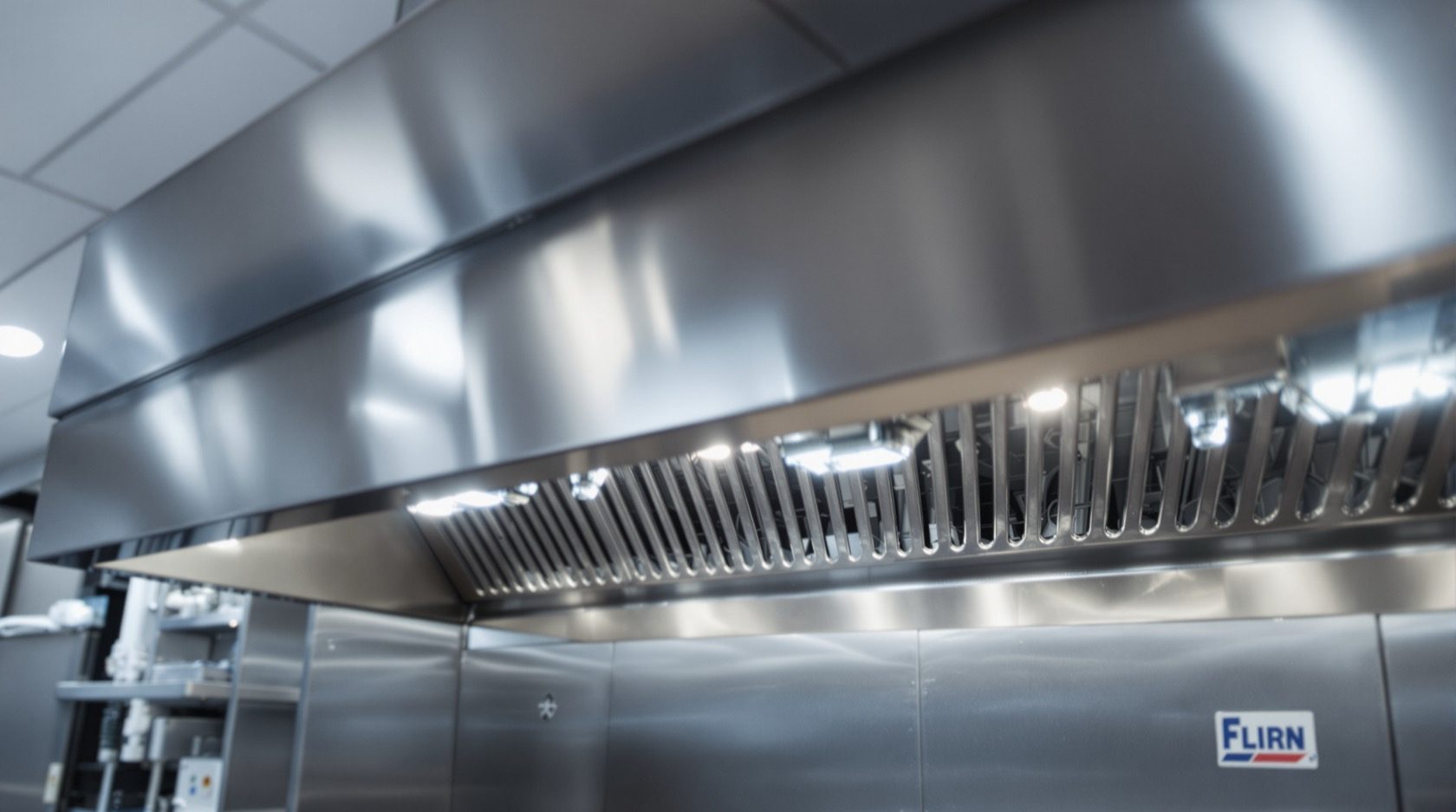
Kitchen Hood Suppression Systems in India (2026): Automatic Wet-Chemical Protection for Commercial Kitchens
The fixed fire-suppression system built into a commercial kitchen exhaust hood - how heat-triggered wet-chemical nozzles smother a fryer fire, cut the gas and fan, and why grease-laden ducts are the fire path everyone forgets.
A commercial kitchen is the most fire-prone room in almost any building. It combines open flame, superheated cooking oil, grease that coats every surface, and an exhaust hood and duct that carry that grease up through the structure. When cooking oil in a deep fryer ignites, it is a Class K fire - a burning-oil fire so hot and so resistant to ordinary extinguishing that water makes it explode and most extinguishers barely touch it. In a home kitchen the answer is small and human: a fire blanket over the pan and a wet-chemical extinguisher in a trained hand. In a restaurant, hotel or canteen kitchen, where a fryer fire can go from a flicker to a duct fire in the ceiling in seconds, the answer has to be automatic, fixed and engineered. That answer is the kitchen hood suppression systems built into the exhaust hood itself.
This is the commercial-kitchen chapter of Studio Matrx's fire-safety library, sitting under the complete guide to fire safety in India. It is written for the people who own, run or fit out commercial kitchens - restaurateurs, hotel and canteen operators, cloud-kitchen founders, institutional and hospital caterers, and the facility managers and consultants who advise them - so you understand what the system does, why the Fire NOC wants it, and above all why "installed" is worthless if the ducts are never cleaned and the tank was discharged years ago.
Scope and safety - read this first. A kitchen hood suppression system is a fixed, engineered, statutory installation - designed, sized, positioned, installed, commissioned and certified by a licensed fire-protection contractor, working to the National Building Code (via SP 7 : 2026, Part 4 Fire and Life Safety) and the applicable UL 300 / NFPA 96 / BIS kitchen-suppression standard - verify the current reference, and tied to your premises Fire NOC under the State Fire Services Act and Rules. This guide helps you specify, understand and maintain it; it is educational guidance, not legal advice, and never a manual for designing, positioning, charging or servicing the system yourself. If a fire runs the fryer or the duct: get everyone out and call the fire brigade on 101 or 112.
The problem: why a commercial kitchen needs its own fixed system
Ordinary building fire protection is not built for a cooking-oil fire. Sprinkler systems throw water, which turns burning oil into a fireball; a CO2 extinguisher cools but does not seal the oil surface, so the oil re-ignites the moment the gas clears. Cooking oil holds enormous heat: once it passes its auto-ignition temperature it will keep re-lighting until the surface is both cooled and sealed. That is exactly what a kitchen hood suppression system is engineered to do, right at the appliance, in the first seconds, without waiting for a human.
Two things make the commercial kitchen uniquely dangerous, and both sit inside the hood and duct:
- The cooking line - ranges, deep fryers, griddles, char-broilers, woks and tandoors - is a row of open, high-temperature oil and flame sources under one hood. A fire on any one of them is directly under the exhaust that will carry it away.
- The grease-laden exhaust duct is the hidden fire path. Every hour of frying deposits a film of grease on the inside of the hood, filters and the duct running up through the building. That grease is fuel. A flare-up at the fryer draws flame straight into a duct lined with concentrated grease, and the fire travels up the duct - inside the structure, out of sight, past every floor the duct passes - faster than any brigade can reach it. India has lost kitchens, floors and whole buildings to grease-duct fires that started as a small pan flare.
What the system is: the anatomy under the hood
A kitchen hood suppression system is a self-contained, pre-engineered package fixed into and around the exhaust hood. Its job is to detect a fire on the cooking line, discharge a wet-chemical agent onto every appliance and into the duct, and simultaneously remove the fire's fuel by cutting the gas or power and stopping the fan - all automatically, and all triggerable by hand.
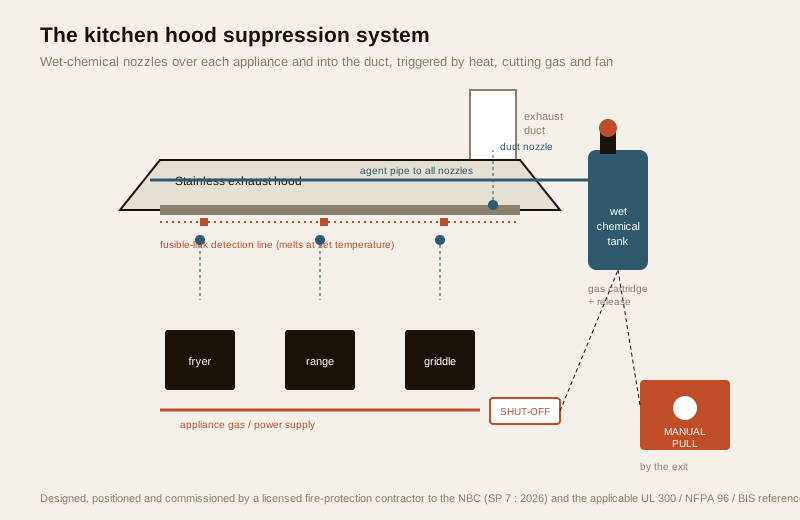
The parts, and what each does:
- The wet-chemical agent tank. A pressurised (or cartridge-operated) cylinder of a potassium-based wet-chemical agent, mounted at the end of the hood line. This is the extinguishing agent - the same chemistry as a Class K wet-chemical extinguisher, sized and plumbed to flood a fixed cooking line.
- Discharge nozzles, aimed appliance by appliance. Each fryer, range, griddle, broiler and wok gets a nozzle (or nozzles) positioned and rated by the designer for that appliance's size and hazard. A separate nozzle is aimed into the mouth of the exhaust duct, and often into the plenum behind the filters, because the duct is where the fire wants to run.
- Detection - fusible links or electric detection. Above the cooking line, a taut cable strung with fusible links runs the length of the hood. Each link is a soldered metal fitting that melts at a set temperature. When a fire raises the temperature under the hood, the nearest link melts, the cable goes slack, and a spring-loaded mechanism fires the release. Larger or newer systems may use electric heat detection tied to the building fire-alarm panel instead.
- The mechanical/gas release. When the link melts (or the pull-station is operated), a cartridge or spring drives the agent out of the tank and through the piping to every nozzle at once - a total-flood of the whole cooking line, not one appliance.
- The gas or electric shut-off. Simultaneous with discharge, the system trips a mechanical gas valve on the appliance gas line (or drops the electrical supply to electric appliances). This is critical: putting out the flame while gas keeps flowing just fills the room with gas for a bigger fire. The system cuts the fuel as it fights the fire.
- The exhaust-fan interlock. The discharge typically signals the exhaust fan to stop (or on some designs the fan is left to clear vapour - this is a design decision), so the fan is not dragging flame and agent up the duct or feeding the fire air.
- The manual pull-station. A clearly marked pull-station, sited on an escape path near an exit, lets any staff member trigger the entire system by hand the instant they see a fire - without waiting for a link to melt. Every commercial kitchen crew should know exactly where it is.
| Part of the system | What it does | Why it matters |
|---|---|---|
| Wet-chemical agent tank | Stores and pressurises the Class K extinguishing agent | The agent that actually smothers and cools burning oil |
| Appliance nozzles | Aim agent at each fryer, range, griddle, broiler | Covers the specific appliance where oil ignites |
| Duct nozzle | Discharges into the exhaust-duct mouth and plenum | Attacks the hidden grease-duct fire path |
| Fusible links / detection | Melt or sense heat over the cooking line | Triggers the system automatically, unmanned |
| Mechanical release | Drives agent to all nozzles at once | Total-flood of the whole line in seconds |
| Gas / electric shut-off | Cuts fuel to the appliances on discharge | Stops feeding the fire; prevents gas build-up |
| Fan interlock | Stops (or manages) the exhaust fan | Keeps fire and agent from being dragged up the duct |
| Manual pull-station | Human-triggered discharge near the exit | Fires the system before a link even melts |
How it works: the automatic sequence
The value of the system is that the whole sequence happens in the first seconds, with or without a person present. Understanding the sequence is what lets an operator trust it - and spot when a part of it has been defeated.
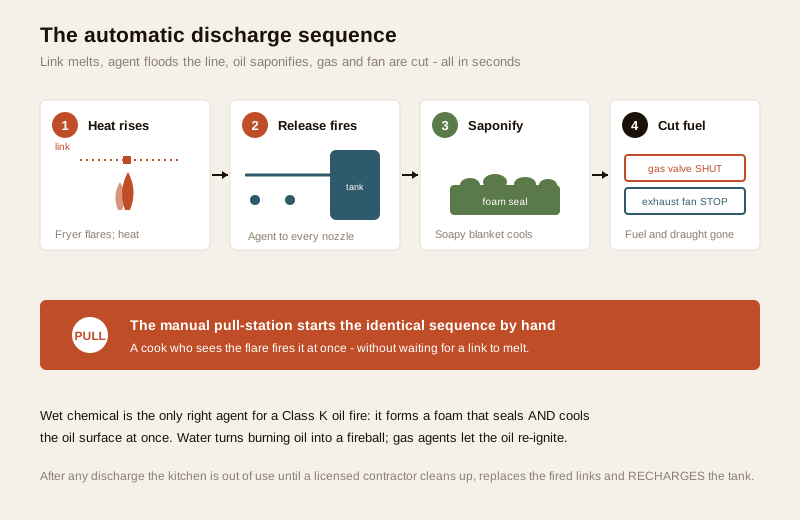
1. Heat rises to the detection line. A flare-up on the fryer or range sends hot gas straight up under the hood, where the fusible-link line runs. (Or an electric heat detector senses it.)
2. The link melts and the system fires. The fusible link melts at its rated temperature, the detection cable slackens, and the spring-loaded release punches the gas cartridge - driving the wet-chemical agent out of the tank.
3. Every nozzle discharges at once. The agent flows through the fixed piping to all nozzles simultaneously - onto each appliance and into the duct - a total-flood, not a targeted spray. A single fryer fire gets the whole line's protection because fire on a cooking line spreads sideways and upward fast.
4. The agent saponifies the oil. This is the chemistry that makes wet chemical the only right agent for a Class K fire: the alkaline agent reacts with the hot cooking oil to form a thick, soapy foam blanket - saponification - that seals the oil surface from oxygen and cools it below its re-ignition point at the same time. Water cannot do this; foam-forming wet chemical can.
5. Fuel and airflow are cut simultaneously. As the agent discharges, the gas valve trips shut (or the electric supply drops) and the exhaust fan is stopped or managed. The fire loses its oil-surface oxygen to the foam, its fuel to the gas cut-off, and its draught to the fan interlock - all together.
6. A human can start it too. The manual pull-station fires the identical sequence by hand, so a cook who sees a flare does not have to wait the seconds it takes a link to melt.
After a discharge the kitchen is out of action until a licensed contractor cleans up the agent, inspects, replaces the fired links, and recharges the tank. That last step is where India fails: a system that discharged once and was never recharged is a decoration, and the next fire has nothing to stop it.
Where it is required - and where it quietly is not
Whether a kitchen hood suppression system is mandatory, and to what extent, depends on the occupancy, the kitchen's scale and the fuel load, judged under the NBC (SP 7 : 2026, Part 4) and applied by the fire officer issuing your Fire NOC. Do not treat any single rule as universal - the requirement follows the building and the kitchen. As a practical map of where these systems belong:
| Setting | Why a fixed hood system belongs there |
|---|---|
| Restaurants and QSRs with deep-frying | Fryers and open ranges under one hood - the classic Class K hazard |
| Hotel and banquet kitchens | High-volume cooking lines feeding occupied floors above via ducts |
| Hospital and institutional kitchens | Continuous catering serving people who cannot self-evacuate |
| Canteens - factory, campus, corporate | Large-batch frying, often in commercial building cores |
| Cloud / dark kitchens | Many fryers packed into a small tenancy, ducts shared with the building |
| Shopping-mall food courts | Rows of kitchens under one roof over a public assembly space |
The system is one part of a compliant kitchen, not the whole of it. It sits alongside the building's fire hydrants and hose reels, its sprinkler system in the wider premises, portable wet-chemical extinguishers at the cooking line for a small pan fire a cook can tackle, and the whole-kitchen fire discipline set out in the kitchen fire-safety guide. For a building-wide view of how these systems are chosen, the fire-suppression system selector walks through what a given premises needs.
The grease duct: the fire path everyone forgets
You can fit a perfect suppression system and still burn the building down if the ducts are never cleaned - because the duct is a fuel store that grows every day the kitchen runs. This is the single most neglected fire risk in Indian commercial kitchens.
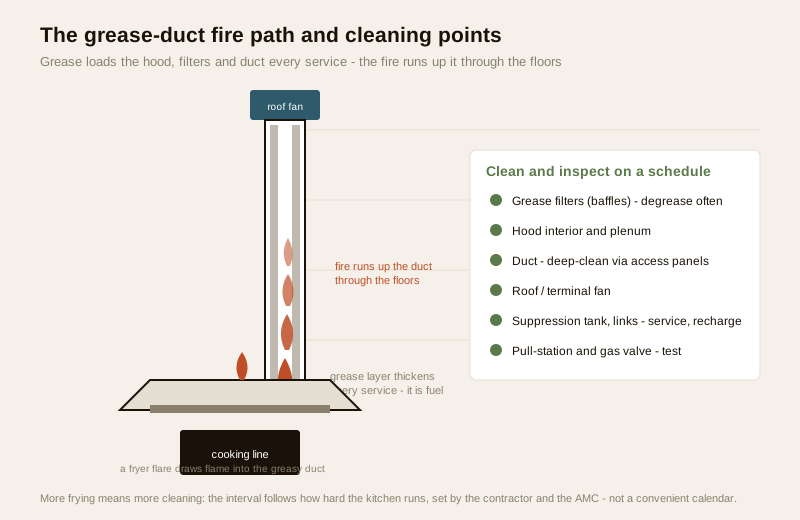
Every service, grease-laden vapour condenses on the inside of the hood, saturates the filters, and coats the duct all the way to the roof fan. Left uncleaned, that film thickens into a hard layer of concentrated fuel lining a chimney that runs through occupied floors. When a fryer flares, flame is drawn straight into it, and a grease-duct fire can burn hot enough to breach the duct and ignite the structure around it - which is exactly why the hood system aims a nozzle into the duct, and exactly why that nozzle is not enough on its own.
The defence is not clever - it is disciplined cleaning and inspection on a schedule, done by a competent contractor, with the points that matter recorded:
| Maintenance point | What it needs | Typical frequency (indicative - set by use and the AMC) |
|---|---|---|
| Grease filters (baffles) | Removed and degreased | Frequently - heavy frying kitchens, daily to weekly |
| Hood interior and plenum | Degreased | Regularly under the AMC |
| Exhaust duct full length | Professional deep-clean via access panels | Periodically - heavy use demands it far more often |
| Roof / terminal fan | Cleaned and checked | On the duct-cleaning schedule |
| Suppression tank and links | Pressure and link check, service, recharge if fired | On the AMC schedule and after any discharge |
| Manual pull-station and gas valve | Tested for correct operation | On the AMC schedule |
Frying volume drives everything: a busy fryer line lays down grease far faster than an occasional griddle, so the cleaning interval is set by how hard the kitchen runs, not by a calendar picked for convenience. The actual schedule for your kitchen is set by the contractor's assessment and your AMC, not guessed - but the direction is one way: more frying means more cleaning.
The honest India reality: installed is not working
The pattern here is the same as everywhere else in Indian fire safety, and it is lethal in a kitchen. A system is fitted to clear the Fire NOC, then abandoned:
- The tank was discharged years ago and never recharged. A pan fire set the system off once, nobody called the contractor to recharge it, and the empty tank has sat under the hood ever since. The next fire meets a system that cannot fire.
- The gas valve was disconnected because it kept tripping. The mechanical shut-off is defeated or wired around because a nuisance trip was inconvenient - so a future discharge will put out the flame while gas keeps pouring in.
- The ducts have never been cleaned. Grease has been building in the duct for years, turning the exhaust into a loaded fuse running through the building.
- The fusible links are painted over or years past service. Links that should have been replaced on schedule are caked in grease or paint and may not melt cleanly - or the whole detection line has gone slack and been tied off.
- Nobody knows where the pull-station is. New staff have never been shown it, or it is blocked behind stacked equipment.
"Installed" is not "working". A kitchen hood suppression system is only real if it is under an Annual Maintenance Contract with a licensed fire-protection contractor who services the tank, tests the release and gas shut-off, replaces fusible links on schedule, and recharges after any discharge - and if the ducts are cleaned on a schedule matched to how hard you fry. Route every part of that to the contractor, and treat the day-to-day discipline - knowing the pull-station, keeping nozzles unobstructed, reporting any discharge at once - as the kitchen crew's own responsibility, the same maintenance discipline the office and apartment guides apply to every building system. Tie it into the premises emergency-preparedness plan so staff know what a discharge means and what to do.
Never defeat it - keep it live, charged and AMC'd. The deadliest states a kitchen hood suppression system can be in are all human-made: an empty tank never recharged after a discharge, a gas shut-off disconnected to stop nuisance trips, a detection line tied off, ducts left to load with grease, a pull-station blocked. Never disconnect, bypass, tie off or leave any part of this system out of service to make an operational annoyance go away - each of those turns a working Class K defence into a stainless-steel ornament over the most fire-prone room in the building. If it discharges, or if any part faults, the fix is one phone call to the licensed contractor and the AMC - not a workaround. When the law wants a fixed suppression system on your kitchen, it wants a maintained, charged, tested one, certified under the NBC and your Fire NOC.
Key takeaways
- A kitchen hood suppression system is the engineered answer to a Class K cooking-oil fire - fixed wet-chemical nozzles built into the exhaust hood, aimed at every fryer, range and griddle and into the duct, that smother and cool burning oil the way ordinary suppression cannot.
- The sequence is automatic and complete - a fusible link melts (or a person pulls the station), the agent floods the whole cooking line and duct, it saponifies the oil into a sealing foam, and the gas and fan are cut at the same instant so the fire loses oil-oxygen, fuel and draught together.
- The grease duct is the fire path everyone forgets - grease loads the hood, filters and duct every service, turning the exhaust into a chimney of fuel; only scheduled professional cleaning, matched to how hard the kitchen fries, keeps that path safe.
- "Installed" is not "working" - discharged-not-recharged tanks, disconnected gas valves, uncleaned ducts and blocked pull-stations are rampant in India; only an AMC with a licensed contractor plus a matched duct-cleaning schedule keeps the system real.
- Route design and service to a licensed fire-protection contractor - the sizing, nozzle placement, gas-shut-off, commissioning and recharge are qualified professional tasks under the NBC (SP 7 : 2026, Part 4), the applicable UL 300 / NFPA 96 / BIS kitchen-suppression standard, and your Fire NOC.
References
- National Building Code of India, SP 7 : 2026 (the NBC), Part 4 "Fire and Life Safety" - the framework that determines when a commercial kitchen requires fixed fire suppression and integrated fire-safety measures by occupancy, scale and hazard; the older SP 7 : 2016 edition is withdrawn but still widely quoted. Verify the current edition via the BIS catalogue: https://www.services.bis.gov.in/
- The applicable kitchen-suppression standard - the internationally referenced UL 300 (pre-engineered restaurant kitchen suppression) and NFPA 96 (ventilation and fire protection of commercial cooking operations), read together with any BIS standard adopted for kitchen-hood suppression. Confirm the specific reference that applies to your premises and Fire NOC, and verify current status via the BIS catalogue: https://www.services.bis.gov.in/
- The relevant State Fire Services Act and Rules and the Model Building Bye-Laws (MoHUA) - these set when a Fire NOC and a certified, maintained kitchen suppression system are legally required for a given commercial-kitchen premises, and the periodic maintenance and duct-cleaning obligations that follow.
- Manufacturer datasheets and installation manuals for the specific suppression system, agent, nozzles and fusible links installed - the authority for the agent rating, nozzle placement, appliance coverage, gas-shut-off arrangement and recharge procedure; always follow the equipment's own documentation and the commissioning contractor's records.
This is an educational overview, not legal advice, and not a substitute for a licensed fire-safety consultant or fire-protection contractor. A kitchen hood suppression system, its design, nozzle placement, gas shut-off, commissioning, the Fire NOC and any statutory installation, recharge or maintenance are qualified professional tasks - engage licensed fire professionals and the State Fire Services, and verify any standard's current status via the BIS catalogue before relying on it.
Export this guide
Related Guides — Deep-dive reading
Kitchen Fire Safety in India (2026): LPG, Oil Fires and the Right Extinguisher
The kitchen starts most Indian home fires. Here is how to prevent an LPG or PNG leak, kill an oil fire the right way, and keep the small kit that actually stops a flare-up spreading.
SecurityWet Chemical Extinguishers in India (2026): The Class-K Answer for Cooking-Oil Fires
The specialist extinguisher for deep-fat and cooking-oil fires. Here is how a wet-chemical mist saponifies hot oil to smother and cool it, why water, foam, CO2 and powder all fail, and where a commercial kitchen must carry one.
SecurityFire Hose Reels in India (2026): First-Aid Firefighting on Every Floor
The wall-mounted fixed hose reel bridges the gap between a portable extinguisher and the fire brigade - a permanently plumbed water line a trained occupant can use on a small, developing Class A fire while everyone else gets out.
SecurityRelated Tools — Try Free
Fire Suppression System Selector
Sprinklers, hydrants, kitchen-hood, clean-agent gas or water mist? Pick what you are protecting and see the fixed suppression a fire engineer would typically consider — an orientation to a proper NBC Part 4 design, not the design itself.
SuppressionCross-Ventilation Analyzer
Estimate airflow and air changes per hour (ACH) from room size, window areas, layout, and local wind — with NBC 2016 Part 8 compliance check.
Ventilation CalculatorFire Extinguisher Selector
The wrong extinguisher can make a fire worse. Pick a space and get the right extinguisher type(s) to consider — ABC powder, CO2, foam, wet-chemical, water or a fire blanket — matched to the fire class, with the deadly never-use warnings.
Extinguisher