
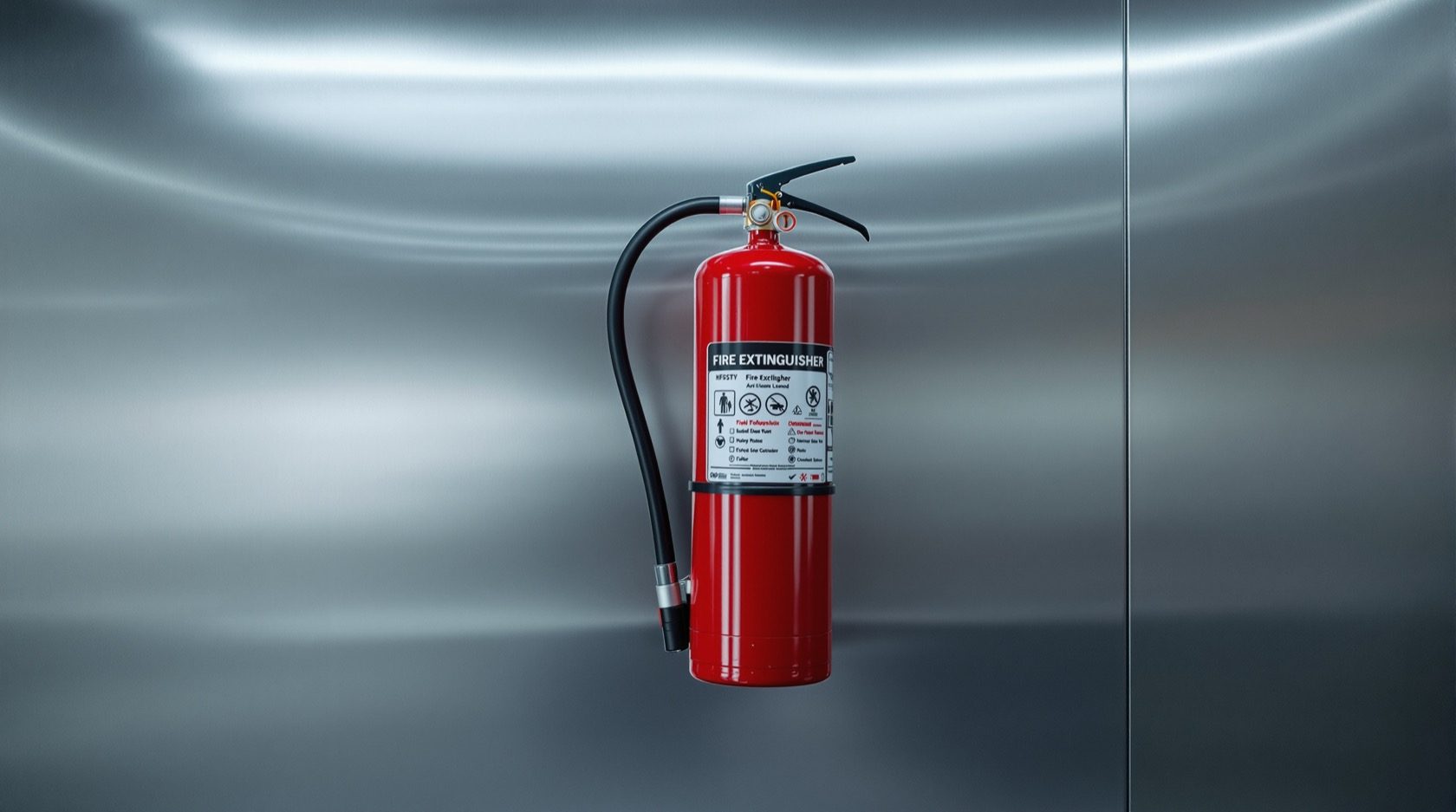
Wet Chemical Extinguishers in India (2026): The Class-K Answer for Cooking-Oil Fires
The specialist extinguisher for deep-fat and cooking-oil fires. Here is how a wet-chemical mist saponifies hot oil to smother and cool it, why water, foam, CO2 and powder all fail, and where a commercial kitchen must carry one.
A pan of cooking oil is unlike any other fuel in a building. Heat it long enough and it ignites on its own, with no spark, at a temperature so high that once the flame is out the oil can burst back into fire minutes later. That single behaviour — a fuel that both burns and re-ignites from its own stored heat — is why wet chemical extinguishers exist as a separate class of device. They are the specialist answer to the cooking-oil fire, the Class K (in Indian and international coding, also written Class F) fire that every other extinguisher either ignores or makes catastrophically worse.
This guide is written for the people who own the risk: restaurateurs, canteen and hostel managers, cloud-kitchen operators, mid-day-meal kitchen supervisors and the facility managers and fire consultants who specify their equipment. It sits inside Studio Matrx's fire-safety library, under the complete guide to fire safety in India, and it is a type-specific chapter of the portable fire-extinguishers pillar. If you have a home kitchen rather than a commercial one, the honest answer is different and simpler — a fire blanket — and we come to it below.
Scope and safety — read this first. A portable extinguisher, wet-chemical included, is for a SMALL, early fire only. If oil ignites in a fryer or pan: raise the alarm and get people moving to the exit FIRST, cut the heat and the fuel if it is safe to reach, and only then tackle the fire — with your back to a clear exit, standing well back, using the right extinguisher for the class. If it does not go out quickly, or if it has spread beyond the appliance, LEAVE and call the fire brigade on 101 or 112. Never let fighting a fire trap you or a colleague. This is educational guidance, not legal advice or a substitute for a licensed fire-safety professional.
What a wet-chemical extinguisher is
A wet-chemical extinguisher is a portable (or wheeled) unit charged with a fine mist of an alkaline potassium-salt solution — commonly potassium acetate, potassium citrate or potassium carbonate in water. It is easy to spot: the cylinder or its label carries a distinct Class K / Class F mark and, uniquely among extinguishers, it usually has a long applicator lance rather than a short horn, so the operator can stand back and lay the agent gently onto the burning oil surface from a safe distance.
Everything about the device is built around one job: putting out a fire in hot cooking oil or fat, and — just as important — keeping it out. To understand why it works where others fail, you have to understand the one chemical reaction at its heart.
How it works: saponification
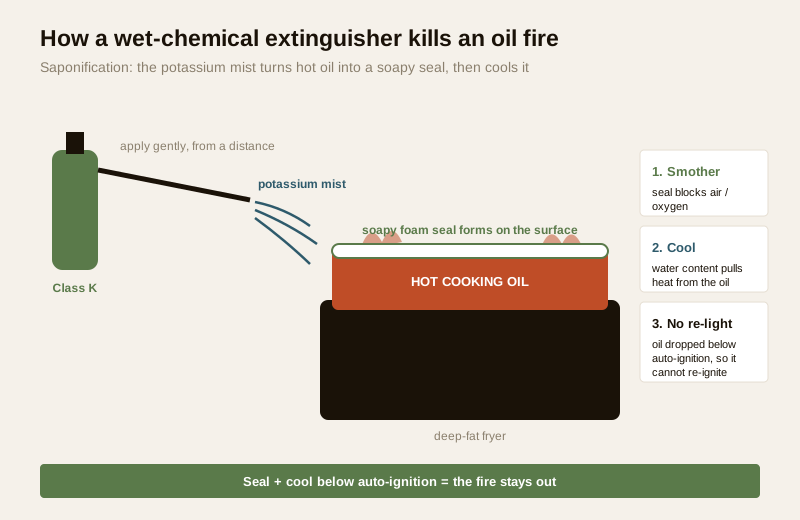
The reason a wet-chemical extinguisher beats a fat fire is a reaction you already know from soap-making. When the alkaline potassium mist lands on hot cooking oil or fat, the two react. The fats (which are chemically esters) and the alkali combine to form a soap — a process called saponification. That soap is not a liquid that runs off; it forms a thick, cohesive, foamy blanket that floats on top of the burning oil and seals the surface.
That soapy seal does three things at once, and it needs all three:
1. It smothers. The foam layer forms a physical barrier between the oil and the air, cutting off the oxygen the flame needs. The fire has nothing to burn at the surface.
2. It cools. The extinguisher is a wet agent — mostly water carrying the potassium salt. As it is applied, the water content draws heat out of the oil and drops its temperature. This is the part that matters most for a fat fire.
3. It suppresses re-ignition. Cooking oil ignites at its auto-ignition temperature — it does not need a spark, only heat. When a flame is knocked down by an agent that does not cool the oil, the oil is still sitting well above that temperature and simply bursts back into flame. Saponification plus cooling drops the oil below auto-ignition and keeps a sealing crust over it, so it stays out.
That third point is the whole game. On a deep-fryer full of oil at frying temperature, extinguishing the visible flame is the easy part; preventing re-ignition of a large, deep, heat-soaked volume of oil is the hard part, and it is the part only a cooling, sealing agent solves.
Why ordinary extinguishers fail on cooking oil
It is tempting to think any extinguisher is better than none on an oil fire. It is not. The wrong agent on a fat fire ranges from useless to lethal, and specifying the wrong unit for a commercial kitchen is a serious error. Here is what each common agent actually does when it hits burning oil.
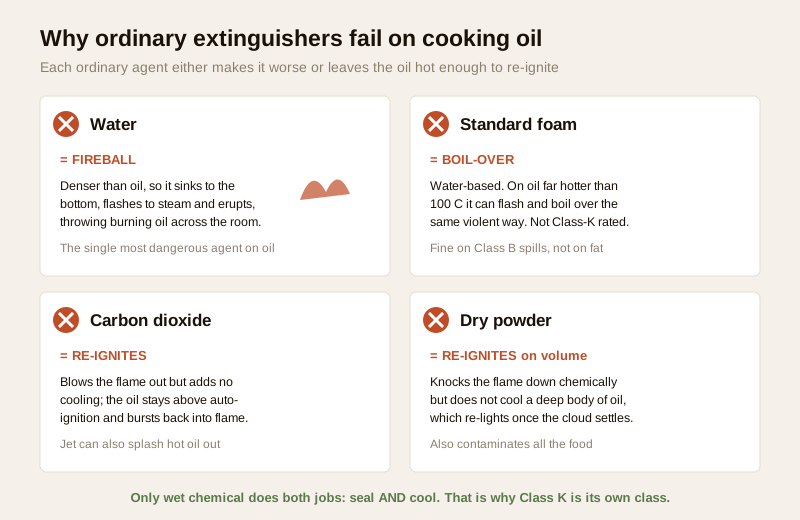
- Water — a fireball. Water is denser than oil, so a jet of it sinks straight through the burning oil to the bottom of the pan or fryer, where the intense heat flashes it instantly to steam. That steam expands roughly seventeen-hundred-fold and erupts upward, ejecting the burning oil out of the vessel as an expanding fireball. Water is the single most dangerous thing you can put on an oil fire. This is why a plain water extinguisher carries an explicit warning never to use it on cooking oil or on live electrical equipment.
- Foam — boil-over risk. Ordinary foam extinguishers are excellent on flammable-liquid (Class B) spill fires like petrol or solvent, where the foam floats and seals a cool-ish liquid. But standard foams are water-based, and on oil that is far hotter than water's boiling point they can flash and cause the same violent boil-over. Standard Class B foam is not rated for and not safe on a deep cooking-oil fire — only a purpose-built wet-chemical (or a specially formulated fryer foam) is.
- Carbon dioxide — no cooling, re-ignition. A CO2 extinguisher displaces oxygen and can knock the visible flame down, but it adds no cooling to the oil and, worse, its high-velocity discharge can splash hot oil out of the vessel. The moment the CO2 disperses, the oil — still above its auto-ignition temperature — re-ignites. CO2 is the right tool for live electrical and Class B fires, not for fat.
- Dry chemical powder — knocks down, does not keep down. An ABC or BC dry-chemical-powder extinguisher will interrupt the flame chemically and put the visible fire out quickly. But powder does essentially nothing to cool a deep volume of hot oil, so on a large fat fire the oil re-ignites once the powder cloud settles. Powder also contaminates all the surrounding food and surfaces. It is a genuine last resort on a very small pan, never the answer for a fryer.
| Agent | On a cooking-oil (Class K) fire | Why |
|---|---|---|
| Water | NEVER — dangerous | Sinks, flashes to steam, ejects a fireball of burning oil |
| Standard foam (Class B) | Not rated — boil-over risk | Water-based; can flash on oil far above 100 C |
| Carbon dioxide (CO2) | Fails — re-ignites | Blows flame out but adds no cooling; oil stays above auto-ignition |
| Dry chemical powder (ABC/BC) | Poor — re-ignites on volume | Interrupts flame but does not cool the oil; contaminates everything |
| Wet chemical (Class K / F) | The correct agent | Saponifies to seal and smother, and cools below auto-ignition |
The pattern is clear: every ordinary agent either makes the fire worse (water, foam) or removes the flame without removing the heat (CO2, powder), so a deep, heat-soaked body of oil re-ignites. Only wet chemical does both jobs — seal and cool — which is exactly why it is a class of its own. The fire-extinguisher selector tool walks through this class-by-class matching.
Where a wet-chemical extinguisher is essential
Wet chemical is a commercial-kitchen tool, not a general-purpose extinguisher. It is provided specifically where there is a meaningful volume of cooking oil or fat being heated. In practice that means:
- Restaurants and hotels with deep-fryers, tandoors with oil, and high-volume frying ranges.
- Canteens in offices, factories and institutions serving fried food at scale.
- Cloud and dark kitchens, where multiple fryers run continuously in a compact space with little supervision.
- Hostel, mess and mid-day-meal kitchens, where large kadhais and bulk frying are routine and the cooking staff may have had little fire training.
- Sweet shops, snack manufacturers and catering kitchens with bulk deep-frying.
In each of these, the wet-chemical extinguisher is a manual, first-response device for the cooking line — mounted on the escape route, on the wall near (not directly over) the frying station, so a trained staff member can reach it, retreat toward the exit, and apply it to a small, contained fryer fire from a safe distance.
It works with, not instead of, a fixed hood system
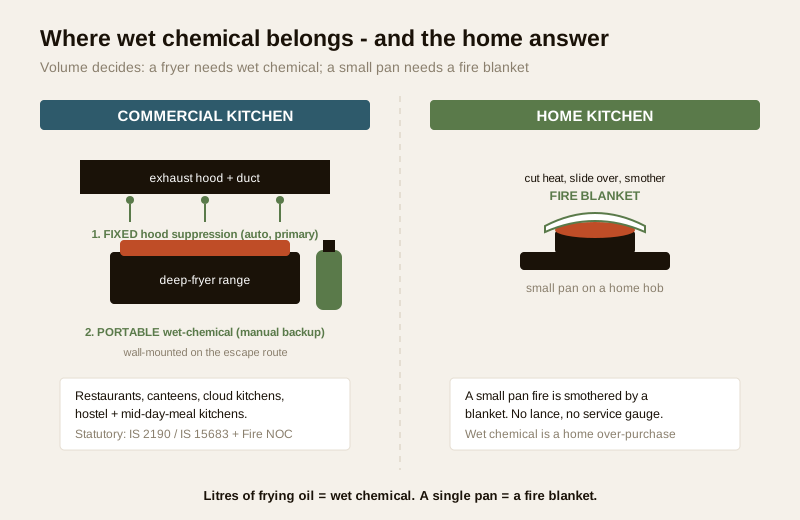
A portable wet-chemical extinguisher is the manual layer. In any commercial kitchen with a cooking range under an exhaust hood, it should sit alongside a fixed kitchen-hood-and-duct suppression system — an automatic, pre-engineered system that detects a fire on the range and discharges a wet-chemical agent directly over the appliances and into the grease-laden duct, then shuts off the fuel and power. That fixed system is the primary defence for the cooking line; the portable extinguisher is the backup a person uses for a small flare-up the fixed system has not yet triggered on. These fixed hood-suppression systems are a specialist, code-driven installation designed, installed and certified by licensed fire professionals — they are covered in their own later guide, and are never a retail purchase. Both layers, plus the premises Fire NOC, are part of the statutory picture set by the complete fire-safety guide and the commercial-building security guide.
The home kitchen answer is different — a fire blanket
If you cook at home, you almost certainly do not need a wet-chemical extinguisher, and buying one for a domestic kitchen is usually the wrong call. A small pan fire on a home hob is best handled by a fire blanket kept within arm's reach of the stove: cut the heat, slide the blanket over the pan to smother the flame, and leave it covered to cool. It is cheaper, needs no servicing pressure gauge, and a frightened person under stress can use it correctly in a way they may not manage with an unfamiliar extinguisher and lance. The realistic home kit is a fire blanket plus one ABC dry-powder extinguisher for the rest of the house — the full logic is in the kitchen fire-safety guide and the home fire-safety guide, and the home fire-safety scorecard turns it into a ten-minute self-check.
The dividing line is volume. A small pan can be smothered by a blanket. A deep-fryer holding litres of oil at frying temperature, running for hours, is a different fire — one that needs the cooling and sealing that only a wet-chemical agent delivers, which is why it is a commercial requirement and a home over-purchase.
How to use one — the PASS technique, adapted for oil
Every portable extinguisher follows the same core drill, PASS:
- P — Pull the safety pin (breaking the tamper seal).
- A — Aim the applicator. For wet chemical this means aiming the lance at the surface of the burning oil, never plunging it in.
- S — Squeeze the handle to discharge.
- S — Sweep — but gently.
Wet chemical has one critical difference from other extinguishers, and it comes from the boil-over risk: you apply it gently, from a distance, and without splashing. A hard, direct jet into the oil would disturb the surface and can cause the very boil-over you are trying to avoid. The correct technique is to stand well back, hold the long applicator over the oil surface and lay the mist on in a slow, sweeping motion, letting the soapy seal build across the top. Cut the heat and fuel first if you safely can, apply steadily until the surface is sealed and the fire is out, and then leave the seal undisturbed to let the oil cool — do not poke it or move the vessel. And the overriding rule applies here as everywhere: if the fire is bigger than the appliance or does not go out fast, stop, get out and call 101 or 112.
Buying, standards and upkeep
A wet-chemical extinguisher is only protection if it is the right specification, correctly placed and actually maintained. This is the owner's statutory duty in a commercial premises, discharged through a licensed refiller.
- Buy to Indian standards. Portable fire extinguishers are manufactured and marked to IS 15683 : 2018 (performance and construction — look for the ISI mark) and are selected, installed and maintained per IS 2190 : 2024, the code of practice. The extinguisher should carry a clear Class K / F rating for cooking-oil fires.
- Place it correctly. Mount it on the escape route serving the cooking line, near the frying station but not directly above it, at the height and travel distance IS 2190 sets, clearly visible and never blocked by clutter or storage. The number and placement of extinguishers for a given premises follow the National Building Code (via SP 7 : 2026, Part 4 Fire and Life Safety) and are part of the premises Fire NOC.
- Check it monthly. A staff member should read the pressure gauge monthly (where fitted), confirm the pin and tamper seal are intact, the applicator is present and the unit is unobstructed and within its service date.
- Service annually, refill after any use. A licensed fire-safety agency must service the extinguisher on the schedule in IS 2190, and it must be recharged after any discharge — even a partial one. A discharged or expired extinguisher only looks like protection.
- Train the staff. An extinguisher nobody has been shown how to use is not a control. Commercial kitchen staff should be trained on the class of fire, the gentle-application technique and, above all, when to stop and evacuate.
When to leave it to professionals — and when to just leave. Specifying the extinguisher schedule, installing and certifying a fixed kitchen-hood suppression system, and obtaining and maintaining the premises Fire NOC are statutory tasks for licensed fire-safety professionals and the State Fire Services — never a DIY purchase and never a substitute for the designed system. And on the night, no extinguisher is worth a life: a wet-chemical unit fights a small, contained fryer fire in its first moments only. If the fire has spread beyond the appliance, filled the space with smoke, or does not go out in seconds, put the extinguisher down, get everyone out and call the fire brigade on 101 or 112.
Key takeaways
- Wet-chemical (Class K / F) is the specialist extinguisher for cooking-oil and deep-fat fryer fires — the one fire you must never hit with water — and it is a commercial-kitchen tool, not a general or home device.
- It works by saponification: the potassium-salt mist reacts with the hot oil to form a soapy foam that seals and smothers the surface, while the water content cools the oil below its auto-ignition temperature so it cannot re-ignite.
- Every ordinary agent fails on oil: water and standard foam cause a boil-over fireball; CO2 and dry powder knock the flame down but do not cool the oil, so a deep, hot volume re-ignites.
- It belongs where oil is fried at volume — restaurants, canteens, cloud kitchens, hostel and mid-day-meal kitchens — usually alongside a fixed hood-and-duct suppression system, while the home answer to a small pan fire is a fire blanket.
- Apply it gently from a distance with the PASS drill, buy to IS 15683 : 2018 and place and maintain it per IS 2190 : 2024 with monthly checks and annual service by a licensed agency — and always raise the alarm and evacuate before you fight anything.
References
- IS 2190 : 2024, Selection, Installation and Maintenance of First-Aid Fire Extinguishers (Portable and Mobile) — Code of Practice, and IS 15683 : 2018, Portable Fire Extinguishers — Performance and Construction — Specification, Bureau of Indian Standards — the codes governing the selection, Class-K rating, placement and upkeep of a wet-chemical extinguisher. Verify current editions via the BIS catalogue: https://www.services.bis.gov.in/
- National Building Code of India, SP 7 : 2026 (the NBC), Part 4 "Fire and Life Safety" — the framework for extinguisher provision, kitchen suppression and the Fire NOC in commercial premises; the older SP 7 : 2016 edition is withdrawn but still widely quoted. Verify the current edition via the BIS catalogue: https://www.services.bis.gov.in/
- The relevant State Fire Services Act and Rules and the Model Building Bye-Laws (MoHUA) — these set when a Fire NOC, a fixed kitchen-hood suppression system and a wet-chemical extinguisher schedule are legally required for a given commercial or institutional kitchen.
This is an educational overview, not legal advice, and not a substitute for a licensed fire-safety consultant or your State Fire Services. Extinguisher schedules, fixed kitchen-hood suppression systems and the premises Fire NOC are qualified professional tasks — engage licensed professionals, and verify any standard's current status via the BIS catalogue before relying on it.
Export this guide
Related Guides — Deep-dive reading
Fire Extinguishers in India (2026): Types, Fire Classes, PASS and the Right One to Buy
The umbrella guide to portable fire extinguishers in India: the fire classes, which agent kills which fire, the deadly wrong-agent mistakes, the PASS technique, and the realistic home kit that actually works.
SecurityDry Chemical Powder Extinguishers in India (2026): The ABC All-Rounder Explained
The ABC dry powder is the most common extinguisher in India and the right single one for most homes and shops - it fights solids, liquids and gas, is safe on live electrics, but makes a corrosive mess.
SecurityFoam Extinguishers in India (2026): Class A & B, Where They Shine & the Electrical Caution
The AFFF foam extinguisher smothers burning solids and, crucially, flammable liquids like petrol, paint and solvent. Here is where it belongs, and the two fires it must never touch.
SecurityRelated Tools — Try Free
Fire Extinguisher Selector
The wrong extinguisher can make a fire worse. Pick a space and get the right extinguisher type(s) to consider — ABC powder, CO2, foam, wet-chemical, water or a fire blanket — matched to the fire class, with the deadly never-use warnings.
ExtinguisherAcoustic Privacy (STC) Visualizer
Indian healthcare acoustic visualizer — compare wall assemblies and noise sources, see received SPL after STC attenuation, and check FGI 2018 / IS 1950 / NABH speech-privacy compliance with live dual-canvas waveform.
Acoustic ToolHome Security Risk Scorecard
Score your home across six security layers — perimeter, entry points, lighting, detection, alarm and habits — and get a prioritised action plan.
Security Scorecard