
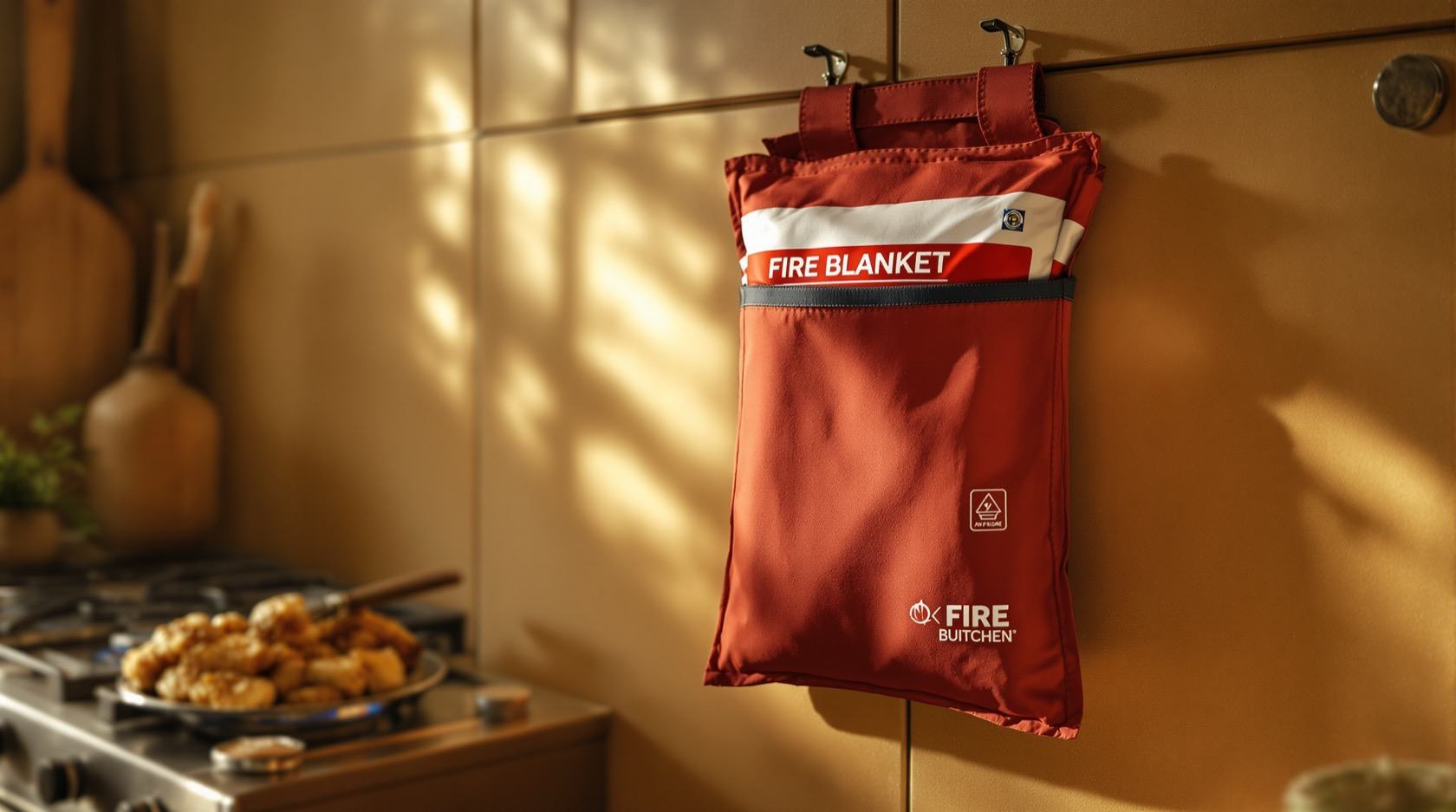
Fire Blankets in India (2026): The Simplest Kitchen Lifesaver Every Home Should Have
A fibreglass sheet that smothers a small fire by cutting off its oxygen - the cheapest, simplest fire-safety tool an Indian home can own, and the right first grab for a cooking-oil pan fire.
Of every device in this fire-safety library, the fire blanket is the cheapest, the simplest and the most under-used. It has no gauge to check, no pressure to lose, no expiry that quietly slips past on a label nobody reads. It is a square of fire-resistant fibreglass cloth in a pouch on the wall, and it does one thing supremely well: it lays over a small fire and cuts off the oxygen, so the fire simply goes out. For the single most common serious accident in an Indian home - a pan of cooking oil catching light on the stove - it is the right first thing to grab, and it costs less than a takeaway dinner.
This is the fire-blanket chapter of Studio Matrx's fire-safety library, and it sits under the complete guide to fire safety in India. It is the home-scale companion to the portable fire-extinguishers guide: where an extinguisher sprays an agent to knock a fire down, a blanket smothers it by starving it of air. The two are partners, not rivals - the realistic Indian home kit is one ABC dry-powder extinguisher plus one kitchen fire blanket, and this guide is about the second half of that pair.
Scope and safety - read this first. A fire blanket is for a small, early, contained fire only - a pan on the stove, a small waste-bin fire, or a person whose clothing is alight. It is not a firefighting tool for a room that is burning. As with every device in this library: if there is a real fire, get everyone out and raise the alarm FIRST, keep your back to a clear exit, and only tackle a fire that is smaller than you are and that you can reach without leaning over it. If the blanket does not put it out at once, or the fire is already spreading, drop everything, get out and call the fire brigade on 101 or 112. Never let firefighting trap you. This is educational guidance, not legal advice or a substitute for a licensed fire-safety professional.
What a fire blanket is, and how it works
A fire blanket is a sheet of woven glass-fibre (fibreglass) cloth, often treated with a fire-retardant finish, folded into a wall pouch with two fabric tabs hanging out of the bottom. Pull the tabs and the blanket drops straight into your hands, ready to use. Domestic sizes are typically around one metre by one metre for a kitchen, with larger sizes (1.2 m x 1.2 m and up) used where a blanket may need to wrap a person.
The physics is the whole point. Fire needs three things at once - fuel, heat and oxygen, the classic "fire triangle". Take away any one and the fire dies. A blanket takes away the oxygen: laid completely over a small fire, it forms an airtight cap so no fresh air can reach the flames, and the fire suffocates in seconds. It adds nothing, sprays nothing and makes no mess - which is exactly why it is so well suited to a kitchen, and why it is the only sensible tool to put over a pan of burning oil, where water would be catastrophic and even a powder extinguisher can splash hot oil.
The star use: a cooking-oil pan fire
Most serious Indian home fires start at the stove, and the worst of them is the cooking-oil fire. Oil left on heat eventually reaches its ignition temperature and bursts into flame on its own, with no spark. This is a Class K fire (cooking oils and fats), and it behaves unlike anything else in the kitchen. The full kitchen picture - LPG, the gas leak, the whole hazard - is in the kitchen fire-safety guide; here we focus on the moment the pan is alight and the blanket is on the wall.
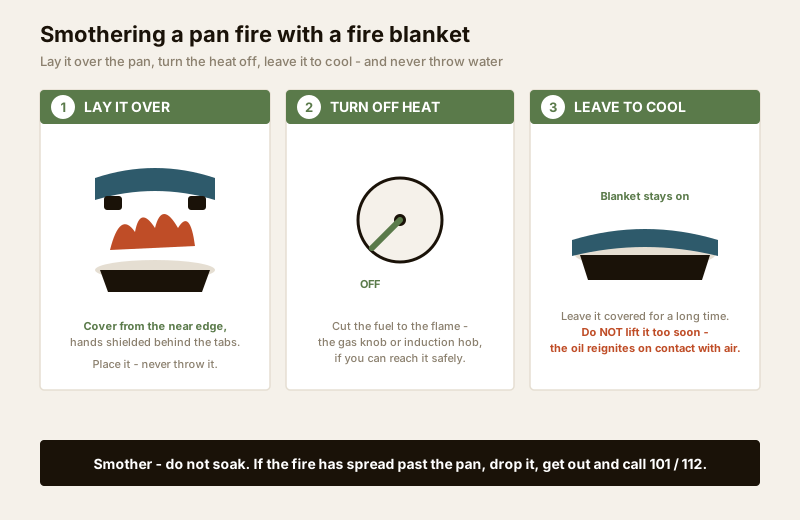
The one instinct you must override is the reflex to throw water. Water is denser than oil, so it sinks to the bottom of the pan and is flashed instantly into steam that expands roughly seventeen-hundred-fold, erupting upward and throwing burning oil across the room as a fireball. Learn that now, so the instinct is rewired before you ever need it. What you do instead is smother and cut the heat:
1. Turn off the heat - the gas knob or the induction hob - if you can reach it safely.
2. Lay the blanket over the pan. Pull it from its pouch by the tabs, wrap the top edge over your hands to shield them, and place it over the pan from the near edge, tenting it away from your body. Place it - never throw it.
3. Leave it covered and let the pan cool for a long time. Do not lift it too soon: re-admitting air to hot oil re-ignites it. Do not move the pan.
4. If it is already spreading past the pan, do not fight it - get out and call 101 or 112.
| If cooking oil catches fire | Do | Do NOT |
|---|---|---|
| The instinct to fight the flame | Turn off the heat first | Do NOT throw water - it flashes into a fireball |
| Covering the pan | Lay a fire blanket over from the near edge | Do NOT fan it or carry the burning pan outside |
| After the flames are out | Leave it covered and let it cool fully | Do NOT lift the blanket to peek - the oil reignites |
| If it has spread past the pan | Get everyone out, call 101 / 112 | Do NOT keep fighting once it is beyond the stove |
This is the home answer to a problem that commercial kitchens solve with heavier tools. In a restaurant or canteen with deep-fryers and large oil volumes, the dedicated tool for a fat fire is a wet-chemical (Class K) extinguisher, which cools and chemically seals the oil surface; the dry-chemical powder extinguisher covers a home's broader solids-liquids-gas risk. But for the small pan fire on a domestic hob, a blanket kept within arm's reach is faster, cleaner and safer than any of them.
The three jobs a fire blanket does well
Beyond the pan fire, a blanket earns its place with two more uses - and all three work the same way, by cutting off the air.
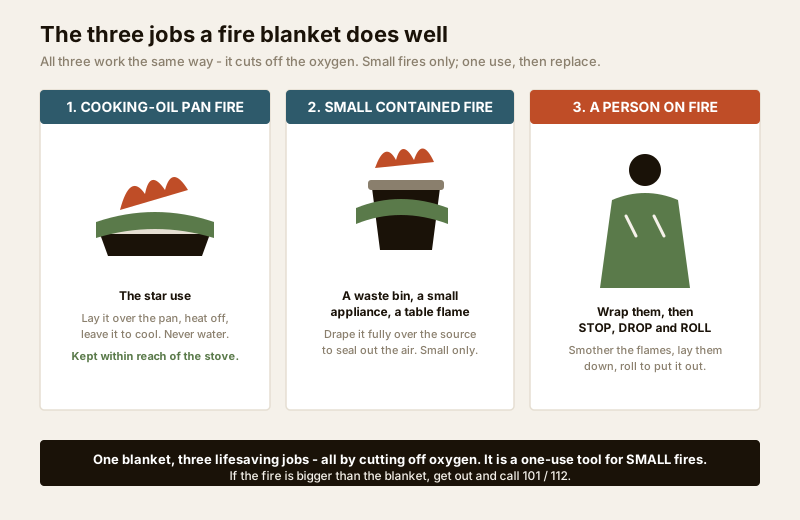
- A cooking-oil pan fire - the star use, covered above. This alone justifies owning one.
- A small contained fire - a waste-paper bin, a small appliance that has just caught, a table flare-up. Drape the blanket fully over the source so it seals out the air, and leave it. This works only while the fire is small enough for the blanket to cover completely.
- A person whose clothing is on fire - one of the most frightening emergencies, and one a blanket is genuinely made for. Wrap the person in the blanket to smother the flames and help them stop, drop and roll: stop moving (running fans the flames), drop to the ground, and roll to press out the fire. Wrapping them keeps the flames off the face and airway while they roll. Then treat the burn - cool it with running water once the flames are out - and get medical help.
| Use | How to deploy the blanket | The hard limit |
|---|---|---|
| Cooking-oil / pan fire | Lay over the pan, heat off, leave to cool | Only while the fire stays in the pan |
| Small contained fire (bin, small appliance) | Drape fully over the source, seal the air out | Only if the blanket covers it completely |
| Clothing on fire (a person) | Wrap the person, help them stop-drop-roll | For flames on a person, not a room fire |
| Anything larger, or a spreading fire | Do not use it - get out | A blanket is a small-fire tool only |
How to use one safely
The blanket protects the fire from oxygen, but it is up to you to protect yourself. A few rules turn it from a good idea into a safe one.
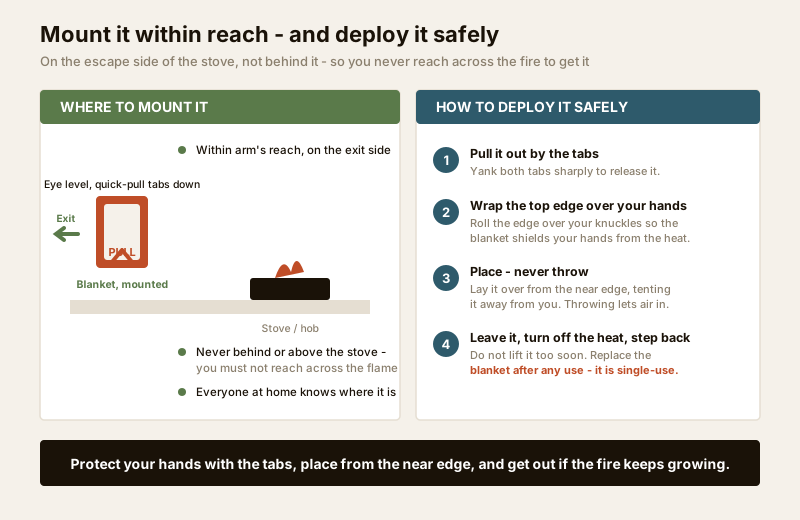
- Protect your hands with the tabs. Pull the blanket out by its two tabs, then roll the top edge back over your knuckles so a double thickness of cloth shields your hands from the heat and flame as you advance.
- Place it, do not throw it. Throwing a blanket lets air rush in under it and can knock a burning pan over. Lay it over the fire in a controlled movement.
- Work from the near edge. Bring the blanket down over the far side of the fire away from you, tenting it so the flames roll away from your body and hands, not up towards your face.
- Turn off the heat source - the burner, the hob, the appliance - as part of the same action, so you are not smothering a fire that is still being fed.
- Leave it in place and step back. Do not lift it to check. Give an oil fire in particular a long time to cool before you go near it.
Know its limits - this is a small-fire tool
A fire blanket's honesty is part of what makes it good: it does one small job well and makes no pretence of doing more. Respect the limits and it will never let you down.
- Small fires only. A blanket smothers a fire it can completely cover. It cannot fight a burning room, a fire climbing a wall, or anything bigger than the sheet itself.
- One event, then replace it. Treat a domestic blanket as single-use: once it has been over a fire it may be scorched, contaminated with hot oil or weakened, and its integrity can no longer be trusted. Buy a new one and remount it immediately - a used blanket back on the wall is not protection.
- It gets hot. The blanket conducts heat; without shielding your hands with the tabs and edge you can be burned even while doing everything else right.
- It is not an extinguisher for spreading fires. For a fire that has grown beyond a pan or a bin, an ABC dry-powder extinguisher has the reach and knock-down a blanket does not - and beyond that, get out. See the portable fire-extinguishers guide for matching the extinguisher to the fire class, and never use water on oil or on live electrical equipment (the electrical fire-safety guide explains why).
- Get out if it grows. No device is worth your life. If the blanket does not put the fire out at once, leave and call 101 or 112.
Buying and mounting one for an Indian home
A blanket is cheap enough that price should never be the reason a kitchen is without one. Choose and place it with a little care.
Choosing a blanket
- Look for a standards mark. Buy a blanket certified to the applicable BIS or EN fire-blanket standard (the widely used international benchmark is EN 1869; confirm the current applicable BIS/EN standard on the product and verify it before you rely on it). Avoid unmarked cloth of unknown fire performance.
- Get the right size. Around one metre square suits a kitchen pan fire; a larger blanket (1.2 m x 1.2 m or more) is better where it may need to wrap a person. If in doubt, size up.
- Choose a quick-release pouch with clear pull tabs, so it deploys in one motion, and prefer fibreglass (not lower-grade cloth).
Mounting it right
- Within arm's reach of the stove, on the exit side. The single most important placement rule: mount it where you can reach it without leaning across the hob, and on the side towards your escape route - so grabbing it never means reaching over the fire.
- Never behind or directly above the stove. A blanket stored where the fire is means you cannot get to it when it matters - this is the most common mounting mistake.
- At eye level, tabs down, unobstructed. Pouch on the wall, tabs hanging free, nothing stacked in front of it.
- Everyone at home knows where it is. A tool nobody can find is no tool at all. Point it out to family and household help, and to anyone who cooks.
Because a fire blanket has no pressure gauge and no moving parts, its "maintenance" is simply a monthly glance: is it still there, still in its pouch, tabs free and reachable, pouch undamaged? That is the whole check. The one active rule is to replace it after any use - and after that, to remount the new one straight away. Contrast this with an extinguisher, which needs its pressure gauge checked monthly and an annual service and refill by a licensed refiller; the blanket's appeal is precisely that it asks so little.
When to leave it to the professionals - and when to just leave. A home fire blanket is entirely yours to buy, mount and use, and you should. But it is a first-aid tool for a fire in its first seconds, nothing more. For a shop, restaurant, office or society building, the extinguisher schedule, the kitchen exhaust suppression and the premises Fire NOC are governed by the National Building Code (via SP 7 : 2026, Part 4 Fire and Life Safety), your State Fire Services Act and Rules and the local Model Building Bye-Laws, and must be provided and serviced through licensed fire-safety professionals - see the office fire-safety guide and the guidance for a commercial building. And one rule overrides all of the above: the moment a fire is more than a small, contained flame you can cover, stop fighting it. Get everyone out, raise the alarm, and call 101 or 112. Tie all of this into a whole-home plan with the home fire-safety guide, the emergency preparedness guide, and the ten-minute home fire-safety scorecard.
Key takeaways
- A fire blanket is the cheapest, simplest home fire-safety tool - a fibreglass sheet that smothers a small fire by cutting off its oxygen, with no gauge, no pressure and no mess.
- Its star use is a cooking-oil pan fire: turn off the heat, lay the blanket over the pan from the near edge, and leave it covered to cool - never throw water, and do not lift it too soon or the oil reignites.
- It also smothers a small contained fire and flames on a person - wrap them and help them stop, drop and roll.
- Use it safely: protect your hands with the tabs and edge, place it (never throw it) from the near edge, and get out if the fire keeps growing - it is a small-fire tool only, single-use, then replace.
- Mount it within arm's reach on the exit side of the stove, never behind or above it, buy one marked to the applicable BIS/EN standard, pair it with an ABC extinguisher, and check monthly that it is still there and reachable.
References
- IS 2190 : 2024, Selection, Installation and Maintenance of First-Aid Fire Extinguishers (Portable and Mobile) - Code of Practice, Bureau of Indian Standards - the framework for the home extinguisher that partners a fire blanket, including placement and servicing. Verify the current edition via the BIS catalogue: https://www.services.bis.gov.in/
- IS 15683 : 2018, Portable Fire Extinguishers - Performance and Construction - Specification, Bureau of Indian Standards - the product standard (ISI mark) for the extinguisher in the realistic home kit. For fire blankets, confirm the applicable BIS/EN fire-blanket standard (the international benchmark commonly cited is EN 1869) on the product before relying on it. Verify via the BIS catalogue: https://www.services.bis.gov.in/
- National Building Code of India, SP 7 : 2026 (the NBC), Part 4 "Fire and Life Safety" - the fire and life-safety framework for buildings and the basis for commercial extinguisher and suppression provision; the older SP 7 : 2016 edition is withdrawn but still widely quoted. Verify the current edition via the BIS catalogue: https://www.services.bis.gov.in/
- The relevant State Fire Services Act and Rules and the Model Building Bye-Laws (MoHUA) - these set when a Fire NOC and a given schedule of first-aid firefighting equipment are legally required for commercial and institutional premises.
This is an educational overview, not legal advice, and not a substitute for a licensed fire-safety professional. A fire blanket is a first-aid tool for a small, contained fire only - if a fire is spreading, get everyone out and call 101 or 112. Verify any standard's current status via the BIS catalogue before relying on it.
Export this guide
Related Guides — Deep-dive reading
Water Extinguishers in India (2026): Class A Only — and the Deadly Wrong Uses
The cheapest, simplest extinguisher cools solids brilliantly but can kill on the wrong fire. Here is where a water extinguisher belongs, and why oil, flammable liquids and live electrical are absolute no-go.
SecurityDry Chemical Powder Extinguishers in India (2026): The ABC All-Rounder Explained
The ABC dry powder is the most common extinguisher in India and the right single one for most homes and shops - it fights solids, liquids and gas, is safe on live electrics, but makes a corrosive mess.
SecurityWet Chemical Extinguishers in India (2026): The Class-K Answer for Cooking-Oil Fires
The specialist extinguisher for deep-fat and cooking-oil fires. Here is how a wet-chemical mist saponifies hot oil to smother and cool it, why water, foam, CO2 and powder all fail, and where a commercial kitchen must carry one.
SecurityRelated Tools — Try Free
Fire Extinguisher Selector
The wrong extinguisher can make a fire worse. Pick a space and get the right extinguisher type(s) to consider — ABC powder, CO2, foam, wet-chemical, water or a fire blanket — matched to the fire class, with the deadly never-use warnings.
ExtinguisherHome Security Risk Scorecard
Score your home across six security layers — perimeter, entry points, lighting, detection, alarm and habits — and get a prioritised action plan.
Security ScorecardBefore & After Studio
Generate AI before-and-after renders to preview how your redesign could look.
DesignAI