
How Home Lifts Work (India): Hydraulic, Traction, Screw and Vacuum Explained
A plain-language look inside the four drive types that lift a home elevator, plus the core components and safety systems every homeowner should be able to name.
A home lift looks like a simple box that goes up and down. Underneath that calm cabin, though, four very different machines can be doing the lifting. One pushes the car up on a column of oil. One hauls it on steel ropes balanced against a counterweight. One spins it up a giant threaded screw. One literally sucks it skyward with air pressure. Understanding which mechanism is under your floor tells you why one lift is whisper-quiet, why another sips power, why one needs a deep pit and another needs none at all.
This is the how-it-works explainer. It is deliberately about the mechanics, not the money or the model choice. If you are at the stage of deciding which lift to buy for your home, start with the residential elevator buyer's guide instead, and use the home lift cost guide for budgets. Here we open the box and show you what moves the car.
Knowing the drive type is the single most useful piece of lift literacy a homeowner can have. It quietly decides your pit depth, your noise, your power bill and your retrofit options.
The job every lift has to do
Whatever the drive, every lift solves the same problem: move a loaded cabin smoothly and safely along a fixed vertical path, stop it level with each floor, hold it there, and never let it fall. The differences are all in how the car is pushed or pulled, and how it is held and guided.
Three ideas run through all four drive types:
- A force that lifts the car — oil pressure, rope tension, a turning screw, or an air-pressure difference.
- A guide that keeps it straight — vertical steel rails the car slides along, so it cannot sway or twist.
- Safety systems that act if something goes wrong — devices that grip the rails on overspeed, cushions at the bottom, and a battery that rescues you in a power cut.
We will cover the four drives first, then the components every homeowner should be able to name.
How it works at a glance
| Drive type | What lifts the car | Pit / shaft needs | Typical home use | Feel and noise | Indicative cost (confirm with vendor) |
|---|---|---|---|---|---|
| Hydraulic | A pump forces oil into a cylinder; a ram pushes the car up; a valve lets it down by gravity | Shallow pit (about 150 to 300 mm); power pack in a nearby cabinet | Low rise, 2 to 4 floors | Very smooth and quiet; oil and heat to manage | ₹8 to 20 lakh |
| Traction (geared or gearless) | An electric motor turns a sheave; ropes carry the car one side, a counterweight the other | More pit and headroom; machine-room-less (MRL) puts the motor in the shaft | Any home height; the all-rounder | Smooth, fast, gearless is quietest | ₹10 to 25 lakh and up |
| Screw (winding column) | A nut platform climbs a rotating threaded screw column | Very low pit (about 150 to 300 mm); self-supporting | Compact homes, retrofits | Steady, mechanical hum; low maintenance | ₹14 to 30 lakh |
| Pneumatic vacuum (PVE) | A turbine drops air pressure above the cabin; atmospheric pressure below pushes it up | No pit, no shaft, no machine room | Easy retrofit, 2 to 3 persons, short travel | Panoramic glass; turbine noise on the way up | ₹11 to 22 lakh |
All figures are indicative for India in 2026, exclude GST at 18 percent, and exclude civil and installation work. Confirm with your vendor and a licensed lift contractor.
1. Hydraulic: lifted on a column of oil
A hydraulic home lift works the way a car jack works, scaled up and made precise.
A pump driven by an electric motor pushes hydraulic oil out of a tank and into a cylinder. Inside the cylinder sits a ram (also called a piston or plunger). As oil fills the cylinder, the ram is forced upward, and the ram carries the car. To go down, the motor does nothing: a control valve simply opens and lets oil bleed back into the tank, so the car descends gently under its own weight. Gravity lowers it; the pump only ever lifts.
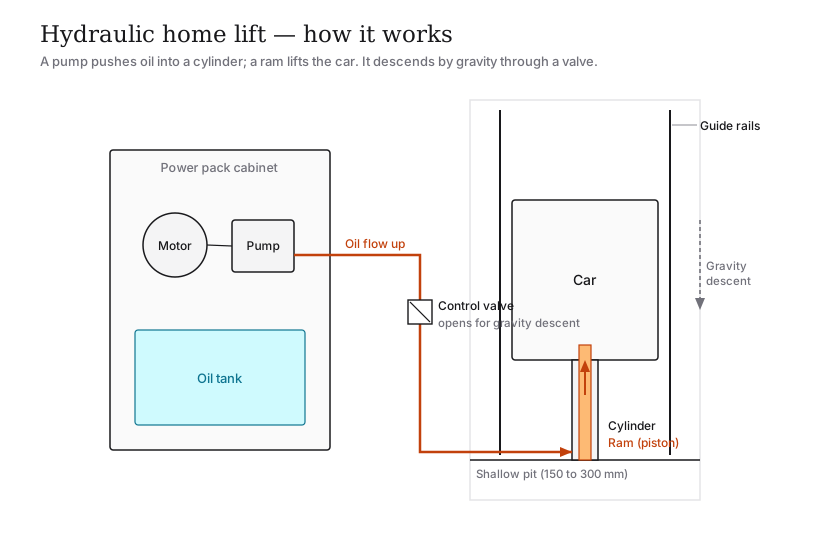
That single-direction design is why hydraulic lifts feel so smooth and stay quiet: the heavy work is a slow, steady flow of oil, and the motor only runs on the way up. It is also why the machinery does not have to sit above the car. The pump and tank live in a small adjacent cabinet, so you do not need a tall machine room on the roof, and the pit can be shallow, roughly 150 to 300 mm.
The trade-offs are physical. Oil gets warm with use, so heat and oil maintenance matter, and in a small space the pump unit needs ventilation. Hydraulics are best for low-rise homes of two to four floors; pushing a tall column of oil higher gets slow and inefficient. For most G plus 1 and G plus 2 Indian homes that want quiet and low civil work, hydraulic is a natural fit.
2. Traction: balanced on ropes against a counterweight
Traction is the classic elevator mechanism, and the cleverest. The car hangs from steel ropes (or flat steel belts on newer systems) that run up and over a grooved wheel called a sheave. The sheave is turned by an electric traction machine (the motor). On the other end of those ropes hangs a counterweight.
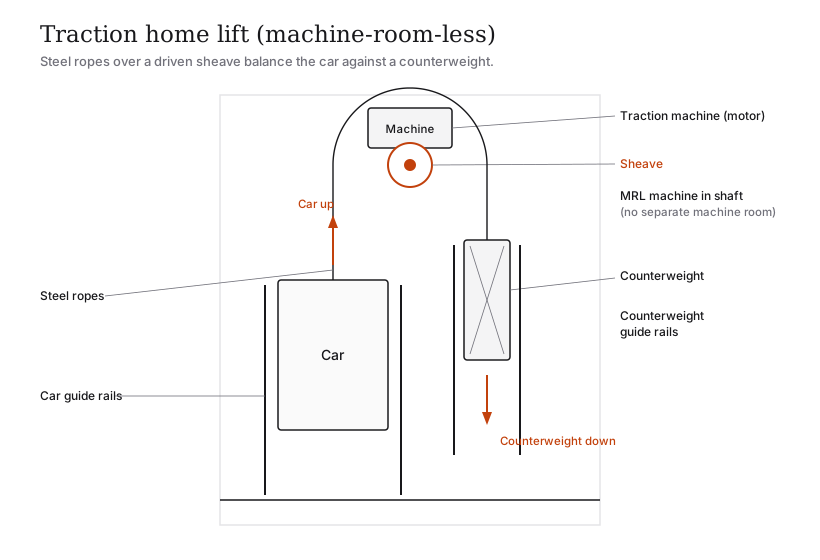
When the motor turns the sheave one way, the car rises and the counterweight drops; turn it the other way and they swap. Friction (traction) between the ropes and the grooved sheave is what grips and moves the ropes, which is where the name comes from.
The counterweight is the whole trick, so it deserves its own picture.
Why the counterweight makes traction efficient
The counterweight is sized to roughly the weight of the empty car plus about half of its rated load. Think about what that means. If the car and the counterweight were perfectly balanced, the motor would barely have to work at all to move either one, the way a see-saw with equal children needs only a fingertip to tip. The motor never lifts the full weight of a loaded car. It only ever moves the difference between the loaded car and the counterweight, which is a fraction of the total.
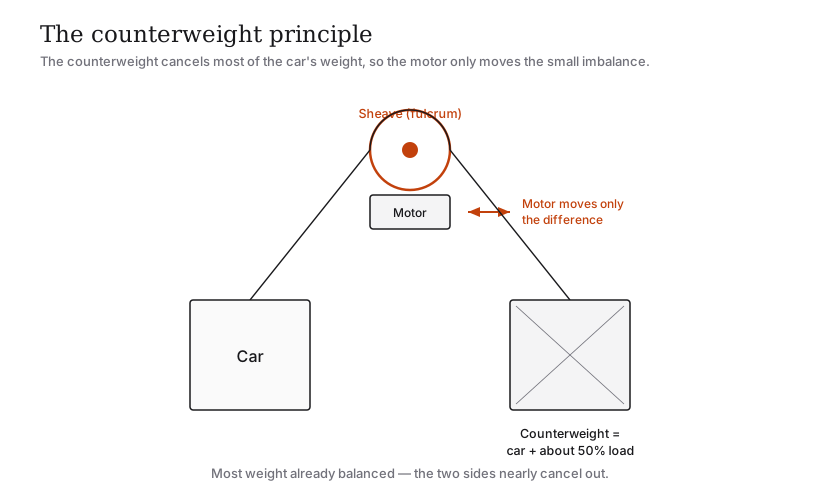
A traction motor does not haul your full weight up the building. The counterweight already cancels most of it, so the motor only nudges the small imbalance. That is why traction lifts use far less power than a drive that lifts the whole car unaided.
This is why traction is the energy-efficient all-rounder, and why it suits any home height rather than just low rise.
Traction comes in two flavours:
- Geared — the motor turns through a gearbox to drive the sheave. Robust and proven, but the gears add some noise and friction.
- Gearless — the motor drives the sheave directly, with no gearbox. This is the quietest and most efficient option, especially when paired with a modern VVVF (variable-voltage, variable-frequency) drive that ramps speed up and down silkily. Gearless machines are compact enough to live inside the shaft.
That compactness gives us the 2026 norm: the machine-room-less (MRL) lift, where the traction machine sits inside the hoistway itself, so there is no separate machine room on the roof. MRL needs a little more pit and headroom than a hydraulic lift, but it removes a whole room from your plans. If a machine room is part of your design conversation, see the machine room requirements guide.
3. Screw: climbing a giant threaded column
A screw-driven (or screw-and-nut) lift does away with ropes and counterweights entirely. A vertical threaded screw column runs the full height of travel. A nut unit fixed to the car platform engages the threads, and a motor on the car rotates against the screw. As the nut turns on the thread, the whole car platform travels up or down the column, exactly like a bolt threading along a long screw.
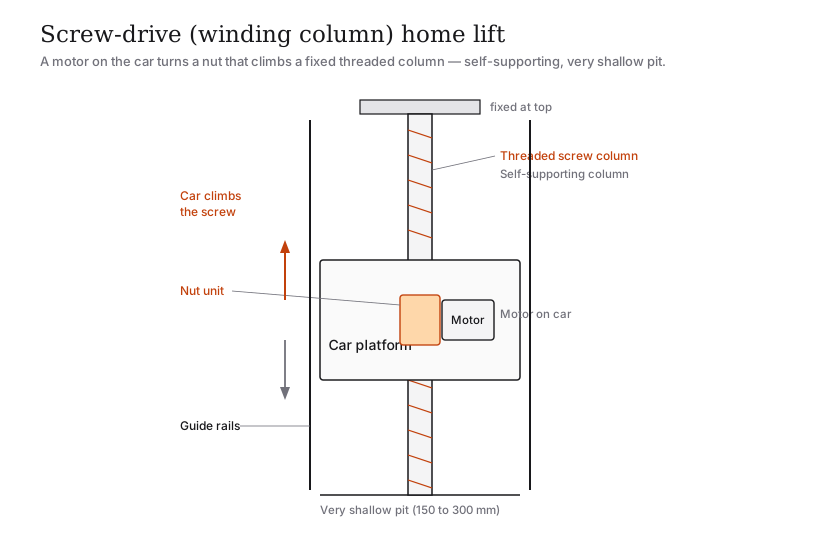
Because the screw column carries the load and is bolted to the structure, the lift is self-supporting: it does not lean on the building for strength, which makes it forgiving to install and well suited to retrofits. It needs only a very shallow pit (about 150 to 300 mm), has no ropes to inspect and no counterweight to balance, and is mechanically simple, which keeps maintenance low.
The trade-off is that a screw and nut grinding against each other is inherently a mechanical, slightly hummy drive, and the screw needs periodic lubrication. Screw lifts are compact, dependable people-movers for homes rather than fast machines.
4. Pneumatic vacuum: pushed up by the air itself
The pneumatic vacuum elevator (PVE) is the most surprising of the four because there is no rope, no piston and no screw touching the car. The car is a sealed cylindrical cabin running inside a sealed tube. On top of the tube sits a set of turbines.
To go up, the turbines spin and pull air out of the tube above the cabin, lowering the pressure there. The ordinary atmospheric pressure below the cabin is now higher, and that difference in pressure simply pushes the cabin upward through the tube. To come down, valves let air back in above the cabin in a controlled way, and the cabin descends gently under gravity, with the turbines metering the release.
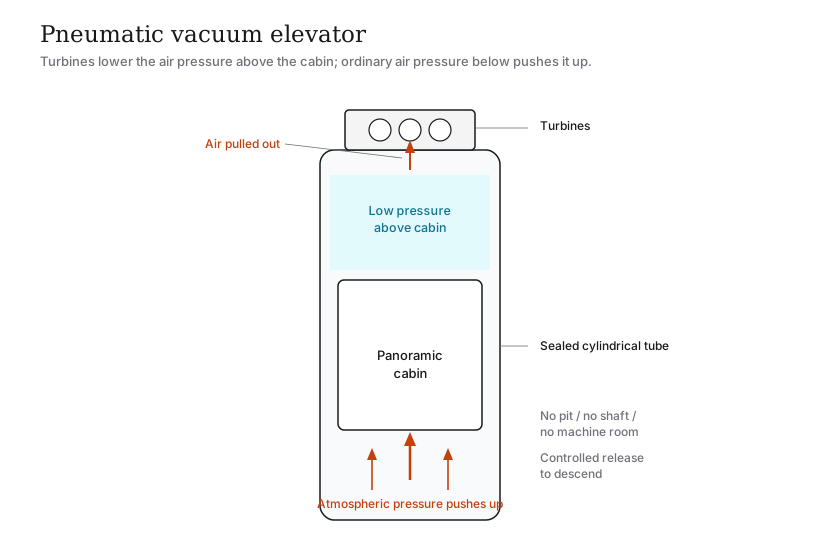
The consequences are dramatic for a retrofit. A PVE needs no pit, no shaft and no machine room, and it is fully self-supporting, so it can be dropped into an existing home with minimal building work, often beside a staircase. The panoramic glass tube is also a striking look. The limits are equally clear: capacity is modest (about two to three persons), travel height is limited, and because lifting works by removing air against atmospheric pressure, the PVE draws more power on the way up than on the way down. Nibav is the best-known India-grown PVE brand.
The core components every homeowner should know
Regardless of drive, a home lift is built from the same family of parts. Being able to name them helps you read a quotation, ask the right questions, and judge an AMC.
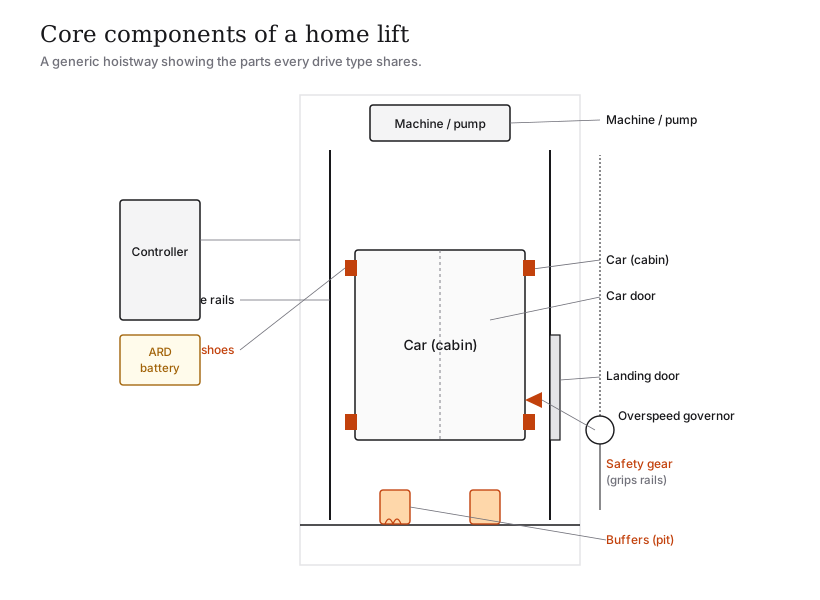
- Car (cabin) — the enclosed platform you stand in. Its floor area is matched to the rated load (see the capacity guide).
- Guide rails and guide shoes — vertical steel rails fixed to the shaft walls. The car (and the counterweight, on traction) ride along them on guide shoes or rollers, so the car cannot sway or twist. The rails are also what the safety gear grips in an emergency.
- Landing doors and car doors — the doors at each floor and on the car. Manual swing doors are cheapest but block wheelchairs; automatic telescopic or sliding doors are smoother and accessible. Both carry sensors so they cannot close on a person.
- Controller — the lift's brain. It receives your calls, runs the motor or pump, manages levelling and door timing, and enforces the safety logic. Safety-critical functions live here on a certified controller and stay there, even when you add smart-home features.
- Machine or pump — the traction motor and sheave, or the hydraulic pump and tank, or the screw motor, or the PVE turbines. This is the drive we have just walked through.
- Ropes, ram, screw or tube — the load-bearing element specific to the drive: steel ropes and counterweight, a hydraulic ram, a threaded screw column, or the sealed vacuum tube.
- Overspeed governor and safety gear — the core fall protection. The governor constantly senses the car's speed. If the car ever moves faster than a set limit, the governor trips the safety gear, a set of wedges or grippers on the car that clamp onto the guide rails and bring the car to a controlled halt. This is the system that makes a lift safe even if the ropes or drive fail.
- Buffers — spring or oil cushions at the bottom of the pit that absorb the impact if the car ever over-travels past the lowest floor.
- ARD (Automatic Rescue Device) — a battery unit that, on a mains power cut, automatically drives the car to the nearest floor and opens the doors so you are never trapped. In India, with its outages, an ARD is essential, not optional. The rescue and battery side is covered in depth in the emergency rescue systems and battery backup systems guides.
Three letters to never compromise on: ARD. A lift without automatic rescue is a lift that can trap you during a routine power cut. Confirm it is included before you sign anything.
How the drive shapes everything else
Once you can see the mechanism, the rest of the buying decisions stop feeling arbitrary, because almost every other spec follows from the drive:
- Pit and shaft follow from the drive. Hydraulic, screw and PVE need shallow or no pits; traction needs a little more. The structural design guide goes into loads and shaft construction.
- Power and phase follow from the drive and size. Compact PVE, small hydraulic and small gearless lifts can run on a normal single-phase home supply; larger traction wants three phase. See the power requirements and single-phase versus three-phase guides.
- Speed follows from the drive and travel. Home lifts are slow by design, about 0.15 to 0.5 m/s; the speed selection guide helps you pick.
- Noise follows from the drive. Gearless traction with a VVVF drive is the quietest; the turbine and the pump are the things to isolate. The noise reduction guide covers shaft placement and isolation.
- Automation (auto doors, auto-levelling, ARD) layers on top of any drive; see the lift automation features guide.
When you are ready to translate all of this into a written order, the lift specification checklist turns these mechanisms into the exact line items to confirm with your vendor.
References
- IS 14665 (Electric Traction Lifts), BIS committee ETD 25, aligned to EN 81. Part 1 covers outline dimensions (car, well, pit, headroom, machine room, door types); Part 4 covers components including buffers, guide rails and shoes, carframe, counterweight, suspension, safety gears and governors.
- IS 14665 Part 2 (BIS): https://law.resource.org/pub/in/bis/S05/is.14665.2.1-2.2000.pdf
- IS 15259 (Hydraulic lifts), companion code for hydraulic installations (referenced by name).
- National Building Code of India 2016, Part 8 (Building Services), Section 5, Installation of Lifts, Escalators and Moving Walks.
- BIS Guide for Using NBC 2016: https://www.bis.gov.in/wp-content/uploads/2022/08/Booklet-Guide-for-Using-NBC-2016.pdf
- Nibav, machine-room-less (MRL) home elevator: https://www.nibavlifts.com/machine-room-less-mrl-home-elevator/
- Nibav, silent home lifts (pneumatic vacuum drive): https://www.nibavlifts.com/silent-home-lifts/
All technical ranges and costs above are indicative for India in 2026 and vary by drive type, capacity, brand, state and year. Confirm specifications with a licensed lift contractor and your local municipal bye-laws before committing.
Export this guide
Related Guides — Deep-dive reading
Lift Specification Checklist (India): The Spec Sheet to Hand Every Home-Lift Vendor
One fillable spec sheet that forces every vendor to quote like-for-like on your shaft, your stops, your safety features.
Home Lifts & AccessibilityHome Lift Planning Checklist (India): Everything to Decide Before You Buy
A printable, ten-stage checklist that takes you from the first family conversation to a signed handover.
Home Lifts & AccessibilityHome Lift Safety Guide (India): How Safe Home Lifts Are and How to Use One Safely
Why modern home lifts cannot free-fall or open onto an empty shaft, the safety features explained, and how to use one safely every day — for children, seniors and emergencies.
Home Lifts & AccessibilityRelated Tools — Try Free
Home Lift Cost Calculator
All-in home lift cost by floors, type, capacity and city — equipment, civil, GST and AMC, with a drive-type comparison.
Lift CalculatorCross-Ventilation Analyzer
Estimate airflow and air changes per hour (ACH) from room size, window areas, layout, and local wind — with NBC 2016 Part 8 compliance check.
Ventilation CalculatorHome Lift Budget Planner
Full line-item budget for a home lift — equipment, finishes, civil, GST, AMC and contingency.
Lift Planner