

Home Lift Planning Checklist (India): Everything to Decide Before You Buy
A printable, ten-stage checklist that takes you from the first family conversation to a signed handover.
A home lift is one of the few purchases where a single wrong decision is poured into concrete. Get the shaft 100 mm too narrow, forget the pit, skip the power backup, or buy before you understand your state's licensing rules, and the fix is rarely cheap. This guide is built to stop that happening. It is an artifact — a complete, printable home lift planning checklist you can carry from the first family conversation right through to handover.
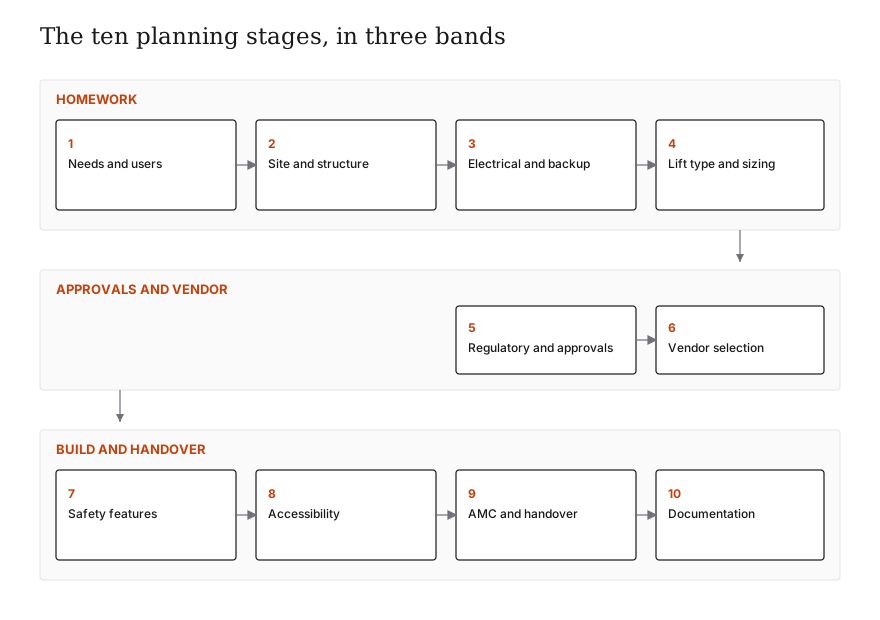
The checklist below is organised into ten stages, in the order you should actually work through them. Each row is one decision or check, with a short note on why it matters. Tick the ☐ as you go. Every figure in this guide is indicative — confirm with your local municipal bye-laws and a licensed lift contractor before you commit money.
Print this guide. Walk the site with a tape measure, a torch and a pen. A lift bought from a brochure is a lift bought blind.
How to use this checklist
Work top to bottom. Stages 1–4 are your homework before you ever call a vendor; they decide what you need. Stages 5–6 cover approvals and choosing who builds it. Stages 7–10 are what you verify during the build and at handover. Do not let a salesperson reorder this — if you size the lift after you have already chosen the brand, you are negotiating from a weak position. For a deeper read on each topic, every stage cross-links to a companion guide.
Stage 1 — Needs and users
Before dimensions or brands, decide who this lift serves and for how long. The honest answers here drive every later choice.
| ☐ | Item to check | Why it matters |
|---|---|---|
| ☐ | Who are the primary users today (elderly parent, child, person with reduced mobility)? | Drives capacity, door type and accessibility provisions. |
| ☐ | Will any user need a wheelchair now or within ~10 years? | A wheelchair-plus-attendant car is ≈1100 × 1400 mm — bigger than a basic 2-person car. |
| ☐ | How many floors must the lift actually serve (G+1, G+2, G+3)? | Travel height shapes lift type, pit/headroom and cost. |
| ☐ | Expected daily trips and peak usage? | Light home use suits hydraulic/screw; heavier use favours traction/MRL. |
| ☐ | Is this for an existing home (retrofit) or new construction? | Retrofit strongly favours low-pit or pneumatic vacuum (no shaft) options. |
| ☐ | Have you future-proofed for ageing-in-place? | Plan once for the next 20 years — see our future-proof home design guide. |
Stage 2 — Site and structure (space audit)
This is the stage that goes wrong most often. Take a tape measure to the actual location and record real numbers — not the architect's drawing.
| ☐ | Item to check | Why it matters |
|---|---|---|
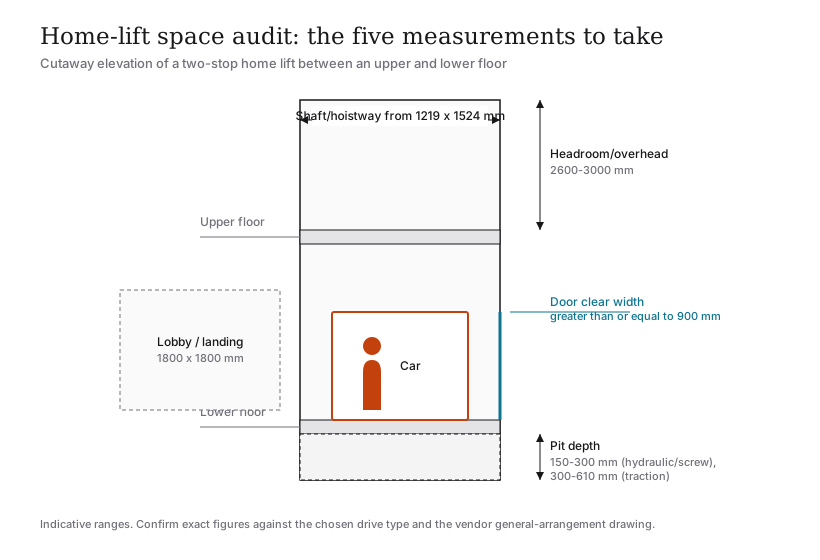
| ☐ | Measure available footprint for the shaft/hoistway. | A small home car needs from ≈1219 × 1524 mm; undersizing the shaft is the most common costly mistake. |
| ☐ | Measure available pit depth below the lowest floor. | Hydraulic/screw need ≈150–300 mm; traction ≈300–610 mm; some gearless 1200–1500 mm. No pit? Consider pitless or PVE. |
| ☐ | Measure headroom/overhead above the top floor. | Typically ≈2600–3000 mm; MRL removes the old machine-room-on-top requirement. |
| ☐ | Confirm the structure can carry the lift loads. | Self-supporting (screw, PVE) options reduce demands on the building; traction loads the well structure. |
| ☐ | Is there space for a power pack/cabinet (hydraulic)? | Hydraulic needs a small adjacent cabinet for the power pack. |
| ☐ | Check for water ingress / flooding risk in the pit. | Pit flooding is an act-of-God exclusion in most AMCs — drainage is your problem to solve. |
| ☐ | Plan the lobby space at each landing. | An accessible lobby is ≈1800 × 1800 mm so a wheelchair can turn. |
Stage 3 — Electrical and backup
Indian power reality — not the brochure — decides this stage. Outages are routine, so backup is non-negotiable.
| ☐ | Item to check | Why it matters |
|---|---|---|
| ☐ | Single-phase or three-phase supply available? | Small home lifts run single-phase; larger traction needs three-phase. |
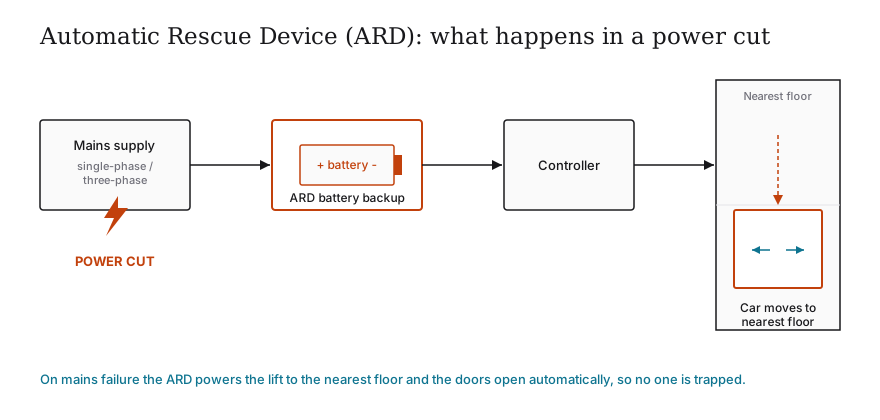
| ☐ | Is an ARD (Automatic Rescue Device) included? | On a power cut, the ARD battery brings the car to the nearest floor and opens the doors. Do not buy without it. |
| ☐ | Dedicated circuit and correct cabling planned? | Lifts need a clean dedicated supply; retrofit wiring is extra civil work. |
| ☐ | Earthing and surge protection in place? | Protects the controller — a costly part often excluded from AMC. |
| ☐ | Estimated running power, especially on ascent? | MRL/screw are modest; a pneumatic vacuum (PVE) draws more on the way up. |
Stage 4 — Lift type and sizing decision
Now match the homework from Stages 1–3 to a lift type. Use this comparison to shortlist, then confirm exact numbers with the cost guide.
| ☐ | Item to check | Why it matters |
|---|---|---|
| ☐ | Shortlist a lift type for your site. | Hydraulic ₹8–20 L (low rise, shallow pit); Traction/MRL ₹10–25 L+ (efficient, faster); Screw ₹14–30 L (low pit, compact); PVE ₹11–22 L (no pit/shaft, retrofit). |
| ☐ | Fix the car capacity (persons / kg). | Home range ≈2–8 persons; a 2-person car ≈150–204 kg. PVE is limited to ≈2–3 persons. |
| ☐ | Decide door type. | Automatic telescopic/sliding is smoother and wheelchair-friendly; manual swing is cheapest but NOT accessible. |
| ☐ | Confirm speed expectation (≈0.15–0.5 m/s). | Hydraulic is slower; traction faster — set expectations early. |
| ☐ | Cross-check against your budget envelope. | See the home lift cost guide; remember GST 18%, civil work and installation are usually extra. |
Stage 5 — Regulatory and approvals
Lifts are state-regulated in India. Roughly ten states require licences; in the rest, IS/NBC remain best practice. Indicative — confirm with your local municipal bye-laws.
| ☐ | Item to check | Why it matters |
|---|---|---|
| ☐ | Does your state have a Lift Act? | About 10 states issue licences: Maharashtra, Gujarat, Karnataka, Kerala, Tamil Nadu, Assam, West Bengal, Delhi, Haryana, Himachal Pradesh. |
| ☐ | Apply for the installation licence before commissioning. | Required in licensing states before the lift can be commissioned. |
| ☐ | Obtain the operation licence / registration. | Needed to legally run the lift; skipping it is a common, avoidable mistake. |
| ☐ | Schedule the periodic safety inspection. | Done by the State Electrical/Lift Inspectorate — government inspectors, not private companies. |
| ☐ | Confirm compliance with IS 14665 / NBC 2016 Part 8 Sec 5. | The technical baseline even where no Act exists. |
| ☐ | Note any building-height triggers in local bye-laws. | A lift is generally required where building height exceeds ~13 m; fireman's lift rules apply above 15 m (some residential rules 30 m). |
Stage 6 — Vendor selection
Brand matters less than local service. A great lift with no nearby technician is a slow lift to nowhere.
| ☐ | Item to check | Why it matters |
|---|---|---|
| ☐ | Shortlist 3 vendors and compare like-for-like. | Use the lift vendor comparison guide. Majors include Otis, KONE, Schindler, TKE; Johnson Lifts is a large indigenous maker; Nibav/Elite specialise in home PVE. |
| ☐ | Confirm a local service branch / technician presence. | No local service presence is a top buyer pitfall. |
| ☐ | Ask for written, itemised quotes (unit + civil + installation + GST). | Civil work and installation are usually extra — get them in writing. |
| ☐ | Check references and existing installations nearby. | Verifies real-world reliability and after-sales behaviour. |
| ☐ | Clarify warranty terms and what voids them. | Aligns expectations before money changes hands. |
Stage 7 — Safety features
Every item here is a must-have, not an upgrade. Confirm each is in the specification, in writing.
| ☐ | Item to check | Why it matters |
|---|---|---|
| ☐ | Overspeed governor + safety gear. | Stops the car on overspeed — core fall protection. |
| ☐ | Door sensors / light curtain. | Prevents doors closing on a person or wheelchair. |
| ☐ | ARD battery backup (re-confirm from Stage 3). | Frees occupants during outages — essential in India. |
| ☐ | Emergency alarm + two-way intercom. | Lets a trapped occupant call for help. |
| ☐ | Manual lowering capability. | Allows safe rescue when power and ARD both fail. |
| ☐ | Overload sensor. | Refuses to move when over capacity. |
| ☐ | Fireman's switch (taller installations). | Required above ~15 m; lets firefighters commandeer the car. |
For the full line-by-line spec to hand a vendor, use the lift specification checklist.
Stage 8 — Accessibility provisions
Private homes are not legally compelled to meet RPwD norms, but the CPWD Harmonised Guidelines are the right best-practice benchmark — especially for ageing-in-place.
| ☐ | Item to check | Why it matters |
|---|---|---|
| ☐ | Clear door width ≥ 900 mm. | Lets a wheelchair pass; manual swing doors usually fail this. |
| ☐ | Car ≈1100 × 1400 mm (wheelchair + attendant). | The minimum accessible home-car size. |
| ☐ | Handrail ≥ 600 mm long at 800–1000 mm height, near the panel. | Support for standing and seated users. |
| ☐ | Automatic door closing time ≥ 5 seconds. | Gives slower users time to enter and exit. |
| ☐ | Braille/tactile buttons + audio and visual floor indicators. | Serves visually and hearing-impaired users. |
| ☐ | Mirror on the rear wall. | Lets a wheelchair user reverse out safely. |
| ☐ | Accessible lobby ≈1800 × 1800 mm. | Room to turn a wheelchair at each landing. |
See our accessible home design guide and the professional universal-design reference for the wider home context.
Stage 9 — AMC and handover
The contract you sign at handover decides your costs for the next decade. Read the fine print before, not after.
| ☐ | Item to check | Why it matters |
|---|---|---|
| ☐ | Choose AMC type: non-comprehensive vs comprehensive. | Comprehensive costs ≈60–70% more but caps surprise repair bills. |
| ☐ | Confirm visit frequency (≈12 monthly preventive visits/year). | Standard service plus emergency breakdown calls. |
| ☐ | Budget the AMC (≈₹20,000–38,500/yr, ~5% annual escalation). | Indicative small-residential range; confirm in your contract. |
| ☐ | Read the exclusions list carefully. | Even comprehensive often excludes flooding, vandalism, and sometimes motor/controller/rope. |
| ☐ | Schedule the commissioning inspection and test run. | Verifies the lift works to spec before you accept it. |
| ☐ | Get hands-on operation and emergency training. | You must know how to use the alarm, intercom and manual lowering. |
Score competing contracts with the AMC evaluation guide.
Stage 10 — Documentation to collect
Keep one folder with everything below. You will need it for inspections, resale and any warranty claim.
| ☐ | Item to check | Why it matters |
|---|---|---|
| ☐ | Itemised final quotation and invoice (with GST). | Proof of scope and spend. |
| ☐ | Installation licence and operation licence/registration. | Mandatory in licensing states; needed at inspection. |
| ☐ | Safety inspection certificate. | Confirms the lift passed the State Inspectorate. |
| ☐ | IS 14665 / NBC compliance declarations. | Evidence the technical baseline was met. |
| ☐ | Warranty document and AMC contract. | Defines what is covered and for how long. |
| ☐ | Operation and maintenance manual. | The day-to-day and emergency reference. |
| ☐ | Wiring diagram and as-built shaft drawings. | Essential for any future repair or modernisation. |
Putting it to work
Tackle the stages in order, and resist the temptation to lock in a brand before you have finished Stage 4. If you would rather answer guided questions than tick a checklist, start with our home lift planning questionnaire and return here to confirm. When you are ready to price it out, move to the cost guide; to choose who builds it, the vendor comparison; and for the exact technical spec to hand over, the specification checklist. The full picture lives in our pillar, the residential elevator buyer's guide for India.
References
- IS 14665 — Electric Traction Lifts (BIS, committee ETD 25): Part 1 (outline dimensions) and Part 2 (installation, operation and maintenance code of practice).
- IS 15259 — Hydraulic Lifts (companion code for hydraulic installations).
- National Building Code (NBC) 2016, Part 8 (Building Services), Section 5 — Installation of Lifts, Escalators and Moving Walks (BIS).
- RPwD Act 2016 (Rights of Persons with Disabilities) — Sections 40, 44, 45 on accessibility.
- CPWD / MoHUA Harmonised Guidelines and Space Standards for a Barrier-Free Built Environment (2016).
Source URLs:
- IS 14665 Part 1 (BIS): https://law.resource.org/pub/in/bis/S05/is.14665.1.2000.pdf
- IS 14665 Part 2 (BIS): https://law.resource.org/pub/in/bis/S05/is.14665.2.1-2.2000.pdf
- BIS National Building Code 2016: https://www.bis.gov.in/standards/technical-department/national-building-code/
- BIS Guide for Using NBC 2016: https://www.bis.gov.in/wp-content/uploads/2022/08/Booklet-Guide-for-Using-NBC-2016.pdf
- RPwD Act 2016 (full text, Odisha SSEPD): https://ssepd.odisha.gov.in/sites/default/files/2024-01/RPWD%20ACT.pdf
- DEPwD (Dept of Empowerment of Persons with Disabilities): https://depwd.gov.in/en/faqs-4/
- CPWD Harmonised Guidelines: https://www.cpwd.gov.in/Publication/Harmonisedguidelinesdreleasedon23rdMarch2016.pdf
- 99acres — lift regulations in India: https://www.99acres.com/articles/know-all-about-the-lift-regulations-in-india.html
- National Govt Services Portal — Maharashtra licence to operate lift: https://services.india.gov.in/service/detail/maharashtra-license-to-operate-lift
Export this guide
Related Guides — Deep-dive reading
Lift Specification Checklist (India): The Spec Sheet to Hand Every Home-Lift Vendor
One fillable spec sheet that forces every vendor to quote like-for-like on your shaft, your stops, your safety features.
Home Lifts & AccessibilityLift Vendor Comparison Sheet (India): How to Compare Home-Lift Companies Before You Sign
A blank, printable matrix that turns three glossy brochures into one decision you can defend.
Home Lifts & AccessibilityHome Lift Planning Questionnaire (India): Answer These Before You Call a Vendor
A fillable eight-part brief that turns a vague lift idea into a spec a vendor can actually quote against.
Home Lifts & AccessibilityRelated Tools — Try Free
Accessibility Compliance Calculator
Check a planned lift against the CPWD and RPwD accessible-lift benchmarks for a score.
Lift CheckerElectrical Safety & Load Audit
Home electrical audit — 10 categories, 65+ checkpoints across earthing, RCCB, MCB, wiring, switchboards, appliance circuits, DG/inverter backup.
Safety AuditHome Lift Comparison Tool
Compare hydraulic, traction, pneumatic vacuum and screw lifts side by side for your home.
Lift Comparison