
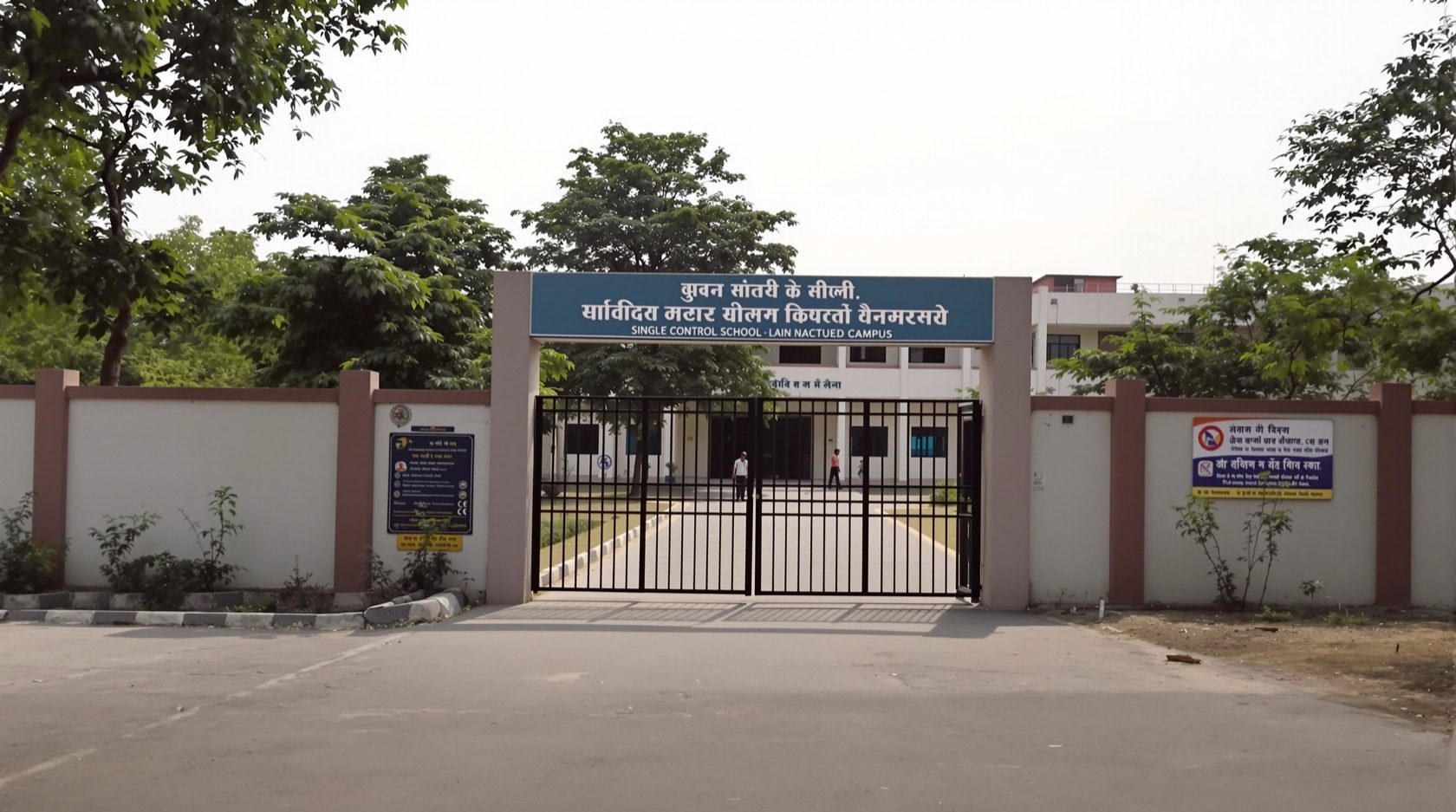
Security Guide for Schools and Colleges in India
Campus security planned around child and student safety — one controlled entry with visitor screening, a sound perimeter, privacy-respecting CCTV, access control for labs and records, safe gate and pick-up, staff and vendor vetting, and emergency planning where security hardware never obstructs escape. For administrators, architects and facility managers.
A school or college is not an ordinary building to secure. The people inside are, for much of the day, in someone else's care — children and young students who cannot assess risk for themselves. That single fact reorders every priority. On a campus, security is not really about protecting property; it is about protecting people, and above all about making sure no unauthorised adult can reach a child, and that every child can get out fast when something goes wrong.
This is the schools-and-colleges guide in the Studio Matrx Security Knowledge Hub. It takes the hub's general layered-security principles and makes them specific to Indian educational campuses — day schools, residential schools, and colleges — for the people who plan and run them: administrators, architects and facility managers. It will help you assess campus risk, plan protection in layers, choose appropriate systems, and coordinate the professionals and authorities who make it work. It deliberately avoids anything that could help a wrongdoer; the perspective throughout is the defender's.
Scope & safety. This guide helps you plan, decide and coordinate. Fire detection and alarm, electronic access control and electric locks, mains electrical work, and the structural perimeter are life-safety-critical: specify them, then engage a qualified security consultant and licensed installers to design, install and certify them to the National Building Code fire and life-safety provisions and local bye-laws. Security hardware must never obstruct evacuation or escape. Nothing here replaces a site-specific assessment.
Why campus security is different
Three things set an educational campus apart from a home or an office, and each shapes the plan.
- The protected population cannot self-protect. Small children wander, trust adults, and follow instructions. The design has to remove the chance of a wrong adult being near them in the first place, rather than relying on the child to react.
- The campus is porous by nature. Hundreds or thousands of students, staff, parents, vendors, contractors and visitors move in and out daily. Security has to filter that flow without turning the school into a fortress or a prison.
- Life-safety dominates. Fire, structural and crush risks on a crowded campus are as serious as any intruder. Every security measure is therefore constrained by one rule: it must never slow an evacuation. A locked gate that saves you from an intruder but traps children in a fire is a failure, not a safeguard.
The organising priority, then, is simple to state and must govern every decision: child and student safety first. Property, convenience and cost all rank below it.
The layers of a secure campus
Campus security works the same way as any layered defence — an unauthorised person should have to defeat several independent measures in turn — but the layers are mapped onto grounds, buildings and rooms.
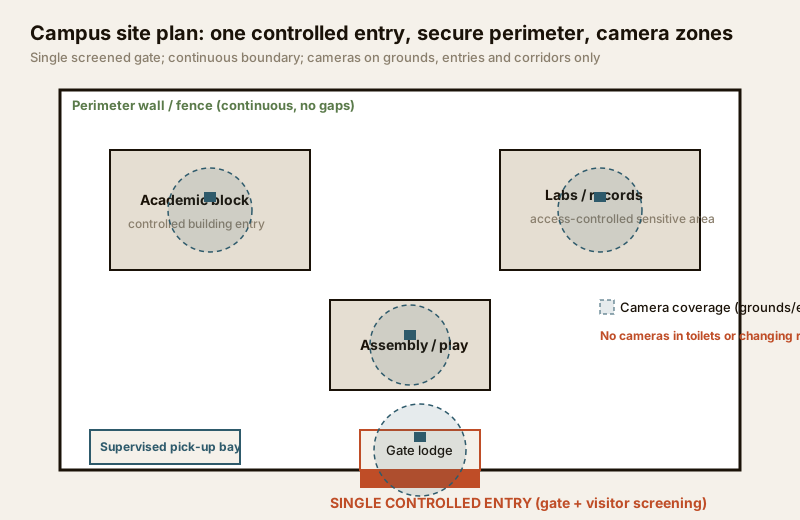
| Layer | What it protects | Typical measures on a campus | Owner |
|---|---|---|---|
| Perimeter | The campus boundary | Continuous wall or fence with no casual gaps, controlled from a single point; clear, unobstructed sight-lines | Management / facilities |
| Single controlled entry | Who gets onto campus | One staffed gate, visitor screening and sign-in, separate supervised pick-up bay | Security supervisor |
| Grounds | Open areas, play and assembly | CCTV of grounds and approaches, lighting, supervised play, no hiding spots | Facilities |
| Building entry | Getting into a block | Controlled doors, reception oversight, staff and student ID | Block in-charge |
| Sensitive areas | Labs, records, stores, server room | Access control, key discipline, logs | Department heads |
| Classroom / lockdown zone | The students themselves | Lockable classrooms that still open freely from inside for escape, drills | Teachers |
The principle that ties the layers together: reduce the number of entries to as few as can be safely evacuated, then watch and control those few well. A campus with one guarded, screened gate is far easier to keep safe than one with five casual openings — provided the fire code's required number of escape exits is fully preserved. The two are not in conflict: exits can be alarmed, one-way and closed to entry while remaining instantly openable from inside for escape. Work this into the drawings early; the security design guide for architects shows how to reconcile a single controlled entry with code-required egress.
One controlled entry and visitor screening
The heart of campus security is the gate. If no unauthorised adult can get past it unescorted, most other risks shrink dramatically. The goal is a single, staffed, controlled entry through which every visitor is identified, logged, badged and escorted — while students, staff and emergency egress are never impeded.
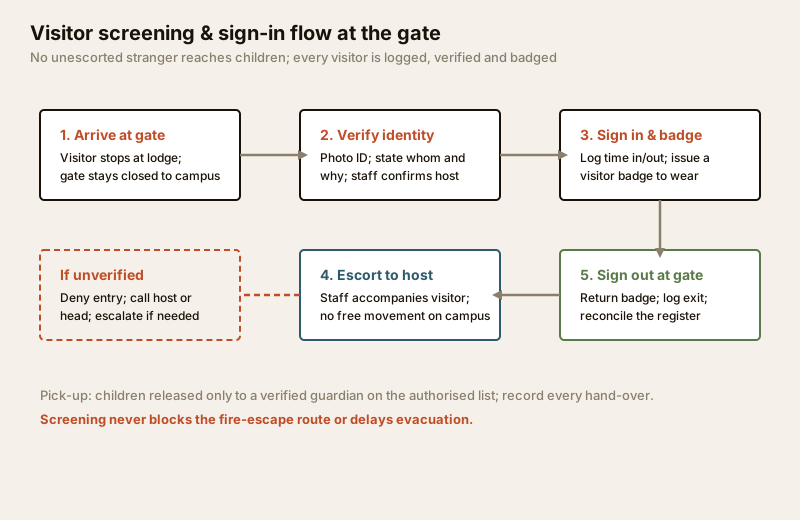
A workable gate routine for an Indian campus:
- Stop at the lodge. The gate stays closed to the campus until the visitor is dealt with. Vehicles queue outside, not inside.
- Verify identity and purpose. Photo ID, whom they are visiting and why. The guard confirms with the host or front office before anyone proceeds.
- Sign in and badge. Record name, time in, host and purpose in a register (paper or a visitor-management app); issue a visible visitor badge.
- Escort, do not release. A staff member accompanies the visitor to the host. No visitor roams the campus freely, and no visitor is ever alone with students.
- Sign out. Time out logged, badge returned, register reconciled at end of day so you always know who is on campus.
- Refuse cleanly. Anyone who cannot be verified is politely denied entry and the matter escalated to the front office or head — never waved through to avoid a scene.
The same discipline governs vendors and contractors: pre-notified, ID-checked, badged, escorted, and ideally scheduled outside peak student-movement times. Deliveries are received at the gate or a controlled bay, not by letting a delivery rider wander to a classroom block.
CCTV that protects without intruding on privacy
Cameras are valuable on a campus — they deter, they help supervise crowded grounds, and they give an honest record if something is disputed. But on a campus full of minors, privacy is a hard boundary, not a preference. Get this wrong and a system meant to protect children instead exposes them.
Cover the places that genuinely need oversight, and only those:
- Yes: the gate and approaches, boundary line, main building entrances and exits, corridors and stairwells, reception, grounds, play areas, car parks, and the entrances to sensitive rooms.
- Never, under any circumstance: toilets, washrooms, changing rooms, medical examination rooms, hostel bedrooms, feeding rooms, or any other private space. There is no security justification that overrides this. State it in your policy in plain words and audit against it.
Set the rest of the policy just as deliberately: cameras are visible and signposted (overt, never hidden); footage is stored securely with restricted, logged access and a defined retention period, then deleted; live monitoring is limited to authorised staff; and the whole scheme is disclosed to parents. Position and count cameras for real coverage of the permitted zones rather than by megapixel count — the CCTV camera coverage calculator helps you plan sight-lines and camera numbers before you buy. Indian conditions matter too: dust and monsoon shorten the life of cheap outdoor cameras, and power cuts demand UPS or battery backup so the system does not go blind during an outage.
Access control for buildings and sensitive areas
Beyond the gate, the campus has places where access should be tighter than the general flow: laboratories (chemicals, equipment, gas), records and admissions (personal data of minors), stores, server rooms, kitchens and plant rooms. These are the campus's inner layers.
Match the control to the sensitivity — do not over-engineer a stationery cupboard, and do not under-protect a chemistry store:
| Area | Sensitivity | Suggested control |
|---|---|---|
| General classrooms | Low (during hours) | Lockable from a key/roster; supervised occupancy |
| Computer / AV rooms | Medium | Keyed or PIN access; usage log; staff present |
| Science labs, chemical & gas stores | High | Access control or a controlled-key regime; staff-only; register |
| Records, admissions, exam stores | High | Restricted access, locked cabinets, data kept confidential |
| Server / plant / electrical rooms | High | Locked, authorised-staff-only, logged |
A crucial constraint on any electric lock or electronic access control here: on a life-safety escape route it must fail safe — release automatically and allow free exit on a fire alarm or power loss. A device that can lock children in is unacceptable regardless of how good its security is. This is precisely the kind of work to specify yourself but hand to a qualified professional to design and certify; the access control system designer and access control cost estimator help you scope and budget it before you brief them, and the building security systems guide covers how these systems integrate.
Gate, transport and pick-up safety
For younger children especially, the most vulnerable moments are arrival and departure — a crowd, vehicles, and many adults, exactly when a child could be led away. Design these transitions with as much care as any electronic system.
- A separate, supervised pick-up bay. Keep pedestrian pick-up away from moving traffic; staff supervise; parents wait outside a defined line rather than flooding the campus.
- Authorised-guardian release. A child is handed over only to a named, verified guardian on the school's authorised list. If someone unlisted comes, the school confirms with the parent before releasing the child, and records every hand-over. Never release a child to an unverified adult on their say-so.
- School transport discipline. Vetted, verified drivers and attendants; a female attendant on routes carrying young children where feasible; a route and boarding list; and a rule that a child is dropped only to an authorised adult, never left at an empty stop. Many of these are established expectations in Indian school-transport practice and local transport-authority rules — align with your state's requirements.
- No unaccompanied wandering. A clear rule that students do not leave the campus during hours without a recorded, authorised gate pass.
Staff, vendor and volunteer vetting
Every adult with routine access to children is part of the security perimeter, so vetting people is as important as any wall or camera. Anyone in regular contact with students — teachers, support staff, bus drivers and attendants, canteen and housekeeping staff, coaches, and regular contractors — should be verified before they start: identity and address confirmed, references and previous employment checked, and police verification obtained where applicable. Keep the records, and re-verify when someone's role changes. Visiting vendors and one-off volunteers are badged and escorted rather than vetted to the same depth, precisely because they are never left unsupervised with students. This procedural layer is cheap and decisive: most abuse-of-access risk is closed at the hiring gate, not by hardware.
Emergency planning: lockdown, evacuation and drills
Security hardware is only half the picture. The other half is a rehearsed plan for the day something goes wrong — a fire, an intruder, a medical or natural emergency — and clarity about who does what. Two responses sit at opposite ends and must never be confused: evacuate (get everyone out to a muster point) and lockdown / shelter-in-place (secure where you are until an all-clear). Staff and students need to know instantly which one a given alarm means.
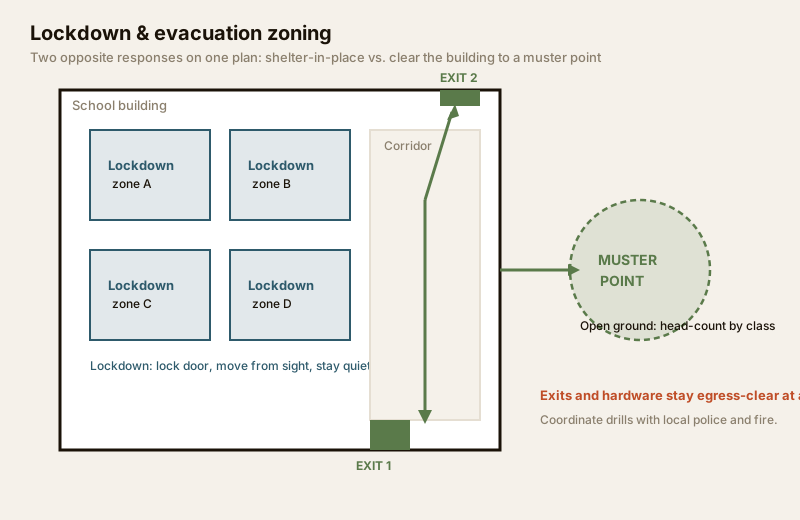
An emergency-protocol matrix turns intent into assigned action. Adapt this to your campus and rehearse it:
| Scenario | Immediate action | Owner |
|---|---|---|
| Fire / smoke | Sound alarm; evacuate by nearest safe exit; head-count at muster point; call fire services | Fire warden / teachers |
| Intruder / external threat | Lockdown: secure classrooms from inside, move from sight, stay quiet; call police | Head + security supervisor |
| Medical emergency | First aid; call ambulance; notify parents; clear a path for responders | Nurse / trained staff |
| Missing / unaccounted student | Account by class register; search protocol; notify head and parents | Class teacher + admin |
| Natural event (quake, flood) | Follow drill for the hazard; evacuate or shelter as trained; account for all | Emergency coordinator |
| Unauthorised person on campus | Escort out or isolate; escalate; review gate log; inform head | Security supervisor |
Make it real, not paper:
- Assign roles. A named emergency coordinator, floor and block wardens, a first-aid team, and a clear chain of command with a deputy for when someone is absent.
- Post the routes. Every room shows its evacuation route and the muster point; exits are lit and never locked, blocked or obstructed.
- Drill regularly. Run fire and lockdown drills on a schedule, time them, debrief, and fix what did not work. Children who have rehearsed act calmly; those who have not, panic.
- Coordinate with authorities. Build a working relationship with the local police station and fire service before an emergency — share your plan and site layout, invite them to review drills, and keep their numbers posted. The wider fire and egress design should follow the building regulations and compliance framework and the National Building Code fire and life-safety provisions.
- Guard the egress, always. The single non-negotiable: no security measure — gate, lock, grille, shutter, barrier or parked vehicle — may obstruct an escape route or a required exit. Audit for this after every change.
When to bring in a professional
Plan, decide and coordinate these yourself — but do not design, wire or certify them yourself. Institutional buildings warrant a qualified security consultant to pull the layers together and confirm code compliance:
- A campus security assessment and master plan — engage a security consultant for the site-specific risk assessment and layered design; the security risk assessment guide and the risk scorecard help you prepare the brief.
- Fire detection and alarm — life-safety-critical; designed, installed and commissioned by licensed professionals to the National Building Code fire and life-safety provisions and local bye-laws.
- Electronic access control and electric locks — must fail safe on egress routes; specify, then use a licensed installer who certifies fire-alarm release.
- Mains electrical work — cameras, gates, alarms and access control need proper wiring; use a licensed electrician (see the electrical hub).
- Structural perimeter and gates — walls, gates and any grilles must be sound and, on escape paths, openable from inside; use a competent structural professional (see structural safety).
Your job is to set the priority — child and student safety — assess the risk, choose the systems and coordinate the trades and authorities. Their job is to make it safe, code-compliant and reliable.
Key takeaways
- Child and student safety is the organising priority. Every measure ranks below it, and none may ever obstruct evacuation.
- One controlled entry with real screening — verify, log, badge and escort every visitor; release children only to authorised guardians.
- CCTV with hard privacy limits — cover grounds, entries and corridors; never toilets, changing rooms or other private spaces, and say so in policy.
- Match access control to sensitivity — labs, records and stores get tighter control; electric locks must fail safe on escape routes.
- Vet the adults and rehearse the emergencies — verify everyone with routine access to children, and drill lockdown and evacuation with police and fire coordination.
Where to go next
- Assess the campus: Security Risk Assessment Guide and the risk scorecard.
- Design it into the building: Security Design Guide for Architects.
- Understand the systems: Building Security Systems Guide.
- Sibling building types: Commercial Buildings and Hospitals, or browse all guides and the Security Hub.
References
- National Building Code of India (SP 7), Bureau of Indian Standards — fire and life-safety, egress and assembly-occupancy provisions relevant to schools; verify the current edition via the BIS catalogue.
- Local municipal building bye-laws and your state education and transport department requirements — govern boundary walls, exits, CCTV, guard and school-transport arrangements; check your city and state rules.
- Local police station and fire service guidance on drills, lockdown, evacuation and coordination for educational institutions.
This is an educational overview for planning and decision-making. Fire detection and alarm, electronic access control, mains electrical work and structural perimeter elements are qualified professional work — engage a security consultant and licensed professionals for design, installation and certification, and verify any standard's current status via the BIS catalogue before relying on it.
Export this guide
Related Guides — Deep-dive reading
School Campus Access Control: Safe Gates India 2026
RFID gate control, parent-pickup verification, attendance SMS, visitor screening and lockdown egress designed for child-safety and DPDP compliance.
Home Doors & EntrancesFail-Safe vs Fail-Secure Locks: The Guide (India 2026)
Why fail-safe vs fail-secure is the single most important access-control decision, and how to get it right for every door.
Home Doors & EntrancesSecurity Fire Alarm Integration in India (2026): Smart Alerts, Certified Systems, Fail-Safe Egress
The most important sentence a smart-home designer can say about fire is also the least profitable: a smart-home smoke sensor or fire notification is a helpful add-on, not a substitute for a certified fire-alarm system. This guide draws the line hard — life-safety detection and alarm belongs to the NBC-governed certified system — and then covers the genuinely useful, correctly-scoped automations the smart layer can add on a verified fire signal: unlock for egress, open the gate for the fire tender, light the escape path, stop the away-scene, and notify everyone loudly. All of it fail-safe. None of it in the way of the system that actually saves lives.
SecurityRelated Tools — Try Free
Access-Control Battery-Backup Calculator
Size the standby battery so an access system keeps running through a power cut, with an egress life-safety note.
Battery BackupHome Security Risk Scorecard
Score your home across six security layers — perimeter, entry points, lighting, detection, alarm and habits — and get a prioritised action plan.
Security ScorecardSecurity System Cost Estimator
Estimate the all-in capex with GST, annual running cost and 5-year total cost of ownership of a home or building security system.
Cost Estimator