
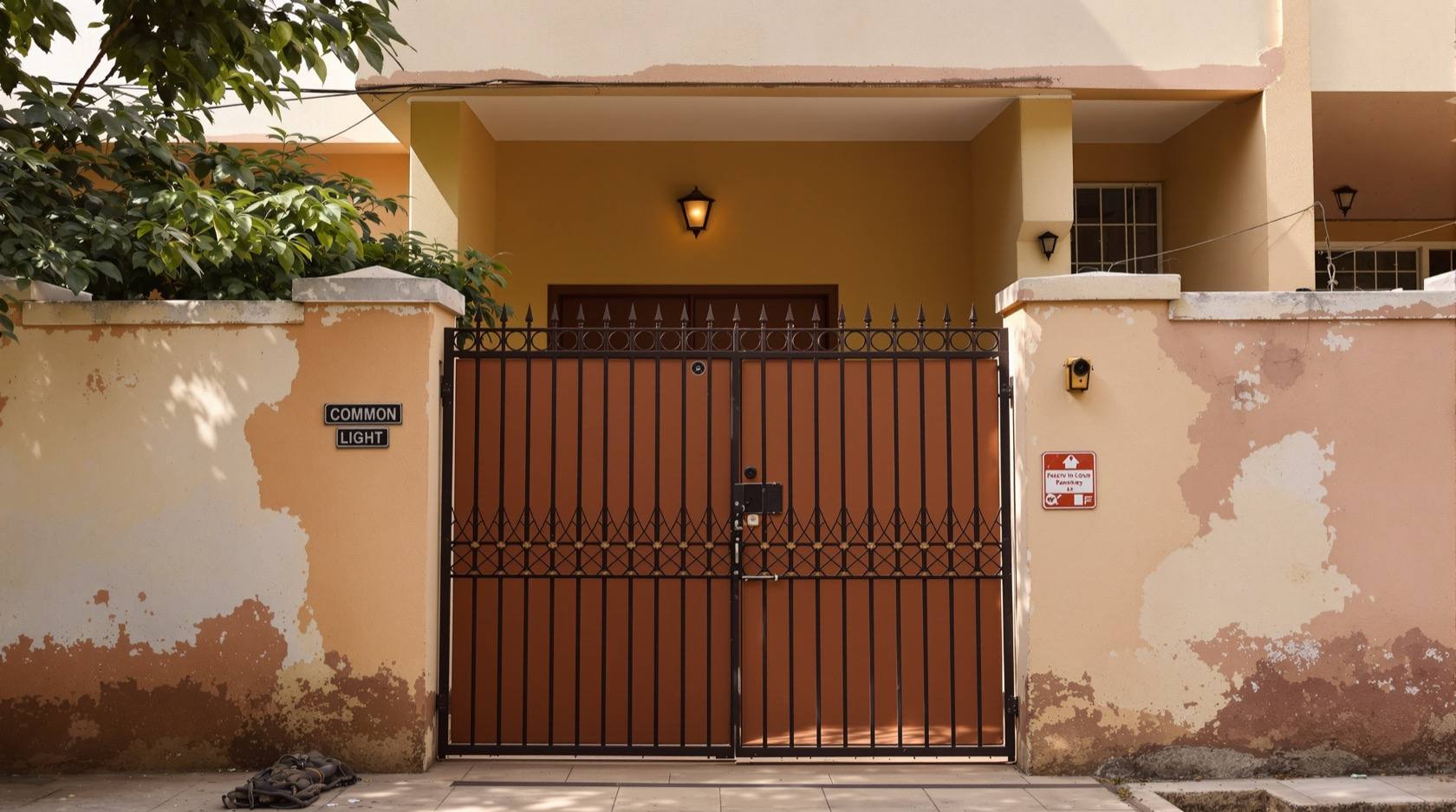
Security for Landlords in India (2026): Protect the Property, Respect the Tenant's Privacy
How an Indian landlord can lawfully secure a rented property - the exterior, boundary, entrance, common and shared areas - while never crossing the hard line into a tenant's private home. Verification done respectfully, agreement clauses that hold, rekeying between tenants, and common-area CCTV run within the DPDP Act.
You own the building, but someone else lives in it. That single fact is the whole of landlord security. When a family, a couple, a student or a working professional signs a rental agreement, the rooms behind their door stop being your space and become their home - with every expectation of privacy that word carries in Indian law and in decency. Your legitimate interest in protecting the structure, the boundary and the shared areas is real and worth acting on. It simply stops at the tenant's threshold, and a great deal of landlord conflict in India comes from not seeing where that stop is.
This guide is written for landlords - individual owners, families renting out a floor, and multi-unit or paying-guest operators - who want to secure their property well and lawfully. It sits under the security for specific users pillar and the for-users sub-hub, and it is the mirror image of the security for tenants guide: read both, because the tenant's rights described there are the boundaries described here.
Scope & safety. A tenant is a resident with rights, not a suspect to be watched. Security for a rented property protects the building; it must never become surveillance of the person who lives in it. Three rules run through everything below. First, no cameras and no monitoring inside a tenant's rented home, ever - a landlord who does this violates the tenant's privacy and handles their personal data unlawfully under the Digital Personal Data Protection Act, 2023. Second, no entry without proper notice and consent, save a genuine emergency such as fire or flood. Third, the safety fabric is yours to provide and maintain - sound doors, locks, lighting and a working common-area system are a landlord's duty, not an optional extra, and none of it may ever compromise the tenant's escape in a fire. This is educational guidance, not legal advice; verify current tenancy, rent-control and police-verification rules for your state and engage a lawyer for your agreement.
The one rule that governs everything
Before any hardware, camera or clause, hold this line in mind. It is the core of lawful landlord security, and it is worth stating in full and in bold.
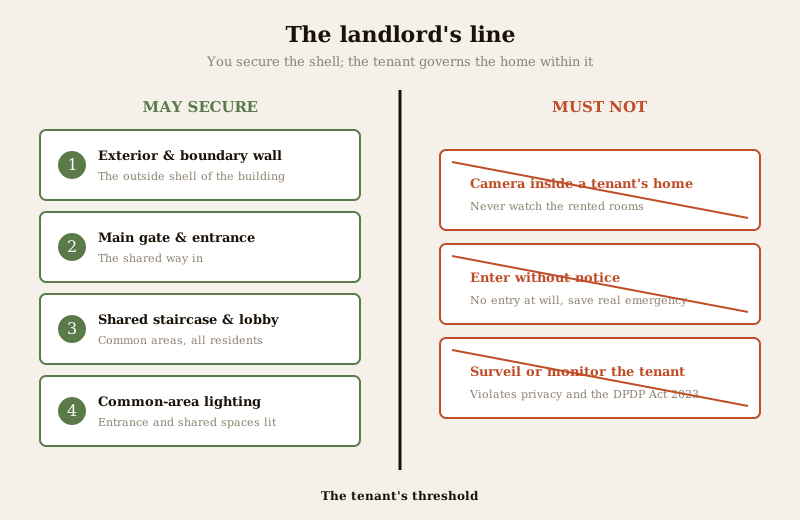
You may secure the building's exterior, boundary, entrance and common or shared areas. You may NOT install cameras inside a tenant's rented home, you may NOT enter without proper notice, and you may NOT surveil the tenant. Doing so violates the tenant's privacy and the DPDP Act 2023.
Everything else in this guide is that rule applied. The property has an outside and an inside, and the tenant's home is the inside. You secure the shell; the tenant governs the space within it. When you are unsure whether a measure is allowed, ask one question: does it protect the building and its shared parts, or does it watch the person? If it watches the person, it is out of bounds - no matter how it is framed, and no matter that you own the walls. For the technology side of this same principle, see smart security and privacy and CCTV privacy masking.
1. Verifying a tenant - lawfully and respectfully
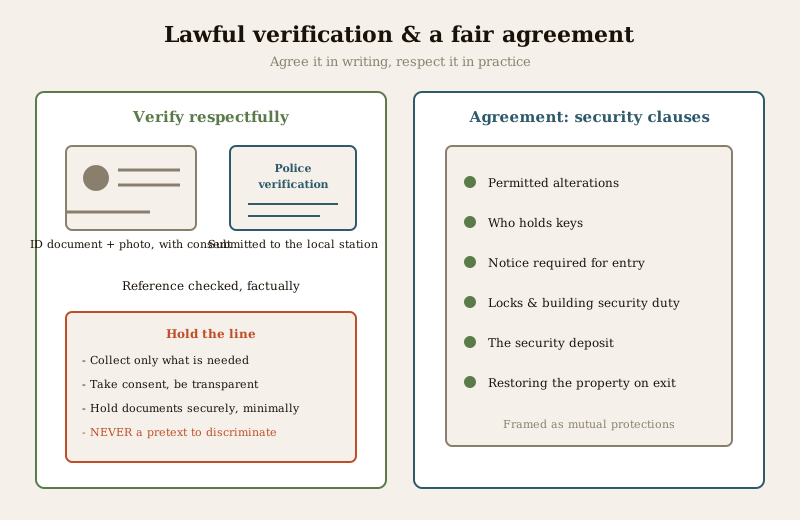
Knowing who is renting your property is legitimate, and in much of India it is also a legal duty. Many states and cities require police verification of tenants - the landlord submits the prospective tenant's details and identity documents to the local police station, often on a prescribed form, so the tenancy is on record. Rules and formats vary by state and change over time, so confirm the current requirement for your city rather than relying on hearsay. Done properly, verification protects both sides: it records a genuine tenancy and it is not, and must never become, a pretext.
Do the verification with dignity:
- Collect only what you need. Proof of identity, proof of the prior address, a photograph and the details the police form actually asks for. You are establishing who your tenant is, not building a dossier. Identity and address documents are sensitive personal data - hold them minimally, keep them secure, share them only with the police as the process requires, and do not circulate or post them.
- Take consent and be transparent. Tell the tenant what you are collecting, why, and that it is going to the police as the law requires. A tenant who understands the process cooperates with it.
- References, honestly. A previous landlord's or employer's reference is a reasonable check. Ask factual questions; do not turn it into an interrogation.
- Never as a pretext to discriminate. Verification exists to confirm identity and satisfy the law - not to screen tenants by religion, region, caste, marital status, food habits or profession. Using "verification" as cover for refusing someone on those grounds is discrimination dressed as diligence, and it is exactly the abuse this section refuses. Verify the person's identity; do not judge their life.
Verification is a one-time, consented, lawful check at the start of a tenancy. It is emphatically not a licence to monitor the tenant afterwards. For managing who comes and goes at the building's shared entrance - a related but distinct question - see visitor access management.
2. The rental agreement: security clauses that hold
Most landlord-tenant security disputes are really disputes about things that were never written down. A clear, fair rental agreement is the single most effective security tool a landlord has, because it settles in advance who may do what. Put the security questions in writing:
- Permitted alterations. State whether the tenant may add their own security - a smart lock, a door chain, a personal video door phone facing their own door, a safe. As a rule, a tenant is entitled to secure the home they live in; agree it up front, along with the condition that fixings are made good on exit. See the tenant's side of this in security for tenants.
- Who holds keys. Say plainly who holds keys or codes to the tenant's unit. A landlord holding a spare is common and reasonable for genuine emergencies, but it must be paired with the entry-notice rule below and must never be used to enter at will.
- Notice for entry. Specify the notice you will give before entering for inspection or repair - reasonable advance notice, at a reasonable time, with the tenant's agreement, except in a real emergency. This clause, honoured, prevents most trust breakdowns.
- Responsibility for locks and building security. Set out who maintains the locks, the doors, the common-area system and the boundary. Structural security is generally the landlord's; the tenant's duty is to use it and not to compromise it.
- The security deposit. Record the deposit, what it covers, and the honest basis for any deduction - genuine damage or unpaid dues, not normal wear.
- Restoring the property on exit. State the condition the property is returned in, including any tenant-added security removed and fixings made good.
Frame these as mutual protections, because they are. Model tenancy and state rent-control frameworks in India increasingly push exactly this kind of written clarity; treat the agreement as the place where the landlord's line and the tenant's rights are both recorded and both respected.
3. Key management between tenants: rekey when they leave
Here is a gap that quietly undermines a lot of rented homes: when a tenant moves out, the departing tenant - and anyone they gave a copy to, a partner, a friend, a maid, a previous flatmate - may still hold a working key. Handing the same key to the next tenant means the new occupant's home can be opened by strangers they never met. The fix is a firm rule:
When a tenant leaves, rekey or change the locks and reset any codes before the next tenant moves in. For a traditional lock, that means rekeying the cylinder or fitting a new lock. For a smart lock, it means deleting every old code, fingerprint and paired phone and issuing fresh credentials - a task smart locks make quick, which is one of their real advantages for a landlord between tenancies. Either way, the departing tenant's access is retired, not inherited by the person who comes next.
This is not distrust of the outgoing tenant; it is basic hygiene owed to the incoming one. Make it routine, budget for it in the turnover between tenancies, and note in the agreement that the tenant should not duplicate keys beyond agreed copies and should return all of them on exit.
4. Securing the property between tenants and when vacant
A property standing empty between tenancies is at its most exposed - no one is home to notice a forced gate, a missing meter, or a squatter. Because the unit is genuinely unoccupied and no tenant's privacy is engaged, you have more latitude here than at any other time, and you should use it to keep the building sound and looking lived-in rather than to install anything that will later watch a tenant.
- Keep it looking occupied. Timed lighting and the simple appearance of use deter opportunists; occupancy simulation covers how to make an empty unit read as lived-in.
- Secure the shell. Lock up, close and check windows and grilles, secure the boundary and the entrance, and remove anything of value left behind.
- Do not advertise the emptiness. Avoid announcing online that the flat is vacant and unwatched; a "to let" notice is one thing, broadcasting that no one is there is another.
- Retire and reset access first. Apply the rekeying rule above the moment the old tenant leaves, so the vacant unit is not sitting on keys held by former occupants.
For the fuller playbook on an empty property, follow security for vacant properties. Anything you install during vacancy that could later face into a tenant's space - a camera in a doorway, for instance - must be removed or repositioned before the next tenant takes possession, so it never becomes surveillance of the new occupant.
5. Common-area and building CCTV, run lawfully
A landlord may run CCTV in the building's genuinely common and shared areas - the main gate, the entrance lobby, the shared staircase, the parking, the boundary. This is legitimate building security. What makes it lawful rather than intrusive is how it is run, and the DPDP Act, 2023 frames the duties, because CCTV of people captures their personal data.
- Notice and signage. Put up clear signage that CCTV is in operation, so residents and visitors know they may be recorded. Covert cameras in a residential building are not the way.
- Point at the shared space, never into a home. Cameras may cover the common areas and approaches. They must never be angled to see through a tenant's window, door or into their unit, and never into a private area. Where a common-area camera unavoidably catches the edge of a private door or window, mask that zone - see CCTV privacy masking.
- Controlled, minimal footage. Store recordings securely, keep them only as long as there is a real reason to, restrict who can view them, and do not share clips casually. Footage is personal data about identifiable people; handle it as such.
- A shared system, not a landlord's spy-hole. In a multi-unit building the common-area system serves all residents' safety, not one owner's curiosity. Run it transparently.
The mechanics of a compliant building system are covered in the building security systems guide, and the gated-community context - where an RWA or association usually owns the shared CCTV - in the gated communities guide. If you are also thinking about the privacy of a door phone at the shared entrance, video door phone privacy applies.
6. Insurance and maintaining the security fabric
The physical security a tenant relies on is largely the landlord's to provide and keep working. Treating it as a duty - not a favour - is both good landlording and, often, a condition of insurance.
- Provide sound basics. A solid main door and frame, quality locks, secure windows and grilles, working boundary and gate, and adequate lighting at the entrance and common areas are the landlord's baseline. A tenant cannot be safe behind a flimsy door you declined to fix.
- Maintain what you installed. A broken common-area light, a gate that will not latch, a failed lock - these are landlord repairs, and prompt attention to them is part of keeping the property secure. Fold security into the routine maintenance cycle.
- Insurance. Insure the structure appropriately, and check what your policy expects of you by way of locks, security and occupancy - some cover assumes reasonable security is maintained, and long vacancy may need to be declared. The tenant insures their own contents; make that division clear in the agreement.
- Never at the cost of escape. No lock, grille or security measure may trap the tenant in a fire. Security hardware on a rented home must stay compatible with a safe exit; where any electrically held door sits on an escape route it must fail safe.
7. Multi-unit landlords, PG and hostel nuance
Renting out several units, or running a paying-guest or hostel arrangement, changes the scale but not the rule. If anything, the temptation to over-watch is greater here, and the answer is the same.
- Private rooms stay private. A PG or hostel room a person sleeps in is their home for the duration. No cameras in private rooms, ever - not "for safety", not "for the parents", not framed as a house rule. This is the same DPDP and privacy line as any tenancy, and it is non-negotiable.
- Common areas, run like any building CCTV. Shared entrances, corridors, dining and common rooms may carry CCTV under the same notice-and-signage, no-into-rooms, controlled-footage discipline as section 5.
- Bathrooms and changing areas: absolutely never. These are the clearest possible private spaces. A camera there is not security; it is a serious violation.
- Access with dignity. Managed entry, a warden or guard, and sensible curfews can be legitimate, but they must respect residents as adults and tenants, not treat them as inmates. Any guard or agency should be PSARA-licensed. Verified entry management is covered in visitor access management.
The scale of a multi-unit operation makes the systems bigger; it does not grant permission to surveil the people renting the rooms.
Landlord: may vs must not
The whole guide reduces to one table. When a measure is not on the left, assume it belongs on the right until you have confirmed otherwise.
| A landlord MAY | A landlord MUST NOT |
|---|---|
| Secure the exterior, boundary wall and gate | Install any camera inside a tenant's rented home |
| Secure and monitor the shared entrance and lobby | Point common-area CCTV into a tenant's window, door or unit |
| Run CCTV in genuine common and shared areas, with signage | Run covert or unsignposted cameras in the building |
| Light and secure common staircases and parking | Enter the tenant's home without proper notice and consent |
| Verify a tenant lawfully at the start, with consent | Use "verification" as a pretext to discriminate |
| Hold a spare key for genuine emergencies | Use that key to enter at will or without notice |
| Rekey and reset codes between tenants | Reuse an old tenant's keys or codes for the next tenant |
| Provide and maintain sound doors, locks and lighting | Install security that traps the tenant or blocks escape |
| Run shared CCTV footage securely and minimally | Share, post or misuse footage of residents |
| Manage entry in a PG or hostel with dignity | Put any camera in a private room, bathroom or changing area |
Key takeaways
- Secure the shell, never the person. A landlord may protect the exterior, boundary, entrance and common areas, but may never put a camera inside a tenant's home, enter without notice, or surveil the tenant - that violates the tenant's privacy and the DPDP Act, 2023.
- Verify lawfully and respectfully. Do the police verification your state requires with consent and minimal data, and never let "verification" become a pretext to discriminate.
- Write the security clauses down. Permitted alterations, who holds keys, notice for entry, responsibility for locks, the deposit and restoring on exit belong in the agreement, framed as mutual protections.
- Rekey between tenants. Change locks or reset codes when a tenant leaves, so departing occupants and their copies cannot re-enter the next tenant's home.
- Common-area CCTV runs on rules. Signage, never pointed into a unit, footage controlled and minimal - and in PG or hostel settings, no cameras in private rooms, bathrooms or changing areas, ever.
- The safety fabric is the landlord's duty. Provide and maintain good doors, locks and lighting, insure the structure, and never let any security measure block the tenant's escape.
Where to go next
- Security for specific users - the pillar that frames security around who lives in the home.
- Security for tenants - the mirror guide; the tenant's rights that define a landlord's limits.
- Security for vacant properties and occupancy simulation - keeping a property safe and lived-in between tenancies.
- Complete guide to smart locks - fast rekeying and code resets between tenants.
- Building security systems guide and gated communities guide - running shared CCTV and building security lawfully.
- Smart security and privacy, CCTV privacy masking and video door phone privacy - keeping technology on the right side of the line.
- Visitor access management - managing entry at a shared or multi-unit building with dignity.
- Home security risk scorecard and site perimeter security assessment - test the property's shell and boundary.
References
- Digital Personal Data Protection Act, 2023 - CCTV footage, identity documents and any monitoring of a tenant are personal data; a landlord must collect with consent, keep it minimal and secure, restrict access, and never surveil inside a tenant's home. Verify the Act and its rules as they come into force.
- State tenancy, rent-control and model tenancy frameworks - the written agreement, notice for entry, deposit and the landlord-tenant balance are governed by the law of your state; confirm the current framework and formats for your city.
- Police verification of tenants - many Indian states and cities legally require the landlord to submit a prospective tenant's details to the local police; requirements and forms vary by state and change, so confirm the current rule for your location.
- Private Security Agencies (Regulation) Act, 2005 (PSARA) - any guard or security agency engaged for a building, PG or hostel should be PSARA-licensed and verified.
- National Building Code of India (SP 7), Bureau of Indian Standards - fire and egress provisions any security hardware on a rented property must respect so a tenant is never trapped; verify the current edition via the BIS catalogue: https://www.services.bis.gov.in/
This is an educational overview for landlords, not legal advice. Tenancy, rent-control and police-verification rules vary by state and change over time, and the DPDP Act's provisions are being brought into force in stages; confirm the current position for your location and have your rental agreement and security arrangements reviewed by a lawyer before you rely on them.
Export this guide
Related Guides — Deep-dive reading
Security for Tenants in India (2026): Protect Your Rented Home and Your Privacy Without Losing the Deposit
Renting is home too. This guide covers a tenant's twin needs - securing a rented home with reversible, take-it-with-you measures the lease allows, and standing on your privacy rights so a landlord cannot surveil you inside your own walls. Practical, India-real, and firmly on the renter's side.
SecurityCo-Living Security in India: Safe Shared Living for Young Residents
The co-living and managed-PG format is booming in Indian cities, packing many unrelated residents into one shared building with common amenities and constant churn. This guide shows how to hold open community and individual privacy together — layered access, visitor control, common-area CCTV that stops at the bedroom door, and life-safety for a building full of sleepers.
SecuritySecurity for Vacant Properties in India (2026): Protecting an Empty Building from Theft, Squatting and Decay
A property standing empty for months - between tenants, awaiting sale, tied up in a possession dispute, inherited, or built but never occupied - is a known target in India. This guide covers how to secure every opening, stop it looking abandoned, alarm and monitor a building with the power off, keep a lawful caretaker, manage utilities and mail, and hold vacant-property insurance - without ever pretending it away.
SecurityRelated Tools — Try Free
Window Hardware Cost Calculator
Estimate window hardware cost — hinges, handles, locks, rollers and multipoint gears.
Window CalculatorHome Security Risk Scorecard
Score your home across six security layers — perimeter, entry points, lighting, detection, alarm and habits — and get a prioritised action plan.
Security ScorecardSecurity System Cost Estimator
Estimate the all-in capex with GST, annual running cost and 5-year total cost of ownership of a home or building security system.
Cost Estimator