
Home Electrical Safety: A Shock- and Fire-Safe Home in India
The two dangers electricity poses — shock and fire — and the layered defences that stop them: earthing, an RCCB, the right protection, quality materials and good habits, plus the warning signs you must never ignore and exactly what to do in an emergency.
Electricity does two things that can kill or destroy: it can shock a person, and it can start a fire. Almost everything in a safe electrical installation exists to prevent one of those two outcomes. This guide is the plain-language anchor to home electrical safety in India — what the dangers actually are, the layered defences that stop them, the warning signs you must never ignore, and what to do when something goes wrong. It doesn't teach you to work on electrics; it teaches you to keep your home and family safe and to know when to call a professional.
It is the safety anchor of the Electrical Knowledge Hub and draws together the protection, earthing and RCCB guides.
The safety line. This guide helps you understand risks, spot warning signs and act in an emergency. All wiring, repair and inspection work is done by a licensed electrician. Never open a live board, chase a fault or "fix" wiring yourself — the two dangers below are exactly why.
The two dangers, understood
Every safety measure maps to one of these:
- Electric shock — current passing through a body. A small current across the heart can be fatal. Shock happens when a person touches a live part, or a faulty appliance whose metal body has become live ("earth leakage"). The defences: earthing (giving fault current a safe path away from you) and an RCCB (which detects leakage and cuts power in milliseconds).
- Electrical fire — heat from a fault igniting surroundings. Overloaded circuits, loose connections, damaged insulation, short circuits and arcing all generate heat. The defences: correct cable sizing, MCBs (which trip on overload/short circuit), good workmanship, quality materials and — increasingly — AFDDs for arc faults.
Understand this and every device in your distribution board makes sense: it is there to stop a shock or a fire.
The layers of defence
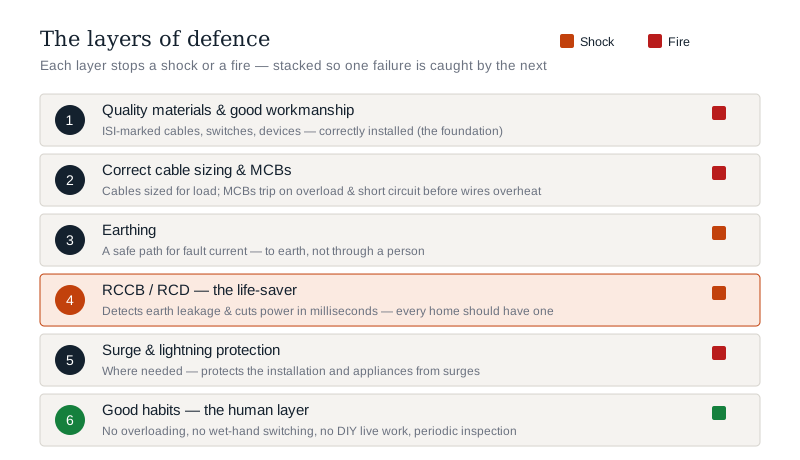
A safe home doesn't rely on one thing; it stacks defences so that if one fails, another catches the danger:
1. Quality materials & good workmanship — ISI-marked cables, switches and devices, correctly installed. The foundation; cheap materials and bad joints cause most fires.
2. Correct cable sizing & MCBs — cables sized for their load, protected by MCBs that trip on overload and short circuit before the cable overheats.
3. Earthing — a proper earthing system so fault current flows safely to earth, not through a person.
4. RCCB / RCD — a residual current device that detects even small earth leakage and disconnects in milliseconds. The single most important life-safety device against shock — every Indian home should have one.
5. Surge & lightning protection where needed (see SPD and lightning protection).
6. Good habits — the human layer, below.
Warning signs you must never ignore
These mean call an electrician now — they are early signs of a shock or fire hazard:
- Burning smell, scorch marks or discoloured switches, sockets or the DB.
- Warm or hot switch plates, sockets, plugs or the DB.
- Frequent tripping of an MCB or RCCB — it is doing its job; something is wrong.
- Flickering or dimming lights (see troubleshooting).
- Sparking, buzzing or crackling from switches, sockets or fittings.
- A tingle or mild shock from an appliance body, tap or switch — a sign of earth leakage; stop using it and call an electrician.
- Damaged, frayed or overheating cables, plugs or extension leads.
- Scorched or melted plug pins or socket holes.
None of these are "wait and see" — they are the installation telling you it needs a professional, quickly.
The habits that keep a home safe
The human layer — free, and genuinely protective:
- Don't overload sockets — no daisy-chained extension boards feeding heaters, ACs and geysers from one point.
- Use quality plugs and leads, and pull the plug, not the cord.
- Keep water away from electrics — the bathroom and kitchen are the highest-risk zones; never touch switches with wet hands.
- Unplug heat-producing appliances (iron, heater) when done.
- Don't DIY live work — the golden rule. Switch off at the DB for anything, and call an electrician for the actual work.
- Childproof sockets in homes with young children.
- Get a periodic inspection — have a licensed electrician check the installation (see maintenance); ageing wiring is a real fire risk.
In an emergency
- Electric shock: do not touch the person while they're in contact with the source. Switch off the power at the main first (or use a dry non-conductive object to separate them). Then call emergency services and give first aid/CPR if trained.
- Electrical fire: switch off the power if safely reachable; use a CO₂ or dry-powder extinguisher or a fire blanket — never water on an electrical fire while live. Evacuate and call the fire service if it's not immediately controllable.
- Smell of burning / sparking from the DB: switch off the main and call an electrician; don't investigate a live board.
Knowing to kill the power first is the one reflex that saves lives.
The one-line answer
Home electrical safety comes down to stopping two dangers — shock and fire — with layered defences: quality ISI-marked materials and good workmanship, correctly sized cables and MCBs, proper earthing, and above all an RCCB that cuts power on earth leakage in milliseconds. Add good habits (no overloading, no wet-hand switching, no DIY live work), never ignore the warning signs (burning smell, heat, tripping, tingles), and in an emergency switch off the power first. All the actual work belongs to a licensed electrician — verify your home has an RCCB and a periodic inspection, and you have covered the essentials.
Where to go next
- The protection layers in depth: Electrical Protection Guide.
- The life-saver against shock: RCCB & RCBO Guide.
- Keep it safe over time: Home Electrical Maintenance Guide.
- Run the room-by-room check: Electrical Safety Checklist.
References
- IS 732 : 2019, Code of Practice for Electrical Wiring Installations, Bureau of Indian Standards.
- National Electrical Code of India, SP 30 : 2023, BIS.
- IS 3043 : 2018, Code of Practice for Earthing, BIS.
- Central Electricity Authority (Measures relating to Safety and Electric Supply) Regulations, 2010 (as amended) — verify current version: https://cea.nic.in/
Electrical safety measures and standards evolve; all wiring, repair and inspection work must be done by a licensed electrician. In an emergency, switch off the power first. Verify any standard's status via the BIS catalogue before relying on it.
Export this guide
Related Guides — Deep-dive reading
Electrical Fire Safety in India (2026): Overloads, Wiring and the Right Protection
Why electrical faults cause so many Indian building fires, and the fix: correct cable sizing and a properly designed board by a licensed electrician, MCB plus RCCB protection, no overloading, and never water on a live fire.
SecurityElectrical Safety for Security Systems in India (2026): Powering It Without Peril
A homeowner's guide to the power side of home and RWA security systems, CCTV, alarms, gates, access control and NVRs, done so it protects you instead of quietly becoming a shock or fire hazard. What makes a supply safe, what to insist on, and why the mains work belongs to a licensed electrician.
SecurityResidential Electrical Systems: The Complete Guide for Indian Homes
How the electricity in an Indian home actually works — from the utility supply and meter through the distribution board, circuits, wiring, earthing and protection, to lighting, safety, energy efficiency, smart controls, solar and backup — written so a homeowner can understand, plan and judge it, and know exactly where a licensed electrician must take over.
Electrical & WiringRelated Tools — Try Free
Electrical Safety & Load Audit
Home electrical audit — 10 categories, 65+ checkpoints across earthing, RCCB, MCB, wiring, switchboards, appliance circuits, DG/inverter backup.
Safety AuditChild & Elder Home-Safety Audit
Room-by-room safety audit for households with children or seniors — 10 categories, 70+ checkpoints tagged by audience.
Safety AuditRainwater Tank Sizer
How big should your rainwater tank be? Computes annual harvest, recommended tank capacity in litres, water-bill savings, and payback — for 10 Indian cities.
RWH Calculator