
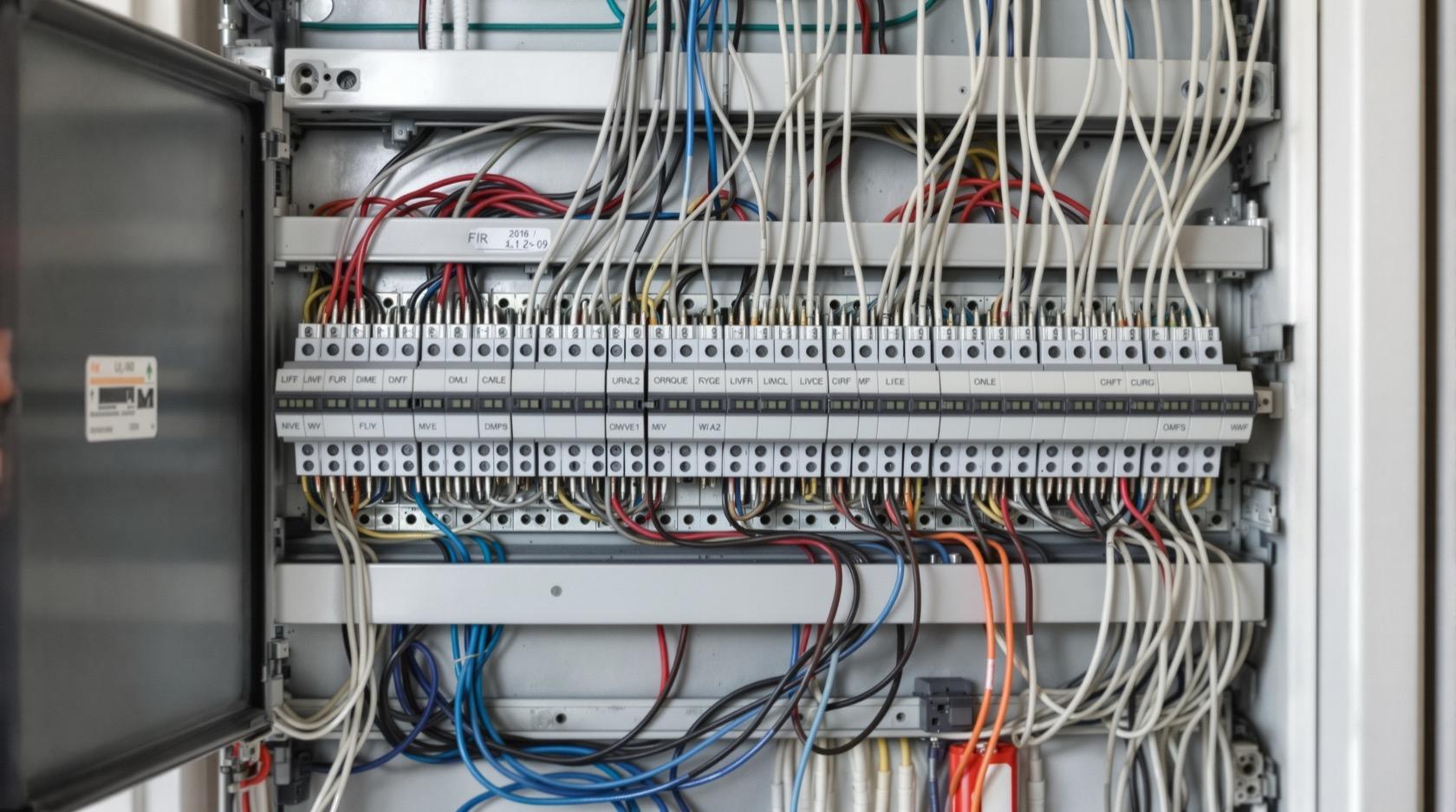
Electrical Fire Safety in India (2026): Overloads, Wiring and the Right Protection
Why electrical faults cause so many Indian building fires, and the fix: correct cable sizing and a properly designed board by a licensed electrician, MCB plus RCCB protection, no overloading, and never water on a live fire.
Ask a fire officer in India what starts the fires they attend, and electrical faults are near the top of almost every list - homes, shops, offices, godowns and high-rises alike. The reason is quietly structural: electricity runs through every wall, all day and all night, unseen, and a fault does not announce itself the way a gas leak or a frying pan does. A loose screw in a socket box, a circuit asked to carry more than its wire was sized for, or a cheap non-ISI switch can heat up for weeks before it finally ignites the insulation around it. Electrical fire safety is the discipline of removing those slow failures before they start - and, crucially, most of the real fixes are not a homeowner's DIY job. They belong to a licensed electrician working to code.
This is the electrical chapter of Studio Matrx's fire-safety library, sitting under the complete guide to fire safety in India. It is deliberately a "specify, do not DIY" guide: your job is to recognise the warning signs, refuse the dangerous shortcuts, and route the wiring itself to a qualified professional. For the wider electrical picture - design, load, earthing and appliances - the electrical hub is the companion reference, and the home fire-safety guide sets the household baseline this chapter drills into.
Scope and safety - read this first. This guide helps you understand, inspect and prevent electrical fire risk, and hold your electrician and vendors accountable. It is not a wiring manual. Designing circuits, sizing cables, installing or modifying the distribution board, and touching anything beyond a plug-top or a replaceable fuse is the work of a licensed electrician working to the National Building Code (via SP 7 : 2026, Part 4 Fire and Life Safety), IS 1646 : 2015 for the fire safety of electrical installations, and the CEA (Measures relating to Safety and Electric Supply) Regulations. This is educational guidance, not legal advice or a substitute for a licensed professional. And one rule overrides everything below: if an electrical fire is anything more than tiny and already contained, cut the power, get everyone out, and call the fire brigade on 101 or 112.
Why electrical faults cause so many fires
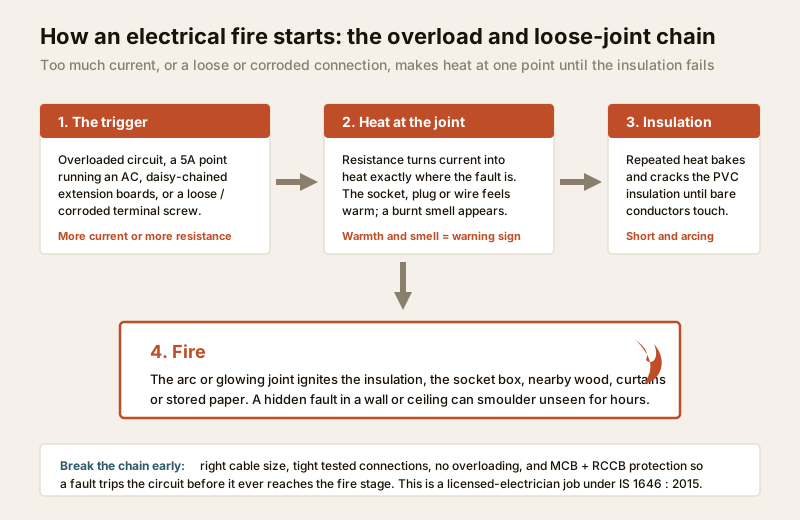
An electrical fire almost never happens by magic. It is a chain: something makes current or resistance too high at one point, that point heats up, the heat breaks down the insulation, and a short or an arc finally ignites whatever is nearby. Understanding the chain tells you where to break it.
The causes, in the order they actually bite
- Overloaded circuits and daisy-chained extension boards. The classic Indian failure mode: a single 5A point running a 1.5-tonne AC, or three heavy appliances stacked through one board plugged into another. The wire carries more current than it was sized for, heats up along its whole length, and cooks its own insulation.
- Loose or corroded connections. A terminal screw that was never properly tightened, or an aluminium joint gone powdery with corrosion, has high resistance at that one spot. Current squeezing through generates concentrated heat - a glowing connection can reach ignition temperature while the rest of the circuit feels normal.
- Undersized or ageing wiring. Old cloth-and-rubber wiring, or thin cable chosen to save money, cannot carry modern loads. Decades of heat cycling leaves the insulation brittle and cracked, so a knock or a rat bite exposes bare conductor.
- Cheap, non-ISI cabling and accessories. A counterfeit switch, a substandard socket or unbranded cable with less copper than its printed rating fails exactly where you cannot see it - inside a wall or a switch box.
- Missing or wrong protection. No RCCB, an MCB of the wrong rating, or - the deadly one - a breaker bypassed with a nail or a wire because it "kept tripping". That tripping was the protection doing its job.
- Unventilated loads. A geyser, AC or inverter/battery boxed into a cupboard or an unventilated shaft cannot shed heat. An inverter in a closed cupboard, or a battery bank in a living space, is a recurring cause of Indian home fires.
The protections that actually work
Every one of the causes above has a known engineering answer. None of them is a gadget you buy off a shelf and plug in - they are properties of a wiring installation done correctly by a licensed electrician. Your role is to insist on them and to recognise when they are missing.
Correct cable sizing and a properly designed board
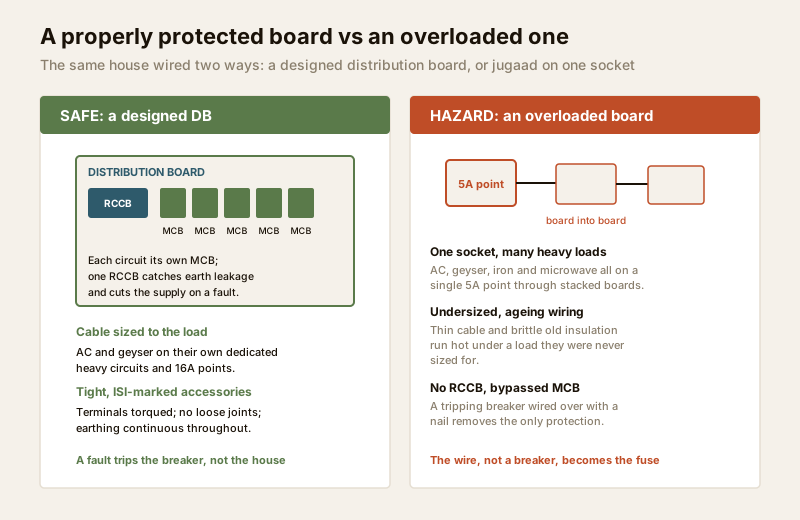
The single most important protection is invisible: cable sized to the load it carries, and a distribution board (DB) designed so each circuit is separately protected. Heavy appliances - the AC, the geyser, the oven - belong on their own dedicated circuits with the right cable and a 16A point, not sharing a 5A lighting circuit. This is a design decision, made by a licensed electrician calculating loads under IS 1646 : 2015 and the CEA regulations, and it is the reason you must never let an untrained person "add a point" off an existing socket.
MCBs, RCCB and RCBO
- MCB (Miniature Circuit Breaker) protects the wiring - it trips on overload and short circuit before the cable overheats. Each circuit gets its own, correctly rated for that cable.
- RCCB (Residual Current Circuit Breaker) protects people and catches earth leakage - it detects current leaking to earth (through a fault, damaged insulation or a person) and cuts the supply in milliseconds. A whole-house RCCB is a core fire and shock protection.
- RCBO combines both functions in one device on a single circuit - increasingly used for critical or high-risk circuits.
No overloading, and honest accessories
Protection devices assume the installation is sane. Do not defeat them by overloading: run one heavy appliance per socket, never stack extension boards, and never run a high-wattage load off a light-duty point. Use ISI-marked cable, switches, sockets and MCBs - the mark is your evidence the device meets the Indian standard it claims. Cheap accessories are a false economy paid for in a fire.
Ventilation for heat-producing loads
Give the geyser, AC condenser, inverter and battery bank room to breathe. An inverter or battery belongs in a ventilated space, never a sealed cupboard or a cramped loft, and never with paper, cloth or fuel stored against it. The home battery backup guide and, for rooftop PV, the solar power for homes guide cover the safe siting of these systems in more depth.
The India reality: jugaad wiring and the shortcuts that kill
Standards describe the ideal; Indian buildings often carry the legacy of decades of improvisation. These are the recurring failure modes worth naming plainly:
| The shortcut | Why it starts fires | The fix |
|---|---|---|
| A 5A point running an AC or geyser | The circuit and cable are sized for lighting, not a heavy motor load - the wire overheats | A dedicated heavy circuit and 16A point, sized and installed by a licensed electrician |
| Daisy-chained extension boards | Each junction adds resistance and load; the weakest one overheats | One heavy appliance per socket; no board plugged into another board |
| An inverter or battery in a closed cupboard | Heat and, for some batteries, gases build with no escape | A ventilated, dedicated location clear of stored combustibles |
| A bypassed or over-rated MCB | Removes the protection between a fault and a fire; the cable becomes the fuse | Correctly rated breakers; a repeatedly tripping MCB is investigated, never defeated |
| Non-ISI cable and switches | Less copper than rated, brittle insulation, poor contacts | ISI-marked accessories throughout, fitted by a qualified electrician |
| Loose terminal screws / aluminium joints | Concentrated resistance heating at the joint | Proper termination and periodic tightening during inspection |
Reading the warning signs before a fire
Electrical fires almost always announce themselves first - if you know the signals. Treat any of these as a stop-and-call-an-electrician event, not a quirk to live with:
- Warmth. A socket, plug, switch or the DB itself that feels warm to the touch is telling you there is resistance heating where there should be none.
- A burning or fishy smell with no obvious source - overheating PVC insulation has a distinctive acrid smell.
- Scorch marks or discolouration around a socket, plug pin or switch.
- Buzzing, crackling or a flickering light tied to one point.
- An MCB or RCCB that trips repeatedly - a genuine fault, not a nuisance. Find the cause; never wire around it.
- A shock or tingle from a tap, appliance body or switch plate - a sign of earth leakage an RCCB should be catching.
Periodic inspection
Wiring ages. A periodic inspection by a licensed electrician - checking terminations, insulation resistance, earthing, RCCB operation and load balance - catches the slow failures before they mature. For an older property, a rental, or any building where you inherited the wiring, an inspection is the single highest-value thing you can commission. RWAs and commercial premises should treat it as a scheduled AMC item, alongside the wider building checks in the apartment security guide and the commercial buildings security guide.
If an electrical fire starts: isolate first
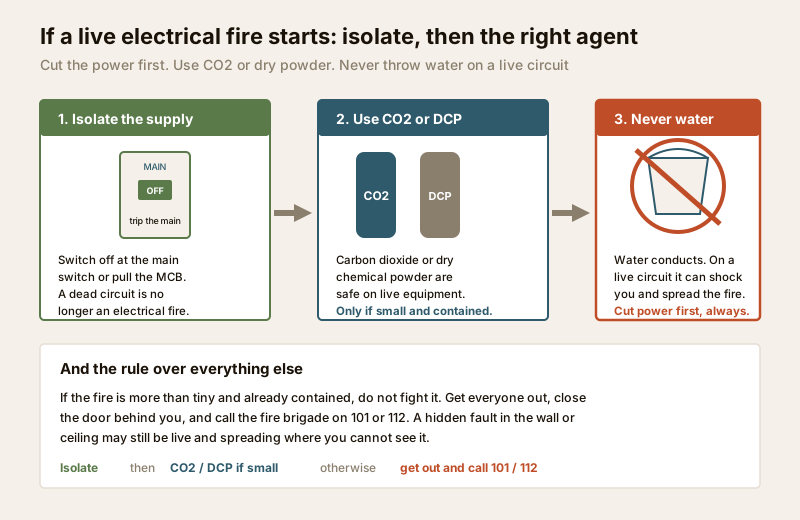
An electrical fire has one rule that overrides the ordinary firefighting instinct: water is dangerous on a live circuit. It conducts, so it can shock you and it can spread the fire. The sequence is isolate, then the right agent, then get out.
1. Isolate the supply. Switch off at the main switch or trip the relevant MCB. A de-energised circuit is no longer an "electrical" fire - it becomes an ordinary fire you can treat normally. This one step is the most important thing you can do.
2. Use CO2 or dry chemical powder (DCP) - the agents rated safe on live equipment - and only if the fire is genuinely small and contained with a clear exit behind you. Never water, never foam on a live circuit.
3. Otherwise, get out and call. If it is spreading, if there is smoke, or if a fault may still be live inside a wall or ceiling where you cannot reach the source, leave, close the door, and call 101 or 112. A hidden fault can smoulder and reignite.
Fire classes matter here. Ordinary solids are Class A, flammable liquids Class B, gases Class C, metals Class D and cooking oils Class K - but a live circuit is not a class of fuel, it is a hazard label: "electrical", meaning energised equipment, which is why you isolate and reach for CO2 or DCP rather than water. Once the power is off, you are simply fighting whatever caught - usually a Class A fire of insulation, wood or paper. The passive protections that stop a fire spreading between rooms - the doors that must never be wedged or blocked - are covered in the fire-rated doors guide.
When the law or your insurer requires a professional. Any new wiring, a rewire, a load addition, a DB modification, or the electrical clearance a building needs is not a homeowner task. It must be designed and installed by a licensed electrical contractor and, where the building's occupancy and height require it, forms part of the statutory approvals and the Fire NOC under your State Fire Services Act and Rules and the Model Building Bye-Laws. Insurers increasingly ask for evidence of compliant wiring and periodic inspection after an electrical fire. Route all of it to qualified professionals working to IS 1646 : 2015 and the CEA regulations - and keep the certificates.
Key takeaways
- Electrical faults are a leading cause of Indian building fires, and they build slowly: overloading, loose or corroded connections, undersized or ageing wiring, cheap non-ISI accessories, missing protection and unventilated loads all end in heat that ignites insulation.
- The core protections are a design job, not a purchase: cable sized to the load and a properly designed board with per-circuit MCBs and a whole-house RCCB (or RCBO on critical circuits), installed by a licensed electrician to IS 1646 : 2015 and the CEA regulations.
- Do not defeat the protection. Never run an AC or geyser off a 5A point, never daisy-chain extension boards, never bypass a tripping MCB, and never box an inverter or battery into a sealed cupboard.
- Warmth, a burnt smell, scorched sockets or a repeatedly tripping breaker are warnings - stop using that point and call a licensed electrician; commission a periodic inspection for older or inherited wiring.
- On a live electrical fire, isolate the supply first, then use CO2 or DCP - never water - and if it is more than tiny and contained, get out, close the door, and call 101 or 112.
References
- National Building Code of India, SP 7 : 2026 (the NBC), Part 4 "Fire and Life Safety" - the fire and life-safety framework for buildings, including electrical installations; the older SP 7 : 2016 edition is withdrawn but still widely quoted. Verify the current edition via the BIS catalogue: https://www.services.bis.gov.in/
- IS 1646 : 2015, "Code of Practice for Fire Safety of Buildings (General): Electrical Installations" (third revision, reaffirmed 2020), Bureau of Indian Standards - the standard governing fire safety of electrical installations. Verify current status via the BIS catalogue: https://www.services.bis.gov.in/
- The CEA (Measures relating to Safety and Electric Supply) Regulations - the statutory safety requirements for electrical installations and the basis for engaging a licensed electrician; read alongside your State Fire Services Act and Rules and the Model Building Bye-Laws (MoHUA), which set when an electrical clearance and Fire NOC are required.
This is an educational overview, not legal advice, and not a substitute for a licensed electrician or fire-safety consultant. Cable sizing, distribution-board design, wiring, and all electrical installation are qualified professional tasks under IS 1646 : 2015 and the CEA regulations - engage a licensed electrical contractor and verify any standard's current status via the BIS catalogue before relying on it.
Export this guide
Related Guides — Deep-dive reading
Electrical Safety for Security Systems in India (2026): Powering It Without Peril
A homeowner's guide to the power side of home and RWA security systems, CCTV, alarms, gates, access control and NVRs, done so it protects you instead of quietly becoming a shock or fire hazard. What makes a supply safe, what to insist on, and why the mains work belongs to a licensed electrician.
SecurityEmergency Lighting Testing in India (2026): The Function Test, the Duration Test and the Battery That Quietly Dies
Emergency lighting is what gets people out of a building in a power cut or a fire — and it is useless if its batteries have silently gone flat. This professional guide covers what emergency lighting is, the two tests that keep it honest (the short frequent function test and the longer periodic duration test that catches dying batteries), what to test across escape routes, stairs and exit signs, the statutory test log, and the safe split of who does what.
SecurityBathroom Fire Safety India: NBC 2016 Part 4, Fire-Rated Materials & Electrical Ignition
The bathroom is rarely thought of as a fire risk, yet it hides several: a leaky geyser element, an over-run exhaust-fan motor, cheap flammable PVC panels overhead, and aerosol cans stored beside a heat source. This is an honest, practical reference to fire and life safety in the Indian bathroom — the NBC 2016 Part 4 context that actually applies to homes, the real ignition sources, self-extinguishing false-ceiling and PVC materials, earth-leakage protection as fire prevention, escape considerations, and the carbon-monoxide danger of gas geysers.
BathroomsRelated Tools — Try Free
Electrical Safety & Load Audit
Home electrical audit — 10 categories, 65+ checkpoints across earthing, RCCB, MCB, wiring, switchboards, appliance circuits, DG/inverter backup.
Safety AuditCross-Ventilation Analyzer
Estimate airflow and air changes per hour (ACH) from room size, window areas, layout, and local wind — with NBC 2016 Part 8 compliance check.
Ventilation CalculatorFalse Ceiling Cost Estimator
Live ₹/sqft across 8 ceiling types — POP, gypsum, designer, metal, PVC, wooden — with cove and spot lighting for 20 Indian cities.
Cost Calculator