
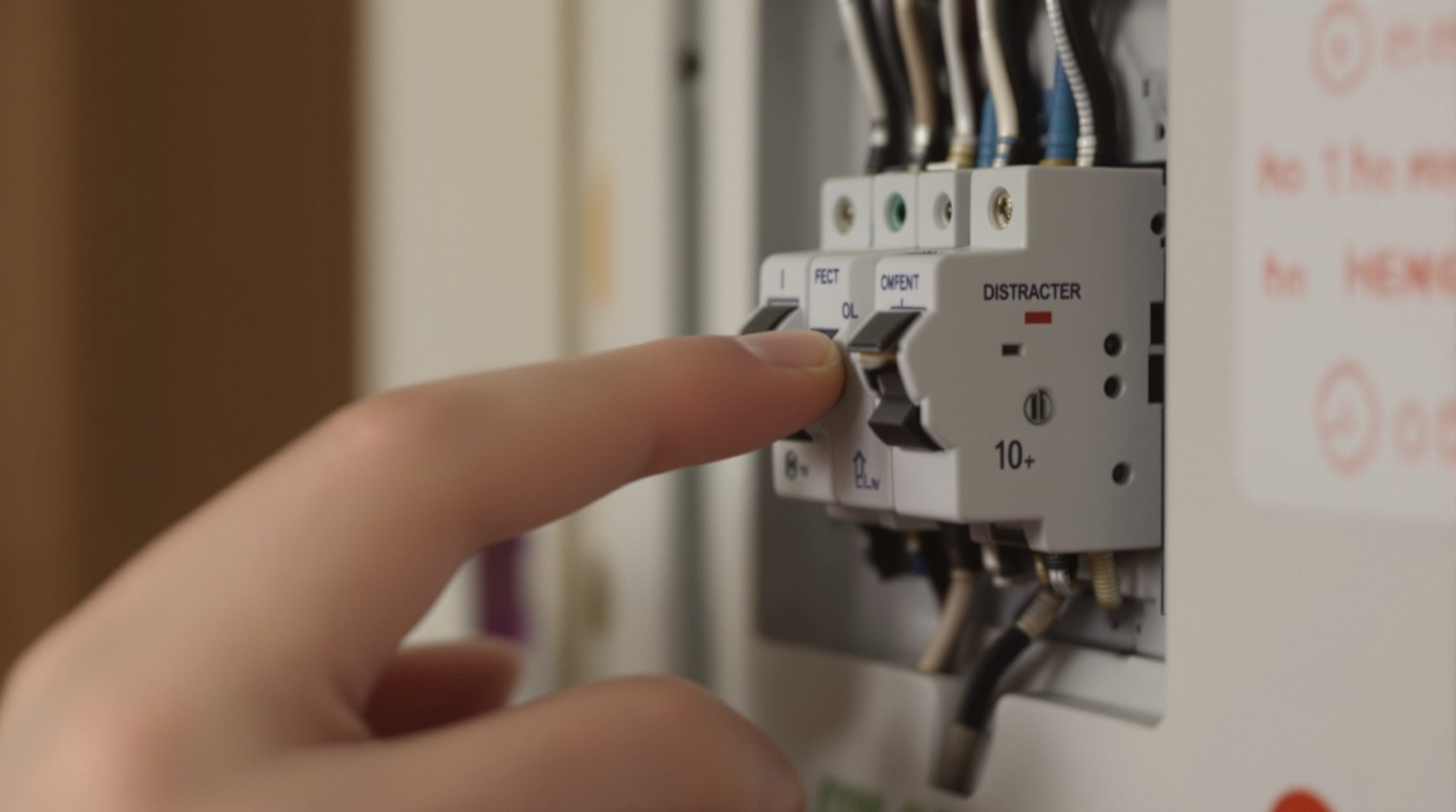
Home Electrical Troubleshooting: Common Problems & When to Call an Electrician
What the common faults actually mean — a tripping MCB, a tripping RCCB, flickering lights, a dead socket, a warm switch — the likely cause of each, the one or two safe things you can check, and the clear line where you must stop and call a licensed electrician.
When something electrical goes wrong, the useful thing isn't to fix it yourself — it's to understand what it means and know the one or two safe things to check before calling a professional. A tripping breaker, flickering lights or a dead socket each tell a story about what's happening in your installation. This guide decodes the common home electrical problems in India: the likely cause of each, what you can safely check, and — crucially — the clear line where you must stop and call a licensed electrician.
It is the problem-solving guide of the Electrical Knowledge Hub, sitting alongside safety and maintenance.
The safety line — read first. Safe homeowner troubleshooting is limited to: resetting a tripped breaker once, unplugging a suspect appliance, and observing. Anything involving opening a socket, switch, fitting or the DB, touching wiring, or a fault that recurs — stop and call a licensed electrician. A recurring trip or any heat, smell or shock is the installation warning you, not an invitation to investigate.
First: the golden rules
- A breaker that trips is protecting you — it found an overload, short circuit or leakage. The fault is real; the breaker is the messenger.
- Reset once. You may reset a tripped MCB/RCCB once. If it trips again, stop — something is wrong and it needs an electrician.
- Never bypass a tripping device — taping a breaker on or replacing it with a higher rating removes your protection and is dangerous.
- Heat, burning smell, sparks or a shock = power off, call now. These are the warning signs; don't troubleshoot, isolate and call.
Common problems, decoded
An MCB keeps tripping
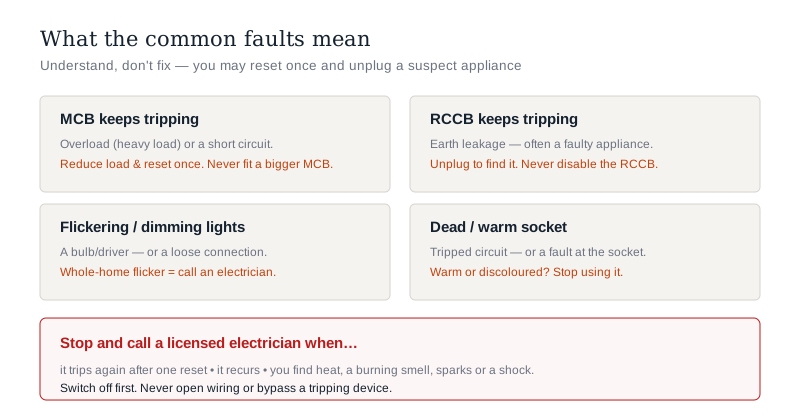
An MCB trips on overload (too much load on the circuit) or a short circuit.
- Likely overload if it trips when you switch on a heavy appliance or run many at once. Safe check: reduce the load on that circuit; if it holds, it was overload — you may need load spread across circuits (an electrician's job). See choosing MCB rating.
- Likely a fault if it trips immediately or with little load. This needs an electrician — a short circuit or damaged cable/appliance.
- Never fit a higher-rated MCB to "stop the tripping" — that defeats the protection.
An RCCB keeps tripping
An RCCB trips on earth leakage — current escaping to earth, often through a faulty appliance or damp.
- Safe check: unplug appliances on that circuit and reset; plug them back one at a time to find the culprit. A faulty appliance is often the cause — stop using it.
- Persistent tripping with nothing plugged in, or tripping you can't trace, means a wiring or installation leakage — call an electrician. Don't disable the RCCB; it's your shock protection.
- Nuisance tripping in monsoon/damp is common and still worth an electrician's check.
Flickering or dimming lights
- One light flickering — often the bulb/driver or its fitting; try a known-good bulb.
- Lights dimming when a heavy appliance starts — normal to a degree, but pronounced dimming can mean an overloaded circuit or a loose connection (a fire risk) — get it checked.
- Whole-home flickering or dimming — could be a supply issue or a serious loose connection at the DB/main; call an electrician (and report to the DISCOM if it's supply-side).
A dead socket or circuit
- Safe check: see whether an MCB/RCCB has tripped and reset once; check if it's a whole circuit or one socket.
- A single dead socket (others fine) usually means a fault at that socket or its wiring — an electrician's job, not one to open yourself.
- A dead circuit that won't reset — a fault on that circuit; call an electrician.
A warm or discoloured switch or socket
- Stop using it. Warmth or discolouration means a loose connection or overload — a genuine fire risk.
- This is not a DIY fix — isolate that circuit if you can and call an electrician promptly.
Frequent bulb failures / appliances misbehaving
- Often voltage fluctuation — see energy management; a stabiliser protects sensitive appliances where supply is poor.
- Repeated failures on one fitting can indicate a wiring or fixture fault worth checking.
When it's the supply, not you
Some problems are the DISCOM's side, not your installation:
- Whole-area outage — a supply/grid issue; report to the DISCOM.
- Consistently low or high voltage across the home — a supply issue to raise with the DISCOM (protect appliances with a stabiliser meanwhile).
- A problem at the meter or service line — the utility's equipment; don't touch it.
Knowing whether a problem is inside your home or upstream tells you whether to call an electrician or the DISCOM.
The one-line answer
Home electrical troubleshooting for a homeowner is about understanding, not fixing: a tripping MCB means overload or a short circuit; a tripping RCCB means earth leakage (often a faulty appliance — unplug to find it); flickering can be a bulb or a dangerous loose connection; a warm or discoloured switch means stop using it. You may reset a tripped breaker once and unplug a suspect appliance — but if it trips again, recurs, or you find heat, smell, sparks or a shock, switch off and call a licensed electrician. Never bypass a tripping device or open wiring yourself, and know when a problem is actually the DISCOM's supply, not your installation.
Where to go next
- The dangers behind the faults: Home Electrical Safety Guide.
- Catch problems early: Home Electrical Maintenance Guide.
- Understand the tripping devices: MCB & MCCB Guide · RCCB & RCBO Guide.
- Get the right person: Hiring an Electrician Guide.
References
- IS 732 : 2019, Code of Practice for Electrical Wiring Installations, Bureau of Indian Standards.
- IS/IEC 60898 (MCBs); IS 12640 (RCCBs), BIS.
- Central Electricity Authority (Measures relating to Safety and Electric Supply) Regulations, 2010 (as amended): https://cea.nic.in/
Troubleshooting here is limited to understanding faults and the two safe homeowner actions (reset once, unplug); all repair and fault-finding inside the installation must be done by a licensed electrician. Any heat, burning smell, sparking or shock means power off and call immediately. Verify any standard's status via the BIS catalogue.
Export this guide
Related Guides — Deep-dive reading
Residential Electrical Systems: The Complete Guide for Indian Homes
How the electricity in an Indian home actually works — from the utility supply and meter through the distribution board, circuits, wiring, earthing and protection, to lighting, safety, energy efficiency, smart controls, solar and backup — written so a homeowner can understand, plan and judge it, and know exactly where a licensed electrician must take over.
Electrical & WiringElectrical Fire Safety in India (2026): Overloads, Wiring and the Right Protection
Why electrical faults cause so many Indian building fires, and the fix: correct cable sizing and a properly designed board by a licensed electrician, MCB plus RCCB protection, no overloading, and never water on a live fire.
SecurityElectrical Safety for Security Systems in India (2026): Powering It Without Peril
A homeowner's guide to the power side of home and RWA security systems, CCTV, alarms, gates, access control and NVRs, done so it protects you instead of quietly becoming a shock or fire hazard. What makes a supply safe, what to insist on, and why the mains work belongs to a licensed electrician.
SecurityRelated Tools — Try Free
Electrical Safety & Load Audit
Home electrical audit — 10 categories, 65+ checkpoints across earthing, RCCB, MCB, wiring, switchboards, appliance circuits, DG/inverter backup.
Safety AuditElectrical Load Calculator
Estimate a home's connected load and realistic maximum demand from its appliances, whether it needs single or three-phase supply, and a suggested main switch rating.
ElectricalMonsoon-Readiness Checklist
Pre-rain home audit across 9 categories — terrace, drains, waterproofing, electrical, HVAC, pest, vehicles, documents.
Seasonal Audit