

Home Electrical Maintenance: The Inspection & Upkeep Schedule for an Indian Home
Electrics age quietly — the simple schedule that keeps a home safe: what you can check yourself, what needs a periodic professional inspection, how often, the signs a system is ageing, and why a decades-old installation is a fire risk waiting to be found.
Unlike a leaking tap or a peeling wall, ageing electrics give almost no warning — until a switch overheats, an RCCB stops tripping, or old insulation fails. Electrical maintenance is the quiet discipline that catches these before they become a shock or a fire. It isn't hard: it's a short list of things you can check yourself, and a periodic professional inspection for the things you can't. This guide is that schedule for an Indian home — what to check, how often, and the signs that mean it's time to call an electrician.
It is the upkeep guide of the Electrical Knowledge Hub, and the ongoing partner to the safety guide.
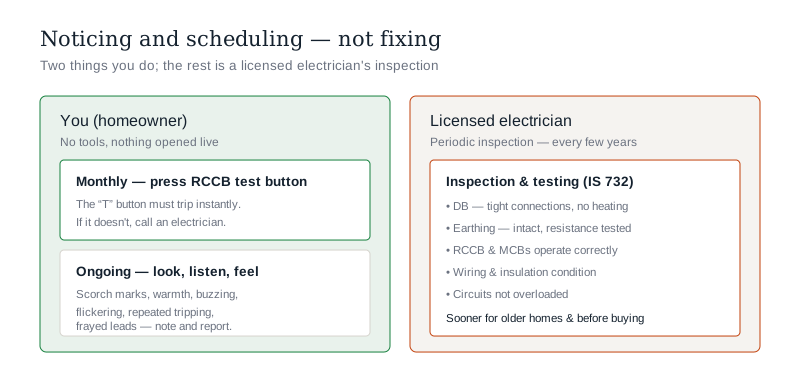
The safety line. The only hands-on task a homeowner should do is the RCCB monthly test-button press and visual/observational checks. Everything else — opening the DB, tightening connections, testing, repairs — is a licensed electrician's job. Maintenance is about noticing and scheduling, not fixing.
What you can safely do yourself
A homeowner's maintenance is observation plus one test — no tools, no opening anything live:
- Press the RCCB test button — the one hands-on task. Monthly, press the "T" button on your RCCB; it should trip instantly. If it doesn't, the device isn't protecting you — call an electrician. (Restore power afterwards.)
- Look and listen — for the warning signs: scorch marks, discolouration, warmth, buzzing, flickering, loose or cracked switch plates.
- Feel for heat — switch plates, sockets and plugs should be cool; warmth means a problem.
- Check plugs and leads — frayed cords, loose plugs, overloaded extension boards.
- Note anything that trips repeatedly — and get it investigated rather than just resetting it.
What needs a professional inspection
The important checks are inside the installation, and belong to a licensed electrician:
- The distribution board — tight connections (loose terminals are a leading cause of heating and fire), no signs of overheating, correct devices.
- Earthing — that the earthing is intact and effective (earth resistance testing).
- RCCB and MCBs — that they operate correctly and at the right ratings.
- Wiring and insulation — condition of cables, insulation resistance, no damage or degradation.
- Load and circuits — that circuits aren't overloaded and the installation still suits how the home is used.
This is a periodic inspection and testing to IS 732, producing a picture of the installation's health.
How often
A sensible schedule for an Indian home:
| Task | Who | Frequency |
|---|---|---|
| RCCB test-button press | Homeowner | Monthly |
| Visual/heat checks | Homeowner | Ongoing / monthly |
| Professional periodic inspection | Electrician | Every few years (sooner for older homes) |
| Inspection at purchase/major change | Electrician | Before buying an older home; after any big load addition |
Older installations, homes with visible problems, or any home about to add heavy load (AC, EV charging, solar) warrant an inspection sooner. Always get an inspection before buying an older property.
Signs a system is ageing — and when to rewire
Electrical installations don't last forever. Signs the wiring itself may be near end of life:
- The home is decades old and never rewired — old wiring, old insulation, and often no earthing or RCCB to modern standards.
- Frequent tripping, flickering or warm fittings across the home, not just one circuit.
- No RCCB, inadequate earthing, or an old fuse-based board rather than a modern MCB/RCCB DB.
- Too few sockets for modern life, forcing overloaded extensions.
- Discoloured, brittle or cloth/old insulation visible at fittings.
When several of these are true, a rewire (see the renovation & rewiring guide) is a safety investment, not an indulgence. A licensed electrician's inspection tells you whether you're maintaining or replacing.
Seasonal and Indian-specific care
- Before the monsoon — check for damp near electrics, ensure earthing and RCCB protection are sound (moisture raises shock risk), and look at outdoor/terrace fittings.
- Lightning-prone areas — verify surge and lightning protection where relevant.
- After voltage events — a major surge or fluctuation is a good prompt to have things checked.
The one-line answer
Electrics age silently, so maintenance is about noticing and scheduling, not fixing. As a homeowner, do just two things: press the RCCB test button monthly (it must trip; if not, call an electrician) and watch for the warning signs — heat, scorch marks, buzzing, flickering, repeated tripping. Leave everything inside the installation — tight DB connections, earthing tests, insulation and RCCB testing — to a licensed electrician's periodic inspection, done every few years and sooner for older homes, before buying an old property, or before adding heavy load. When a home is decades old with frequent tripping, no RCCB or inadequate earthing, an inspection will tell you whether it's time to rewire — a safety investment worth making.
Where to go next
- The dangers you're guarding against: Home Electrical Safety Guide.
- When maintenance becomes replacement: Electrical Renovation & Rewiring Guide.
- Fix the day-to-day faults: Electrical Troubleshooting Guide.
- Run the room-by-room check: Electrical Safety Checklist.
References
- IS 732 : 2019, Code of Practice for Electrical Wiring Installations (periodic inspection & testing), Bureau of Indian Standards.
- IS 3043 : 2018, Code of Practice for Earthing (earth testing), BIS.
- IS 12640 (Parts 1 & 2), Residual Current Operated Circuit Breakers (RCCBs) — test provision, BIS.
Inspection intervals are indicative and depend on the installation's age and condition; all inspection, testing and repair must be done by a licensed electrician. The only homeowner task is the RCCB test-button press and visual observation. Verify any standard's status via the BIS catalogue.
Export this guide
Related Guides — Deep-dive reading
Electrical Fire Safety in India (2026): Overloads, Wiring and the Right Protection
Why electrical faults cause so many Indian building fires, and the fix: correct cable sizing and a properly designed board by a licensed electrician, MCB plus RCCB protection, no overloading, and never water on a live fire.
SecurityElectrical Safety for Security Systems in India (2026): Powering It Without Peril
A homeowner's guide to the power side of home and RWA security systems, CCTV, alarms, gates, access control and NVRs, done so it protects you instead of quietly becoming a shock or fire hazard. What makes a supply safe, what to insist on, and why the mains work belongs to a licensed electrician.
SecurityElectrical Renovation & Rewiring Guide for Indian Homes
When an older home needs its electrics upgraded — how to recognise wiring that has reached the end of its life, what a full rewire versus a partial upgrade involves, how to add smart controls, RCCB protection and capacity to an existing home, and how to estimate the cost.
Electrical & WiringRelated Tools — Try Free
Electrical Safety & Load Audit
Home electrical audit — 10 categories, 65+ checkpoints across earthing, RCCB, MCB, wiring, switchboards, appliance circuits, DG/inverter backup.
Safety AuditMonsoon-Readiness Checklist
Pre-rain home audit across 9 categories — terrace, drains, waterproofing, electrical, HVAC, pest, vehicles, documents.
Seasonal AuditEarth Conductor Size Calculator
Find the minimum protective (earth) conductor size for a circuit from its phase conductor size, using the standard IS 732 / IEC 60364 rule.
Electrical