
Home Earthing Explained: The Invisible Life-Saver
What earthing is and why every home must have it — how it gives a dangerous fault a safe path to the ground, why it lets your MCB and RCCB actually work, what good earthing looks like, and the IS 3043 standard that governs it in India.
Earthing is the most important part of a home's electrical system that you will never see and rarely think about — until it saves a life. It is the connection that gives a dangerous electrical fault a safe, deliberate path into the ground, instead of leaving it waiting in the metal body of an appliance for someone to touch. A home with good earthing is protected; a home with poor or missing earthing is a hazard, no matter how modern its switches look. This guide explains what earthing does, why it matters so much, and how to know yours is sound.
It sits under the protection layers guide and the residential electrical systems pillar. For the different physical methods, see types of earthing.
The safety line. Earthing is fundamental to safety and is entirely a licensed electrician's domain to design, install and test to IS 3043 : 2018. This guide helps you understand why it matters and recognise problems; it is not a guide to installing or testing earthing yourself. If you doubt your home's earthing, have it professionally checked — it is that important.
What earthing actually does
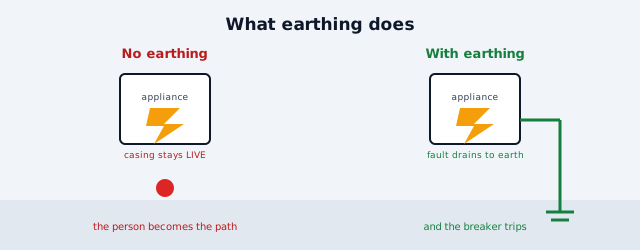
Normally, current flows out on the live and back on the neutral, and the metal body of an appliance is dead — safe to touch. But if a live wire inside a geyser, fridge or mixer comes loose and touches the metal casing, that casing becomes live. Without earthing, the casing simply sits there at a dangerous voltage, and the first person to touch it becomes the path to earth — a potentially fatal shock.
Earthing prevents this by connecting every metal casing, every socket's earth pin, and the installation itself to an earth electrode buried in the ground, through a low-resistance conductor. Now, if a live wire touches the casing:
1. The fault current flows through the earth path, not through a person.
2. That surge of current trips the protective device (the MCB, or especially the RCCB), cutting the power.
So earthing does two life-saving jobs at once: it keeps metal parts safe by draining a fault away, and it enables the protective devices to trip by giving the fault current somewhere to go.
Why earthing makes the other protections work
This is the point most people miss: earthing is the foundation the whole protection system stands on. An RCCB detects current leaking to earth — but that leak needs an earth path to flow through in the first place. Many faults only trip an MCB because earthing provides a low-resistance route that lets a large fault current flow. Take earthing away, and the protective devices you paid for may never trip when they are needed most. This is why "we have MCBs and an RCCB" is not enough without confirmed, sound earthing beneath them.
What good earthing looks like
Good earthing has a few characteristics an owner should know to ask about:
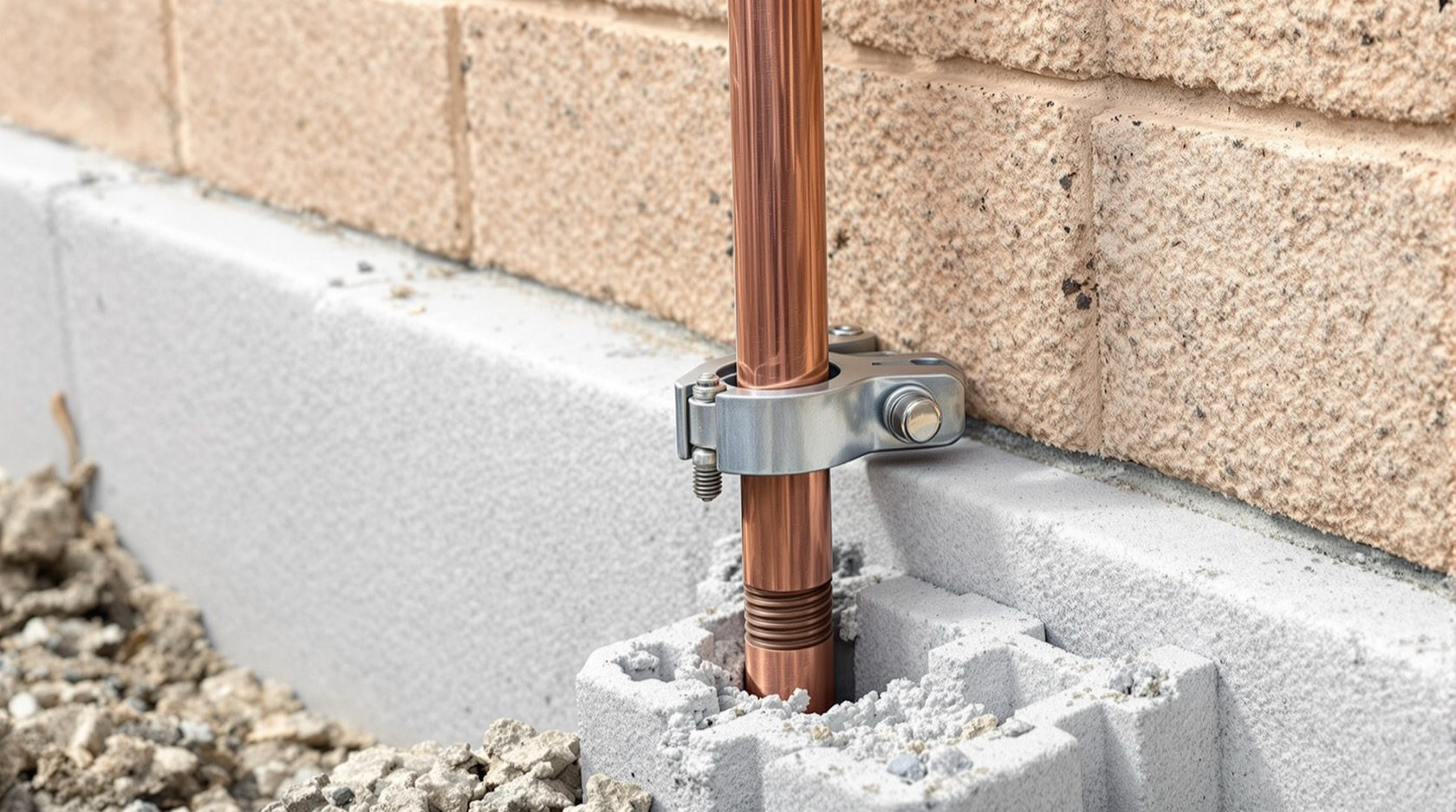
- A proper earth electrode — a pipe, plate or rod system buried to reach moist soil, installed to IS 3043. The earthing types guide explains the options.
- Low earth resistance — the resistance from the installation to the general mass of earth must be low enough for fault current to flow and trip protection. This is measured by an electrician with an earth tester, not assumed.
- A continuous earth conductor run to every point — every socket, every metal-bodied appliance, the DB itself — with none skipped.
- Sound connections that do not corrode or loosen over time (a common failure in older or poorly-made earthing).
- Separation and correctness appropriate to the supply system, as the electrician determines.
Signs of earthing trouble
You cannot test earthing yourself, but some signs warrant an urgent professional check:
- A mild tingle or shock from the metal body of an appliance (a geyser, fridge, washing machine) — a classic sign of a fault with inadequate earthing. Stop using that appliance and call an electrician.
- No earth pin connection at sockets, or an installation you know was done cheaply.
- An old home whose earthing has never been tested, or a home after flooding or major electrical work.
- Protective devices that do not trip on a known fault.
The one-line answer
Earthing gives a dangerous electrical fault a safe, low-resistance path into the ground — so a loose live wire drains harmlessly away instead of leaving an appliance's metal body live, and so your MCB and RCCB actually trip when they should. It is the invisible foundation the whole protection system depends on, governed by IS 3043, and its soundness must be measured and confirmed by a licensed electrician, never assumed. A tingle from an appliance body, or earthing that has never been tested, is a reason to call a professional now.
Where to go next
- The physical methods: Types of Earthing.
- The whole safety picture: Layers of Electrical Protection.
- The device earthing enables: RCCB, RCBO & ELCB Guide.
- Old-home safety: Electrical Renovation & Rewiring.
References
- IS 3043 : 2018, Code of Practice for Earthing (Second Revision), Bureau of Indian Standards.
- IS 732 : 2019, Code of Practice for Electrical Wiring Installations, BIS.
- Central Electricity Authority (Measures relating to Safety and Electric Supply) Regulations, CEA: https://cea.nic.in/
- National Electrical Code of India, SP 30 : 2023, BIS: https://www.bis.gov.in/
Earthing requirements are indicative; design, installation and testing must be done by a licensed electrician to IS 3043. If you suspect an earthing fault (for example a tingle from an appliance), stop using it and call a professional. Verify any standard's status via the BIS catalogue before relying on it.
Export this guide
Related Guides — Deep-dive reading
Residential Electrical Systems: The Complete Guide for Indian Homes
How the electricity in an Indian home actually works — from the utility supply and meter through the distribution board, circuits, wiring, earthing and protection, to lighting, safety, energy efficiency, smart controls, solar and backup — written so a homeowner can understand, plan and judge it, and know exactly where a licensed electrician must take over.
Electrical & WiringElectrical Fire Safety in India (2026): Overloads, Wiring and the Right Protection
Why electrical faults cause so many Indian building fires, and the fix: correct cable sizing and a properly designed board by a licensed electrician, MCB plus RCCB protection, no overloading, and never water on a live fire.
SecurityElectrical Safety for Security Systems in India (2026): Powering It Without Peril
A homeowner's guide to the power side of home and RWA security systems, CCTV, alarms, gates, access control and NVRs, done so it protects you instead of quietly becoming a shock or fire hazard. What makes a supply safe, what to insist on, and why the mains work belongs to a licensed electrician.
SecurityRelated Tools — Try Free
Electrical Safety & Load Audit
Home electrical audit — 10 categories, 65+ checkpoints across earthing, RCCB, MCB, wiring, switchboards, appliance circuits, DG/inverter backup.
Safety AuditEarth Conductor Size Calculator
Find the minimum protective (earth) conductor size for a circuit from its phase conductor size, using the standard IS 732 / IEC 60364 rule.
ElectricalElectrical Load Calculator
Estimate a home's connected load and realistic maximum demand from its appliances, whether it needs single or three-phase supply, and a suggested main switch rating.
Electrical