
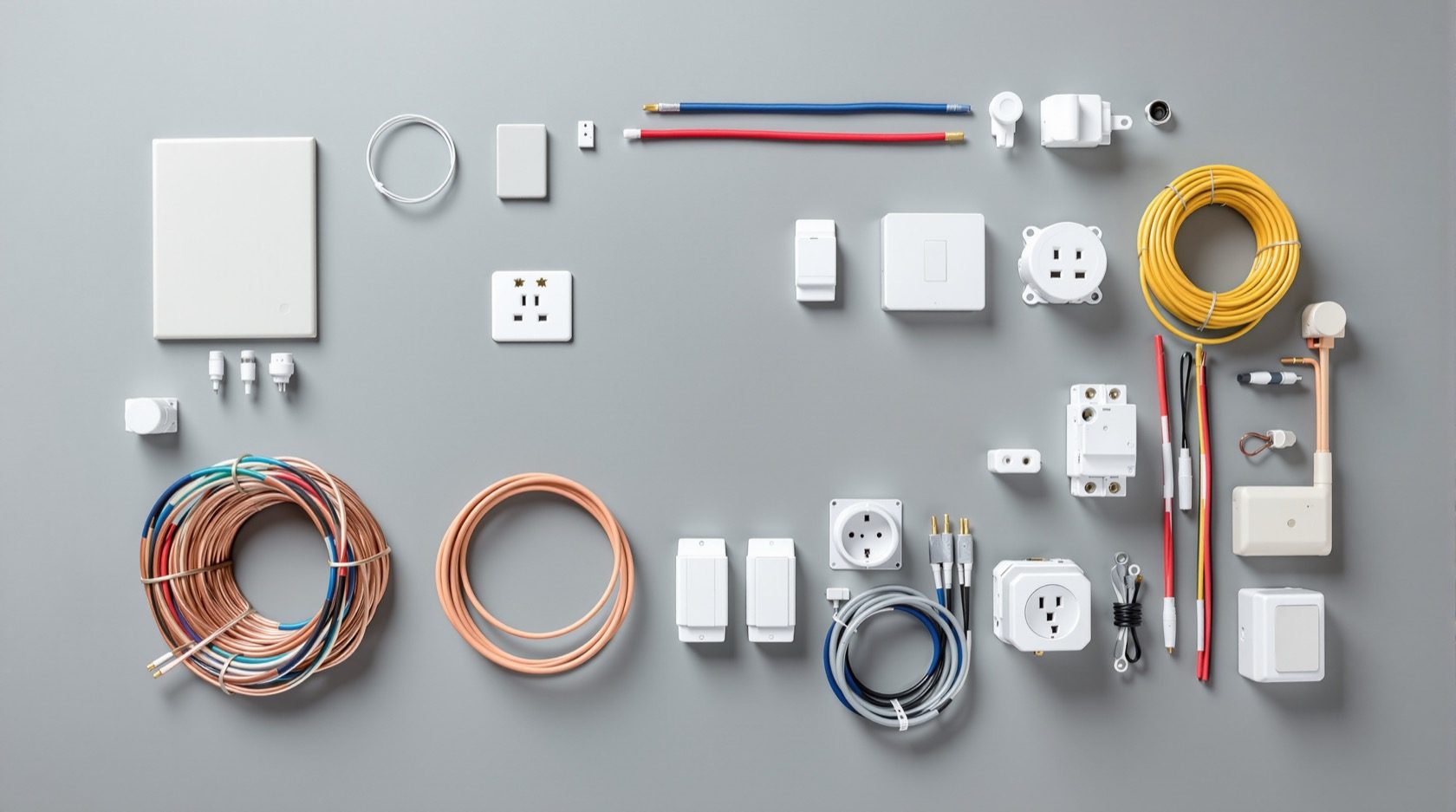
Buying Electrical Materials in India: The ISI Mark, Quality & Avoiding Fakes
The one place never to save money — how to buy quality electrical materials: what the ISI mark means and how to verify it, where quality genuinely matters (cables, MCBs, RCCBs) versus where it's flexible, how to spot counterfeits, and why the cheapest option is the most expensive mistake.
There is one place in a home you should never save money: the electrical materials hidden in the walls. A cheap cable, a fake MCB or a counterfeit RCCB doesn't announce itself — it sits quietly until the day it fails to protect you. Because these products are safety devices, quality isn't a luxury; it's the whole point. This guide is how to buy electrical materials well in India — what the ISI mark means, where quality genuinely matters, how to avoid fakes, and why the cheapest option is so often the most expensive mistake.
It is the buying guide of the Electrical Knowledge Hub, and works hand in hand with hiring a good electrician.
The safety line. Buying good materials is your job; installing them is a licensed electrician's. Quality materials badly installed are still unsafe, and quality materials are what a good electrician insists on — the two go together.
The ISI mark: your single best filter
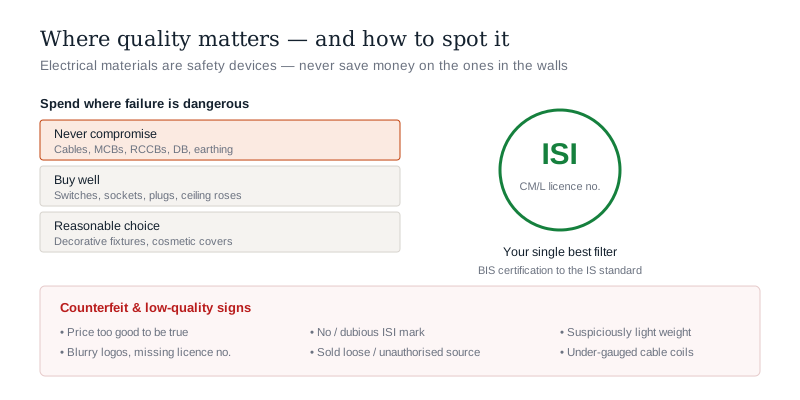
The ISI mark is the certification granted by the Bureau of Indian Standards (BIS) to products that conform to the relevant Indian Standard. For electrical goods it is the simplest, most reliable quality signal a homeowner has:
- It means the product is made to the IS standard (e.g. IS 694 for cables, IS/IEC 60898 for MCBs, IS 12640 for RCCBs) and is subject to BIS oversight.
- Genuine ISI marks carry a CM/L licence number you can, in principle, verify with BIS.
- For safety-critical items, ISI-marked is non-negotiable — it's the difference between a device that protects you and one that only looks like it does.
Buying ISI-marked products is how you apply the electrical standards without reading them.
Where quality genuinely matters most
Not everything costs the same in consequences. Spend where failure is dangerous:
| Priority | Items | Why |
|---|---|---|
| Never compromise | Cables/wires, MCBs, RCCBs, the DB, earthing materials | These are the shock- and fire-safety layer; failure is dangerous |
| Buy well | Switches, sockets, plugs, ceiling roses | Handled daily; poor ones overheat and wear |
| Reasonable choice | Fittings, decorative fixtures, cosmetic covers | Function and taste; safety impact lower |
The cables and protective devices are where a rupee saved can cost the most — buy the best you can there and economise, if anywhere, on the cosmetic layer.
Cables: the biggest hidden risk
House-wiring cable is the most-faked, most-compromised electrical product because it's hidden and sold by the coil:
- Insist on ISI-marked cable to IS 694, from a reputable brand.
- Under-gauging is common — cheap cable may carry less copper than its stated size, overheating under load. Buy from trusted sellers and reputable brands.
- Copper, correctly sized for the circuit (see copper vs aluminium and the wire size calculator).
- Consider fire-performance cables (FR/FRLS) for added fire safety.
Because cable sits in the walls for decades, this is the worst possible place to cut corners.
Spotting counterfeits and low quality
Fakes imitate trusted brands. Watch for:
- A price too good to be true — genuine safety devices have a floor cost; a "branded" MCB at a fraction of the usual price is suspect.
- Poor packaging, printing or finish — blurry logos, missing licence numbers, no proper markings.
- Missing or dubious ISI mark / CM licence number.
- Sold loose or from an unauthorised source rather than an authorised dealer.
- Wrong weight/feel — a genuine cable coil or MCB has a certain heft; suspiciously light often means less material.
When in doubt, buy from an authorised dealer of a reputable brand — the surest way to avoid counterfeits.
Buying smart
- Let your electrician specify, but verify — agree the brands and specs in writing (see hiring an electrician), and check what's delivered matches.
- Buy safety-critical items yourself for a big job if you want certainty on quality, from authorised sellers.
- Match the material to the load — the right cable size and device rating for the circuit, not a one-size guess (see choosing MCB rating).
- Keep bills and warranties — proof of genuine purchase and cover if something fails.
- Don't over-buy exotic — you need quality and correct spec, not the most expensive gadget; ISI-marked, right-sized, reputable-brand is the target.
The one-line answer
Electrical materials are safety devices, so quality is the whole point — never save money on the ones hidden in the walls. Use the ISI mark (BIS certification to the relevant IS standard) as your primary filter, and treat it as non-negotiable on cables, MCBs, RCCBs, the DB and earthing — the shock- and fire-safety layer — while economising, if anywhere, only on the cosmetic layer. Cables are the biggest hidden risk (insist on ISI-marked IS 694 copper, correctly sized, from reputable brands), avoid counterfeits by buying from authorised dealers and distrusting prices that are too good to be true, and keep your bills. The cheapest option is usually the most expensive mistake.
Where to go next
- Get it installed right: Hiring an Electrician Guide.
- Understand the standards behind the mark: Electrical Standards & Codes Guide.
- The cables in depth: Copper vs Aluminium Wiring · Fire-Resistant Cables.
- Size it correctly: Wire Size Calculator.
References
- Bureau of Indian Standards — Standard Mark (ISI mark) & product certification: https://www.bis.gov.in/
- IS 694 : 2010 (PVC Insulated Cables up to 1100 V); IS/IEC 60898 (MCBs); IS 12640 (RCCBs); IS 3854 (Switches), Bureau of Indian Standards.
- IS 302 : Part 1 : 2024, Household and Similar Electrical Appliances — Safety — General Requirements, BIS.
Product standards and certification schemes are periodically revised; verify a product's ISI/BIS certification and a standard's current status via BIS before relying on it. Materials must be installed by a licensed electrician.
Export this guide
Related Guides — Deep-dive reading
Plumbing Buying Guide: How to Buy Plumbing Products in India (2026)
The shopping and decision layer for buying plumbing products in India — the universal buying rules that apply to pipes, pumps, tanks, purifiers and fittings: insist on the BIS/ISI mark and the right IS standard, know when branded beats local, weigh warranty and after-sales, spot counterfeits, match the product to your need without oversizing, and read price against quality before you pay.
PlumbingSecurity Product Certification Guide (2026): Reading the Marks That Prove a Device Is Safe and Genuine
How a homeowner tells a genuinely certified, fit-for-purpose security product from an uncertified one, and why it matters most for life-safety and anything electrical or outdoor. A plain-language buyer's guide to the marks and standards you will actually meet in India, and how to verify one is real.
SecurityElectrical Safety for Security Systems in India (2026): Powering It Without Peril
A homeowner's guide to the power side of home and RWA security systems, CCTV, alarms, gates, access control and NVRs, done so it protects you instead of quietly becoming a shock or fire hazard. What makes a supply safe, what to insist on, and why the mains work belongs to a licensed electrician.
SecurityRelated Tools — Try Free
Electrical Safety & Load Audit
Home electrical audit — 10 categories, 65+ checkpoints across earthing, RCCB, MCB, wiring, switchboards, appliance circuits, DG/inverter backup.
Safety AuditMaterial Schedule Generator
Generate a room-wise finish schedule — walls, floors, ceilings, trim, and joinery by location.
Material ScheduleEarth Conductor Size Calculator
Find the minimum protective (earth) conductor size for a circuit from its phase conductor size, using the standard IS 732 / IEC 60364 rule.
Electrical