
Compressed Stabilised Earth Blocks (CSEB): A Specify-and-Select Guide for India (2026)
What CSEB is - local soil plus a small percentage of cement or lime, compressed in a press and cured, never kiln-fired - its low-carbon and thermal-mass strengths, its real limits around soil, quality control and water, and how it compares with fired clay brick and fly-ash brick. A specify-and-select guide.
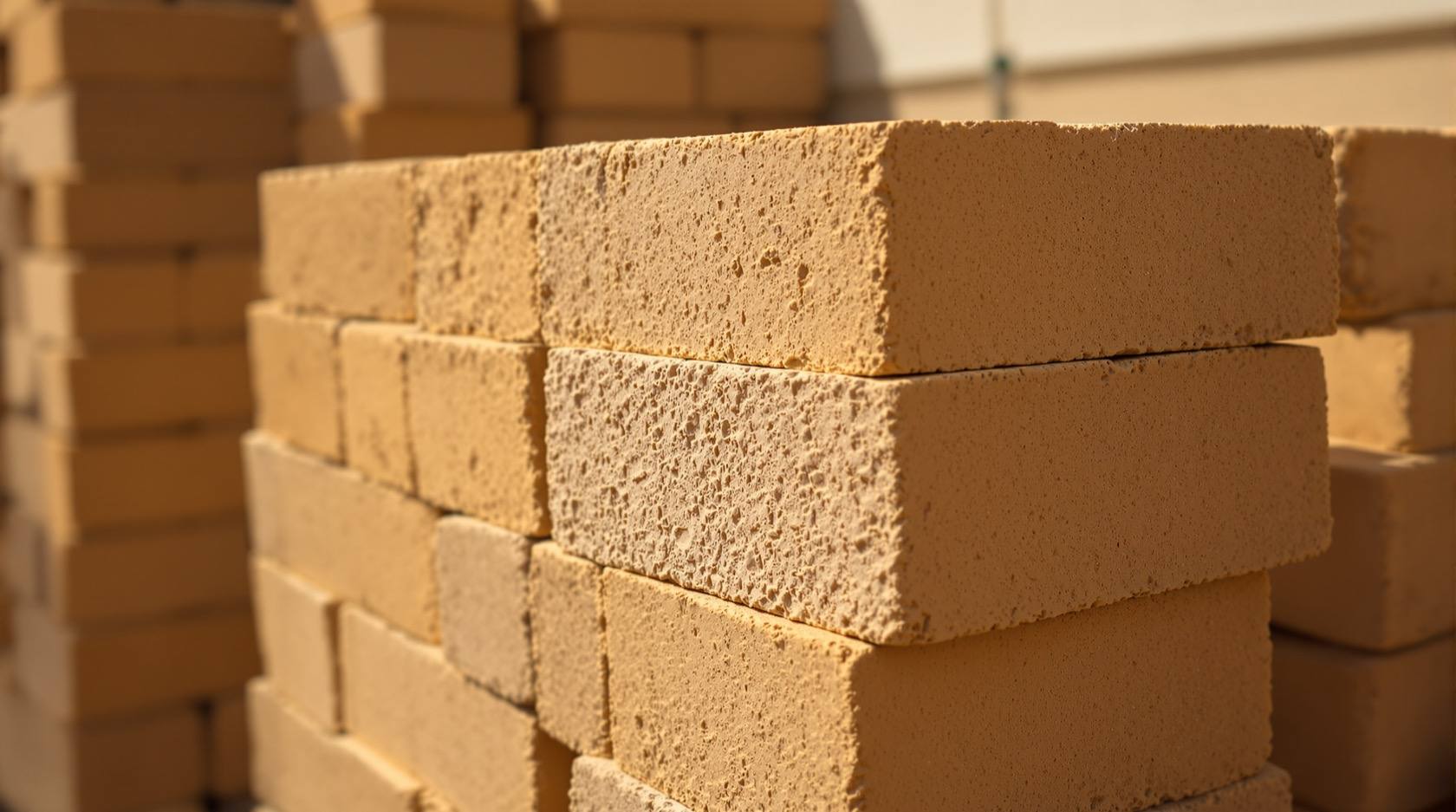
Long before the fired clay brick and the concrete block, India built in earth. Compressed Stabilised Earth Blocks - CSEB, also called stabilised mud blocks - are the modern, engineered version of that ancient idea. You take the soil that is already on or near your site, add a small dose of a stabiliser (a little cement or lime) and just enough water, compress the damp mix hard in a press, and let the blocks cure. There is no kiln. Nothing is fired. That single fact - no firing - is why a well-made CSEB wall can carry a fraction of the embodied carbon of fired brick, while giving you thermal mass, a handsome exposed finish and, at scale, real economy.
India has a genuine pedigree here. The Auroville Earth Institute near Puducherry has trained builders and refined earth-block presses and techniques for decades, and the ASTRA / IISc work in Bengaluru put the "stabilised mud block" on a proper research footing. So this is not a fringe experiment - it is a mature, documented Indian building system. This guide helps you choose and specify CSEB honestly: what it is, its real strengths, its equally real limits, and how it stacks up against fired brick and fly-ash brick. It does not tell you how to test your soil, fix your mix, set your press or design a load-bearing wall - those are engineering and site decisions for a trained team.
Scope and safety: This is a selection guide. Strengths, densities, stabiliser percentages and prices here are indicative only - CSEB performance depends entirely on the specific soil, mix and compaction, so nothing here substitutes for site testing. Soil identification and testing, choosing the stabiliser and its dosage, press selection and calibration, curing regime, and any load-bearing wall design belong to a qualified engineer and a trained CSEB team (an outfit such as the Auroville Earth Institute or an equivalent). Nothing here replaces the relevant BIS standards, the National Building Code or a licensed professional.
What CSEB actually is
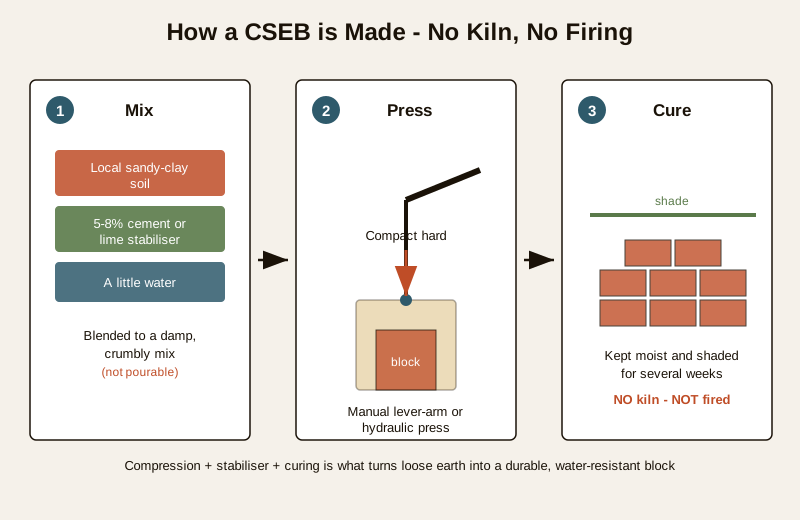
A compressed stabilised earth block is made from three cheap ingredients: soil, a small percentage of a stabiliser and a little water. The soil does the bulk of the work - ideally a sandy-clay earth with the right balance of sand, silt and clay. The stabiliser, usually ordinary cement (commonly around 5 to 8 percent by weight for cement) or hydrated lime for more clayey soils, is what turns loose earth into a durable, water-resistant block. Water is added only to a damp, crumbly consistency - not a pourable mix.
The damp mix is fed into a block press - a manual lever-arm machine (the classic Auroville-style press) or a hydraulic press for higher output - and compacted under pressure into a dense, precise block. The block is demoulded immediately, then cured, typically kept moist and shaded for several weeks so the cement or lime can gain strength. Compression plus stabiliser plus curing is what separates an engineered CSEB from a soft, unfired traditional mud block that would wash away in the rain.
The result can be laid much like a brick - often with a thin stabilised-earth mortar - and, because the blocks come out of the press clean and dimensionally accurate, a CSEB wall can be left exposed, needing no plaster. That saves a whole trade, a whole material and a whole layer of cost. For where earth-building sits in the wider low-carbon picture, start with the green building materials guide and the complete building materials guide.
The properties that make CSEB attractive
CSEB earns its place for a specific bundle of qualities, not for record strength:
- Much lower embodied carbon. This is the headline. Fired clay brick spends days in a kiln burning coal or biomass; CSEB is simply compressed and air-cured. The only carbon of note is in the small dose of cement or lime, so a well-made CSEB wall typically carries far lower embodied energy and carbon than fired brick or concrete block. Put a number on your own wall build-up with the embodied carbon calculator.
- Uses site or local soil. The main raw material is the earth already under your feet, so extraction and transport can be near-zero. Less freight means less cost and less carbon.
- Good thermal mass. A dense earth wall absorbs daytime heat slowly and releases it at night, evening out indoor temperature swings and helping keep interiors cooler in hot Indian climates.
- Attractive exposed finish. Clean, accurate blocks let you skip plaster and paint on many walls, leaving a warm, earthy exposed face that architects prize - and cutting cost and future maintenance.
- Decent strength when well made. A properly graded soil, correct stabiliser dose, good compaction and disciplined curing produce blocks fit for load-bearing single and low-rise construction. The key words are "when well made".
- Good economy at scale. Blocks are often pressed on site from local soil, and the plaster-free exposed finish removes a trade - so on a reasonably sized project CSEB can be genuinely economical, especially where soil and skilled teams are available.
CSEB pairs naturally with the other earth-and-plant walling systems - see rammed earth construction, which uses the same soil-plus-stabiliser logic in a monolithic wall, and hempcrete, a lightweight bio-based infill. All three sit under the sustainability and green buildings hub.
| Property | Typical behaviour of CSEB | What it means for you |
|---|---|---|
| Firing | None - compressed and cured, not kiln-fired | Far lower embodied energy than fired brick |
| Embodied carbon | Low - only the small stabiliser dose | A leading low-carbon walling choice |
| Main raw material | Local or site soil | Minimal extraction and transport cost |
| Thermal mass | High - dense earth wall | Cooler, steadier interiors |
| Finish | Clean exposed block, plaster optional | Saves plaster and paint; earthy character |
| Compressive strength | Moderate, depends on soil, dose, compaction, curing | Fine for low-rise if well made and tested |
| Water resistance | Improved by stabiliser, still needs detailing | Needs good roof overhangs, plinth and coping care |
| Best use | Single and low-rise load-bearing | Not a tall-building material |
The limits - and how to manage them
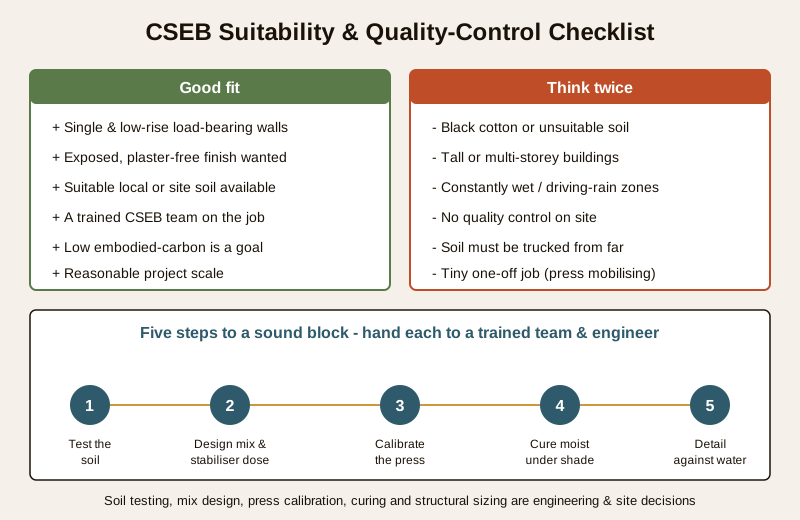
CSEB's weaknesses are the honest flip side of its strengths, and none are disqualifying if the block is made and detailed properly - but they demand discipline:
- It needs the RIGHT soil. This is the single most important limit. Not every soil makes a good block. CSEB wants a sandy-clay soil with a balanced grading - too much clay and blocks shrink, crack and swell with water; too little and they crumble. Black cotton soil, with its high shrink-swell clay, is generally unsuitable without correction. The soil must be identified and tested, and the mix designed from those results - never assumed.
- Quality control on the press and stabiliser percentage. Strength and durability hinge on consistent compaction pressure and the correct, well-mixed stabiliser dose. Too little cement or lime and the block is weak and water-sensitive; badly mixed or badly pressed blocks vary wildly. This needs a trained team and real quality control, block by block.
- Curing discipline. Because the strength comes from the stabiliser hydrating, the freshly pressed blocks must be kept moist and shaded for weeks, not rushed into the wall. Skipped or shortened curing is a common cause of weak, dusty blocks.
- Water and erosion care. Even stabilised, an earth wall dislikes prolonged wetting and driving rain. Good design protects it: generous roof overhangs, a raised damp-proofed plinth, a coping on parapets and compound walls, and care at splash zones. In very wet exposure a breathable surface treatment or a protected detail may be needed.
- Best for single and low-rise. CSEB shines in single-storey and low-rise load-bearing construction. Going taller means engineered design, possibly confining elements, and a much higher bar - decidedly engineer's territory.
Soil testing, mix design, press calibration, curing regime and structural sizing are all execution decisions - hand them to a qualified engineer and a trained CSEB team such as the Auroville Earth Institute or an equivalent. For the moisture-detailing mindset an earth wall needs, the moisture logic in best materials for moisture-prone homes is worth a read.
How CSEB compares with fired clay brick and fly-ash brick
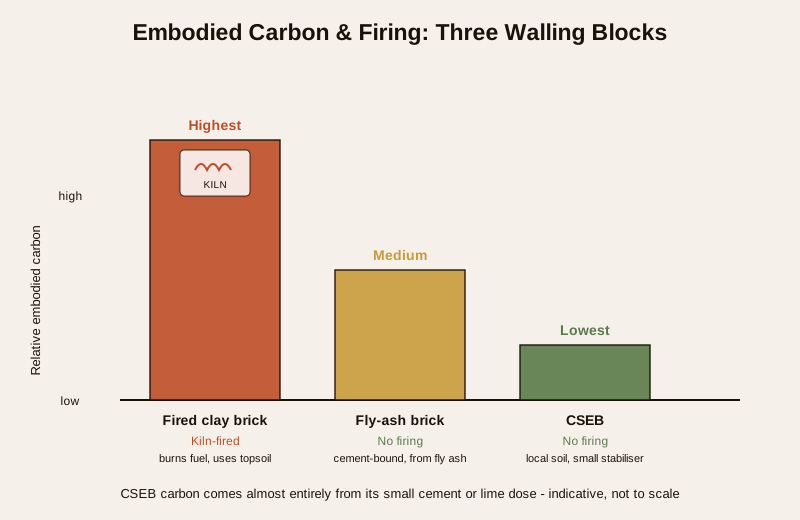
The real question for most homeowners is how CSEB stacks up against the two blocks it competes with: the traditional fired clay brick and the increasingly common fly-ash brick. The decisive difference is firing. Fired clay brick bakes in a kiln, burning fuel and, in older brick kilns, emitting heavily - and it also consumes fertile topsoil. Fly-ash brick uses industrial fly ash, cement and sand, usually pressed and cured rather than kiln-fired, so it already avoids clay-firing emissions. CSEB goes further on the raw-material side by using ordinary local soil and only a small stabiliser dose.
| Factor | CSEB | Fired clay brick | Fly-ash brick |
|---|---|---|---|
| How it is made | Soil plus small stabiliser, pressed, cured | Moulded clay, kiln-fired | Fly ash, cement, sand, pressed, cured |
| Firing / kiln | None | Yes - fuel-intensive | Usually none |
| Embodied carbon | Low (stabiliser only) | High (kiln fuel) | Moderate (cement content) |
| Main raw material | Local or site soil | Fertile clay / topsoil | Industrial fly ash |
| Thermal mass | High | Moderate to high | Moderate |
| Exposed finish | Yes - often plaster-free | Common (exposed brick) | Usually plastered |
| Water resistance | Needs detailing | Good | Good |
| Best fit | Low-rise, local soil, low-carbon goal | General walling | General walling, low-carbon-ish |
For the head-to-head that most Indian homeowners actually weigh, read fly-ash bricks vs clay bricks, and for the lightweight walling alternative see AAC blocks vs red bricks. CSEB is not automatically "greener than everything" - a badly made CSEB with a heavy cement dose, trucked-in soil and no exposed finish can lose its advantage. The saving is real only when the block is made well, from local soil, with a modest stabiliser dose, and left largely unplastered.
Cost and sustainability
CSEB economics depend heavily on soil, scale and labour. Where suitable soil is on or near the site and a trained team presses blocks locally, the material cost can be low and the plaster-free exposed finish removes an entire finishing trade - so on a reasonably sized project CSEB is often competitive with, and sometimes cheaper than, a plastered brick wall. Indicative block rates vary widely by region, soil, press type and stabiliser dose, so treat any single figure with caution and get local quotes and a proper estimate. On small one-off jobs, mobilising a press and a trained team can erode the saving - CSEB rewards scale.
On sustainability, CSEB is close to a textbook low-carbon material: no firing, local soil, minimal transport, plaster-free finish and passive-cooling thermal mass. Green-building frameworks such as GRIHA, IGBC and LEED may award credit for local, low-embodied-energy materials like CSEB. Quantify the benefit for your own design with the embodied carbon calculator, and read the sustainability logic in full in the green building materials guide and the sustainability and green buildings hub.
Standards and testing
Compressed stabilised earth blocks and soil-cement blocks in India are broadly addressed by Bureau of Indian Standards (BIS) specifications for soil-based and stabilised blocks and by the general masonry provisions of the National Building Code of India (SP 7:2026); the ASTRA / IISc and Auroville Earth Institute bodies of work are the practical Indian references. Test methods for compressive strength, water absorption and density follow standard procedures (named generally here - consult the current editions). Because CSEB performance depends entirely on the specific soil and mix, the decisive step is not a generic table but testing your actual soil and trial blocks for grading, compressive strength and water absorption, and having an engineer design the wall from those results. Standards and editions are revised periodically - verify against current sources rather than relying on memory.
Key takeaways
- CSEB is local soil plus a small percentage of cement or lime and a little water, compressed in a press and cured - never kiln-fired, which is the whole point.
- India has a strong pedigree in the material through the Auroville Earth Institute and ASTRA / IISc, so it is a mature, documented system, not an experiment.
- Its strengths are much lower embodied carbon than fired brick or concrete block, use of site or local soil, good thermal mass, an attractive plaster-free exposed finish, decent strength when well made and good economy at scale.
- Its limits are that it needs the right soil (tested sandy-clay, not black cotton), strict quality control on press and stabiliser percentage, curing discipline, water and erosion detailing, and that it is best kept to single and low-rise work.
- Specify and select CSEB for the right situation, then hand soil testing, mix design, press calibration, curing and structural design to a qualified engineer and a trained CSEB team - and always test your actual soil.
References
- Auroville Earth Institute - training, presses and technical guidance on compressed stabilised earth blocks and earth architecture in India.
- ASTRA / Indian Institute of Science (IISc), Bengaluru - foundational research on stabilised mud blocks / soil-cement blocks.
- Bureau of Indian Standards - specifications for soil-based and stabilised blocks and general masonry, plus standard test methods for compressive strength, water absorption and density; consult the current editions.
- National Building Code of India (SP 7:2026) - masonry and structural provisions relevant to low-rise load-bearing earth-block walls.
- Studio Matrx guides: green building materials guide, rammed earth construction, fly-ash bricks vs clay bricks, AAC blocks vs red bricks and the sustainability and green buildings hub.
Export this guide
Related Guides — Deep-dive reading
Rammed Earth Construction in India: A Guide to Compacted Earth Walls (2026)
What rammed earth is, its deep Indian and global tradition, and why architects are reviving it - superb thermal mass, low embodied carbon, a beautiful stratified natural finish, and honest limits around labour, formwork, wall thickness and erosion. A specify-and-select guide.
Building MaterialsGreen Building Materials Guide (India): Low-Carbon, Healthy & Sustainable Choices (2026)
What actually makes a building material green - low embodied carbon and energy, recycled and renewable content, local sourcing, durability, recyclability, low VOC and water efficiency - mapped honestly across the whole Indian building, with the lifecycle nuance no label can give you.
Building MaterialsHempcrete in India: The Carbon-Negative Bio-Composite Wall, Decoded (2026)
What hempcrete really is - hemp shiv plus a lime binder plus water - and how to specify it honestly for Indian eco and passive homes: its breathable, carbon-negative, non-combustible strengths, its non-load-bearing reality, and the licensing, supply and cost hurdles that keep it niche.
Building MaterialsRelated Tools — Try Free
Material Decision Framework (M-Score)
Score 30+ Indian construction materials across cost, durability, climate fit, maintenance, and sustainability.
MaterialsCross-Ventilation Analyzer
Estimate airflow and air changes per hour (ACH) from room size, window areas, layout, and local wind — with NBC 2016 Part 8 compliance check.
Ventilation CalculatorRainwater Tank Sizer
How big should your rainwater tank be? Computes annual harvest, recommended tank capacity in litres, water-bill savings, and payback — for 10 Indian cities.
RWH Calculator