
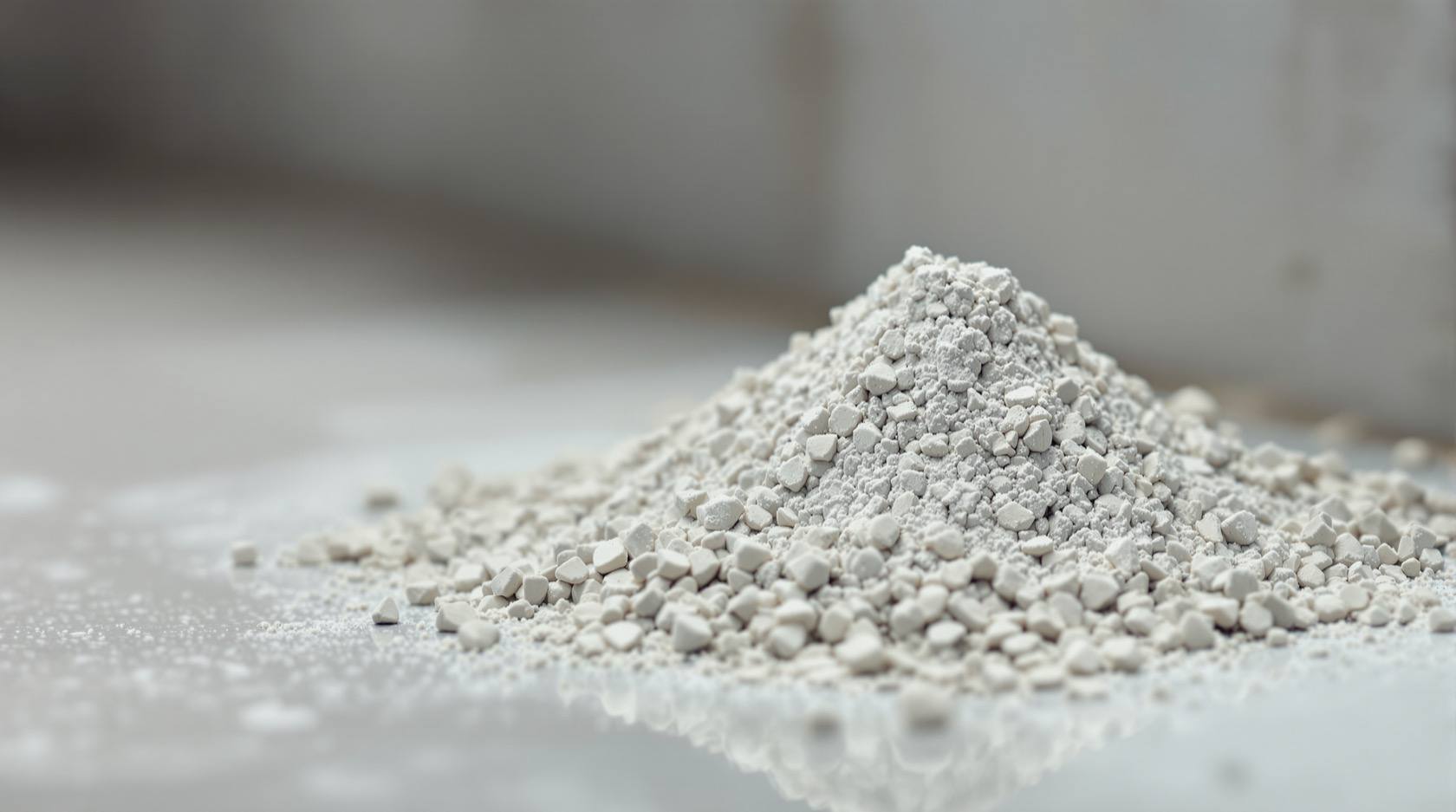
GGBS, Fly Ash and SCMs in Concrete India: The Low-Carbon Mix (2026)
A plain-language guide to GGBS, fly ash, silica fume and other supplementary cementitious materials (SCMs) - the industrial by-products that replace part of the cement in concrete, cut its carbon, and boost durability - and why the replacement percentage and mix design belong to a qualified engineer or the RMC plant.
Every tonne of ordinary cement made carries roughly its own weight in carbon dioxide, because the heart of cement - clinker - is produced by roasting limestone in a kiln, a process that releases carbon both from the fuel and from the limestone itself. Concrete is the most-used building material on earth after water, and cement is the part of it that costs the planet the most. So the single most powerful lever a homeowner or builder in India can pull to lower the carbon of a house today is deceptively simple: use less clinker. Supplementary cementitious materials - SCMs - are how you do that. They are fine powders, mostly rescued from other industries, that replace a slice of the cement while often making the concrete more durable, not less. This guide explains what they are, where they come from, what they gain and cost you, and how to ask for them.
The stance here is to help you select and specify. What SCM to use, how much to replace, and the final mix design are engineering decisions for your structural engineer or the ready-mix plant. A homeowner should never set replacement percentages by guesswork. What follows gives you the vocabulary to understand and request a lower-carbon, more durable concrete with confidence.
Scope and how to read this. This is a selection and specification guide, not a mix-design manual. The replacement percentage, trial batching, curing regime and the overall concrete mix design are safety-critical decisions that belong to your structural engineer, contractor or RMC supplier. Any percentages, doses or costs here are indicative planning aids for 2026 - always follow your engineer's instructions and get written quotes locally. SCMs and blended cements are governed in India by Bureau of Indian Standards codes (IS 1489 covers Portland pozzolana cement, IS 455 covers Portland slag cement, IS 3812 covers fly ash and IS 12089 covers slag for GGBS) and used within the concrete practice code (IS 456). Standards are named generally - consult current editions.
What an SCM actually is
A supplementary cementitious material is a fine powder that you add to concrete in place of some of the cement, and which itself contributes to the strength and durability of the hardened mix. That last part is what separates an SCM from an inert filler. When cement reacts with water it produces two things: the strong gel that gives concrete its strength, and a large amount of leftover lime (calcium hydroxide) that does nothing useful and can even weaken the concrete's resistance to chemicals. SCMs are "pozzolanic" or "latently hydraulic": they react with that leftover lime, or with water, to form more of the strong gel. So they are not just cheap dilution - they convert a waste product of the cement reaction into extra strength and a tighter, less permeable pore structure.
Two things make SCMs worth understanding as a non-engineer. First, most are industrial by-products - fly ash from power stations, slag from steelmaking, silica fume from silicon smelting - so using them is a form of recycling that also cuts the carbon of your concrete. Second, they change how the concrete behaves early on: many are slower to gain strength in the first week or two, which is a manageable trade-off but one that demands good curing. If you want the material behind the concrete itself, our guides on types of cement in India and understanding concrete strength set the scene, and SCMs are the practical backbone of low-carbon construction materials.
The main SCMs and where they come from
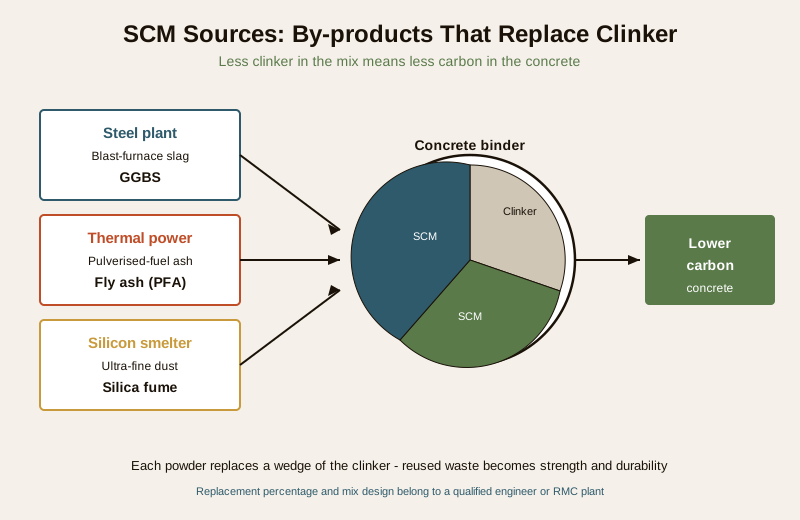
GGBS - ground granulated blast-furnace slag. When iron is smelted in a blast furnace, a molten slag floats off the top. Chill it rapidly with water (granulate it) and grind it fine, and you get GGBS - a near-white powder that is "latently hydraulic," meaning it sets with water much like cement does, only slower. India makes large volumes of it wherever there is integrated steel production. GGBS is the SCM that can replace the largest share of cement - commonly 30 to 50 percent, and much more in specialist mass-concrete work - which is why it is the heavyweight of low-carbon concrete. It appears in blended cement sold as Portland slag cement (PSC), or is added separately at the RMC plant.
Fly ash - the pulverised-fuel ash (PFA) from thermal power. When pulverised coal burns in a power station, the fine ash carried up the flue is captured and collected. This is fly ash, a grey pozzolanic powder. India, with its large coal fleet, produces it in enormous quantity, and putting it into concrete is both a huge waste-management win and a carbon saving. Fly ash typically replaces 15 to 35 percent of cement. It is the "P" in the very common Portland pozzolana cement (PPC) that dominates Indian retail cement, and it is also added at the mixer. It brings excellent workability and long-term durability - our comparison of fly ash bricks versus clay bricks shows the same material at work in masonry.
Silica fume - the specialist. A by-product of smelting silicon and ferrosilicon alloys, silica fume is an extraordinarily fine powder - particles around a hundred times smaller than cement grains. That fineness makes it powerful in tiny amounts: just 5 to 10 percent replacement produces very high strength and a dramatically less permeable, more chemical-resistant concrete. It is expensive and reserved for high-performance work - marine structures, high-strength columns, industrial floors - rather than routine house concrete.
Natural pozzolans. Before industry gave us slag and ash, nature offered volcanic ashes and calcined clays that react with lime in the same way. Calcined clay (in particular the modern "LC3" limestone-calcined-clay-cement route) is a fast-growing low-carbon option in India because good clay is available almost everywhere, unlike slag and ash which sit near steel plants and power stations.
How SCMs reach your concrete: blended cement or added at the mixer
There are two routes, and as a homeowner you will meet both. The first is blended cement, where the SCM is already inter-ground with the clinker at the cement factory and sold as a single bag. Portland pozzolana cement (PPC) contains fly ash; Portland slag cement (PSC) contains GGBS. Buy these and you are using SCMs without doing anything else - which is exactly why they are the easy, mainstream way to lower carbon. The second route is adding the SCM separately at the ready-mix plant or site mixer, dosed as a designed fraction of the total binder. This gives an engineer precise control over the replacement level for a demanding job. If you are ordering ready-mix concrete, the SCM content is part of the design mix on your delivery docket - a sensible thing to ask about.
The benefits: why engineers reach for SCMs
The carbon saving is the headline, but it is far from the only reason SCMs are specified. Their benefits stack up in a way that makes them attractive even setting sustainability aside.
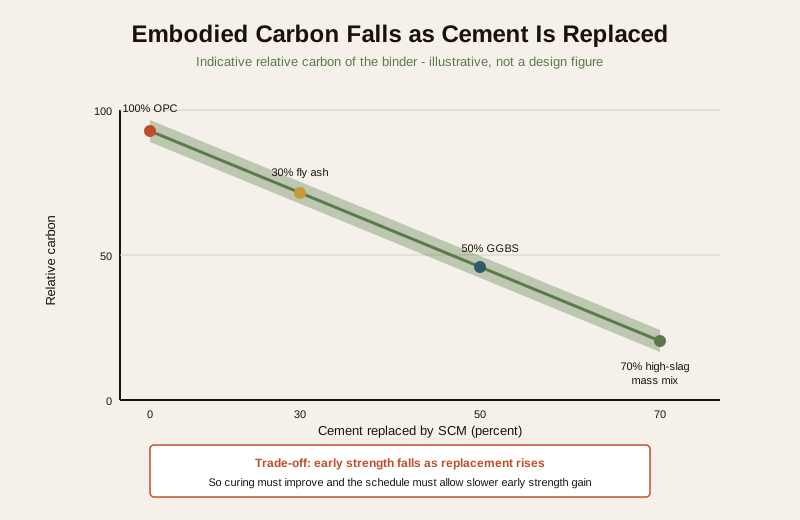
- Lower embodied carbon. Every percent of clinker replaced is roughly that percent of cement's carbon avoided. A 50 percent GGBS mix can cut the concrete's cement-related carbon nearly in half. This is the most practical, available, mainstream way to cut concrete's carbon in India today.
- Better long-term strength and durability. SCMs keep gaining strength for months, not just the standard 28 days, and they refine the pore structure so the hardened concrete is denser and less permeable. Less permeable concrete lasts longer because water, salts and gases penetrate more slowly.
- Lower heat of hydration. Cement generates heat as it sets. In a large or thick pour - a raft foundation, a big podium slab - that heat can crack the concrete as it cools unevenly. SCMs, especially GGBS, react more slowly and release less heat, which is why mass concrete leans on them heavily.
- Sulphate and chloride resistance. By consuming the leftover lime and tightening the pores, SCMs make concrete far more resistant to sulphate attack (from certain soils and groundwater) and to chloride ingress (from sea spray and coastal air). For any coastal or marine structure in India - and much of the country is coastal - a high-SCM mix is close to standard good practice, protecting the reinforcement steel that rusting chlorides would otherwise attack.
The trade-offs: what to plan around
SCMs are not free lunch, and pretending otherwise leads to problems on site. The trade-offs are real but manageable when they are respected.
The main one is slower early strength. Because most SCMs react more slowly than clinker, a high-replacement concrete can be weaker in the first three to seven days. That matters for when you can strike formwork or load a slab, and the schedule must allow for it. The remedy is not less SCM but good curing - keeping the concrete moist for longer lets the slower reaction complete and the mix usually overtakes plain cement concrete by 56 or 90 days. There are dosage limits: push replacement too high without the right controls and you risk a mix that is slow to set, prone to surface dusting, or vulnerable to early-age carbonation. And SCM availability and quality vary by region - GGBS is easy near steel belts, fly ash near power stations, and quality must be to standard. None of these is a reason to avoid SCMs; each is a reason the replacement percentage is an engineered decision, not a homeowner's.
The SCM comparison table
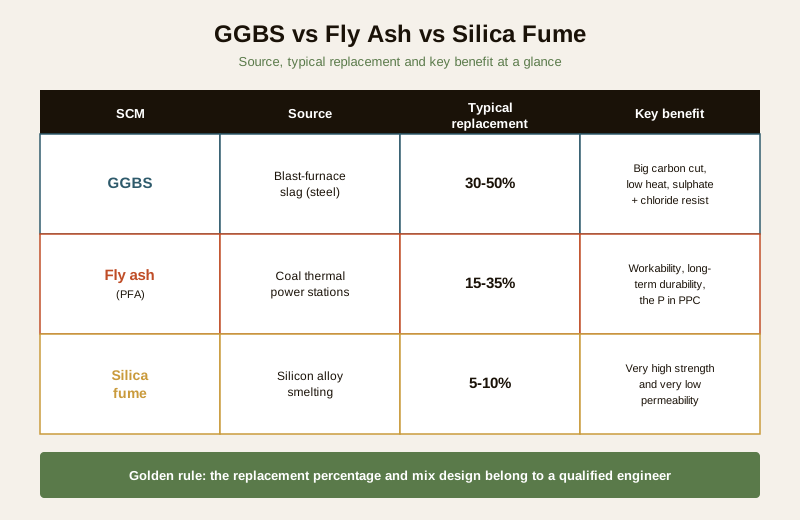
The table below turns the families above into a quick reference. Read it to understand and request a proposal, not as a recipe to act on yourself.
| SCM | Source (by-product of) | Typical replacement | Key benefit |
|---|---|---|---|
| GGBS | Iron and steel making (blast-furnace slag) | 30 to 50 percent (higher in mass concrete) | Big carbon cut, low heat of hydration, strong sulphate and chloride resistance |
| Fly ash (PFA) | Coal-fired thermal power stations | 15 to 35 percent | Excellent workability and long-term durability; widely available (the "P" in PPC) |
| Silica fume | Silicon and ferrosilicon smelting | 5 to 10 percent | Very high strength and very low permeability for high-performance work |
| Natural pozzolan / calcined clay | Volcanic ash or calcined clay (LC3) | 15 to 35 percent | Low-carbon, clay available almost everywhere, independent of steel or power plants |
A second reference below sets the SCM story against the choice most homeowners actually make at the counter - which bag of cement to buy.
| Route | What you buy or specify | Best for |
|---|---|---|
| PPC (Portland pozzolana cement) | A single bag with fly ash already blended in | General house construction; the easy, mainstream low-carbon default |
| PSC (Portland slag cement) | A single bag with GGBS already blended in | Coastal and durability-critical work; lower heat of hydration |
| SCM added at RMC / mixer | An engineered replacement percentage in the design mix | High-performance, mass or marine concrete needing precise control |
| Plain OPC (no SCM) | Ordinary Portland cement alone | Only where early strength is critical and specified - the highest-carbon option |
SCMs versus the alternatives - and the honest limits
It helps to place SCMs against the more radical low-carbon options. Geopolymer concrete goes further - it removes ordinary cement almost entirely and binds with activated fly ash or slag - but it remains specialist, needs careful activation chemistry and is not yet a mainstream site material in India. SCMs, by contrast, are ordinary concrete with less clinker: available today, priced sensibly, understood by every RMC plant, and already sitting inside the PPC and PSC bags most Indians already buy. That is precisely why they are the single most practical decarbonisation move for a real house being built this year, not a future one. For the wider picture, our green building materials guide is the anchor, and you can put numbers to the saving with our embodied carbon calculator.
The honest limits are worth stating plainly. SCMs lower carbon and lift durability, but they do not turn a bad mix into a good one, and they demand disciplined curing to deliver their promised strength - skimp on curing and a high-SCM concrete underperforms. The replacement percentage is a genuine engineering judgement that balances carbon, strength timeline, exposure and buildability. And SCMs also interact with any chemical admixtures in the mix, which is one more reason the whole design is a package owned by your engineer or RMC supplier. Where all of this sits in the bigger material picture is laid out in our complete building materials guide.
Key takeaways
- SCMs - GGBS, fly ash, silica fume and natural pozzolans - are fine powders, mostly industrial by-products, that replace part of the cement in concrete and contribute strength and durability, not just cheap filler.
- Replacing clinker is the biggest lever on concrete's carbon: GGBS commonly replaces 30 to 50 percent, fly ash 15 to 35 percent, and silica fume 5 to 10 percent in high-performance work.
- Benefits stack up beyond carbon: better long-term strength, lower heat of hydration for mass pours, and much stronger sulphate and chloride resistance, which is why high-SCM mixes are near-standard for coastal and marine work in India.
- The main trade-off is slower early strength, managed by good curing and a realistic schedule; dosage limits and regional supply are the other things to plan around.
- Most Indians already use SCMs via blended cement - PPC contains fly ash, PSC contains GGBS - so buying these bags is the easy, mainstream, available-today way to lower concrete's carbon, unlike still-specialist geopolymer concrete.
- The replacement percentage, curing regime and overall mix design belong to a qualified structural engineer or the RMC plant - a homeowner specifies and requests SCMs; they do not set the dosage by guesswork.
References
- Bureau of Indian Standards - Portland pozzolana cement (IS 1489), Portland slag cement (IS 455), fly ash for concrete (IS 3812), granulated slag for GGBS (IS 12089) and plain and reinforced concrete practice (IS 456), named generally; consult the current editions.
- National Building Code of India (SP 7:2026) - general guidance on materials and construction practice.
- Green building rating references (GRIHA, IGBC, LEED) recognise SCM use and lower-carbon concrete; named generally.
- Studio Matrx guide: types of cement in India.
- Studio Matrx guide: low-carbon construction materials in India.
- Studio Matrx guide: geopolymer concrete in India.
- Studio Matrx guide: green building materials guide for India.
- Studio Matrx tool: embodied carbon calculator.
- Indicative percentages, replacement levels and costs reflect 2026 conditions and vary by product, cement, region and exposure - always follow the datasheet and obtain local engineering advice.
Export this guide
Related Guides — Deep-dive reading
Geopolymer Concrete in India: The Low-Carbon, Cement-Free Concrete Explained (2026)
Geopolymer concrete swaps Portland cement for a binder made from industrial waste - fly ash and GGBS - activated by an alkaline solution, cutting concrete's carbon footprint dramatically. What it is, why its embodied carbon is so much lower, how it compares to ordinary OPC concrete on strength, durability and cost, and its honest state in India today: promising, emerging, and mostly a precast and specialist material, not a homeowner site pour.
Building MaterialsCompressed Stabilised Earth Blocks (CSEB): A Specify-and-Select Guide for India (2026)
What CSEB is - local soil plus a small percentage of cement or lime, compressed in a press and cured, never kiln-fired - its low-carbon and thermal-mass strengths, its real limits around soil, quality control and water, and how it compares with fired clay brick and fly-ash brick. A specify-and-select guide.
Building MaterialsConcrete Admixtures Guide India: Types, Uses and Dosage (2026)
A homeowner and site-owner's plain-language guide to concrete admixtures - what these small doses actually do, the main types from superplasticisers to retarders and accelerators, when each one earns its place, and why dosing and mix design belong to a qualified engineer or the RMC plant.
Building MaterialsRelated Tools — Try Free
Material Decision Framework (M-Score)
Score 30+ Indian construction materials across cost, durability, climate fit, maintenance, and sustainability.
MaterialsConstruction Timeline Simulator
Simulate construction timelines by trade, with lag days, float, and critical path highlighting.
Timeline SimulatorGreen Building Water Score Calculator
Score a building's water efficiency 0–100 from treated-water reuse, rainwater harvesting, low-flow fixtures and metering, with an IGBC/GRIHA-style rating and your biggest improvement lever.
Sustainability