
Geopolymer Concrete in India: The Low-Carbon, Cement-Free Concrete Explained (2026)
Geopolymer concrete swaps Portland cement for a binder made from industrial waste - fly ash and GGBS - activated by an alkaline solution, cutting concrete's carbon footprint dramatically. What it is, why its embodied carbon is so much lower, how it compares to ordinary OPC concrete on strength, durability and cost, and its honest state in India today: promising, emerging, and mostly a precast and specialist material, not a homeowner site pour.
Concrete is the most-used building material on earth, and its binder - ordinary Portland cement (OPC) - is one of its dirtiest ingredients. Making cement is thought to account for roughly 8 percent of global carbon-dioxide emissions, because baking limestone to clinker both burns fuel and releases CO2 from the rock itself. Geopolymer concrete is one of the most serious attempts to break that link. Instead of Portland cement, it uses a binder built from industrial by-products - fly ash from coal power stations and GGBS (ground granulated blast-furnace slag) from steelmaking - "activated" by an alkaline solution. The result is a concrete with little or no Portland cement, a dramatically lower carbon footprint, and durability that in many respects beats conventional concrete.
This guide helps you understand and specify geopolymer concrete: what it actually is, why its embodied carbon is so much lower, how it compares to OPC concrete on strength, durability, availability and cost, and - most honestly - where it really stands in India today. The short version: it is promising and genuinely emerging, but it is largely a research, precast and specialist material handled by engineers and factories, not a bag you buy to mix in your backyard.
Scope and safety: This is a specify-and-select guide. Strengths, carbon figures and prices here are indicative only - they move with the source materials, mix design, curing method, region and project, so always get project-specific data and quotes. Geopolymer mix design, the handling of alkaline activators, curing regime, and any structural or load-bearing use are specialist work - hand them to a qualified materials engineer, structural engineer and an experienced precast supplier. The alkaline activators (sodium hydroxide and sodium silicate) are corrosive industrial chemicals; their handling is a controlled lab and factory concern, never a site-DIY task. Nothing here replaces a professional mix design, the relevant IS codes or a licensed engineer.
What geopolymer concrete actually is
An ordinary concrete is aggregate and sand bound together by cement paste - Portland cement plus water, which react (hydrate) to form the glue. Geopolymer concrete keeps the aggregate and sand but throws out the Portland cement entirely. In its place it uses two things:
- A source of aluminosilicates - a fine, glassy, silica-and-alumina-rich powder. The two workhorses are fly ash (the fine ash captured from coal-fired power plants) and GGBS (a glassy powder from blast-furnace slag). Both are waste streams that would otherwise be dumped. See how these fit the wider family of supplementary binders in the GGBS and SCMs in concrete guide.
- An alkaline activator - typically a mix of sodium hydroxide (caustic soda) and sodium silicate (water glass). This strong alkali dissolves the silica and alumina from the powder, which then re-link into a hard, rock-like three-dimensional network - a "geopolymer".
That geopolymerisation reaction is chemically different from cement hydration. There is no limestone being baked, so the huge process emissions of clinker simply do not occur. The binder is, in effect, assembled from waste and a chemical activator rather than manufactured in a kiln.
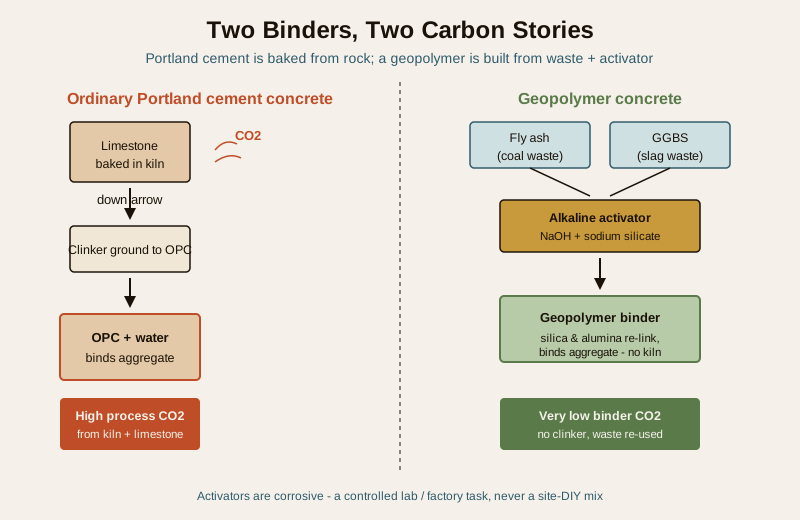
The mix can be tuned. A fly-ash-rich geopolymer usually needs heat curing (often 60 to 80 deg C) to gain strength, which suits factory precast. Blending in GGBS lets the concrete set and gain strength at ambient temperature, which is what makes site-cast geopolymer even conceivable. Powder proportions, activator strength and curing regime are exactly the levers a materials engineer tunes - and why this is not a fixed recipe you can look up and pour.
Why it matters: carbon, waste, and durability
Three arguments drive the interest in geopolymer concrete, and all three are real.
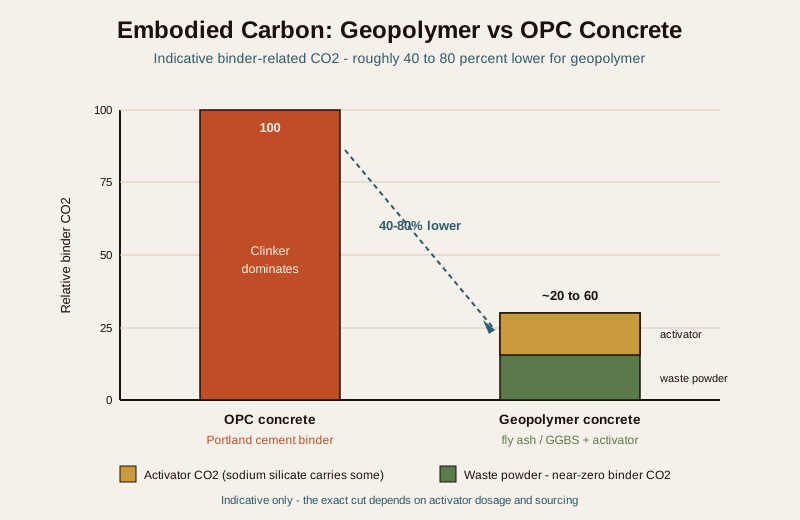
Dramatically lower embodied carbon. Because there is no clinker, the binder's CO2 is a fraction of Portland cement's. Studies commonly report geopolymer concrete cutting the binder-related carbon by roughly 40 to 80 percent versus an equivalent OPC mix - the exact figure depends on how much activator is used and how it is sourced, since sodium silicate itself carries some embodied carbon. Even at the cautious end, it is a large reduction in the single most carbon-heavy part of concrete. To see how a swap like this moves a project total, run mixes through the embodied carbon calculator and read the wider picture in the low-carbon construction materials guide.
It consumes waste streams. Fly ash and GGBS are the by-products of coal power and steel - India generates enormous quantities of both. Turning them into a structural binder is a double win: it avoids clinker emissions and it diverts industrial waste from ash ponds and slag heaps. That circular-economy story is why geopolymer sits comfortably in the green building materials family.
Excellent durability. This is the underrated part. The geopolymer network is dense and low in free lime, which gives it genuinely strong performance where ordinary concrete struggles: high resistance to acids and sulphates, low permeability, good fire resistance and heat stability, and strong long-term durability. In aggressive environments - sewage, marine, chemical, high-temperature - a well-designed geopolymer can outlast conventional concrete. Strength is competitive too: geopolymer concretes routinely reach normal structural grades and can be designed for high strength.
Geopolymer concrete vs OPC concrete: an honest comparison
No material is free of trade-offs, and geopolymer's are as important as its strengths. The table below sets it beside ordinary OPC concrete across the properties that actually decide a specification. Treat every figure as indicative and confirm against project-specific mix data.
| Property | Geopolymer concrete | Ordinary OPC concrete |
|---|---|---|
| Binder | Fly ash / GGBS + alkaline activator (no or low OPC) | Ordinary Portland cement (clinker) |
| Embodied carbon | Very low - roughly 40 to 80 percent lower binder CO2 | High - cement is the main carbon source |
| Compressive strength | Competitive; normal to high grades achievable | Well established across all grades |
| Durability / chemical resistance | Excellent - high acid, sulphate and fire resistance, low permeability | Good, but more vulnerable to acid and sulphate attack |
| Curing | Fly-ash mixes often need heat (60 to 80 deg C); GGBS blends can cure ambient | Ambient water curing, universally understood |
| Activator handling | Corrosive alkalis - a controlled lab / factory task | None beyond ordinary cement handling |
| Availability in India | Limited - precast, research and specialist only | Universal - every town, every supplier |
| Standards / codes | Emerging; no full general IS code yet, project-specific design | Mature IS-code framework, decades of practice |
| Cost | Variable - activator cost offsets cheap waste powders | Well-known, generally lower and predictable |
| Best use today | Precast elements, aggressive/industrial exposure, specialist projects | Everything, everywhere - the default |
The pattern is clear. Geopolymer wins decisively on carbon and durability, is competitive on strength, but trails badly on availability, standardisation, familiarity and the practicality of curing and activator handling. Ordinary concrete - whether site-mixed or ready-mix (RMC) - remains the default precisely because it is universal, code-covered and understood by every contractor. For a homeowner comparing binders, it also helps to understand the conventional side first through the types of cement guide.
Where geopolymer concrete fits in India today
This is where honesty matters most. Geopolymer concrete is real and it is being used - but it is not a general-purpose product you can specify casually. Its state in India is best described as research-led, precast-first, and specialist.
- Research and academia lead it. The IITs and other institutions have run extensive work on fly-ash and GGBS geopolymers, and India's vast coal-ash supply makes it a natural fit for local research and pilots.
- Precast is its best home today. Factory conditions solve geopolymer's two biggest practical problems at once: heat curing is easy to provide in a plant, and the corrosive activators are handled safely by trained staff in a controlled setting. Precast beams, panels, blocks, pavers, pipes and railway sleepers are where geopolymer is most viable now. It slots naturally beside the precast and AAC wall panels story.
- Some infrastructure and specialist pours. A handful of infrastructure and industrial projects have used geopolymer or high-slag low-carbon concrete, especially where chemical or fire resistance is the point.
- Not a general site-mix product - yet. For ordinary home and building construction, geopolymer is not something a contractor buys and mixes on site. Handling caustic activators, hitting the right curing temperature, and the absence of a full, familiar general IS-code framework all make routine site use impractical today.
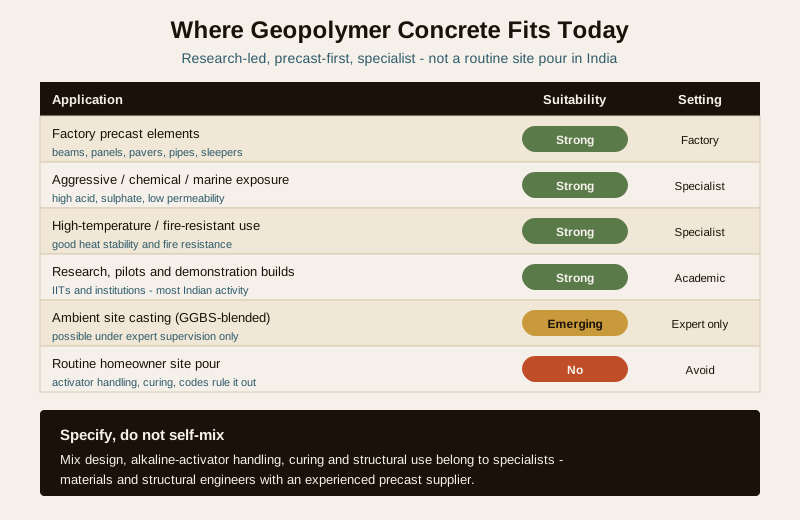
| Where it fits today | Suitability | Why |
|---|---|---|
| Factory precast elements | Strong | Plant heat curing and safe activator handling |
| Aggressive / chemical / marine exposure | Strong | Excellent acid, sulphate and low-permeability performance |
| High-temperature / fire-resistant use | Strong | Good heat stability and fire resistance |
| Research, pilots and demonstration builds | Strong | Where most Indian activity sits today |
| Ambient site casting (GGBS-blended) | Emerging | Possible under expert supervision, not routine |
| Routine homeowner site pour | Not suitable | Activator handling, curing and codes are specialist-only |
Cost, standards and how to specify it
On cost, geopolymer is a genuine mixed bag. The powders - fly ash and GGBS - are cheap waste, but the alkaline activators (especially sodium silicate) are not, and they can dominate the mix cost. Net cost therefore swings with activator dosage, local chemical prices and whether heat curing adds energy cost. In many cases geopolymer lands broadly comparable to a good conventional mix; in others the activator makes it dearer. As always, treat any figure as indicative and get a project-specific quote from a supplier who has actually cast it.
On standards, geopolymer sits in an emerging space. The Bureau of Indian Standards (BIS) covers fly ash and GGBS as materials, and green-building frameworks - GRIHA, IGBC and LEED - reward the low embodied carbon and recycled content. But there is not yet a full, general IS design code for geopolymer concrete the way there is for conventional RCC, so structural use rides on project-specific mix design, testing and engineering judgement rather than a familiar code table. This is a strong reason to treat any structural geopolymer element as bespoke engineering.
To specify it sensibly as a homeowner or designer: name it where its strengths are decisive - a precast, chemically-exposed or fire-critical element - and then hand the actual mix design, activator selection, curing regime and structural checks to a qualified materials and structural engineer working with an experienced precast supplier. Do not attempt a site-mixed geopolymer pour, and never let anyone handle the caustic activators outside a controlled setting. For the broader menu of ways to cut a project's concrete carbon, read this alongside the complete building materials guide.
Key takeaways
- Geopolymer concrete replaces Portland cement with a binder made from industrial waste - fly ash and/or GGBS - activated by an alkaline solution of sodium hydroxide and sodium silicate, so it contains no or very low OPC.
- It matters because it slashes embodied carbon (cement is roughly 8 percent of global CO2), consumes waste streams, and delivers excellent durability - high acid, sulphate and fire resistance and low permeability - at competitive strength.
- Against OPC concrete it wins on carbon and durability and is competitive on strength, but trails on availability, standardisation, curing practicality and activator handling.
- In India it is research-led, precast-first and specialist - best in factory precast, aggressive-exposure and fire-critical elements - and not a routine site-mix or homeowner pour.
- Mix design, alkaline-activator handling, curing and any structural use are specialist work - specify geopolymer where it fits, but leave the chemistry and engineering to qualified materials and structural engineers and an experienced precast supplier.
References
- Bureau of Indian Standards (BIS) - specifications covering fly ash and ground granulated blast-furnace slag (GGBS) as construction materials; note that a full general IS design code for geopolymer concrete is still emerging, so structural use relies on project-specific mix design and testing.
- National Building Code of India (SP 7:2026) - general building, fire and life-safety provisions; relevant IS structural and durability codes apply as interpreted by the structural engineer for any load-bearing element.
- Green-building frameworks - GRIHA, IGBC and LEED - recognise low-embodied-carbon and high-recycled-content binders such as geopolymer and high-slag concretes.
- Indian and international research literature on fly-ash and GGBS geopolymer concrete (IITs and other institutions) - the primary source for strength, durability and curing behaviour; confirm any figure against project-specific data.
- Studio Matrx guides: green building materials, GGBS and SCMs in concrete, low-carbon construction materials, types of cement, ready-mix concrete, precast and AAC wall panels, the complete building materials guide, and the embodied carbon calculator.
Export this guide
Related Guides — Deep-dive reading
GGBS, Fly Ash and SCMs in Concrete India: The Low-Carbon Mix (2026)
A plain-language guide to GGBS, fly ash, silica fume and other supplementary cementitious materials (SCMs) - the industrial by-products that replace part of the cement in concrete, cut its carbon, and boost durability - and why the replacement percentage and mix design belong to a qualified engineer or the RMC plant.
Building MaterialsLow-Carbon Construction Materials in India: Cutting Embodied Carbon (2026)
What embodied carbon is in plain terms, why cement and steel dominate it, and the practical levers to cut it in Indian building - blended cement and SCMs, material efficiency, lower-carbon walling, local sourcing, durability, timber and bamboo, and recycled content. A specify-and-select guide.
Building MaterialsGreen Building Materials Guide (India): Low-Carbon, Healthy & Sustainable Choices (2026)
What actually makes a building material green - low embodied carbon and energy, recycled and renewable content, local sourcing, durability, recyclability, low VOC and water efficiency - mapped honestly across the whole Indian building, with the lifecycle nuance no label can give you.
Building MaterialsRelated Tools — Try Free
Material Decision Framework (M-Score)
Score 30+ Indian construction materials across cost, durability, climate fit, maintenance, and sustainability.
MaterialsGreen Building Water Score Calculator
Score a building's water efficiency 0–100 from treated-water reuse, rainwater harvesting, low-flow fixtures and metering, with an IGBC/GRIHA-style rating and your biggest improvement lever.
SustainabilityStamp Duty Calculator — All Indian States
Stamp duty + registration charges for all 28 states and 8 UTs — gender concessions, urban/rural variants, metro cess built in.
Stamp Duty