
Security Fire Alarm Integration in India (2026): Smart Alerts, Certified Systems, Fail-Safe Egress
The most important sentence a smart-home designer can say about fire is also the least profitable: a smart-home smoke sensor or fire notification is a helpful add-on, not a substitute for a certified fire-alarm system. This guide draws the line hard — life-safety detection and alarm belongs to the NBC-governed certified system — and then covers the genuinely useful, correctly-scoped automations the smart layer can add on a verified fire signal: unlock for egress, open the gate for the fire tender, light the escape path, stop the away-scene, and notify everyone loudly. All of it fail-safe. None of it in the way of the system that actually saves lives.
There is one sentence in this whole section of the smart-home library that you must never let a client, a vendor, or your own enthusiasm soften. Here it is, in the plainest words: a smart-home smoke sensor or fire notification is a helpful ADD-ON, NOT a substitute for a certified fire-alarm system. Everything else in this guide sits underneath that line. If you take nothing else away, take that.
It is an easy line to blur, because the smart gadget looks so capable. A ninety-nine-rupee Wi-Fi smoke sensor pings your phone the instant it sees smoke; the app has a red screen and a siren sound; it feels like fire protection. It is not. It is a convenience that, on a good day, gives you an early nudge — and on the everyday Indian bad day (a six-hour power cut, the router down, the vendor's cloud unreachable, the battery flat, the subscription lapsed), it is a dead rectangle on the wall that warns nobody. Life safety cannot be built on a thing that fails silently.
Scope & safety. Smart fire notifications are convenience and early awareness, not a guarantee, and they must degrade gracefully with a non-smart fallback for anything that matters. Life-safety fire detection and alarm in India is governed by the National Building Code (NBC), SP 7:2026, and delivered by a certified, BIS-standard fire-alarm system — not a cloud gadget. For any building requiring a fire NOC, the certified system is mandatory and is the trigger of record. A smart lock must never trap people in a fire; do not voice-unlock a door. Every interlock between the fire system and locks, gates or doors must be designed to code, fail-safe, and signed off with the fire strategy and fire officer. Connected devices are also an attack surface and a data collector — the Digital Personal Data Protection Act, 2023 applies. Certified fire, mains-electrical and lift work is for licensed professionals; you specify, decide and coordinate. This is educational guidance, not fire-safety, legal or engineering advice.
The non-negotiable, drawn on paper
The cleanest way to hold this line on a project is to draw two boxes and never let them merge.
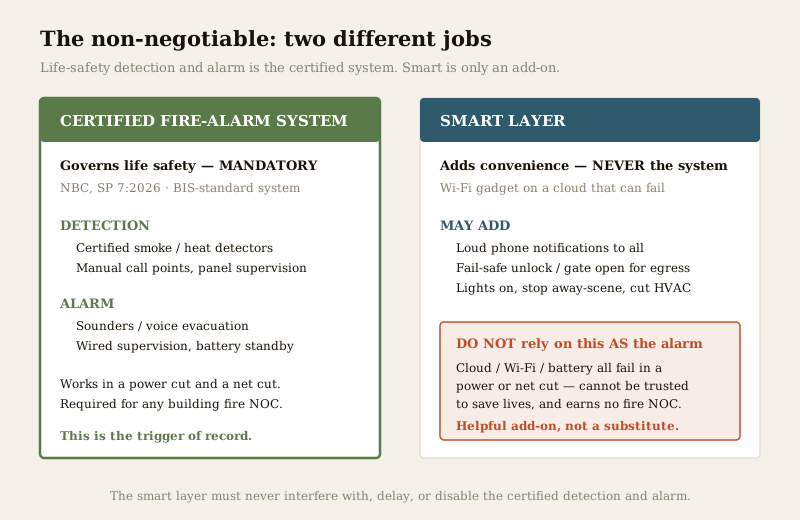
The left box does two jobs the smart layer must never claim: detection (certified smoke and heat detectors, manual call points, a supervised panel) and alarm (sounders or voice evacuation, wired and supervised, with battery standby so it screams through a power cut). Whether the building uses an addressable or wireless certified system, and how it is zoned, tested and maintained, is fire-engineering work — the whole fire-safety sub-hub exists for it. The right box only ever adds to that. When you write the fire strategy and the automation spec, keep them as two documents that reference each other, never one document that conflates them.
Why so absolute? Because the failure modes are asymmetric. If the smart layer fails, you lose a convenience. If the certified system fails, people die — and a Wi-Fi smoke gadget cannot stand in for it. It has no supervision (a cut wire or dead sensor goes unnoticed), no independent power, no code compliance, and a single point of failure in a cloud you do not control. That is disqualifying for life safety, however clever the app.
Where the smart layer genuinely earns its place
Now the good news, and the reason this guide is not simply "buy a certified system, the end". Once the certified system exists and owns detection and alarm, the smart home can add real, life-safety-positive value — because a house full of connected locks, gates, lights and scenes can do things a standalone fire panel cannot. The rule is simple: on a verified fire signal from the certified system, the smart layer helps people get out. It never becomes the thing that detects, and never becomes the thing that sounds the alarm of record.
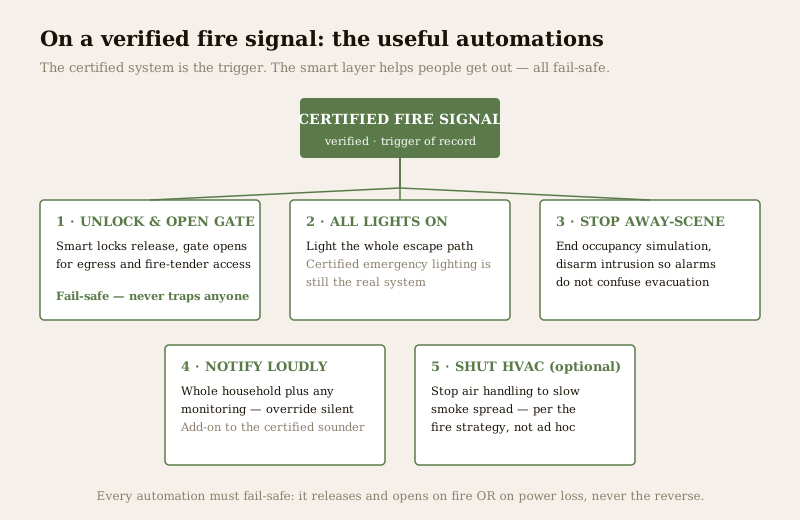
Here is each one, scoped honestly.
1. Unlock for egress and open the gate for the tender
This is the single most valuable integration, and the one most easily got dangerously wrong. On a verified fire signal, smart locks on egress doors should release and the automatic gate should open — so people can flee without fumbling for a phone or a code, and so the fire tender can drive straight in. A locked gate that a fire engine has to wait outside of has cost lives in Indian apartment fires; automating it open on a fire signal is a genuine safety win. See complete guide to smart locks, security gate-automation integration, and fire-tender access for the mechanics.
But the discipline is everything: this must be fail-safe. The lock must release on fire and on power loss, never require power to open. Never let a smart lock trap people in a fire. A lock that fails locked when the battery dies or the cloud drops is not a security feature, it is a hazard. More on this in the interlock section below.
2. Turn all lights on and light the escape path
On a fire signal, turn every smart light on — full brightness, whole house — so nobody is finding the stairs in the dark or in smoke. It is cheap, it is instant, and it helps. But be honest with the client about what it is and is not: the certified emergency lighting is the real system. Smart bulbs run on the same mains and cloud that fail in the fire and the power cut; NBC-compliant emergency lighting with its own battery backup is what the code relies on and what actually works when the power is gone. The smart "all lights on" is a useful supplement on top of it, not a replacement for it. Cross-link emergency lighting and security lighting integration.
3. Stop the away-scene, disarm intrusion
A smart home configured for security is often actively working against a fire evacuation without anyone realising. If the house is in an "away" mode running occupancy simulation, or the intrusion alarm is armed, an evacuation can be met with lights snapping off on a schedule, a siren screaming for a "break-in" as people pour out of doors, and a system fighting the exit. So on a verified fire signal the smart layer should cancel any away-scene, stop occupancy simulation, and disarm the intrusion system — so the security automation gets out of the way and does not confuse the evacuation. A person leaving through a door during a fire is egress, not a burglary.
4. Notify the whole household and monitoring, loudly
The certified sounder is the alarm of record inside the building, but the smart layer can widen the net: push a loud, override-silent notification to every family member's phone and to any monitoring service the moment the certified system reports fire — so the person at the office, the elderly parent's adult child, and the remote monitoring desk all know at once. Design this the way you design any critical alert: override Do-Not-Disturb, escalate if unacknowledged, and keep an SMS or call fallback for when the internet is down. The full craft of this is in smart security notifications. It is an add-on to the certified sounder, never the primary alarm.
5. Optionally, shut HVAC to slow smoke
Central air-handling can pull smoke through a building. Where the fire strategy calls for it, a fire signal can shut down HVAC and non-essential ventilation to slow smoke spread. Treat this as an engineering decision made with the fire strategy, not a clever automation you add unilaterally — in some buildings smoke-control fans must run, not stop. Specify it to the fire consultant, do not improvise it.
The interlock discipline (this is the part that can kill)
Every one of those automations is an interlock between the certified fire system and the smart home — a wire or a signal that lets a fire event drive a lock, a gate, a light, a scene. Interlocks to life-safety systems are not a hobbyist wiring job. Hold this rule in bold and never bend it: any interlock between the fire system and locks, gates or doors must be designed to code, be FAIL-SAFE (it releases and opens on a fire signal OR on power loss), and be signed off with the fire strategy and the fire officer.
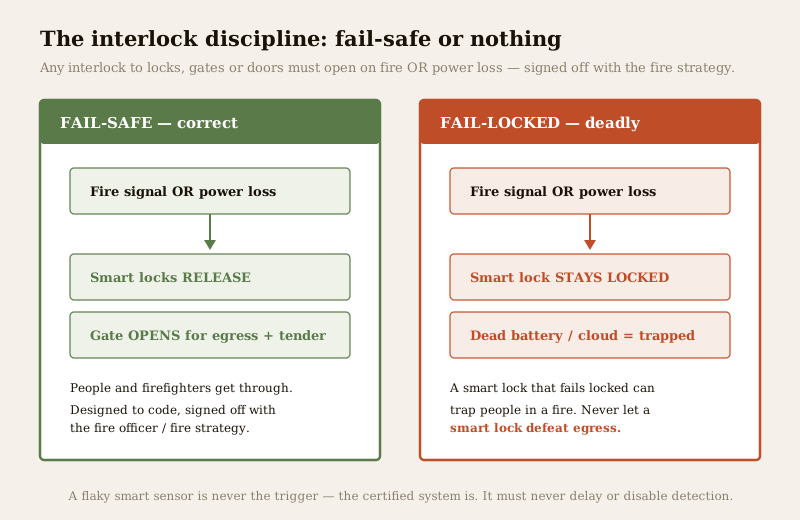
The load-bearing ideas:
- Fail-safe, always. The safe state on fire and on power loss is open and released. If the interlock needs power or a working cloud to unlock a door, it is fail-locked, and fail-locked can trap people. Egress hardware and the way it releases on fire is fire-engineering territory — specify it, get it signed off, do not DIY it. See complete guide to smart locks.
- The certified system is the trigger of record. The signal that drives the interlock must come from the certified fire panel, not from a Wi-Fi smoke gadget. A flaky consumer sensor deciding to fling every door open and blare an evacuation on a false reading is its own hazard — evacuation chaos, a gate wedged open all night, the boy-who-cried-wolf effect that makes people ignore the real one. The smart layer must never interfere with, delay, or disable the certified detection and alarm — it listens to the certified system and acts on it; it does not become it.
- Sign-off, not improvisation. Because these interlocks touch life safety, they are part of the fire strategy and belong to the fire consultant and fire officer, reviewed and signed off. Your role as designer or integrator is to coordinate the smart layer into that approved strategy — never to quietly wire a lock to a smoke sensor on a weekend.
Handling false signals without breaking evacuation
Consumer smart sensors are noisy. Kitchen steam, an incense stick, a shower's humidity, a dusty sensor — any of these can make a cheap Wi-Fi smoke gadget cry fire. If that false reading is allowed to unlock every door, open the gate, kill the intrusion alarm and blast an evacuation notification at 2am, you have manufactured chaos and taught the household to disbelieve the alarm. Two rules keep this sane:
- Only the certified system triggers the life-safety interlocks. The certified panel is supervised, its detectors are rated and sited to code, and it is far less prone to nuisance trips than a bedside gadget. Consumer smart smoke sensors can inform a soft notification ("possible smoke in the kitchen, check it") but must not drive door-release, gate-open or the evacuation cascade.
- Design the evacuation cascade to be believed. Because it is tied to the certified trigger of record, it stays rare and stays credible. A cascade that fires on every false consumer ping trains everyone to ignore it — the exact opposite of life safety.
Data and privacy, kept minimal
A fire event and the automations around it generate data — who was home, which doors opened, snapshots, timestamps — and that is personal data under the DPDP Act, 2023. Keep it minimal and purposeful: log what the fire strategy and any investigation genuinely need, store it where you can account for it, and do not let a fire integration become a backdoor stream of occupancy data to an overseas cloud. Minimal collection, clear retention, honest disclosure to the household. Privacy is a first-class part of the design, not an afterthought.
Key takeaways
- The non-negotiable: a smart smoke sensor or fire notification is an ADD-ON, not a substitute for a certified fire-alarm system. Life-safety detection and alarm is governed by the NBC (SP 7:2026) and delivered by a certified, BIS-standard system; for any fire-NOC building it is mandatory and is the trigger of record.
- A Wi-Fi gadget on a cloud that fails in a power or net cut cannot be relied on to save lives. No supervision, no independent power, no code compliance, a single cloud point of failure. Never let it stand in for the system.
- The smart layer adds value on a verified fire signal: fail-safe unlock and gate-open for egress and fire-tender access; all lights on to light the path; stop the away-scene and disarm intrusion; loud notification to the household and monitoring; optionally shut HVAC to slow smoke.
- Certified emergency lighting is the real system — "all smart lights on" is a supplement, not a replacement.
- Interlock discipline is life-and-death: to code, FAIL-SAFE (release and open on fire OR power loss), and signed off with the fire strategy and fire officer. Never let a smart lock trap people in a fire; never voice-unlock a door.
- Only the certified system triggers the life-safety interlocks. A flaky consumer sensor must not drive door-release, gate-open or the evacuation cascade — the smart layer must never interfere with, delay or disable certified detection and alarm.
- DPDP-minimal: collect only what the fire strategy needs, retain it accountably, do not stream home-occupancy data to a cloud you cannot answer for.
Where to go next
- The pillar: the complete guide to smart-home security in India.
- The certified systems the smart layer supplements: addressable fire-alarm systems, wireless fire-alarm systems, and voice evacuation systems.
- The whole fire discipline: the fire-safety sub-hub.
- Fail-safe egress hardware and gates: complete guide to smart locks, security gate-automation integration, and fire-tender access.
- The lighting side: emergency lighting and security lighting integration.
- Getting the alerts right without chaos: smart security notifications and remote security monitoring.
- The sensor honesty layer: smart sensors and stopping an away-scene: occupancy simulation.
- Check where your coverage has gaps: the home-security risk scorecard.
- Browse the whole security hub, the smart-home security section, and the home-automation smart-home hub.
References
- National Building Code of India (NBC), SP 7:2026, Bureau of Indian Standards — the governing reference for certified fire detection and life-safety alarm systems that a smart fire notification supplements but does not replace; confirm the current edition and the applicable fire-NOC requirements for the building.
- Digital Personal Data Protection Act, 2023 (India) — obligations for personal and behavioural data generated by fire-event logs, door-access records and camera snapshots that reveal home occupancy.
- Bureau of Indian Standards (BIS) and Bureau of Energy Efficiency (BEE) — product and safety marks for the certified fire-alarm equipment and for mains-powered smart hubs, locks and lighting; verify certification on the specific product.
- Matter, Zigbee, Z-Wave, Thread and Wi-Fi — the connectivity standards over which smart-home devices receive a fire signal and run automations; verify current versions and device support, and never route a life-safety interlock over a consumer wireless link without fire-strategy sign-off.
This guide is educational and reflects general good practice for scoping the smart-home layer around a certified fire-alarm system in India; it is not fire-safety, legal or engineering advice. Certified fire detection and alarm, egress hardware, interlocks and mains-electrical work must be designed to the NBC (SP 7:2026) and signed off by qualified fire professionals and the fire officer. Verify the current specification of any product and the applicable regulations before you rely on them.
Export this guide
Related Guides — Deep-dive reading
Smart Security Notifications in India (2026): Beating Alert Fatigue by Designing the Alert Layer
The single biggest reason smart security fails in a real home is not a weak camera or a cheap lock — it is alert fatigue. A system that pings you fifty times a day for a cat, a plant, a delivery and a neighbour's car trains you to swipe every alert away, so you miss the one that matters. The fix is to design notifications deliberately: tier alerts by severity, filter at the source, make each alert actionable, escalate to the right person, and keep a critical path that survives a phone on silent or an internet cut.
SecurityGeofencing Home Security in India (2026): Convenience Without the Trap
A geofence is a virtual boundary around your home; your phone crossing it can arm the alarm as the last person leaves and light the place up as you arrive. This guide explains the genuinely useful security uses, and the honest caveats: never let a phone's location alone unlock your door, never make a geofence the only thing that arms your home, and treat continuous family tracking as sensitive data.
SecurityFire-Egress Compatibility for Smart Locks in India (2026): Never Trap Anyone
How to make sure a smart lock or access-controlled door on an escape route always lets people out in a fire or emergency: fail-safe hardware, free egress, fire-rated doors, and the fire-alarm interlock.
SecurityRelated Tools — Try Free
Access-Control Battery-Backup Calculator
Size the standby battery so an access system keeps running through a power cut, with an egress life-safety note.
Battery BackupEmergency-Egress Checker
A life-safety self-check that access-controlled doors on escape routes still let people out in an emergency.
Egress CheckHome Security Risk Scorecard
Score your home across six security layers — perimeter, entry points, lighting, detection, alarm and habits — and get a prioritised action plan.
Security Scorecard