
Cool Roof vs Green Roof: Which Beats Roof Heat Better?
Two very different ways to stop your slab from cooking — the cheap, light, reflective cool roof that bounces the sun away, versus the planted green roof that insulates, shades and gives you a garden. A balanced, India-grounded comparison across heat, cost, structural load, waterproofing, upkeep and co-benefits.
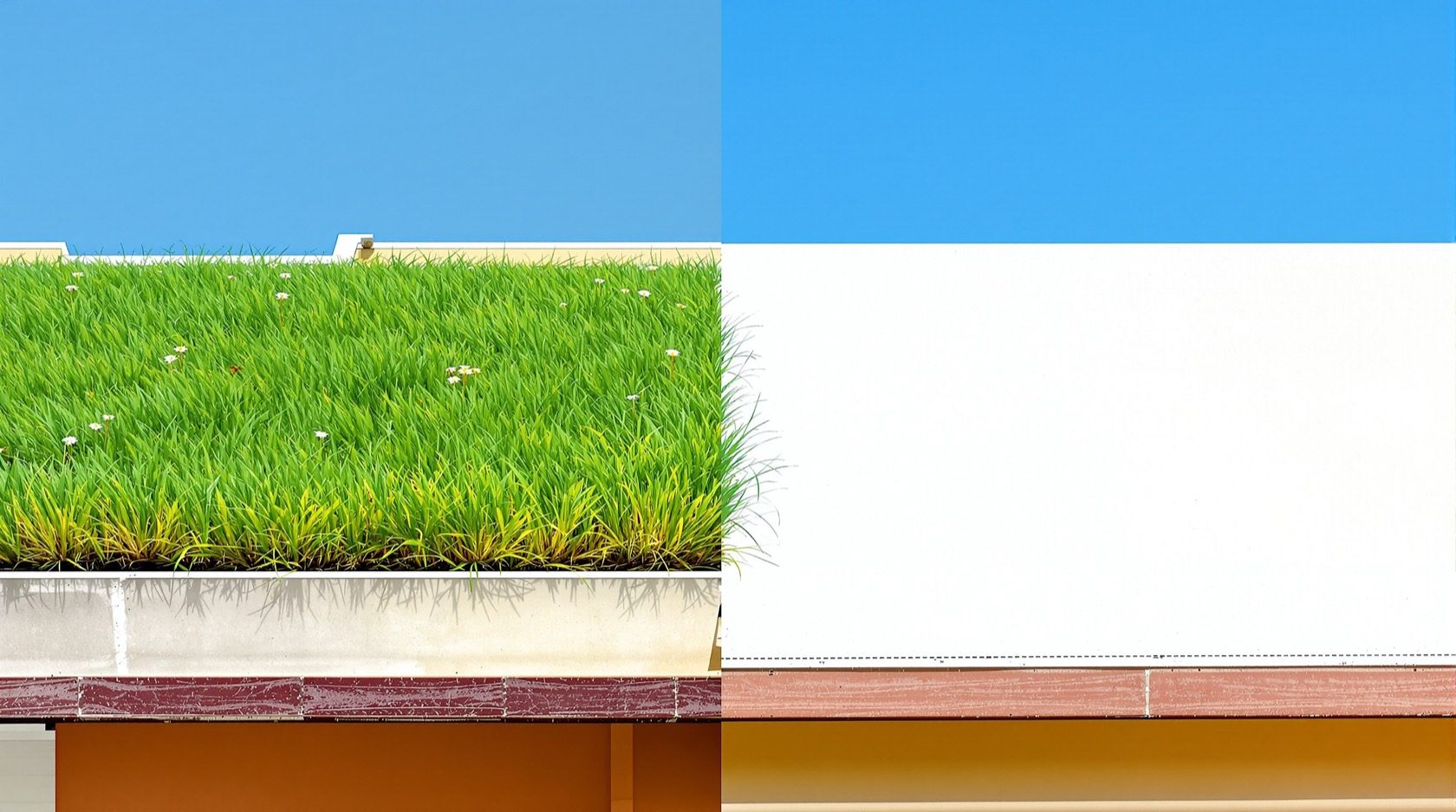
In our climate the roof is the single biggest heat collector on the house, and the top floor pays for it every summer afternoon. Two very different strategies promise to fix that, and they could hardly be more opposite: a cool roof simply makes the surface highly reflective so most of the sun bounces straight back off — a white or light coating, china-mosaic, or reflective tiles and membranes — while a green roof covers the slab in soil and plants that shade it, insulate it and cool it by evaporation, and hand you a rooftop garden in the bargain.
Both genuinely cut roof heat. But they sit at opposite ends of the cost, weight and effort scale, and that is the whole story of this decision. A cool roof is cheap, light, quick and almost foolproof; a green roof is expensive, heavy, and a real building project that adds load your structure must be able to carry. This guide on the Roofing Knowledge Hub — a companion to The Ultimate Guide to Roofing Systems — lays the two side by side across the criteria that actually decide it, and ends with a clear "choose cool roof if… / choose green roof if…" verdict. There is no universal winner here; the right answer depends on your building, your budget and what you want the roof to do.
Scope & safety. This guide helps you understand, compare and choose between the two approaches, and do safe ground-level planning. A green roof adds significant dead load and hides its own waterproofing — sizing the structure, calculating the wet-soil load, and specifying and applying a root-resistant waterproofing system are qualified professional work for a structural engineer and a licensed waterproofing contractor. Work at height is dangerous. Nothing here replaces a site-specific design or an on-site professional.
The short answer
For most Indian homes, a cool roof is the sensible first move: for a small fraction of the cost and effort it drops roof-surface temperatures sharply, adds almost no weight, and is dead-easy to inspect and re-coat. A green roof wins when you want more than cooling — a usable garden, greenery, biodiversity and rainwater retention — and your structure can carry the load and you are willing to pay for and maintain it. Many homes get the best of both by doing a cool roof on the exposed slab and a green terrace-garden zone where the structure allows. Match the roof to your building and your priorities, not to what looks impressive.
What each one actually is
Before scoring them, be precise, because "cool" and "green" get used loosely.
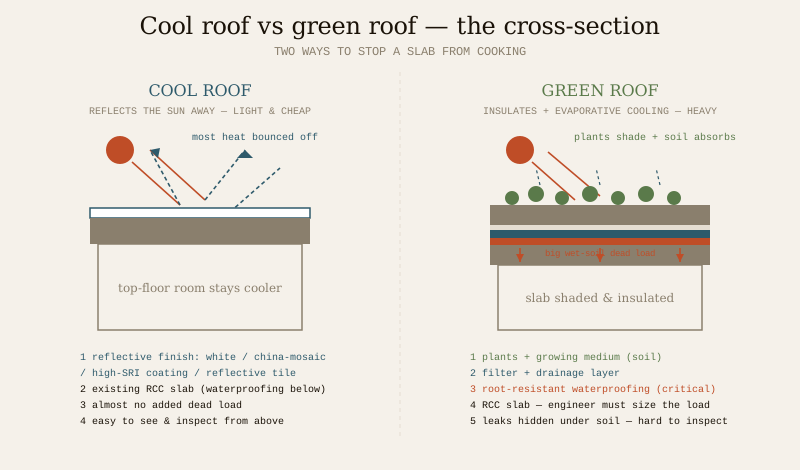
- A cool roof is any finish that is highly reflective (bounces sunlight) and high-emissivity (sheds absorbed heat quickly). In India that means white or light cool-roof coatings and high-SRI paints, traditional white china-mosaic or broken-china tiling, light reflective ceramic tiles, or reflective single-ply membranes. It is a thin surface layer that sits on top of your existing waterproofed slab and changes nothing structural underneath.
- A green roof is a planted, layered build-up over the slab: a root-resistant waterproofing membrane at the bottom, then a drainage layer, a filter fabric, a growing medium (lightweight soil) and the plants themselves. An extensive green roof is a thin (roughly 80–150 mm) low-maintenance carpet of hardy groundcover; an intensive green roof is a deep, true rooftop garden with shrubs, lawn and even small trees. The deeper it goes, the heavier it gets. See the full green roof guide.
That single difference — a light reflective skin versus a heavy living layer — is the root of almost every trade-off below.
The head-to-head — the criteria that decide it
Here is the whole comparison in one table. Read down the column that matters most to you; neither roof wins every row, which is exactly why the choice depends on your building and priorities.
| Criterion | Cool roof (reflective finish) | Green roof (planted build-up) |
|---|---|---|
| How it cuts heat | Reflects most solar radiation before it heats the slab — cheap & direct | Plants shade the slab, soil insulates, and evapotranspiration cools — multi-layer |
| Heat performance | Sharp drop in surface temperature; excellent value per degree | Excellent, steadier all-day cooling; also cools the air around it |
| Cost | Low — a coating or tiling job; cheapest way to beat roof heat | High — a full multi-layer build; several times the cost of a cool roof |
| Added structural load | Almost none — a thin surface layer | Large wet-soil dead load; needs an engineer to confirm the slab can take it |
| Waterproofing risk | Low — sits on top; simple to see & inspect | High if done wrong — leaks hide under soil; needs a bullet-proof root-resistant membrane below |
| Maintenance | Keep it clean; re-coat every few years | Ongoing — irrigation, weeding, plant care, drainage checks |
| Co-benefits | None beyond cooling (but unbeatable value) | Usable garden, biodiversity, rainwater retention, amenity, air & noise |
| Lifespan | Coating a few years; china-mosaic / tile far longer | Long if the waterproofing survives; a leak means lifting the whole garden |
| Best for | Most homes — budget, simple, light, low-fuss | Homes with the structure, budget & time that want a garden and greenery |
Indicative, for typical Indian homes. A structural engineer must size the load for any green roof, and a waterproofing contractor confirms the membrane system; get local quotes for cost.
Reading the scores — where each genuinely wins
The table is easy to skim but easy to misread, so here is the honest weighting, scored so you can see the shape of each option at a glance.
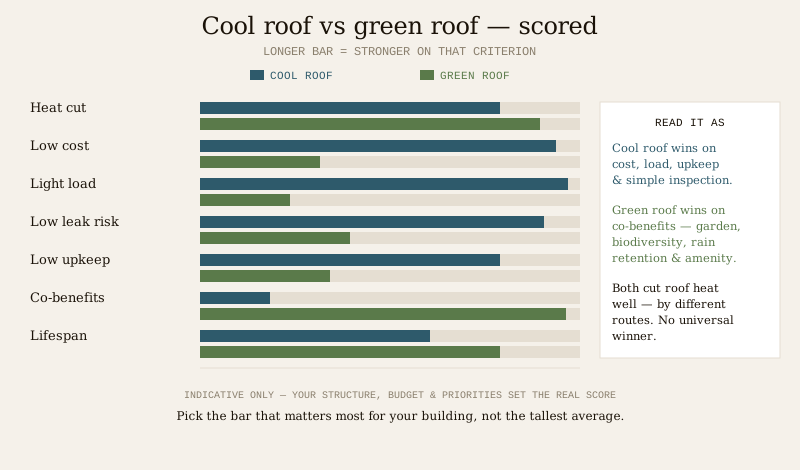
Where the cool roof clearly wins is cost, weight, upkeep and simplicity. It is, rupee for rupee, the most efficient way to take the sting out of a hot slab: a coating or china-mosaic job costs a fraction of a green roof, adds essentially no load, and can be inspected and refreshed by walking out onto the terrace. For a rented flat, a resale flip, a weak or older slab, or simply a tight budget, nothing else comes close on value.
Where the green roof clearly wins is co-benefits. Cooling is only part of its appeal. It gives you an actual usable outdoor room, supports plants, insects and birds, holds back and slows monsoon runoff, buffers noise, and softens the whole building. If you want the roof to be a place and not just a lid, the cool roof cannot compete — a coating gives you a cooler roof and nothing else.
On raw heat, both are strong — they simply get there by different routes. The cool roof stops heat at the door by reflection; the green roof absorbs, shades and evaporates it over the day, and also cools the air immediately around it. Neither is a runaway winner on cooling alone, which is why the other rows — cost, load, leaks and upkeep — usually decide the choice. To size the effect on your own slab, run the numbers through the Roof Heat-Gain Calculator.
Cost — and where the money goes
"Which is cheaper?" has a blunt answer here: the cool roof, by a wide margin. But it helps to see why the green roof costs what it does, because most of that money buys things you cannot see.
| Where the money goes | Cool roof | Green roof |
|---|---|---|
| Surface / finish | The coating, china-mosaic or reflective tile itself | Plants + growing medium |
| Hidden layers | None — it is the top layer | Drainage layer, filter fabric, protection board |
| Waterproofing | Uses your existing waterproofing | A dedicated root-resistant membrane system (a big line item) |
| Structure | Nothing added | Possible slab strengthening if the engineer requires it |
| Setup extras | Cleaning / surface prep | Irrigation, edging, kerbs, access, first planting |
| Ongoing | Occasional re-coat + cleaning | Water, plant replacement, weeding, drainage upkeep |
The headline: a cool roof is mostly a finish, so almost all the money is visible and one-time. A green roof is mostly substructure — the plants on top are the cheap part; the drainage, root-resistant waterproofing and (sometimes) structural work underneath are where the budget goes, plus a running cost forever. Treat any single figure with suspicion and get itemised local quotes; the Roof Cost Calculator helps you frame a realistic range before you call contractors. For deeper context, see the roof construction cost guide.
Structural load — the make-or-break for a green roof
This is the criterion that quietly eliminates a green roof for many homes, so give it real weight. A cool roof adds a negligible surface layer — you can put one on almost any sound slab without a second thought. A green roof is a different animal: saturated soil is heavy, and a green roof adds a large, permanent, wet dead load to the slab — and it must be checked when the medium is fully soaked in the monsoon, not when it is dry. An intensive garden roof can add several times the load of a thin extensive one.
That load is not something to eyeball. Whether your existing or planned slab can carry it — and whether it needs strengthening or a purpose-designed slab — is a calculation for a structural engineer, governed by the loading and concrete codes. Before you fall in love with a rooftop garden, get a rough sense of the dead load with the Terrace-Garden Load Calculator, then have an engineer confirm it for your building. If the answer is "the slab cannot take it," that is your decision made: cool-roof it instead, or limit the green zone to a small, engineer-approved patch.
Waterproofing — the risk hides under the soil
The two options could not be more different on leaks, and it matters enormously in monsoon India.
A cool roof sits on top of everything. Your waterproofing stays fully visible; if a crack or a damp patch appears, you can see it, reach it and fix it. Inspection is a walk on the terrace.
A green roof buries its waterproofing under drainage, soil and plants. If the membrane fails, water can track sideways for metres before it shows up as a stain on a ceiling far from the actual breach — and finding and repairing it may mean lifting a section of the garden. That is why a green roof demands a bullet-proof, root-resistant waterproofing system installed and tested before a single plant goes down — roots will exploit any weakness a normal membrane leaves. This is not a place to save money or use a generalist. A leak under a green roof is far costlier and messier than a leak under a cool roof, which is the single biggest reason to treat green-roof waterproofing as specialist professional work. See roof waterproofing for the systems involved.
Maintenance, durability and the monsoon
- Maintenance. A cool roof asks little: keep it clean (dirt and algae kill reflectivity, so an occasional wash matters), and re-coat when the finish dulls — china-mosaic and tile need even less. A green roof is a living system: it needs irrigation (especially through the dry pre-monsoon months), weeding, occasional replanting, and drainage checks so outlets do not clog with soil and leaf litter. If you will not tend it, a green roof slowly becomes a patchy, weedy liability. See the roof maintenance guide.
- Durability & lifespan. A cool coating is a wearing layer — think a few years between refreshes; china-mosaic and reflective tile last far longer. A green roof can last a very long time provided the buried waterproofing holds; its whole lifespan is hostage to that one hidden layer, which is another reason to over-specify it.
- The monsoon angle. Here the green roof shows a real co-benefit: its soil and drainage absorb and slow rainfall, easing the load on gutters and drains and reducing runoff — useful where rainwater harvesting or urban flooding is on your mind. But the same rain saturates the soil to its heaviest, tests the waterproofing hardest, and can wash out or waterlog young plants. A cool roof simply sheds the rain as your slab always did — no drama, but no retention benefit either. In genuine heavy-monsoon regions, a green roof's waterproofing and drainage must be designed with real care.
The honest cons of each
- Cool roof cons. It cools but does nothing else — no garden, no greenery, no runoff benefit. Coatings need re-doing, dirt erodes their reflectivity, and a very bright white glare can be a nuisance to overlooking neighbours. It is a fix, not an amenity.
- Green roof cons. It is expensive, heavy, and a genuine construction project. It burdens the structure, hides its own waterproofing, needs constant care, and a botched waterproofing job can be a slow, costly disaster. It rewards commitment and punishes neglect.
Which should you choose — the verdict
No hedging. Match the roof to your building and what you want from it.
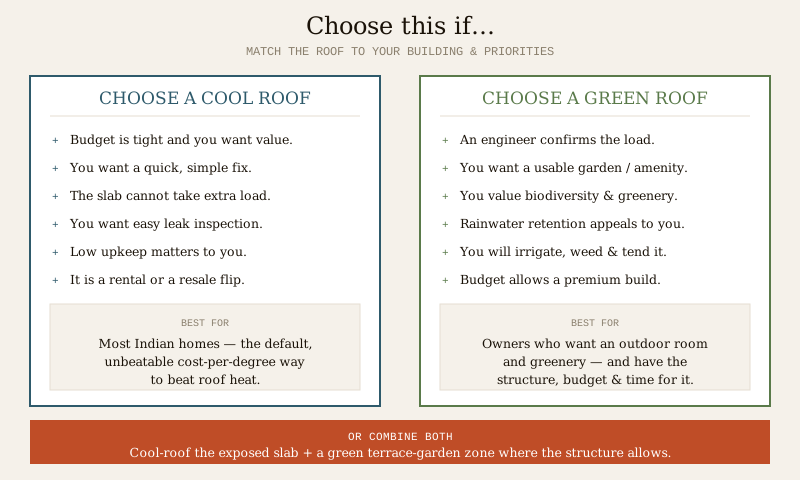
Choose a COOL ROOF if…
- Your budget is tight and you want the most cooling per rupee.
- You want a quick, simple, low-risk fix with minimal disruption.
- Your slab cannot take extra load (older building, weak slab, or no engineer's sign-off).
- You value easy leak inspection and want your waterproofing to stay visible.
- Low maintenance matters, or it is a rental or resale property.
- Frankly, for most Indian homes — it is the default, unbeatable-value way to beat roof heat.
Choose a GREEN ROOF if…
- A structural engineer confirms your slab can carry the wet-soil load (this comes first — without it, stop).
- You genuinely want a usable rooftop garden or amenity, not just cooling.
- You value greenery, biodiversity and softening the building.
- Rainwater retention and slower monsoon runoff appeal to you.
- You are willing and able to irrigate, weed and maintain a living roof.
- Your budget allows a premium, multi-layer build with specialist waterproofing.
You can combine the two
For many homes the smartest answer is not either/or. Cool-roof the exposed, structural or hard-to-reach areas of the slab — where cheap, light reflection does the heat job perfectly — and create a green terrace-garden zone in one area the engineer has cleared for the load. You get the affordable, whole-roof heat protection of a cool roof and a real green amenity where it makes sense, without loading the entire slab with wet soil. This hybrid is often the most sensible outcome: it refuses the false binary and lets each part of the roof do the job it is best at. A good terrace design can zone the two cleanly, with the green area sitting over the strongest part of the structure.
Whichever way you lean, remember that heat, insulation and ventilation work together: pairing either approach with proper roof insulation and roof ventilation does more for comfort than any single move alone. And if you are still weighing the whole roof, start with how to choose a roof and roof selection for Indian climates.
The one-line answer
If you want the cheapest, lightest, simplest way to stop your slab cooking — and that is most Indian homes — a cool roof is the clear first move; if you want a usable garden, greenery and rainwater retention, your structure can carry the load, and you will pay for and maintain it, a green roof earns its keep; and where the building allows, the honest best answer is often both — a cool roof across the exposed slab with a green terrace-garden zone over the part the engineer has cleared. Decide on your budget, your slab and your appetite for upkeep — and hand the load calculation and the waterproofing to professionals either way.
Where to go next
- The two approaches in depth: Cool Roof Guide · Green Roof Guide.
- Protect the layer that decides a green roof's life: Roof Waterproofing Guide.
- Get the load right: Roof Structural Safety & Compliance · Terrace-Garden Load Calculator.
- Cool the top floor completely: Roof Insulation Guide · Roof Ventilation Guide.
- Make the roof a place: Terrace Roof Design Guide · Rooftop Rainwater Harvesting.
- Keep it working: Roof Maintenance Guide.
- The whole library: Roofing Knowledge Hub.
References
- National Building Code of India (SP 7), Bureau of Indian Standards — Part 6 (Structural Design) and Part 11 (Approach to Sustainability) cover roof loading and energy/thermal considerations; verify the current edition via the BIS catalogue.
- IS 875 (Part 1 & Part 2): Design Loads (dead & imposed loads) for Buildings and Structures — governs the dead-load check a green roof requires — Bureau of Indian Standards.
- IS 456: Plain and Reinforced Concrete — Code of Practice (RCC slab design and any strengthening), Bureau of Indian Standards.
- Energy Conservation Building Code (ECBC) and the Eco-Niwas Samhita for residences — reflectance (SRI) and roof thermal-performance guidance relevant to cool roofs; verify current editions via the Bureau of Energy Efficiency.
- IS 3067 — general design details and preparatory work for damp-proofing and waterproofing of buildings; verify current status via the BIS catalogue: https://www.services.bis.gov.in/
This is an educational overview. Structural load calculation for a green roof, waterproofing specification and application, and any work at height are qualified professional work — engage a structural engineer and a licensed waterproofing contractor for your project, and verify any standard's current status via the BIS catalogue before relying on it.
Export this guide
Related Guides — Deep-dive reading
The Green Roof Guide
How to turn a hot, dead Indian rooftop into a cool living layer — what a green roof actually is, extensive versus intensive versus semi-intensive, the layered build-up (waterproofing, root barrier, drainage, filter, growing media, plants), the structural load that decides everything, plants and irrigation for our climate, real benefits and costs, and whether an existing roof can carry one. Plain language, India-grounded.
RoofingDesigning a Naturally Energy-Efficient Indian Home
Comfort first, gadgets last — passive design, orientation, insulation, ventilation and the climate wisdom that cuts Indian energy bills
SustainabilityThe Cool Roof Guide
The reflective roof that bounces the sun's heat back to the sky — one of the cheapest, highest-impact upgrades for a hot Indian home. What makes a roof cool (solar reflectance and thermal emittance, combined as SRI), the options from white paint to china mosaic, the temperature drops you can expect, the fast payback, and how a cool roof fits alongside insulation and green roofs. Plain language, India-grounded.
RoofingRelated Tools — Try Free
Rainwater Tank Sizer
How big should your rainwater tank be? Computes annual harvest, recommended tank capacity in litres, water-bill savings, and payback — for 10 Indian cities.
RWH CalculatorMonsoon-Readiness Checklist
Pre-rain home audit across 9 categories — terrace, drains, waterproofing, electrical, HVAC, pest, vehicles, documents.
Seasonal AuditLandscape Cost Calculator
Estimate a garden's cost — hardscape, softscape, lawn, irrigation, lighting and annual upkeep — by area, tier and city.
Budget Calculator