
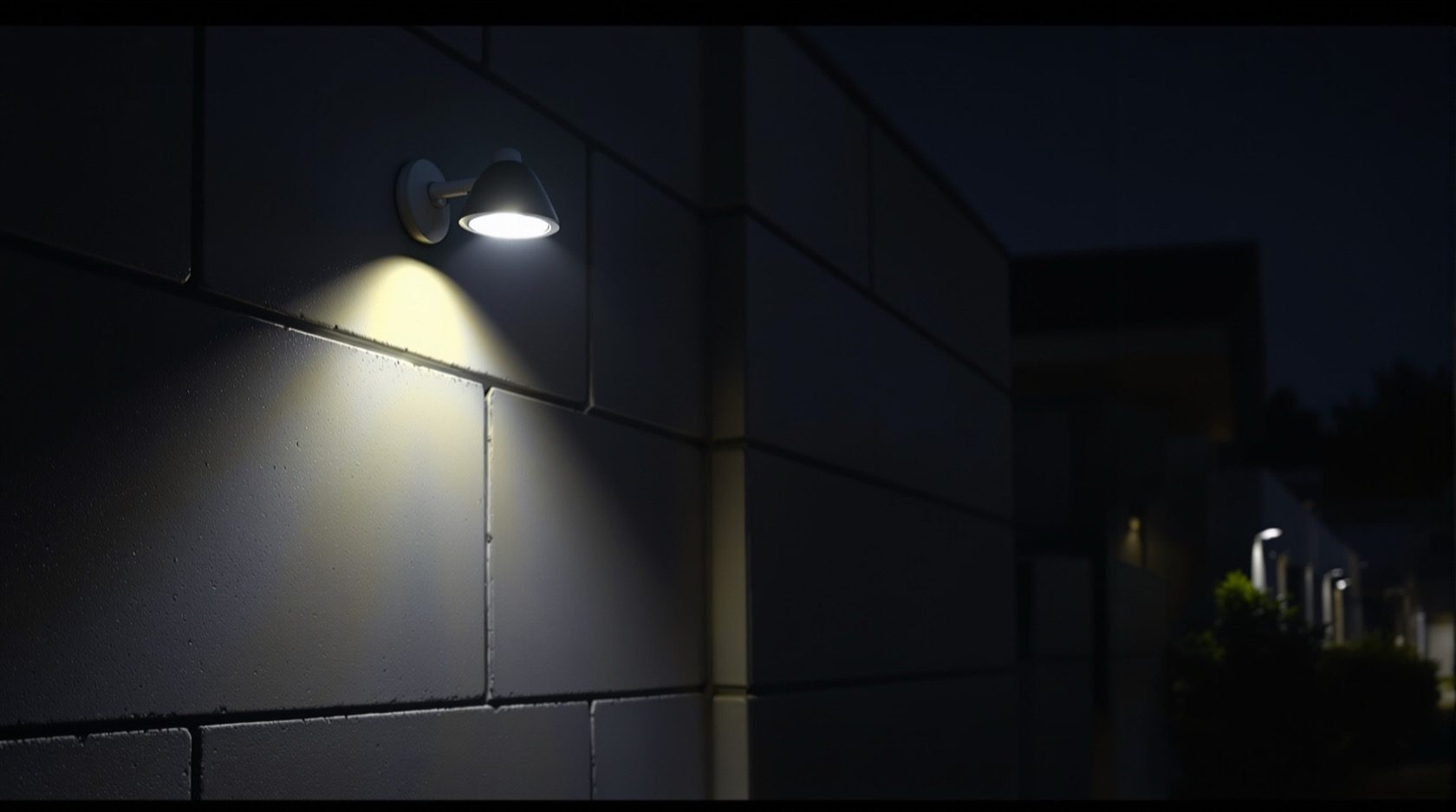
Security Lighting in India (2026): Lighting the Boundary Without Dazzling the Camera or the Neighbour
How to use light as a security layer that deters intruders and lets your cameras see, done well with uniform shielded downlight, no glare, no neighbour trespass and a power-cut backup.
Most people think of a boundary light as a convenience — something to see the gate lock by. As a security measure it is far more than that. Security lighting is a genuine layer of protection: a lit boundary is an unattractive target, so it deters; light is what lets most cameras and any guard actually see, so it enables detection; and when a light snaps on the instant someone approaches, it warns, exposes and helps you respond. A dark corner, by contrast, is a blind spot an intruder can work in unseen.
But here is the catch that this whole guide turns on: light only helps if it is done well. One harsh floodlight bolted to a wall and aimed roughly outward is the classic Indian own-goal — it dazzles your own camera, throws deep shadows an intruder can hide in, spills into the neighbour's bedroom, and leaves half the boundary dark. Good security lighting is the opposite: even, aimed downward onto your own ground, shielded so it neither blinds the camera nor trespasses next door, and backed up so it does not die with the mains. This guide is part of the Studio Matrx perimeter security library and sits under the complete perimeter security guide; it explains how to use light as a security layer and, honestly, how to avoid the ways it backfires.
Scope, honesty & safety. This guide helps you plan, choose and coordinate boundary lighting, strictly as a defensive layer. Two realities to hold onto. First, light is not a sensor and not a response — it deters and it lets a camera or a person see, but a lit boundary still needs someone (a camera feed, a guard, a neighbour) to verify and respond to be worth anything; pair it with perimeter CCTV and a boundary intrusion detection plan. Second, any mains wiring, and any fixture mounted at height, is licensed-professional work — route it to a licensed electrician (see the electrical hub). This is educational guidance, not legal advice.
Why light is a security layer
Light works on all three of the things a perimeter is supposed to do — deter, detect, respond — which is why it belongs in every boundary plan alongside the wall and the sensors.
- It deters. An intruder wants an easy, quiet, unseen target. A boundary that is evenly lit — or, better, one where a light snaps on the moment they approach — tells them they have been seen. Deterrence that happens before entry protects the building itself, not just its contents, and an opportunist very often simply moves on.
- It enables detection. Most cameras need light. A standard CCTV camera in a dark corner sees noise, not faces; even good low-light cameras do far better with adequate, even illumination. A perimeter CCTV system — and the wider family of outdoor CCTV — and a lighting plan are two halves of one design — the camera is only as good as what it can see. Light also lets a guard or a neighbour see with their own eyes.
- It aids response. When motion-triggered light comes on with a motion sensor or an alarm, it does three things at once: it startles the intruder, it lights the scene for whoever verifies the alert, and it makes the intruder easy to follow or describe. Light turns a detection into a visible event.
The honest caveat, exactly as with any perimeter measure: light on its own catches nobody. It makes a target unattractive and makes seeing possible, but a lit compound with no camera and no one watching is just a well-lit crime scene. Light is a force-multiplier for the compound wall and the detection layer around it — never a substitute for either.
Two strategies: continuous vs motion-activated
There are two basic ways to run a security light, and most good boundaries use both in different places.
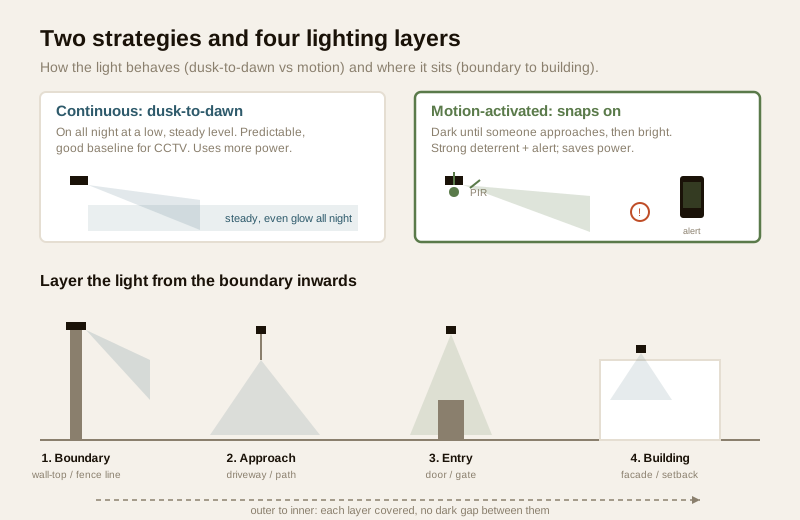
Continuous, dusk-to-dawn. The light stays on at a steady, usually modest level all night, switched by a photocell (dusk-to-dawn sensor) or a timer. Its virtues are predictability and a constant baseline for CCTV — the camera always has something to see, and there is never a moment of darkness while a motion light warms up. Its costs are power and, if overdone, light nuisance and the fact that a permanently lit scene gives an intruder a known, unchanging picture. Continuous light is best at low, even levels on the parts of the boundary a camera watches all night.
Motion-activated. The light stays dark until a sensor detects approach, then snaps on bright. Done well this is the strongest deterrent of all: the sudden change is startling and unmistakably says "you have been seen," it doubles as an alert (often wired to the same sensor as the alarm), and it saves power by only running when needed. Its weaknesses are nuisance triggers (street dogs, traffic, wind-blown foliage) and the brief moment before it fires — which is exactly why it is paired with, not a replacement for, a camera that sees in low light.
| Strategy | Deterrence | CCTV support | Power | Main weakness |
|---|---|---|---|---|
| Continuous dusk-to-dawn | Steady "this place is watched" | Constant baseline, always something to see | Higher (runs all night) | Overdone = light nuisance; fixed, known picture |
| Motion-activated | Strong — the sudden snap-on startles | Excellent when it fires; brief dark moment before | Lower (runs only on trigger) | Nuisance triggers; needs low-light camera to cover the gap |
| Both, layered | Best of each | Baseline plus a bright event on approach | Moderate | Needs sensible sensor placement and tuning |
The practical answer for most Indian compounds is a layer of each: low continuous light on the camera-watched boundary and at the entry, plus motion-activated brights on the driveway and approach where a sudden burst does the deterrent work.
Layering the light from boundary to building
Just as detection is layered, light is layered from the outside in. Think of four bands, each covered so there is no dark gap between them:
- Boundary layer — the wall-top and fence line itself, the line an intruder must cross. Even, downward light here removes the dark strip where someone would climb.
- Approach layer — the driveway, path and side passages between the boundary and the building. This is the classic place for motion-activated brights.
- Entry layer — the gate and the doors, where people are identified. Reliable, even light here supports the camera and the video door phone.
- Building layer — the facade and setback, lit modestly so the house is not a dark silhouette with black voids around it.
The single rule that ties the layers together is uniformity. It is far better to have even, moderate light everywhere than one bright spot and a ring of shadow around it — because the eye (and the camera) adjusting to a bright pool goes blind to the dark beyond it, and that dark is precisely where an intruder waits. Uniform coverage with no dark pools is the heart of doing this well.
Doing it well: aim, shield, and don't dazzle anyone
This is the part that separates security lighting from a floodlight that makes things worse. Every rule here is about containing the light — putting it where it helps and keeping it out of where it hurts.
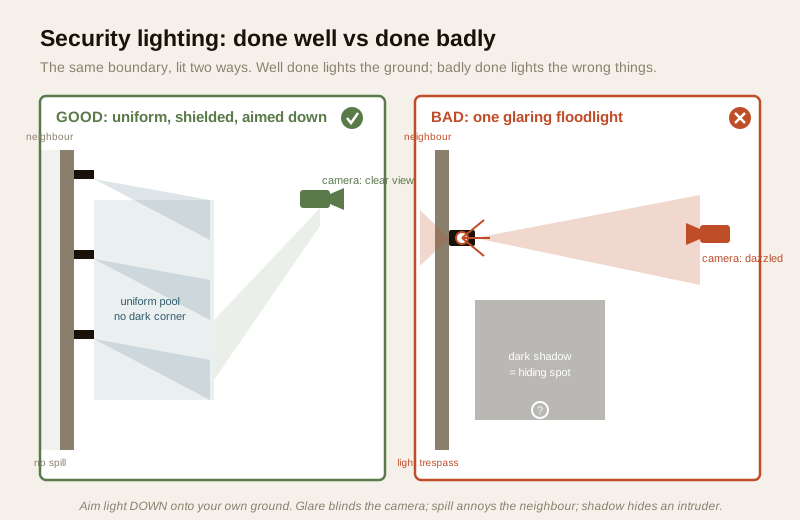
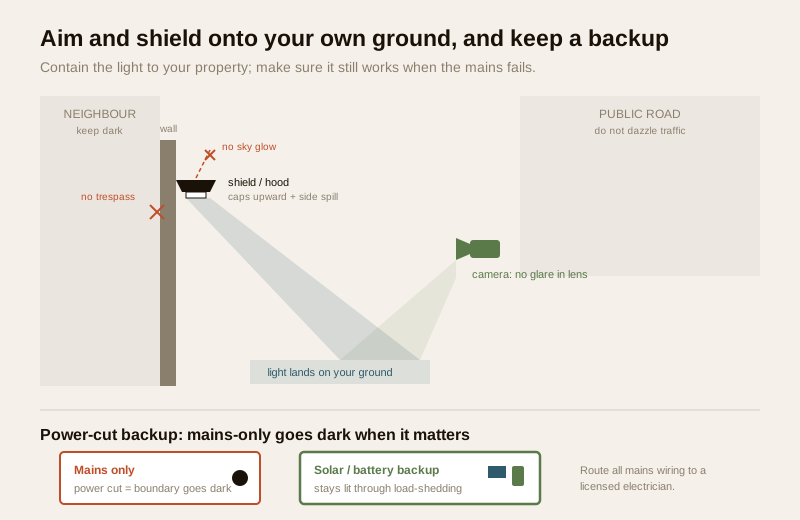
Aim and shield downward, onto your own property. A security light should light the ground inside your boundary, not the sky, not the camera, and not the neighbour. Use fixtures with a hood or shield and aim them down. This one habit prevents the three most common failures at once:
- It stops you dazzling your own camera or guard. A light aimed toward a camera puts glare straight into the lens — the sensor "stops down" for the bright source and everything around it drops into black. You have blinded your own eyes. Position lights so they illuminate the scene the camera looks at while staying out of its field of view; light should come from behind or beside the camera, never toward it. This own-goal — a floodlight and a camera fighting each other — is the single most common mistake on Indian boundaries.
- It stops you creating shadow. A single harsh light creates one bright pool and a hard-edged shadow beside every object. Shielded, downward, overlapping fixtures fill those shadows in. No dark pools means no hiding places.
- It stops light trespass. Light spilling into a neighbour's window or across the public road is a real nuisance — a genuine and common source of neighbour disputes, and increasingly a light-pollution and dark-sky concern. Shielding and aiming keep the light on your side of the wall. On the road side, glare that dazzles passing traffic is both a nuisance and a hazard.
| Failure (India reality) | What it causes | The done-well fix |
|---|---|---|
| One floodlight aimed outward | Glare blinds the camera; dark shadow beside every object | Shielded downlights, aimed onto your own ground, overlapping for uniform cover |
| Light spilling next door / onto the road | Neighbour dispute; dazzled traffic; light pollution | Hoods and correct aim to contain light within your boundary |
| A single bright spot | Eye and camera go blind to the dark ring around it | Even, moderate light everywhere; no dark pools |
| Wrong colour of light | Camera colours look wrong; faces hard to read | A colour temperature and colour rendering suited to the camera (see below) |
| Sensor pointed at the road | Constant false triggers from traffic and dogs; light ignored | Aim the sensor across your own approach, not the street; tune range |
Colour temperature and CRI for camera clarity. For a camera to render a scene usefully, white light with a reasonable colour rendering (how faithfully colours appear) helps far more than a very cheap, colour-starved lamp under which a red car and a maroon shirt look identical. A neutral-to-cool white is generally kinder to cameras than a deep warm glow, but avoid harsh, glaring extremes. These are selection choices; treat specific figures as guidance and confirm what your particular cameras want.
IR versus white light. Two ways to give a camera light at night. White light is visible — which means it also deters, because the intruder sees they are lit; it lets a colour camera work and lets people see with their own eyes. Infrared (IR) is covert — only the camera sees it, so it does not deter and gives a monochrome image, but it lights a scene without announcing the camera or annoying a neighbour. Many boundaries use both: white light where deterrence and neighbour-friendly visible lighting are wanted, IR where discreet camera vision matters. Match the choice to the spot.
Motion-sensor placement to avoid nuisance triggers. A motion light is only as good as where its sensor looks. Aim the detection zone across your own approach and driveway, not out at the street where traffic and street dogs will trip it every few minutes — a light that cries wolf gets ignored or switched off. Tune the range and angle to your site, and keep the sensor clear of swaying foliage and heat sources. The false-alarm discipline here is the same as for any boundary intrusion detection: choose and place well, never just crank up sensitivity.
Power-cut backup. A light wired to the mains alone is dark exactly when it matters — during a load-shedding cut or a deliberately tripped supply. Any boundary that relies on light for security needs a backup: solar-powered lights with their own battery for far gates and fence runs, or battery-backed fixtures and an inverter/UPS on the lighting circuit for the core boundary. Confirm the backup covers the camera and any sensors on the same line too. In a country of routine power cuts, mains-only security lighting is a boundary that goes blind on schedule.
It only works if someone verifies and responds
Light makes the boundary an unattractive target and makes seeing possible — but seeing is only useful if someone is watching and acts. This is the same honest thread that runs through the whole boundary intrusion detection library. A motion light that snaps on at 2 a.m. in an empty lane, with no camera recording and no one to look, has startled an intruder and told nobody. Pair your lighting with:
- A camera that sees the lit scene — so a trigger can be verified (a person, or a stray dog) before anyone reacts. Good lighting and perimeter CCTV are designed together; placement of both matters, so read the camera placement guide alongside your lighting plan.
- A way to alert and respond — a guard, a monitoring arrangement, or at least an app alert to your phone. Most Indian setups are self- or guard-monitored; a lit, camera-covered boundary tied into your perimeter alarm plan is what turns "seen" into "acted on."
For a society or gated community, this is a shared-infrastructure decision — uniform boundary lighting, tied to the community CCTV and the guard's monitor, planned as one system; the gated communities security guide covers that coordination. To map where your own boundary is dark and where light is most needed, the site perimeter security assessment is a useful starting point.
False alarms, neighbourliness & when to bring in a professional. Outdoor light lives in a noisy world — traffic, street dogs, wind, monsoon — so a motion sensor pointed carelessly will nuisance-trip until everyone ignores it; aim it across your own ground and tune it, never just raise sensitivity. Be a good neighbour: shield and aim so no light crosses the wall into a bedroom or dazzles the road — light trespass is a real dispute and a growing pollution concern, and the community and municipal bye-laws increasingly care about it. And hand the expert parts over: any mains wiring, circuit work, or fixture mounted at height is for a licensed electrician; a lighting designer should set actual illuminance levels and uniformity to the applicable standard; and for a society perimeter, treat it as a specified, maintained shared project. Verify any standard's current status before relying on it.
Key takeaways
- Security lighting is a real layer — it deters (a lit boundary is an unattractive target), it enables detection (most cameras and any guard need light to see; a dark corner is a blind spot), and it aids response — but only if it is done well.
- Use both strategies: low continuous dusk-to-dawn light on the camera-watched boundary and entry, plus motion-activated brights on the approach where a sudden snap-on both deters and alerts while saving power.
- Uniformity is the heart of it — even, overlapping, moderate light with no dark pools an intruder can hide in beats one bright floodlight surrounded by shadow every time.
- Aim and shield downward onto your own property so you never (a) dazzle your own CCTV or guard, the classic own-goal that blinds the camera and creates shadow, or (b) trespass light into a neighbour's window or the public road — a genuine nuisance and pollution concern.
- Match the light to the camera and back it up: sensible colour temperature and colour rendering for clarity, white light for deterrence versus covert IR for discreet vision, motion sensors aimed across your own ground to avoid nuisance triggers, and solar or battery backup so the boundary is not dark during a power cut.
References
- The applicable BIS/IEC illuminance and outdoor-lighting standard (verify) — treat specific lux levels, uniformity ratios and glare limits as design figures set by a qualified lighting designer to the current standard; confirm the standard's status via the BIS catalogue: https://www.services.bis.gov.in/
- National Building Code of India (SP 7), Bureau of Indian Standards, together with local municipal bye-laws and any light-nuisance / light-pollution provisions — for the electrical, lighting and neighbour-amenity aspects of an outdoor install; verify the current edition via the BIS catalogue: https://www.services.bis.gov.in/
- Digital Personal Data Protection Act, 2023 — where security lighting supports cameras that overlook a neighbouring property or a public road, the resulting footage is personal data; agree access, storage and privacy handling, and keep credentials private.
This is an educational overview, not legal advice. It is strictly about using light defensively to deter intrusion and help cameras see, never about defeating any security measure. Mains wiring, circuit work, work at height, and setting illuminance levels are qualified professional tasks — engage a licensed electrician and a lighting designer, and verify any standard's current status via the BIS catalogue before relying on it.
Export this guide
Related Guides — Deep-dive reading
Motion-Activated Security Lighting in India (2026): Sensor Types, the False-Trigger Problem, and Pairing Motion With a Base Light So Your Camera Never Goes Blind
How PIR, microwave and dual-tech sensors really behave in Indian conditions, how to stop the stray-dog-and-passing-auto false triggers that make owners disable the light, and why a motion-only light leaves a camera dark until it is too late.
SecurityPerimeter CCTV in India (2026): Watching the Boundary and Verifying the Alarm
How cameras earn their place on the perimeter — watching along the fence and wall line, and letting a human confirm a real intruder before response — designed for Indian darkness, weather and neighbour privacy.
SecurityPerimeter Alarm Systems in India (2026): Detect an Intruder at the Boundary
How an outer detection layer — outdoor motion sensors, beam barriers, fence and wall-top sensors and gate contacts — warns you the moment someone crosses your compound wall, and how to design it for Indian weather without endless false alarms.
SecurityRelated Tools — Try Free
CCTV Camera Coverage & Count Calculator
Estimate how many CCTV cameras you need, the NVR channels, storage in TB for your retention period, and an indicative all-in cost with GST.
CCTV CalculatorSecurity Backup Power Calculator
Size a UPS/inverter and battery to keep CCTV, NVR, router and alarm running through a power cut — load, Ah, VA and cost.
Backup PowerCCTV Camera Overlap Calculator
The overlap or blind gap between two adjacent cameras, from coverage width and spacing, plus the spacing for a target overlap.
Overlap