
Why Sustainable Buildings Cost Less Over Time
The lifecycle-cost case for green homes in India, explained in plain money for ordinary homeowners
When you compare two homes, you usually compare the price tags. House A costs a little less to build, House B costs a little more because it has better insulation, shaded windows, a small solar system and a rainwater pit. Most buyers stop there and pick House A.
But the price tag only tells you what a home costs on the day you move in. It says nothing about what it costs you every month for the next twenty or thirty years, the bills, the repairs, the repainting, the air conditioner running harder every summer. A sustainable home is built around a simple idea, that the cheapest house to buy is rarely the cheapest house to own.
This guide is for ordinary Indian homeowners and buyers. No green jargon, no idealism. We will look at the real money, where sustainable design saves you cash, where the green premium is real and where it is a myth, what honest payback periods look like, and how to budget for it without getting sold gadgets you do not need.
1. The one idea behind everything, lifecycle cost
There is a single concept that, once you understand it, changes how you look at every home. It is called lifecycle cost, sometimes called total cost of ownership.
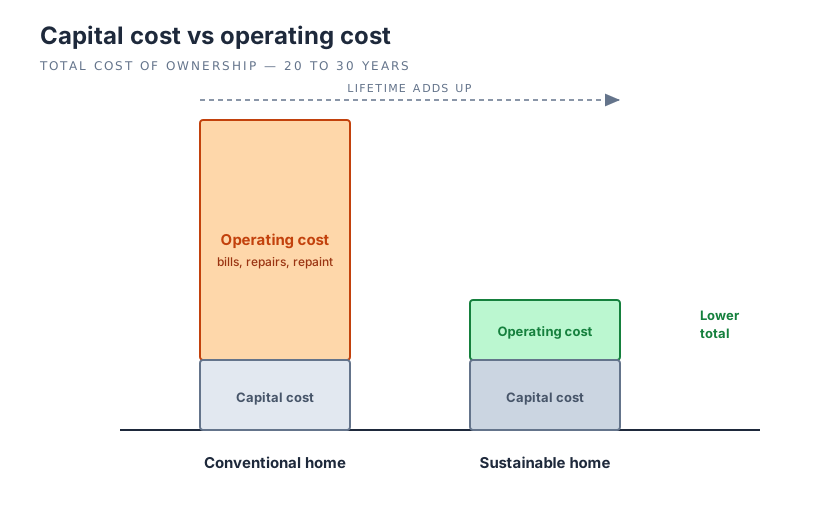
Your home has two kinds of cost. The first is the capital cost, the one-time money you spend to build or buy, land, materials, labour, fittings. The second is the operating cost, the recurring money you spend to keep living in it, electricity, water, repairs, maintenance, repainting, replacing things that wear out. Operating cost is small each month but it never stops, and you pay it for as long as you own the home.
Over a 20 to 30 year period, those small monthly amounts add up to a very large number. For many ordinary homes, the money spent running the home over its life can rival or exceed the money spent building it. That is the part the price tag hides.
Sustainable design works by accepting a slightly higher capital cost (sometimes) in exchange for a much lower operating cost (almost always). You spend a bit more, or sometimes nothing more, on the day of construction, and you save every month for decades. To see whether that trade is worth it, you have to look at the whole life of the home, not just the first day.
2. Where the money actually comes back, the five savings buckets
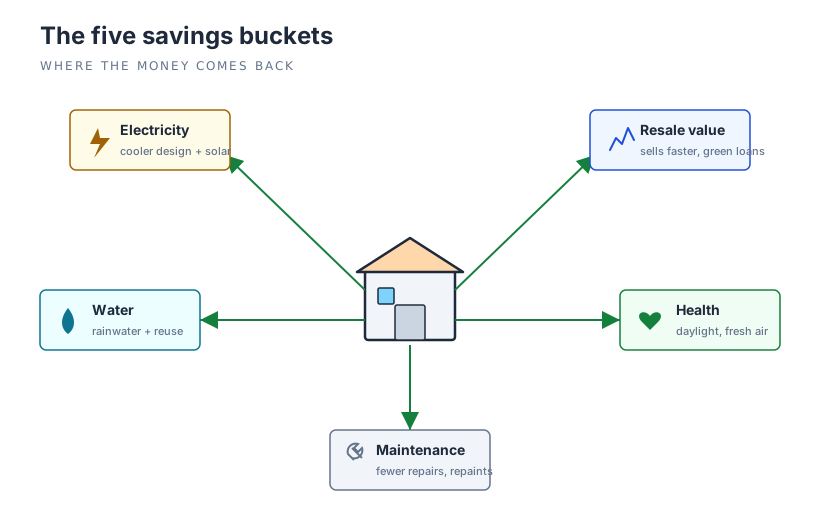
A sustainable home does not save money in one dramatic way. It saves a little in several places, and those add up. Here are the five real buckets.
Lower electricity bills. This is the biggest and most reliable one. A home designed for our climate, the right orientation, shaded west windows, cross ventilation, light coloured roofs, and good insulation, stays cooler on its own. That means the fans and air conditioners run for fewer hours and at lower settings. Add efficient appliances and a rooftop solar system, and your monthly bill can shrink dramatically. Many of these savings come from design choices that cost little or nothing extra.
Lower water bills. Rainwater harvesting, reusing treated water for the garden and flushing, and efficient fittings cut the volume of municipal or tanker water you buy. In cities that depend on water tankers in summer, this is real cash, not a rounding error.
Lower maintenance and replacement. Durable, weather-appropriate materials and good waterproofing mean fewer repairs, less frequent repainting, and fittings that last longer. Cheap finishes that fail in five years and need redoing are a hidden recurring cost that quietly drains your budget.
Better comfort and health. A home that is naturally cooler, has good daylight and fresh air, and avoids damp and mould is simply healthier to live in. That can mean fewer doctor visits, less spending on air purifiers and dehumidifiers, and less reliance on running an AC just to feel comfortable. This bucket is harder to put a precise number on, but it is real.
Better resale value and easier financing. As buyers grow more aware of running costs, and as some lenders begin offering preferential green home loans, a home with lower bills and a recognised efficiency story can sell faster and command a better price. You can read more in our companion on green building certifications.
3. Is the green premium real? Mostly smaller than you fear
The biggest reason people avoid sustainable homes is the fear of a large green premium, the idea that building green automatically costs a fortune more. Let us be honest and precise about this, because the truth is more encouraging than the rumour.
The most powerful sustainable strategies are passive, meaning they work without machines or running cost. Orienting the house so bedrooms avoid the harsh afternoon sun, placing windows for cross ventilation, shading the west and south-west, using lighter roof colours, and planning rooms around daylight, these cost essentially nothing extra if you decide them early, at the design stage. They are decisions, not purchases. The green premium on good passive design is often close to zero, and occasionally it even saves money because you build smaller and smarter. Our guide on a naturally energy-efficient Indian home covers these in depth.
Where a premium does appear is in systems and better materials, wall and roof insulation, double glazing where it is justified, a solar system, rainwater infrastructure, better waterproofing. These do cost more upfront, but the increase is usually a modest single-digit to low double-digit percentage of the build cost, and most of them pay for themselves over time through lower bills.
The expensive trap is the bolt-on gadget, the imported smart-everything system, the elaborate gizmo that promises savings far smaller than its price. We will return to this in section 7. For now, remember the rule, passive design is nearly free, smart systems pay back, gadgets often do not.
4. Honest payback periods, ranges not promises
Payback period means the time it takes for your accumulated savings to equal the extra money you spent upfront. After that point, you are in profit for the rest of the home's life.
The table below gives illustrative ranges only. Real numbers depend heavily on your local electricity and water tariff, your climate zone, your usage, the quality of installation, and the subsidies available to you. Treat these as orders of magnitude, not quotes, and verify for your own project and tariff before you decide.
| Measure | Roughly what it costs | What it saves | Illustrative payback |
|---|---|---|---|
| Good orientation, shading, cross ventilation | Little to nothing if decided early | Lower cooling load every summer | Effectively immediate |
| Wall and roof insulation (Eco Niwas Samhita type) | Modest extra at construction | Less heat in, fewer AC hours | A few years |
| 5-star efficient appliances and AC vs low-rated | Small extra per appliance | Lower running cost over its life | Often within the appliance's life |
| Rooftop solar (after PM Surya Ghar subsidy) | Larger upfront, reduced by subsidy | Big monthly bill cut, then near-free power | Commonly cited 3 to 6 years |
| Rainwater harvesting and water reuse | Modest civil works | Less tanker and municipal water | Varies widely, faster where water is scarce |
| Durable materials and good waterproofing | Small to modest extra | Fewer repairs and repaints over decades | Spread across the home's life |
Two things to internalise. First, the cheapest measures (orientation, shading, ventilation) often have the fastest payback because they cost almost nothing. Second, even where payback takes a few years, the home lasts for decades, so the savings continue long after the cost is recovered.
5. Rooftop solar, the clearest worked-out case
Solar is worth singling out because it has a clear subsidy and a payback you can actually estimate.
Under the PM Surya Ghar Muft Bijli Yojana, the central government provides a subsidy for residential rooftop solar, structured by system size, with a maximum central subsidy commonly cited at around 78,000 rupees for systems of about 3 kW and above, and several states adding their own top-ups. This meaningfully shrinks the upfront cost and therefore the payback.
A typical illustrative picture, a modest residential system can cut a large slice off your monthly electricity bill, and after the subsidy, payback periods are commonly cited in the range of three to six years depending on your state tariff, sunlight, and usage. After that, the panels keep generating for roughly two decades more, which is close to free electricity for the rest of the system's life.
The key honest caveats, your actual savings depend on how much electricity you use and your local per-unit tariff, your roof's shading and direction matter a lot, and you should get quotes and check the latest subsidy rules before deciding. For a fuller treatment including how net metering works, see our dedicated guide on solar power for homes, ROI and PM Surya Ghar.
6. The cost of NOT building sustainably
It is tempting to think of conventional building as the safe, cheap default and sustainable building as the optional upgrade. In a country like India, with our climate and our trends, that picture is backwards.
Electricity tariffs have broadly trended upward over the years, and as our cities get hotter and AC ownership rises, the homes that depend most heavily on air conditioning are the most exposed to those rising costs. A poorly designed home that overheats forces you to run more cooling, for more hours, at a higher tariff, year after year. You are effectively locked into an ever-rising bill that you cannot easily escape.
There is also the retrofit penalty. Almost everything sustainable is far cheaper to build in than to add later. Insulating a wall during construction is a small extra cost. Tearing into a finished wall to insulate it later, or adding external shading to a house that was wrongly oriented, costs many times more and is often only a partial fix. Choosing not to build sustainably is not avoiding a cost, it is postponing a larger one, and adding a lifetime of higher bills on top.
The Eco Niwas Samhita, India's energy conservation code for homes, exists precisely because the running-cost burden of inefficient housing is large at a national scale. What is true for the country is true for your household, the cheap-to-build inefficient home is the expensive-to-live-in one.
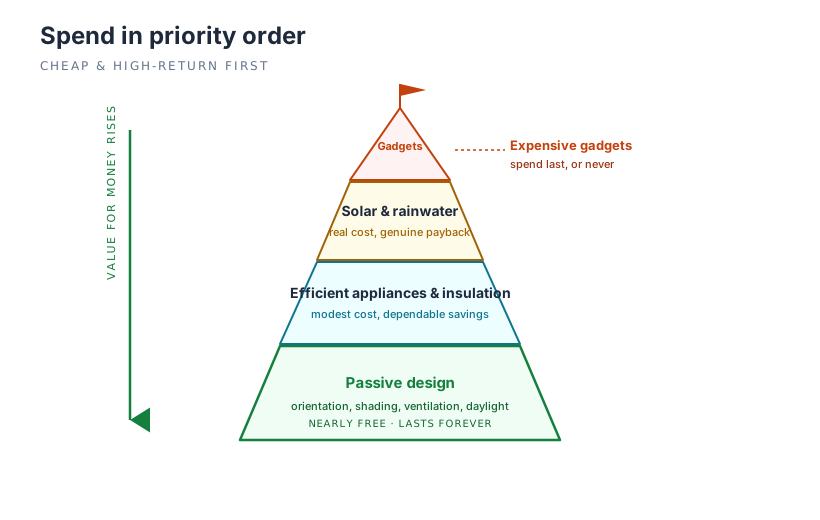
7. Cheap passive design beats expensive gadgets, almost every time
If you take one practical lesson from this guide, make it this one. Spend your sustainability budget in the right order.
The highest return, lowest cost measures are passive and come first, orientation, shading, ventilation, daylight, roof colour, and a sensible smaller footprint. These cost little, last forever, and need no maintenance. Next come efficient appliances and good insulation, modest cost, dependable savings. Then come productive systems like solar and rainwater, real upfront cost but genuine payback and subsidy support.
Last, and treated with healthy suspicion, come bolt-on gadgets, expensive imported smart systems, elaborate automation, and feature-heavy gizmos that promise savings far smaller than their cost and often need replacement or subscriptions. A beautifully automated home that was badly oriented in the first place is just an expensive way to run an air conditioner.
The reason this matters financially is simple. A rupee spent on good design buys savings for the life of the home with no recurring cost. A rupee spent on a complicated gadget may buy a smaller saving, a maintenance headache, and an early replacement. Get the free and cheap things right first, and only then consider the expensive ones.
8. A simple worked example over time
Numbers make this concrete. The following is an illustrative story, not a quote for your home, but it shows the shape of how lifecycle cost works.
Imagine two similar homes. The conventional home costs a little less to build. It heats up in summer, so the family runs ACs for long hours, the electricity bill is high every month, the water comes partly from tankers in summer, and cheap finishes need repainting and small repairs fairly often. None of these costs are huge on their own, but together they form a heavy monthly drain that rises a little every year as tariffs climb.
The sustainable home costs somewhat more to build, the extra going into orientation done right, insulation, efficient appliances, a small solar system after subsidy, and a rainwater pit. On day one, it looks like the worse deal, it cost more.
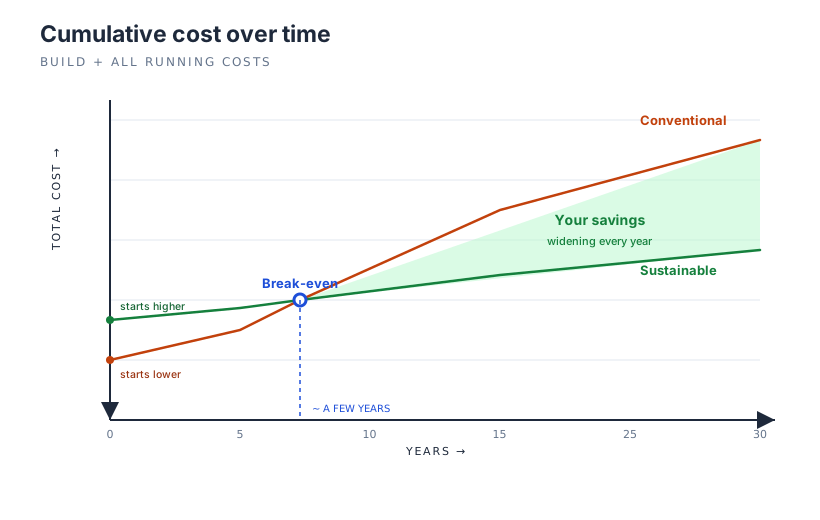
But from month one, its bills are lower. The cooler design needs less AC, the solar offsets much of what is left, the rainwater cuts tanker spend, and the durable finishes need less redoing. Each year the gap in running cost widens, because the conventional home is paying ever-rising bills while the sustainable home is paying very little.
Plot both homes' total money spent, build plus all running costs, against time, and you get two lines. The sustainable line starts higher but rises gently. The conventional line starts lower but rises steeply. Somewhere a few years in, they cross, that is the break-even point shown in figure 3. After that, the sustainable home is cheaper in total, and it keeps getting cheaper relative to the conventional one for the rest of its life. By year twenty or thirty, the difference can be substantial. The home that cost more to buy turns out to have cost far less to own.
What this means for you
You do not need to chase a perfect green home or a fancy rating to benefit. You need to shift how you compare options, from the price tag to the lifetime cost.
A few practical moves. Decide the free things first, at the design stage, get the orientation, shading, ventilation, and daylight right before a single brick is laid, because these are impossible to add cheaply later. Insulate the roof and walls during construction, not after. Buy the highest practical star-rated appliances, the small premium pays back through their life. Treat solar and rainwater as investments with a payback, check the current PM Surya Ghar subsidy and your local tariff, and get real quotes for your own roof and usage. And be sceptical of any gadget whose promised savings are vague or small.
When you budget, set aside a modest sustainability allowance within your build budget, and spend it in priority order, cheap passive measures first, productive systems next, gadgets last or never. Remember that every range in this guide is illustrative, payback periods, savings, and premiums all depend on your climate zone, tariff, usage, and the quality of work, so verify the numbers for your own project before deciding.
The honest summary is this. Sustainable building is not charity and it is not luxury. For an Indian homeowner facing rising tariffs, hotter summers, and water stress, it is usually the cheaper long-term choice, often by a wide margin, and the cheapest parts of it are nearly free. To go deeper, read what makes a building sustainable, understand the materials angle in embodied carbon in construction, and look ahead with the future of green building materials.
Sources
- Ministry of Power, Bureau of Energy Efficiency, Eco Niwas Samhita (Energy Conservation Building Code for Residential Buildings), beeindia.gov.in
- PM Surya Ghar Muft Bijli Yojana, official scheme information and subsidy structure, pmsuryaghar.gov.in
- Press Information Bureau, Government of India, Eco Niwas Samhita 2018 launch release, pib.gov.in
- Bureau of Energy Efficiency, Standards and Labelling (Star Rating) programme for appliances and air conditioners, beeindia.gov.in
- International Energy Agency, India policy database, Energy Conservation Building Code for Residential Buildings, iea.org
Note on figures, all savings, payback periods, premiums, and the worked example in this guide are illustrative ranges intended to show the shape of lifecycle cost, not precise quotes. Subsidy amounts, tariffs, and costs change over time and vary by state and project. Verify current figures for your own home before making decisions.
Export this guide
Related Guides — Deep-dive reading
Designing a Naturally Energy-Efficient Indian Home
Comfort first, gadgets last — passive design, orientation, insulation, ventilation and the climate wisdom that cuts Indian energy bills
SustainabilityEnergy-Efficient Facades in India: How the Building Skin Cuts Your Cooling, Heating & Lighting Bills
How a building facade drives cooling, heating and lighting energy in India, the three levers of solar-heat-gain control, insulation and daylighting, U-value, SHGC, VLT and WWR in plain terms, ECBC and Eco-Niwas expectations, and real Indian green buildings.
Building FacadesWhat Makes a Building Sustainable? A Plain-Language Guide for Indian Homeowners
The six dimensions that make a home genuinely sustainable, energy, water, materials, health, site and durability, and how to tell real green design from green-washing
SustainabilityRelated Tools — Try Free
Cross-Ventilation Analyzer
Estimate airflow and air changes per hour (ACH) from room size, window areas, layout, and local wind — with NBC 2016 Part 8 compliance check.
Ventilation CalculatorRainwater Tank Sizer
How big should your rainwater tank be? Computes annual harvest, recommended tank capacity in litres, water-bill savings, and payback — for 10 Indian cities.
RWH CalculatorBrise-Soleil Visualizer
Interactive horizontal-louvre cut-off angle calculator — sun altitude, louvre depth, and spacing inputs with a live shadow preview. Computes θ = arctan(spacing/depth) for façade shading, ECBC envelope compliance, hospital daylight design, and tropical sun-control detailing.
Sun Shading Tool