

How Buildings Can Give Back: Biodiversity and Environmental Health
How an Indian home and its plot can actively improve the ecology and environment around it, not just reduce harm
For most of us, a "green" home means one that takes less from the world. Less electricity. Less water. Less waste sent to the dump. That is a good and necessary goal. But there is a more hopeful idea quietly gaining ground among architects, ecologists and rating bodies in India and abroad: a building does not have to settle for being less bad. It can actively give back.
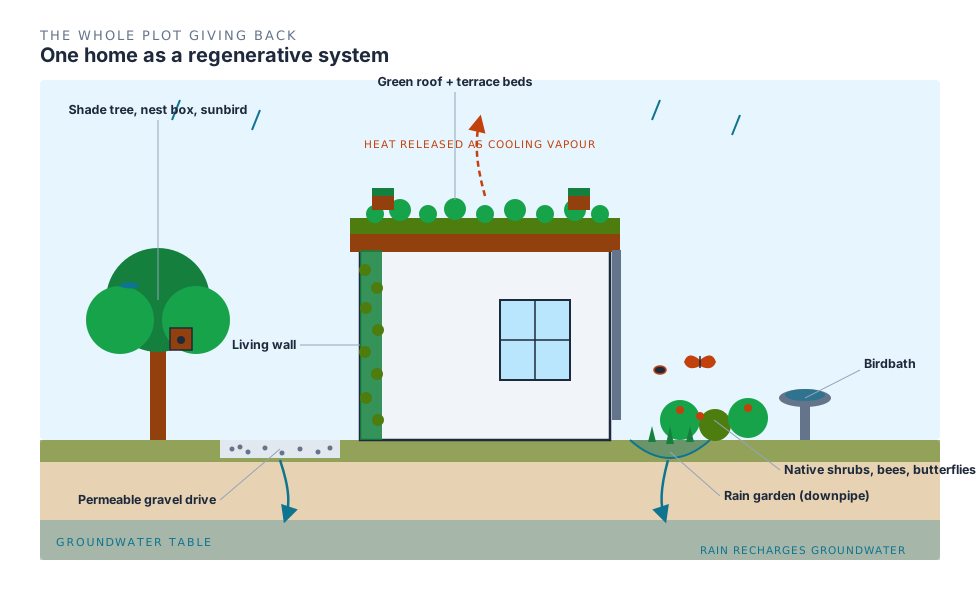
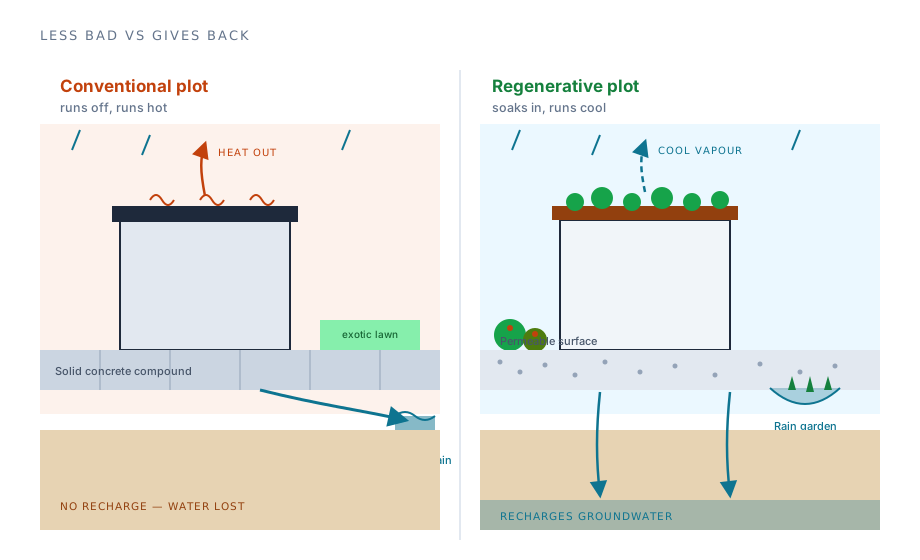
Think about it from the outside in. Your plot of land was once part of a living system, with soil that drank the rain, plants that fed insects, and trees that cooled the air and sheltered birds. When we build, we usually replace all of that with concrete and tile. But we do not have to. A home can be designed and planted so that it recharges groundwater, cools its street, feeds bees and butterflies, gives birds a place to drink and nest, and turns its own kitchen waste back into soil. That is the difference between "less harm" and "net positive" or regenerative design: instead of just shrinking the damage, the home becomes a small, working part of the neighbourhood's ecology.
This guide is about the outside of your home and the ground it sits on, and how that ground can serve the wider environment. It is the outward-facing twin of our guide on what makes a home healthy, which deals with the air, light and comfort inside your walls. Here, we look out. None of this requires a farm or a fortune. A balcony, a terrace, a strip of soil and a few good decisions are enough to start.
1. From "less bad" to "gives back": what regenerative really means
It helps to picture a ladder. On the bottom rung is a conventional home that simply uses whatever it needs. A step up is the green or sustainable home, which tries to use less. Higher still is the net-zero home, which tries to balance what it takes against what it produces, so the books roughly even out. The top rung is the net-positive or regenerative home, which aims to give back more than it takes.
Designers often use a simple test: nature does not do zero. A healthy forest does not just break even on water, food and air; it produces a surplus that feeds everything around it. A regenerative building borrows that logic. It treats the home not as a sealed box parked on the land, but as a member of the local ecosystem that contributes to it.
In practice, "giving back" at the scale of one home means a handful of concrete things, which the rest of this guide walks through: capturing rain so it recharges the ground instead of flooding the street, planting in a way that feeds local wildlife, cooling the air around the building, sheltering birds and pollinators, and closing the loop on waste. You will not single-handedly fix a city. But these actions stack. One cooler, greener, water-absorbing plot among thousands is how cooler, less flood-prone, more alive neighbourhoods are actually built.
2. Green roofs and terrace gardens: putting the ground back on top
When you cover a roof with plants and soil, you are essentially returning some of the natural ground you displaced, but lifted into the air. A planted roof works in two useful ways. First, it cools. The soil and plants shade the roof slab and release moisture through their leaves, a process called evapotranspiration that carries heat away as the water evaporates. A bare concrete or dark roof can get punishingly hot in the Indian sun and radiate that heat into the rooms below and the air around it; a planted roof stays far cooler. Studies in warm Indian conditions have found rooms under a green roof running several degrees cooler than rooms under a bare roof.
Second, a green roof slows down rain. Instead of dumping the whole downpour into the drain in minutes, the soil soaks up a good share and releases it slowly, easing the load on storm drains that otherwise overflow during the monsoon. The amount retained varies a lot with the depth of soil and the size of the storm, so it helps most with ordinary rain and less during a cloudburst, but the direction is always the same: less sudden runoff.
For most Indian homes, a full intensive garden roof with deep soil and trees is a structural commitment best planned with an engineer. But a lighter terrace garden of pots, raised beds and a few hardy plants is within reach of almost anyone, and rooftop gardening is already flourishing in Mumbai, Bengaluru and Delhi. Even a partly planted terrace cools the floor below, grows some food, and gives insects and birds a foothold in the city.
3. Living walls and vertical greenery: cooling the face of the building
Walls catch sun too, especially west-facing ones that bake through the afternoon. Letting greenery climb or hang against a wall, whether a simple creeper on a trellis or an engineered living wall, shades the surface, cools it through the same evaporation effect, and traps a layer of still air that slows heat from getting in. In tropical experiments, the gap behind a green facade can run several degrees cooler than the exposed wall.
There is a second, quieter benefit. Leaves catch airborne dust and fine particles on their surfaces, so a band of greenery along a wall can modestly clean the air immediately around it. The effect varies with the plant and the setting, so treat it as a welcome bonus rather than an air-purifier, but in dusty Indian streets every leaf helps.
A practical tip from research in Delhi's climate: leave a gap of at least about 150 mm between the planting and the wall so air can move and the wall can dry, which protects the building and improves the cooling. Choose species suited to your light and wall direction, and keep them watered, ideally with harvested rain or reused water.
4. Native and pollinator-friendly planting: feed the local web of life
Here is where many well-meaning gardens go wrong. A flat, manicured lawn of imported grass and a few showy exotic flowers looks tidy, but to local wildlife it is close to a desert. The reason is that a great many insects are fussy eaters that can only feed on the native plants they evolved alongside. Replace those plants with exotics and the insects vanish, and so do the birds that depend on insects to raise their chicks. Garden trials in several countries have found native plantings host noticeably more bees and other insects than exotic beds.
So the single most powerful planting choice you can make is to favour Indian native and locally adapted plants, in layers, rather than a monoculture lawn or a row of ornamental imports. A mix of flowering shrubs, herbs, grasses and a tree or two, with blooms spread across the seasons, keeps nectar and pollen available year-round. Tulsi, hibiscus, jasmine and many regional natives do this well.
Two cautions. First, avoid pesticides, especially the neonicotinoid class, which are particularly harmful to bees and butterflies; reach for neem-based or biological controls instead. Second, beware popular "pollinator" plants that are actually invasive in India, lantana being the notorious example. It is widely recommended in casual gardening lists, yet it has overrun huge areas of Indian forest and crowds out native plants. Stick to non-invasive natives and you cannot go far wrong. This planting layer is also the backbone of sustainable water management in the landscape, since deep-rooted natives need far less watering.
5. Trees, shade and the urban heat island
If you can plant or protect a single tree, you have made one of the highest-value moves available to a homeowner. A tree cools in two ways at once: it shades the ground, walls and people beneath it, and it releases water vapour from its leaves, which cools the surrounding air. Canopy can lower local air temperature by a meaningful margin and is one of the best defences against the urban heat island, the well-documented effect by which dense cities of dark roofs, asphalt and concrete run measurably hotter than the countryside around them, often by a few degrees and sometimes more.
Indian cities have been losing tree cover precisely as they need it most. And the kind of tree matters, not just the count. Research in Bengaluru has found that exotic ornamentals, however pretty, support little local birdlife, while native trees offer food, nesting and shelter. Where you have a choice, choose native or well-adapted species, protect mature trees already on your plot rather than felling them, and remember that the shade you grow cools not only your own home but the street and the homes beside you. That spillover is exactly how individual gardens add up to a cooler neighbourhood.
6. Let the rain soak in: permeable surfaces, rain gardens and recharge
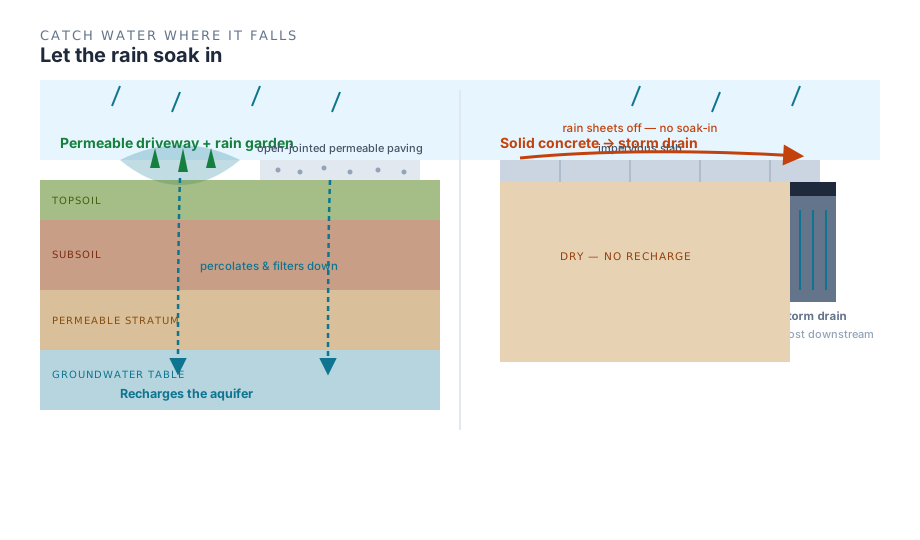
This may be the most important section for India, because the country is the world's largest user of groundwater and depends on it for most of its drinking water and farming, yet aquifers in many regions are being pumped faster than they refill. The Centre for Science and Environment has argued for decades that we must "catch water where it falls."
A conventional plot works against this. We pave the compound in solid concrete, so rain cannot sink in. It runs off in sheets, carrying oil and grime into the drains, overwhelming them and flooding the road, while not a drop reaches the aquifer below. The fix is to let water soak in wherever you can. Permeable paving, gravel, open-jointed blocks or simply more planted ground lets rain percolate down to recharge the groundwater and spreads runoff out over time so drains are not swamped all at once.
A rain garden takes this further: a shallow planted dip, set where roof or yard water naturally flows, that catches the runoff and lets it filter slowly into the soil. As the water sits, soil and the deep roots of native plants trap sediment and break down pollutants, so cleaner water reaches the ground, which means less water pollution downstream as well as recharge. A bioswale is a cousin of this, a gently sloped planted channel that both moves and absorbs water. These ideas come from outside India and Indian field data is still thin, but the underlying mechanism is universal, and pairing them with a rainwater harvesting pit is one of the most genuinely regenerative things a home can do.
7. Welcome the birds and the bees: habitat in small spaces
Giving back is not only about water and heat; it is about making room for other lives. Two simple provisions go a long way. A shallow dish or stone birdbath, raised off the ground to keep it safe from cats, gives birds and insects a place to drink and bathe, which matters enormously in a hot, paved city. And a nest box mounted on a wall or tree offers a home to small birds that nest in cavities, such as mynas, robins and tits, where old trees with natural hollows have been cut down.
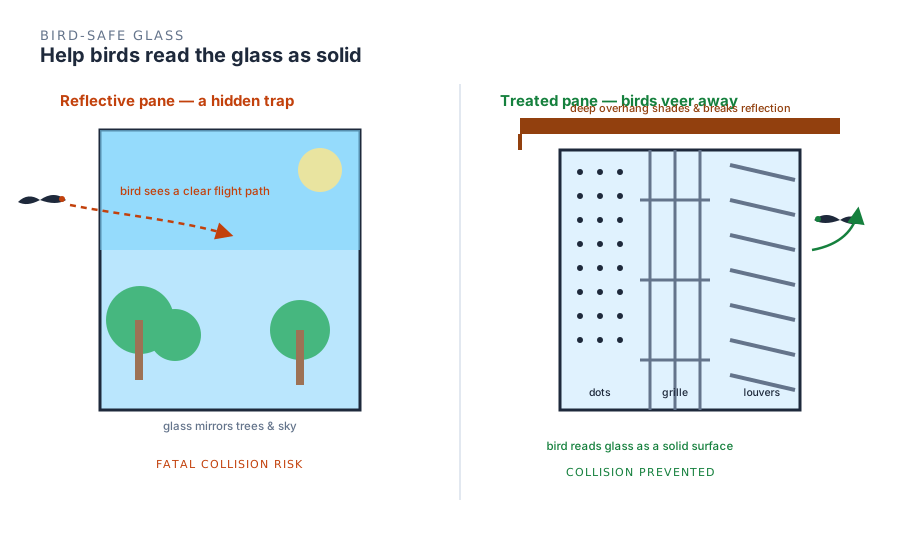
Glass deserves a special warning. Large, reflective or transparent panes are a major and often invisible killer of birds, which see either a clear flight path or a mirrored image of the sky and trees and fly straight into them. Homes near greenery and water see more strikes, because that is exactly where birds are. The remedies are cheap and effective: patterns of dots, lines or frosting on the glass let birds read it as a solid surface, and external screens, grilles, louvers, shutters and deep overhangs break up the reflection while shading the window too. Even covering a small fraction of the glass with a well-spaced pattern can prevent most collisions.
8. Close the loop: composting and cleaner light at night
Two final habits turn a home from a one-way consumer into something closer to a natural cycle.
The first is composting. When kitchen and garden waste goes to a landfill, it rots without air and releases methane, a potent greenhouse gas. Composting at home, in a simple bin or pot, lets it break down with air instead, and the result is rich soil for your own garden, which means you buy less chemical fertiliser and send less to the dump. That is what closing the nutrient loop means: the nutrients in your food scraps go back into your soil rather than leaving as waste. Keep the compost aerated and it stays clean and odour-free.
The second is lighting. Bright, upward-spilling outdoor lights at night are a form of pollution we rarely notice. They disorient migrating birds, draw and exhaust flying insects, including the pollinators and fireflies we want to keep, and disrupt human sleep by suppressing the hormone that tells our bodies it is night. The fix is easy: use shielded fixtures that point light downward only where you need it, choose warmer tones over harsh blue-white, and switch lights off when no one is using them. Your home gets quieter and darker at night, and the small creatures around it can carry on.
9. The India picture, and why one home matters
It is fair to ask whether any of this counts when cities are this large and the pressures this big. India's metros are dense, hot and water-stressed, and they have lost tree cover at the very moment heat and flooding are worsening. One home cannot reverse that.
But the value of these measures is precisely that they aggregate. A network of permeable plots, planted roofs, rain gardens and shade trees across a neighbourhood behaves like a distributed system: together they recharge the local water table, lower the street temperature, soak up monsoon runoff and stitch back a corridor of habitat that birds and insects can actually use. Each home is one node. The cooler street, the borewell that does not run dry, the butterflies that return, these are neighbourhood-scale outcomes built from plot-scale decisions. India's green-building rating systems recognise this directly: both GRIHA and IGBC award credits for preserving existing trees, planting natives, reducing the heat-island effect, managing stormwater on site and limiting light pollution, which is the institutional way of saying that what your plot does to its surroundings genuinely matters.
| Strategy | What it does for the environment | Homeowner effort |
|---|---|---|
| Green roof or terrace garden | Cools the building and street; slows monsoon runoff; grows food and habitat | Medium to high (pots and beds are low; full soil roofs need an engineer) |
| Living wall or creeper on a wall | Shades and cools a hot facade; traps some dust | Low to medium |
| Native, layered planting (not exotic lawn) | Feeds pollinators and the birds that depend on them | Low; mostly a choice of what to plant |
| Protect or plant a tree | Shade plus evaporative cooling; bird and insect habitat | Low to medium; biggest long-term payoff |
| Permeable paving and rain garden | Recharges groundwater; cuts flooding; filters pollutants | Medium; best designed in at the start |
| Birdbath and nest box | Direct habitat and water for birds and insects | Low |
| Bird-safe glass treatment | Stops fatal window collisions | Low; patterns, screens, overhangs |
| Home composting | Avoids landfill methane; returns nutrients to soil | Low; one bin and a habit |
| Shielded, warm, switched-off lighting | Protects birds, insects and human sleep | Low; fixture and habit change |
What this means for you
You do not need to do everything, and you certainly do not need a big budget. Start with the choices that cost little and give the most. If you have any soil, plant a native, layered garden and skip the exotic lawn and the pesticides. If you have a terrace, put plants on it. If you are paving a compound, make at least part of it permeable and steer the downpipes toward a planted dip rather than the drain. Protect any mature tree you already have, and plant one if you can. Put out a birdbath, mount a nest box, treat large glass panes so birds can see them, keep a compost bin, and point your outdoor lights down and warm.
Each of these is a small act. But together, and multiplied across a street, they are how a home stops being merely "less harmful" and starts being a quiet contributor to the living city around it, cooling it, watering it and bringing it back to life. For the bigger framing, see what makes a building sustainable and why sustainable buildings cost less over time, and for the whole approach to a low-impact home, our guide to sustainable home design.
Sources
- GRIHA (Green Rating for Integrated Habitat Assessment) Council and TERI: site planning, native-plant lists, heat-island and on-site stormwater criteria. grihaindia.org
- Indian Green Building Council (IGBC), Green New Buildings and Green Homes rating systems: tree and water-body preservation, heat-island reduction and light-pollution credits. igbc.in
- Centre for Science and Environment (CSE): rainwater harvesting and groundwater recharge, "catch water where it falls." cseindia.org
- Central Ground Water Board assessments and groundwater-stress analyses (via ORF and World Bank IEG). orfonline.org
- US EPA on green roofs, cool roofs, evapotranspiration and stormwater retention. epa.gov
- National Audubon Society and Xerces Society on native plants, pollinators and bird food webs. audubon.org, xerces.org
- Peer-reviewed urban-ecology and urban-heat-island research on albedo, vegetation cooling and green facades. link.springer.com, sciencedirect.com, ncbi.nlm.nih.gov
- Down To Earth and Mongabay India on invasive species (lantana, prosopis) and urban tree-cover loss. downtoearth.org.in, india.mongabay.com
- Green building and bird-conservation guidance on bird-safe glass design. gba.org
- DarkSky and conservation reviews on light pollution and its effects on birds, insects and people. darksky.org
All figures in this guide are illustrative and mechanism-based; exact values depend on local climate, soil, design and maintenance, and precise rating-credit thresholds should be confirmed against the current GRIHA and IGBC manuals.
Export this guide
Related Guides — Deep-dive reading
The Best Trees for Indian Homes
A research-grade guide to choosing and placing trees around an Indian home — the real cooling and clean-air numbers, the right species for shade, flowers, fragrance and fruit, and the placement science that keeps roots out of your walls and drains.
LandscapeWhy Landscape Architecture Matters More Than the Building
How the green around, above and beyond your home out-cools, out-drains and out-appreciates the structure itself — at every scale from balcony to city.
LandscapeUnderstanding Sun Path Analysis for Your Home
How the sun actually moves over an Indian site through the day and the year — and why that single fact quietly decides where your kitchen, bedroom and living room should sit.
Site PlanningRelated Tools — Try Free
Rainwater Tank Sizer
How big should your rainwater tank be? Computes annual harvest, recommended tank capacity in litres, water-bill savings, and payback — for 10 Indian cities.
RWH CalculatorCross-Ventilation Analyzer
Estimate airflow and air changes per hour (ACH) from room size, window areas, layout, and local wind — with NBC 2016 Part 8 compliance check.
Ventilation CalculatorGarden Planning Toolkit
Get a tailored garden plan — planting layers, Indian species, features and a checklist — from your climate, space, sun and goals.
Planner