
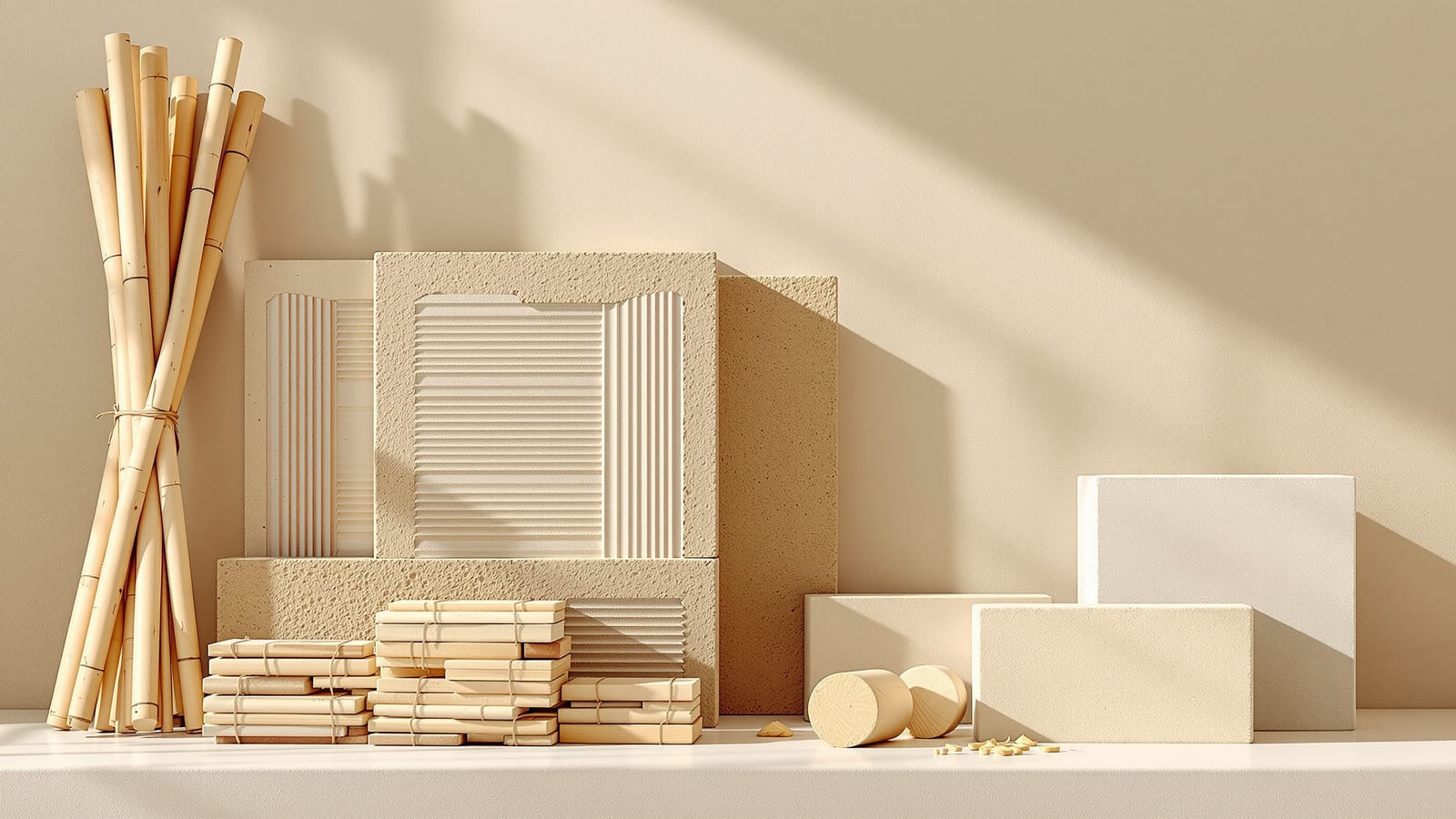
The Future of Green Building Materials in India
The emerging low-carbon, healthier materials reshaping how Indian homes will be built — and what you can realistically choose now versus watch
When you imagine the home you will build between 2026 and 2030, you probably picture the rooms, the light, the layout. You rarely picture the cement, steel, bricks and paint that make it possible. Yet those materials decide a large share of your home's lifetime impact on the planet — and increasingly, on your wallet and your family's health.
For two decades, the green-building conversation in India was mostly about energy: solar panels, efficient air-conditioning, LED lights. That fight is being won. The next frontier is the stuff the walls are actually made of. The carbon locked into cement, steel and bricks before you even switch on a fan is called embodied carbon, and for a typical Indian house it can rival a decade of running it. This guide is a grounded tour of the materials trying to bring that number down — what each one is, where it honestly stands in India today, and what you can realistically choose now versus simply keep watching.
A word of caution up front: green materials are crowded with marketing. Some are mainstream and proven. Some are emerging but real. A few are genuinely experimental and oversold. We will be clear about which is which.
1. Why materials are suddenly the frontier
A modern house spends most of its carbon budget twice. Once, slowly, over its life — running fans, lights and air-conditioners. And once, all at once, the day it is built — in the cement, steel and fired bricks that arrive on site. As homes get more energy-efficient, that second lump (the embodied carbon, the emissions baked into the materials themselves) becomes the bigger and harder problem. You can swap a light bulb. You cannot easily swap a poured foundation.
Two materials dominate the story. Cement is responsible for roughly 7 to 8 percent of global CO2 emissions, mostly from the chemistry of turning limestone into clinker, not just the fuel burned. Steel adds more. India is the world's second-largest cement producer, so even small percentage improvements here move enormous numbers. That is exactly why the most important "future" materials are not exotic newcomers — they are smarter versions of cement, steel and brick. We cover the realistic newcomers too, but keep that perspective: the biggest wins are hiding in the most ordinary bags. For the fuller picture of how this is measured, see our companion guide on embodied carbon in construction.
2. Smarter cement: the biggest lever you can actually pull
If you change one thing on your build, change the cement.
Blended cements (PPC and PSC) are already mainstream and BIS-standardised. Portland Pozzolana Cement (PPC) replaces part of the carbon-heavy clinker with fly ash, a waste by-product of coal power. Portland Slag Cement (PSC, covered by IS 455) does the same using GGBS, or ground granulated blast-furnace slag — a by-product of steel-making. Both are widely sold, cost the same or less than ordinary Portland cement (OPC), and lower the embodied carbon of your concrete simply by containing less clinker. For most home applications they perform as well as or better than OPC, with slightly slower early strength gain. Maturity: mainstream. You can ask for these today.
LC3 (Limestone Calcined Clay Cement) is the most exciting near-term story, and it is partly an Indian invention. Instead of clinker, it uses a blend of limestone and calcined (heated) clay — clays that are abundant in India and need far less energy than making clinker. Crucially, LC3 now has an Indian standard, IS 18189:2023, and in 2025 a major producer (JK Lakshmi Cement) moved it from pilot to commercial launch, with other large developers running trials. Independent assessments suggest LC3 can cut cement-related CO2 meaningfully versus OPC. Maturity: emerging fast. It is real and standardised, but availability is still patchy and regional in 2026. Worth asking your supplier about; expect it to scale through the late 2020s.
The honest caveat for all blended and low-carbon cements: contractors used to OPC sometimes resist them because early strength comes on slower, which can feel like "weak" cement on site. It is not weak — it simply needs correct curing and a little patience. A good engineer will specify the right grade.
| Material | What it replaces / supplements | Maturity in India (2026) | Honest caveat |
|---|---|---|---|
| PPC / PSC blended cement | Ordinary Portland Cement | Mainstream, BIS standard (IS 455 for PSC) | Slower early strength; needs proper curing |
| LC3 limestone-calcined-clay cement | Ordinary Portland Cement | Emerging, IS 18189:2023, commercial from 2025 | Availability still regional |
| Fly-ash bricks | Fired clay bricks | Mainstream, IS 12894 | Quality varies between makers |
| AAC blocks | Fired clay bricks | Mainstream, IS 2185 (Part 3) | Needs correct adhesive/jointing; brittle if mishandled |
| CSEB (stabilised earth blocks) | Fired bricks / concrete block | Emerging, IS 1725:2023 | Needs skilled makers; not for every soil |
| CLT / mass timber | Concrete frame (some uses) | Early, mostly imported | 40-50 percent costlier; codes evolving |
| Hempcrete | Infill insulation (not structural) | Experimental, niche | Tiny supply chain; not load-bearing |
3. Bricks and blocks that skip the kiln
Fired clay bricks are a quiet climate problem: they bake limited topsoil in coal-fired kilns. Two replacements are now firmly mainstream.
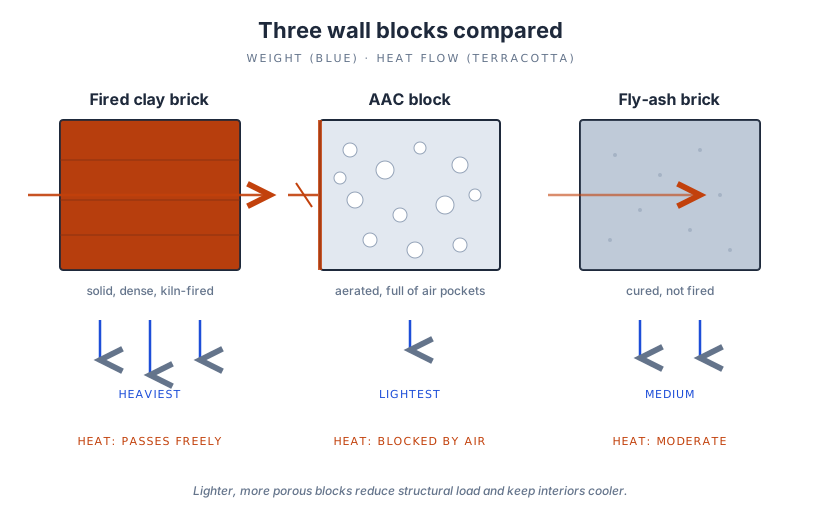
Fly-ash bricks (governed by IS 12894) turn the same coal-plant waste used in PPC into solid bricks, using lime and gypsum instead of firing. They are dimensionally accurate, save mortar, and are widely available across India. The catch is quality consistency — small unregulated units vary a lot, so buy from a maker who can show IS-compliant test results.
AAC blocks (Autoclaved Aerated Concrete, IS 2185 Part 3) are the lightweight grey blocks now common in apartment construction. They are full of tiny air pockets, which makes them light, surprisingly good at keeping heat out, and fast to lay. They reduce structural load and improve thermal comfort — a real advantage in hot Indian cities. Caveats: they need the correct thin-bed adhesive (not ordinary mortar), and they are brittle, so careless handling cracks them. For a deeper comparison of both against fired brick, see modern construction materials for Indian homes.
4. Earth, reborn: rammed earth and CSEB
Building with earth is the oldest idea on this list and, surprisingly, one of the most forward-looking. The revival is led in India by institutions like the Auroville Earth Institute.
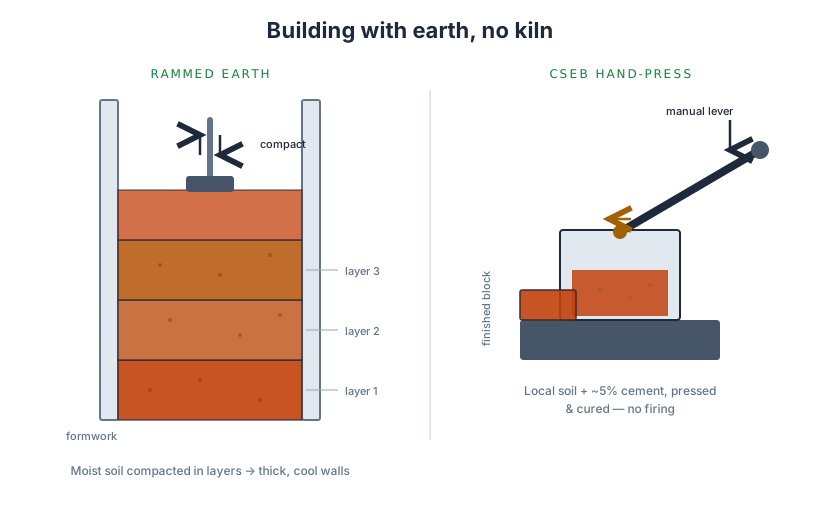
Compressed Stabilised Earth Blocks (CSEB) are made from local soil mixed with a small amount of cement (often around 5 percent), pressed in a machine, and cured — no firing at all. Because the soil often comes from the site itself, transport emissions plummet. India now has an updated standard, IS 1725:2023, covering stabilised soil blocks and their dimensions, which gives engineers and lenders something concrete to specify against.
Rammed earth uses moist, stabilised soil compacted in layers inside formwork to create thick, solid walls with a beautiful striated finish. Both techniques give walls that stay cool in heat and breathe naturally.
Maturity: emerging. These are proven and standardised, but not yet plentiful — they depend on skilled crews and the right soil, so they are most realistic if you are building in a region with an established earth-building practice or are willing to source expertise. They are not a drop-in replacement everywhere.
5. Timber and bamboo: the structural newcomers
For most of modern Indian history, building "tall and solid" meant concrete and steel. A global movement is challenging that with engineered wood — and it is genuinely early-stage in India.
Mass timber and CLT (Cross-Laminated Timber) are made by gluing layers of timber at right angles into large, strong panels that can form floors and walls, even for multi-storey buildings. The wood stores carbon rather than emitting it, and panels are prefabricated, so sites are faster and cleaner. India has showcase projects and a mass-timber research centre at IIT Roorkee working to localise standards and train engineers. But be realistic: most CLT is still imported, which pushes landed cost well above concrete, so today it appears mainly in premium homes and institutional buildings. Maturity: early; watch through 2027-2030.
Engineered bamboo is the homegrown cousin with huge potential — India has abundant bamboo — but structural-grade engineered bamboo products are still largely at the research and pilot stage, with international test standards still maturing. For everyday engineered-wood choices you can actually buy now, our guide on engineered wood and lifecycle costing is the practical reference; for structural CLT, treat it as something to watch.
6. The experimental edge: hempcrete and bio-based materials
This is where excitement runs ahead of reality, so read carefully.
Hempcrete is a mix of the woody core of the hemp plant with a lime binder. It is not structural — it cannot hold up a roof — but it makes excellent insulating, breathable infill walls around a timber or other frame, and the plant absorbs CO2 as it grows. Industrial hemp (with very low THC, under 0.3 percent) is legally cultivable in India under licence, and proof-of-concept homes and small producers exist, notably in the Himalayan belt and a few startups. Maturity: experimental and niche. The supply chain is tiny, costs are uncertain, and you would need a builder who has actually worked with it. Inspiring, but not yet a mainstream choice.
Other bio-based materials — mycelium (mushroom-root) panels, agricultural-waste boards, natural-fibre insulation from coir, jute or straw — are at the lab and early-product stage worldwide. Some natural-fibre insulation is the closest to buyable. Treat the rest as a glimpse of the future, not a 2026 shopping list.
7. Closing the loop: recycled aggregate, blocks and steel
A sustainable home is not only about new low-carbon materials; it is about reusing what already exists. India generates an estimated 100 million tonnes of construction and demolition (C&D) waste a year.
Recycled aggregate — crushed concrete and rubble reused in new concrete — got a real boost when BIS amended IS 383:2016 to allow processed C&D waste as aggregate. Recycled blocks made from C&D waste are now produced in several cities. Maturity: emerging, with growing facilities in metros.
Recycled steel matters quietly but enormously. Steel made largely from scrap in electric-arc furnaces carries far less embodied carbon than steel from virgin ore, and reinforcement bars in India already contain recycled content. You can ask for high-recycled-content steel; it is increasingly available.
To understand how recycling, reuse and design-for-disassembly fit together as a system, see our sibling guide on the circular economy in construction.
8. Roofs and finishes: small materials, big comfort
Not every green material is structural. Some of the highest-value, easiest choices are skin-deep — and you can apply them to a home you already own.
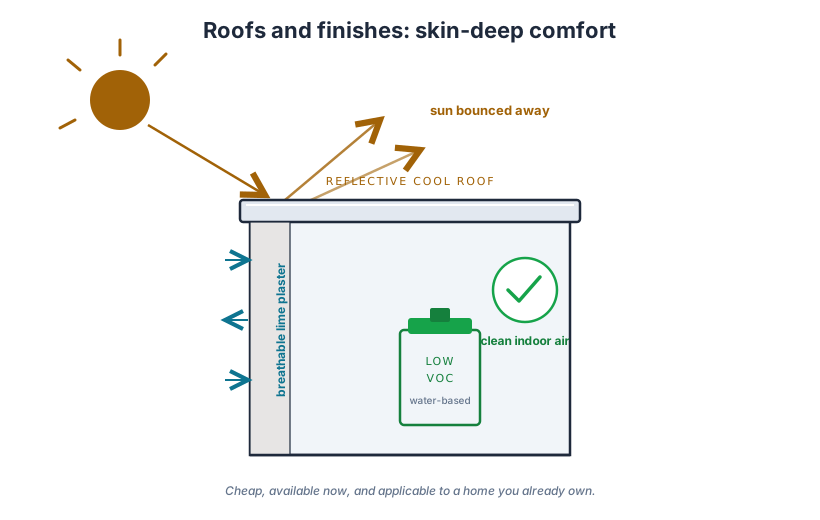
Cool roofs and reflective coatings are high-reflectivity paints or membranes that bounce sunlight off your terrace instead of letting it cook the rooms below. India's Energy Conservation Building Code (ECBC) recommends reflective roofs, and certified cool-roof products can earn points under both GRIHA and IGBC, the two main Indian green-building rating systems. They are cheap, available now, and can noticeably cut top-floor cooling loads. Maturity: mainstream and high-value.
Low-VOC paints and natural finishes protect your family's air, not just the planet. VOCs (volatile organic compounds) are the chemicals that give fresh paint its strong smell and linger as indoor pollution. Low-VOC and water-based paints are now widely sold by every major Indian brand. Going further, traditional lime and clay plasters are breathable, non-toxic finishes enjoying a quiet revival — they regulate humidity and contain almost no synthetic chemicals, though they need skilled application. Maturity: low-VOC paints mainstream; lime and clay plasters emerging, craft-dependent.
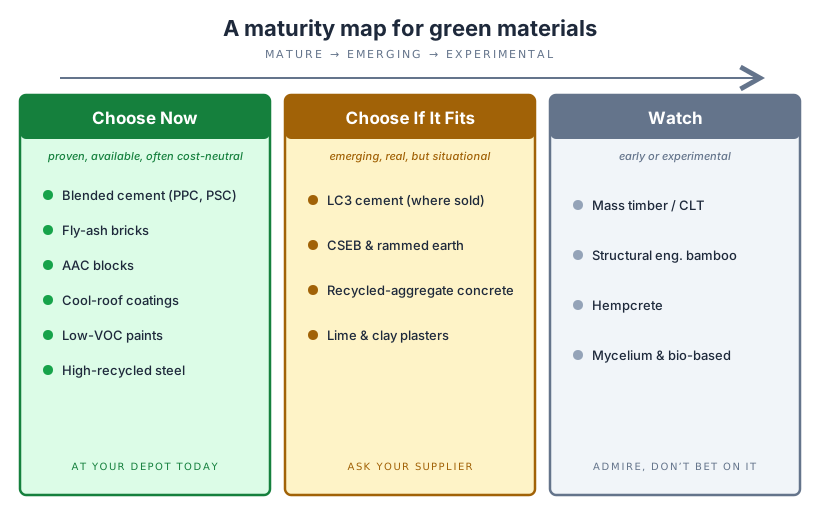
9. A simple maturity map: choose now, or watch
To cut through the noise, here is the honest sorting most homeowners need.
Choose now (proven, available, often cost-neutral): blended cements (PPC, PSC); fly-ash bricks; AAC blocks; cool-roof coatings; low-VOC water-based paints; high-recycled-content steel. None of these require heroics — they need a contractor willing to use them and an engineer to specify them correctly.
Choose if your context fits (emerging, real, but situational): LC3 cement where available; CSEB and rammed earth where soil and skilled crews exist; recycled-aggregate concrete and blocks in metros that produce them; lime and clay plasters with a skilled hand.
Watch, do not bet your build on it (early or experimental): mass timber and CLT (still mostly imported, premium-priced); structural engineered bamboo (research-stage); hempcrete and mycelium and other bio-based materials (niche, tiny supply).
What this means for you
You do not need to wait for a futuristic material to build a meaningfully greener home. The single biggest, easiest win — switching to a blended or low-carbon cement and using fly-ash or AAC blocks — is available at your nearest depot today, usually at no extra cost. Add a cool roof and low-VOC paints, ask your fabricator for high-recycled-content steel, and you have already cut a large slice of your home's embodied carbon and improved its comfort and air quality, all with mainstream materials.
The emerging materials — LC3, CSEB, rammed earth, recycled aggregate — are worth pursuing if your region, soil and builder support them; ask suppliers directly, because availability is changing fast. The experimental ones — CLT, engineered bamboo, hempcrete — are genuinely exciting and worth admiring in showcase projects, but in 2026 they belong on your "watch" list, not your purchase order, unless you have a builder with real experience.
The deeper lesson is to ask one new question of your architect and contractor: not just "how will this home run?" but "what is it made of, and what did that cost the planet?" That question, more than any single product, is what reshapes how Indian homes get built. To see how it fits the whole picture, read what makes a building sustainable and our practical guide to sustainable home design.
Sources
- Bureau of Indian Standards — IS 18189:2023 (Limestone Calcined Clay Cement, LC3); Development Alternatives / TARA and JK Lakshmi Cement commercial launch of LC3 (2025).
- RMI, "Unleashing the Potential of Limestone Calcined Clay Cement (LC3)"; One Planet Network, LC3 sustainability assessment for India.
- Bureau of Indian Standards — IS 455 (Portland Slag Cement); IS 2185 Part 3 (Autoclaved Cellular Aerated Concrete Blocks); IS 12894 (Pulverised Fuel Ash–Lime Bricks).
- Bureau of Indian Standards — IS 1725:2023 (Stabilised Soil Blocks); Auroville Earth Institute, Compressed Stabilised Earth Block resources.
- Mordor Intelligence, Asia-Pacific Cross-Laminated Timber market; ArchiDiaries / IIT Roorkee mass-timber centre reporting on CLT status in India.
- Narcotic Drugs and Psychotropic Substances Act, 1985 (industrial hemp under 0.3 percent THC); reporting on Himalayan hempcrete homestays and Indian hemp-building startups.
- Bureau of Indian Standards — IS 383:2016 amendment permitting processed C&D waste as aggregate; BMTPC, Utilisation of Recycled Produce of Construction & Demolition Waste.
- Energy Conservation Building Code (ECBC) cool-roof provisions; GRIHA and IGBC green-building rating systems, cool-roof and material credits.
Export this guide
Related Guides — Deep-dive reading
Green Building Materials Guide (India): Low-Carbon, Healthy & Sustainable Choices (2026)
What actually makes a building material green - low embodied carbon and energy, recycled and renewable content, local sourcing, durability, recyclability, low VOC and water efficiency - mapped honestly across the whole Indian building, with the lifecycle nuance no label can give you.
Building MaterialsEmbodied Carbon in Construction: Cutting the Carbon Locked Into Your Indian Home
The CO2 baked into your cement, steel and bricks is paid up front and can never be undone. Here is where it hides in an Indian home, and the low-cost choices that cut it by roughly a quarter.
SustainabilityCompressed Stabilised Earth Blocks (CSEB): A Specify-and-Select Guide for India (2026)
What CSEB is - local soil plus a small percentage of cement or lime, compressed in a press and cured, never kiln-fired - its low-carbon and thermal-mass strengths, its real limits around soil, quality control and water, and how it compares with fired clay brick and fly-ash brick. A specify-and-select guide.
Building MaterialsRelated Tools — Try Free
Cross-Ventilation Analyzer
Estimate airflow and air changes per hour (ACH) from room size, window areas, layout, and local wind — with NBC 2016 Part 8 compliance check.
Ventilation CalculatorBefore vs After — Cost Reality Check
Compare what you expected to pay vs what you actually paid, category by category.
Reality CheckDoor Material Comparison Tool
Compare 2–4 door materials on cost, durability, maintenance, security and moisture resistance.
Comparison Tool