
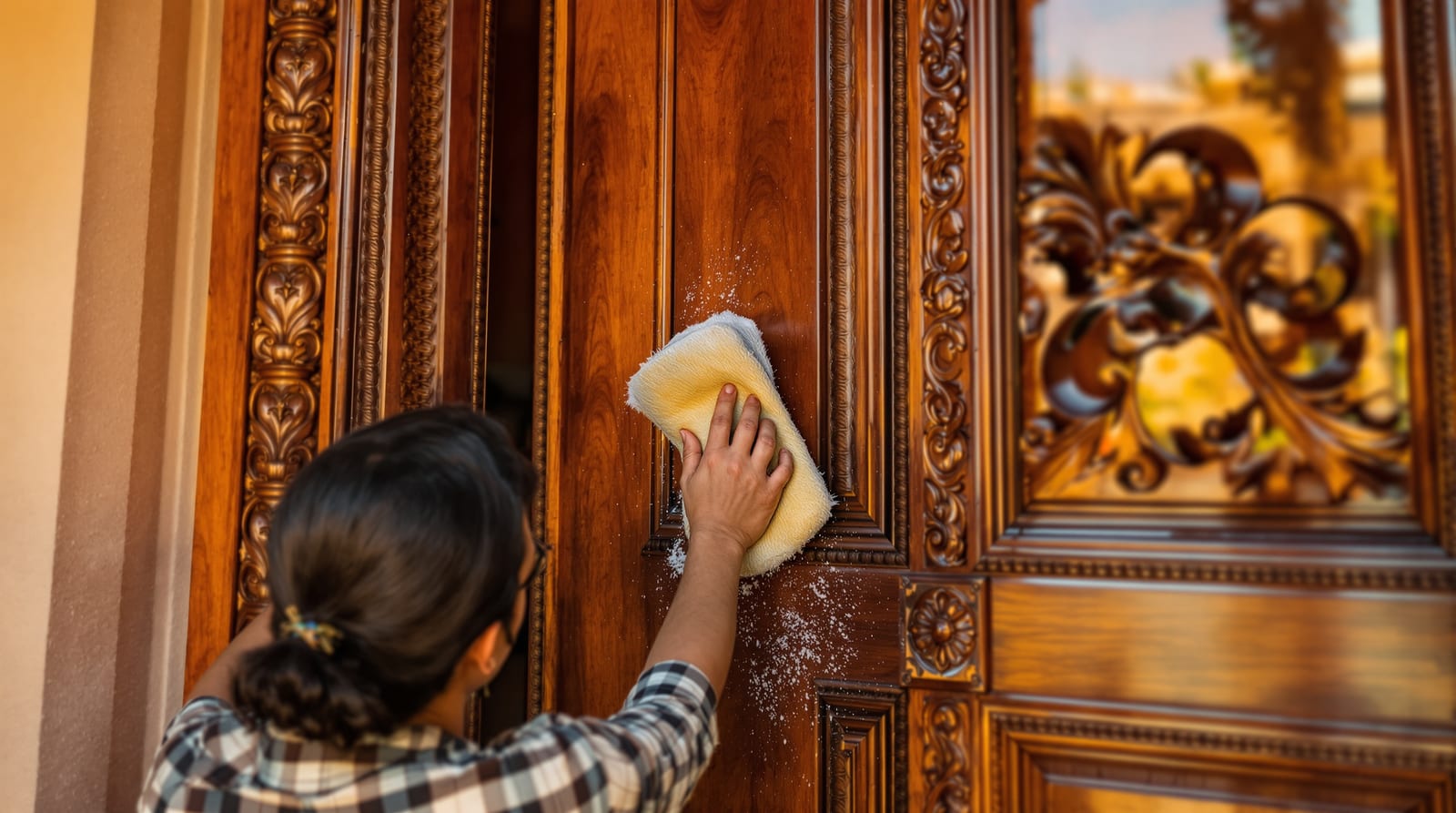
Main Door Maintenance: Complete Care Guide India 2026
Keep your hardest-working door beautiful and secure — polishing, weatherproofing, lock and closer servicing, and a season-by-season checklist.
Your entrance does more than any other door in the house. Good main door maintenance is really about caring for the one leaf that takes direct sun, lashing monsoon rain, dust, slamming and dozens of openings a day — and still has to look proud for guests and keep your family secure. The reward for a little routine attention is huge: a teak main door that is oiled and protected can stay gorgeous for 30+ years, while a neglected one greys, cracks and starts sticking within a few monsoons. This guide walks you through re-polishing, weatherproofing, sealing the bottom, and servicing every piece of hardware — lock, smart lock, handles and closer — plus a season-by-season checklist so nothing slips.
If you want the bigger picture first, see the complete door guide and our general door maintenance guide. This page is specifically about the front door.
Why the main door needs special care
Most internal doors live in a stable, shaded, dry environment. The main door does not — it sits at the boundary between a controlled inside and a brutal outside, so it suffers stresses no other door faces:
- UV bleaches and dries the finish, especially on west- and south-facing entrances.
- Monsoon rain and humidity swell the timber and rot the bottom rail and threshold.
- Dust and pollution dull the polish and clog the lock and closer.
- Heavy daily use loosens hinges, wears the latch and tires the closer spring.
A solid hardwood main door — usually teak or another wooden door — is worth protecting because replacing it is expensive. Catching problems early is the whole game.
Tools & materials you'll need
Keep a small "front-door kit" so you are never hunting for things on polishing day.
| Item | Use | Indicative ₹ (incl GST) |
|---|---|---|
| Teak oil or melamine/PU polish | Re-finish the leaf | ₹250-900 |
| 220 & 320 grit sandpaper | Smooth before oiling | ₹80-200 |
| Lint-free cotton cloths | Apply oil, buff | ₹100 |
| Silicone spray / 3-in-1 oil | Lock, closer, hinges | ₹120-350 |
| Graphite powder (dry lube) | Lock cylinder | ₹80-150 |
| Brass/metal polish (e.g. Brasso) | Handles, knocker, numerals | ₹120-250 |
| Weatherstrip / door seal | Draught and rain at edges | ₹150-500 |
| Door bottom sweep / threshold seal | Seal the gap under the door | ₹250-800 |
| Wood filler / putty | Small cracks and dents | ₹100-300 |
| Screwdriver set + Allen keys | Hinges, handles, closer | ₹200-500 |
For anything bigger than this kit handles — a warped leaf, a rotted bottom rail, or a failed smart lock board — budget for a carpenter or technician (₹400-800 for a short visit, ₹800-1,500 for a full day in metros).
Re-polishing and oiling a teak main door
Difficulty: moderate. Time: half a day plus drying. Do it once a year, before or after monsoon.
A teak door does not need stripping every year — usually just a feed-and-refresh. Full refinishing (sanding back to bare wood) is a once-in-several-years job; for the deep version see door polishing & refinishing.
1. Choose a dry day. Never oil or polish in high humidity or just before rain — the finish will go cloudy. Early winter or a clear post-monsoon week is ideal.
2. Clean the leaf. Wipe off dust and grime with a barely-damp cloth, then let it dry fully (an hour).
3. Light sanding. Go over the surface with 320 grit in the direction of the grain to key the old finish. You are dulling, not stripping. Wipe away all dust.
4. Spot-fix. Press wood filler into any small cracks or dents, let it cure, then sand flush. For bigger damage see repair a cracked wooden door.
5. Apply the finish. For teak oil: flood a thin coat with a cloth, let it soak 15-20 minutes, then wipe off ALL excess — leftover oil stays sticky and attracts dust. For melamine/PU: apply thin, even coats with a clean cloth or brush.
6. Let it dry, then recoat. Two thin coats beat one thick one. Buff lightly between coats with a soft cloth.
7. Mind the exposed face. The outer face takes all the weather — give it the extra coat.
UV and rain protection
Oil alone is not very UV-resistant. For an exposed entrance, finish with a UV-stabilised exterior polish or marine/spar varnish topcoat, or fit a small awning or chajja so the door sits in shade — this single change extends a finish's life dramatically. Re-coat the weather-facing side more often than the inside; a south- or west-facing door may need a refresh every 8-10 months, a shaded north-facing one every 18-24.
Sealing the bottom and threshold
The bottom rail and threshold are where main doors quietly die — rain wicks up the end grain and rots the wood. Protect them:
- Seal the bottom edge. Lift or open the door and check the underside. If it is bare timber, brush on oil or sealant so water cannot soak in. If it is already soft or dark, you may be facing door bottom rot repair.
- Fit a door sweep. A rubber or silicone sweep on the bottom keeps out rain, dust, insects and draughts. See stop door draughts for fitting tips.
- Maintain the threshold. Keep the threshold/saddle clean and re-seal its joint with the floor. A weep gap or slight outward slope helps rain run off rather than pool.
- Weatherstrip the sides and top. Adhesive foam or silicone strips on the frame stop wind-driven rain and noise. Our door seals & weatherstripping guide covers types and fitting.
Servicing the locks, handles and closer
The main door usually carries the most hardware in the house, and it is the part most worth keeping in top shape for security.
The main lock (mortise / cylinder)
- Lubricate the cylinder with graphite or a dry PTFE spray — never thick oil, which gums up and traps dust. A puff of graphite into the keyway, then work the key a few times.
- Oil the latch and bolt with a drop of light oil where they slide.
- Check alignment. If the bolt no longer drops cleanly into the strike plate, the door may have dropped — see fix sagging door — or the strike needs adjusting.
- A worn or seizing lock body is cheap to replace (₹800-4,000 for a good mortise set); deeper help in our door hardware guide.
Smart lock
If you have a smart door lock, maintenance is mostly electronic: replace the batteries before they die (most warn you; carry a spare 9V or keep the mechanical key handy), keep the fingerprint sensor clean and dry, and shelter it from direct rain with a small canopy — moisture is the number-one killer of smart locks in Indian monsoons. Keep firmware updated via the app. If the board fails, that is a technician job, not DIY.
Handles, knocker and numerals
Tighten the grub screws on lever handles every few months. For brass fittings, polish with a metal cleaner and buff dry — then a thin wax coat slows tarnishing in coastal/humid air. Loose handle? See loose door handle fix.
Door closer
If your entrance has a hydraulic closer, it needs an occasional check: wipe it down, look for oil weeping (a sign it is failing), and tune the closing and latching speed using the adjustment screws. Full method in door closer adjustment. A leaking closer cannot be refilled — replace it (₹600-3,000).
Hinge care
Heavy main doors put real load on hinges. Twice a year:
- Wipe the hinges and apply a drop of oil or silicone to each knuckle, then swing the door to spread it. A squeaky door is just a dry hinge.
- Tighten the screws. If a screw spins freely, the hole is stripped — see fix loose door hinges.
- In coastal areas, watch for rust; treat early per our advice on lubricating door hinges.
The seasonal maintenance calendar
| Cadence | Task |
|---|---|
| Monthly | Wipe leaf and hardware; tighten loose handle/closer screws |
| Before monsoon | Seal bottom edge & threshold; fit/replace door sweep & weatherstrip; check awning |
| During monsoon | Dry-lube the lock; watch for swelling/sticking; keep smart lock dry |
| Post-monsoon | Light-sand & re-oil/polish the leaf, extra coat on the weather face; UV topcoat |
| Festival / winter | Polish brass and numerals; oil hinges; deep-clean; refresh look for guests |
| Yearly | Full inspection: hinges, lock, closer, seals, smell-test the bottom rail for damp |
Festival-time refresh
Before Diwali, Pongal, Onam or a family wedding, the front door is the face of the home. A quick refresh — wipe, a light oil coat, brass polished, fresh toran hook tightened, a working bell and a clean threshold — makes the whole house feel cared for in under two hours.
When to stop and call a carpenter (or technician)
Maintenance has limits. Call a professional when:
- The leaf is warped, cracked through, or the bottom rail is rotted/soft — that is repair-or-replace territory; weigh it with our repair-vs-replace door calculator.
- The door sags and rubs despite tightened hinges — the frame or hinge mortise may need rework.
- The smart lock electronics fail, or any glass panel cracks — do not improvise.
- You suspect termite or borer in the timber — treat it properly via termite-proofing doors.
To plan and budget the whole year, the home door maintenance planner lays out tasks and rough costs.
Frequently asked questions
How often should I oil or polish my teak main door?
A shaded north-facing door is fine with a refresh every 18-24 months. A sun- and rain-exposed south/west door benefits from a light re-oil every 8-12 months. Always re-coat after a harsh monsoon and never in damp weather.
What's the best lubricant for the main door lock?
Use dry graphite powder or a PTFE/silicone dry spray in the keyway and on the bolt. Avoid thick oils and WD-40 as a long-term lube — they attract dust and gum up the cylinder, which is the usual cause of a stiff key.
How do I protect a smart lock during the monsoon?
Shelter it under a small canopy or chajja, keep the sensor clean and dry, change batteries before they fail and keep the mechanical override key handy. Moisture ingress is the main reason smart locks fail in Indian rains.
My main door swells and sticks every monsoon — what can I do?
Seal all edges (including top and bottom) so it can't absorb moisture, and keep the finish intact. If it still sticks badly, see our advice on fixing a swollen door rather than over-planing, which leaves gaps once it dries.
Is it worth hiring someone, or can I do this myself?
Routine care — oiling, lubricating, polishing brass, fitting seals — is easy DIY and costs only consumables (₹500-1,500 a year). Save the carpenter (₹400-1,500 a visit) for warps, rot, sagging frames and lock-body or smart-lock failures.
What's the single most important thing for a long-lasting main door?
Keep water out. Seal the bottom and threshold, maintain the finish, and put the door in shade if you can. Sun and rain — not daily use — are what age an entrance door fastest.
Export this guide
Related Guides — Deep-dive reading
Door Maintenance Guide India: A Seasonal Care Routine to Keep Doors Smooth for Decades
Oil the hinges, tighten the screws, lube the lock, check the seals and re-coat the finish — a simple seasonal calendar that stops Indian doors from binding in the monsoon, sagging, tarnishing on the coast or falling to termites.
Home Doors & EntrancesWooden Door Maintenance: Teak & Solid-Wood Care India 2026
A season-by-season routine to keep solid-wood and teak doors swell-free, termite-safe and beautiful through India's monsoon and harsh sun.
Home Doors & EntrancesDoor Repair Guide India: Fix Holes, Dents, Swelling, Hinges & Locks (2026)
A fix-it reference for Indian homes: every common door problem with a quick fix, a proper repair, a replace verdict, the materials needed, and indicative rupee costs.
Home Doors & EntrancesRelated Tools — Try Free
Window Hardware Cost Calculator
Estimate window hardware cost — hinges, handles, locks, rollers and multipoint gears.
Window CalculatorMonsoon-Readiness Checklist
Pre-rain home audit across 9 categories — terrace, drains, waterproofing, electrical, HVAC, pest, vehicles, documents.
Seasonal AuditDoor Cost Calculator
Estimate the all-in cost of a door — leaf, frame, hardware, fitting and GST — by type, material and size.
Door Calculator