
How to Fix a Sagging Door in India: Diagnose, Tighten, Shim & Plane
A step-by-step repair sequence to fix a door that droops, binds on the frame, or won't latch — from a free five-minute screw fix to a last-resort plane.
A door that scrapes the frame, leaves a wedge-shaped gap at the top, or needs a shoulder-shove to latch is almost never "warped." Nine times out of ten the leaf has simply dropped because the top hinge has worked loose — and that is a free, five-minute fix if you do it in the right order. The mistake most people make is to reach straight for a planer and shave the binding edge. Plane first and you remove material permanently; then the day the hinge is finally tightened the door is too small and rattles in its frame. So work from the cheapest, most reversible fix upward, and only cut wood when nothing else has worked.
This guide gives you that exact sequence — diagnose, tighten, long-screw, shim, fill, plane, rehang — with Indian hardware, ₹ costs, and a monsoon note, because in much of India a door that "sags" in July is behaving very differently from one that droops year-round.
First, diagnose: why is the door sagging?
Before touching a screwdriver, find out which problem you have. Open the door halfway and look, then close it slowly and watch where it touches.
- Wedge gap at the top, tight at the bottom on the latch side. Classic hinge sag. The leaf has rotated down because the top hinge is pulling away from the frame. This is the most common case and the easiest fix.
- Hinge visibly pulling out, screw heads proud, screws spin freely. Loose or stripped screws. The wood around the screws has crushed or the threads have lost grip.
- Door binds along the whole latch edge, evenly, only in the rainy season. Moisture swelling, not sag (see the monsoon note below).
- Hinge knuckles loose, leaves wobble side to side, you can lift the door and feel play. Worn hinge — the pin or knuckle has worn, common on cheap pressed-steel hinges on heavy doors.
- Gaps are uneven and the frame itself looks out of square. Settled or racked frame — the building has moved, or the frame was never fixed plumb. Hardest case; may need the frame re-shimmed or re-fixed.
A quick test: with the door open, grab the latch edge and lift firmly. If the door rises 2-5 mm and the top gap closes, the hinges (or their screws) are the culprit — go to the steps below. If it doesn't move and the bind is even, suspect swelling or the frame.
The fixes, cheapest first
Work down this list in order. Stop the moment the door swings clean and latches on its own — there is no prize for doing more.
1. Tighten every hinge screw (free, 5 minutes)
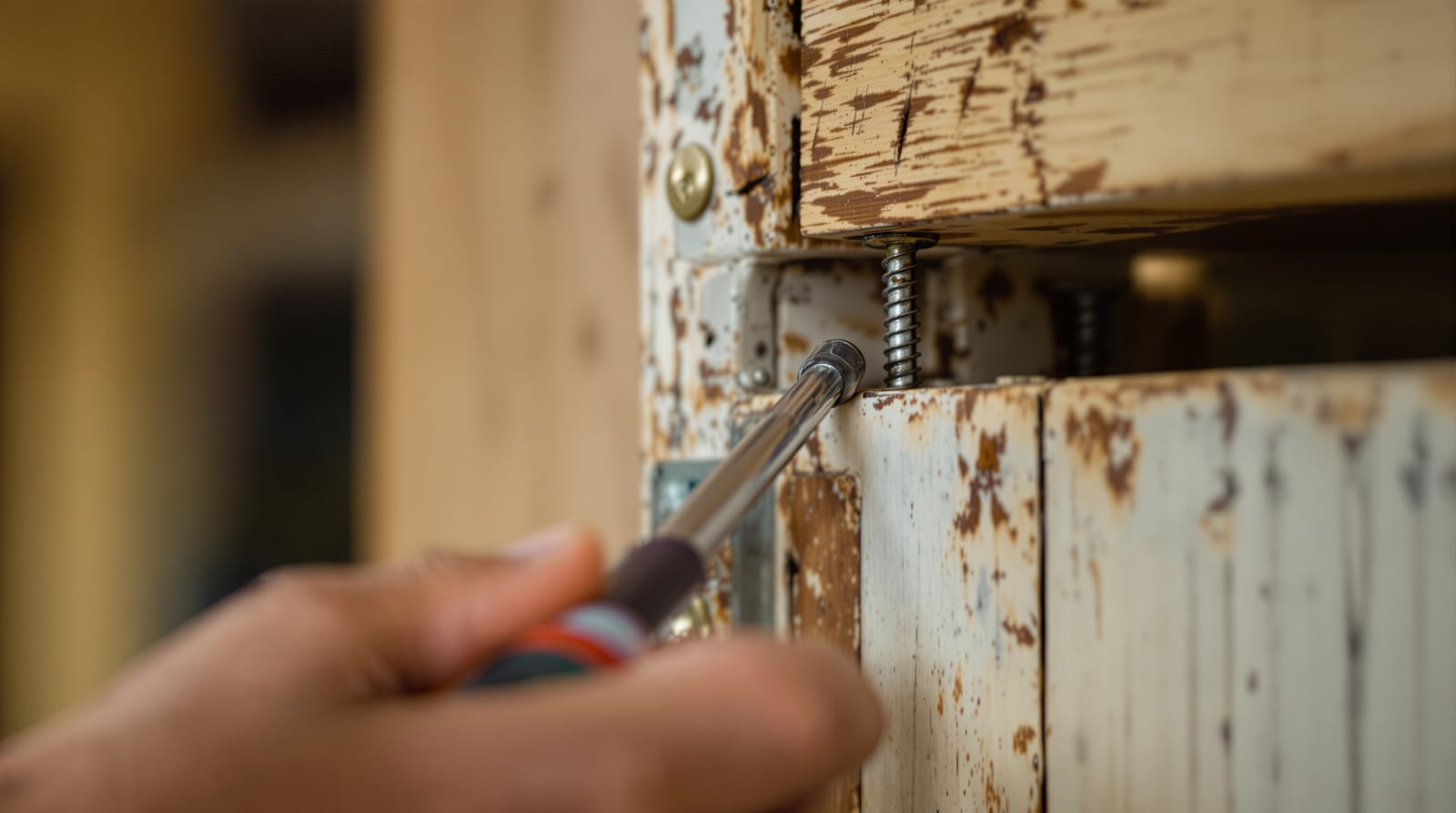
Open the door, wedge a folded cloth or a flat wood scrap under the latch edge to take the weight off the hinges, and snug every screw on both leaves with a hand screwdriver — not a drill (a drill overtightens and strips). Start with the top hinge, which carries most of the sag load. If a screw bites and the gap at the top closes, you may be done. Re-check after a day of use.
2. Replace one top-hinge screw with a long 3-inch screw (₹10-30)
This is the single most effective fix for a dropped door and it costs almost nothing. The short factory screws (about 16-20 mm) only grip the frame's face board. Swap one screw on the top hinge — pick the hole nearest the wall/jamb — for a long 65-75 mm (about 3-inch) wood screw. The long screw passes through the frame and bites into the structural stud or the masonry plug behind it, pulling the whole frame and door snug toward the wall and lifting the latch edge.
Choose the same head type so it sits flush in the hinge countersink. Drive it firmly but stop when the gap closes — overdriving can bow the frame and create a new bind. In a brick/RCC wall (most Indian construction) the frame is held by hold-fasts and plugs, so use a screw with a matched wall plug (Hilti/Fischer-type, ₹2-5 each) where the long screw lands in masonry rather than timber.
3. Shim the hinge to re-square the door
If the top is now snug but the door binds on the hinge side near the bottom, the top hinge is sitting too deep (mortise cut too far). Unscrew the top hinge leaf, cut a thin packer — a strip of cardboard, a thin ply sliver, or a purpose-made plastic hinge shim — to the size of the mortise, lay it behind the hinge, and re-fix. This pushes the top of the door away from the hinge jamb and toward the latch, swinging the bottom-latch corner up. Conversely, shimming the bottom hinge tips the door the other way. Add or remove shim a fraction at a time and re-test.
4. Fill stripped screw holes (₹0-50)
If screws just spin and won't bite — the hole is stripped. Don't move to a fatter screw as your first move (it splits softwood frames). Instead pack the hole:
- Matchsticks or bamboo skewers + wood glue (Fevicol): dip 2-4 matchsticks in glue, tap them into the hole, snap off flush, let it cure 30-60 minutes, then drive the original screw into the fresh wood.
- Wooden dowel (the proper fix): drill the hole out to 8 mm, glue in a hardwood dowel, trim flush, let it cure, then pre-drill a pilot and re-screw. This is the strongest, most durable repair.
- Avoid the "stuff it with paper" hack — it doesn't hold and you'll be back in a month.
5. Plane the binding edge — last resort only
Only reach for a plane once the hinges are tight, square, and the door still rubs — usually because the leaf has genuinely swollen or the frame has permanently moved. Find the rub by sliding a sheet of paper around the closed door's gap, or rub chalk on the frame stop and close the door to mark where it touches. Plane the latch edge (not the hinge edge, which changes the swing) in light passes, working with the grain, then re-seal the bare edge — critical in India, because raw timber will drink monsoon humidity and swell again. A few light passes; check often. Take off only what binds.
6. Rehang if the hinge itself is worn
If the knuckles wobble and you can lift the door with visible play, the hinge is worn out — common on cheap pressed-steel hinges under a heavy teak or flush leaf. Replace with good stainless-steel butt hinges (IS 1341), sized for the door's weight (a heavy main door wants 3-4 hinges, not 2). Set the new hinges in the same mortises; if the door is heavy, this is also the moment to add a third hinge in the middle. See our door hinges guide for India for sizing, quantity, and which hinge type suits which door.
Repair cost & difficulty at a glance
| Symptom | Most likely cause | Fix | Materials cost (indicative) | Difficulty |
|---|---|---|---|---|
| Wedge gap at top, binds bottom-latch | Top hinge loosened | Tighten screws | ₹0 | Easy (5 min) |
| Hinge pulling off frame | Short screws lost grip | One 3-inch screw into stud | ₹10-30 | Easy (15 min) |
| Door binds on hinge side | Hinge mortise too deep | Shim behind hinge | ₹0-30 | Easy (20 min) |
| Screws spin, won't bite | Stripped screw holes | Dowel / matchsticks + glue | ₹0-50 | Moderate (1 hr + cure) |
| Even bind, rainy season | Swollen leaf | Re-seal; plane lightly if persistent | ₹0-300 | Moderate–Hard |
| Wobble, lift play in door | Worn hinge | Replace with SS butt hinge (IS 1341) | ₹80-500/set | Moderate (1-2 hr) |
| Whole frame out of square | Settled / racked frame | Re-shim or re-fix frame; call a carpenter | ₹300-1,500 labour | Hard |
Costs are indicative and vary by city and vendor; add 18% GST on hardware. A local carpenter will typically charge ₹300-800 to diagnose and tighten/rehang a single door, more if the frame needs re-fixing. For a free five-minute check, do steps 1 and 2 yourself before you call anyone.
The monsoon swelling note
In coastal and high-humidity belts — Kerala, the Konkan, Bengal, the North-East — and across most of India during the June-September monsoon, a door that closes perfectly in summer can bind hard in the rains. That is swelling, not sag, and the giveaway is that it eases again as the weather dries. Resist the urge to plane it in July: plane a swollen door and come December you'll have a draughty, rattling gap. Instead:
- Confirm the hinges are tight first (a swollen door is heavier and accelerates hinge sag, so the two often arrive together).
- Seal the door fully — all six faces including top and bottom edges, which are the moisture entry points most people leave bare. A sealed leaf swells far less. See our door maintenance guide for India for the seal-and-service routine.
- Choose moisture-stable materials where swelling is chronic: WPC, fibreglass, or UPVC for bathroom, balcony, and utility doors don't swell at all.
- If you must plane a genuinely over-swollen door mid-monsoon, take off the bare minimum and re-seal the cut edge the same day.
A door that also squeaks as it sags usually just needs the hinges oiled at the same time — our fix a squeaky door guide covers the lubrication step that pairs naturally with this repair. For bigger structural problems — split frames, rot, doors beyond saving — see the broader door repair guide for India.
Frequently asked questions
Why does my door bind only in the monsoon?
The timber leaf is absorbing humidity and swelling, especially if the edges were never sealed. It will ease as the air dries out. Tighten the hinges, seal all six faces of the door, and only plane as a genuine last resort — plane a swollen door now and it will rattle in the dry season.
How long should the long hinge screw be?
About 65-75 mm (roughly 3 inches), long enough to pass through the frame and bite the stud or masonry plug behind it. Replace just one screw on the top hinge, in the hole nearest the jamb, and match the head type so it sits flush in the hinge countersink. In brick or RCC walls, use a matched wall plug where the screw lands in masonry.
My screws just spin and won't tighten. What now?
The hole is stripped. Pack it with glued matchsticks or bamboo slivers (quick) or, better, drill it out and glue in a hardwood dowel before re-screwing. Let the glue cure before driving the screw. Don't simply jump to a fatter screw — in a soft frame it can split the timber.
Should I plane the hinge edge or the latch edge?
The latch edge, in light passes with the grain. Planing the hinge edge changes the door's swing and can create new binds. And only plane at all once the hinges are tight and square — planing should be the last fix you try, not the first.
When should I just call a carpenter?
If the frame itself is out of square or has settled, if the door has split or rotted, or if a heavy main door keeps dropping despite tight hinges, get a carpenter (₹300-800 for a typical single-door fix). Loose screws, the long-screw trick, shimming, and filling holes are all safe DIY jobs first.
Export this guide
Related Guides — Deep-dive reading
Door Hinge Replacement: DIY Step-by-Step Guide (India 2026)
Match the size, type and finish, then swap a worn or rusted hinge yourself without taking the whole door off its frame.
Home Doors & EntrancesFix Loose Door Hinges: Easy DIY Repair Guide India 2026
Tighten, re-anchor or replace sagging hinges with the matchstick trick and longer screws — the #1 cure for most door faults.
Home Doors & EntrancesDoor Repair Guide India: Fix Holes, Dents, Swelling, Hinges & Locks (2026)
A fix-it reference for Indian homes: every common door problem with a quick fix, a proper repair, a replace verdict, the materials needed, and indicative rupee costs.
Home Doors & EntrancesRelated Tools — Try Free
Door Material Comparison Tool
Compare 2–4 door materials on cost, durability, maintenance, security and moisture resistance.
Comparison ToolDoor Hinge Selector
Get the right hinge type, size and count for a door by its height, weight and material — with a coastal SS-304 note.
Door ToolWindow Maintenance Cost Calculator
Estimate annual window upkeep by frame material — yearly, per-window and 5-year cost.
Window Calculator