
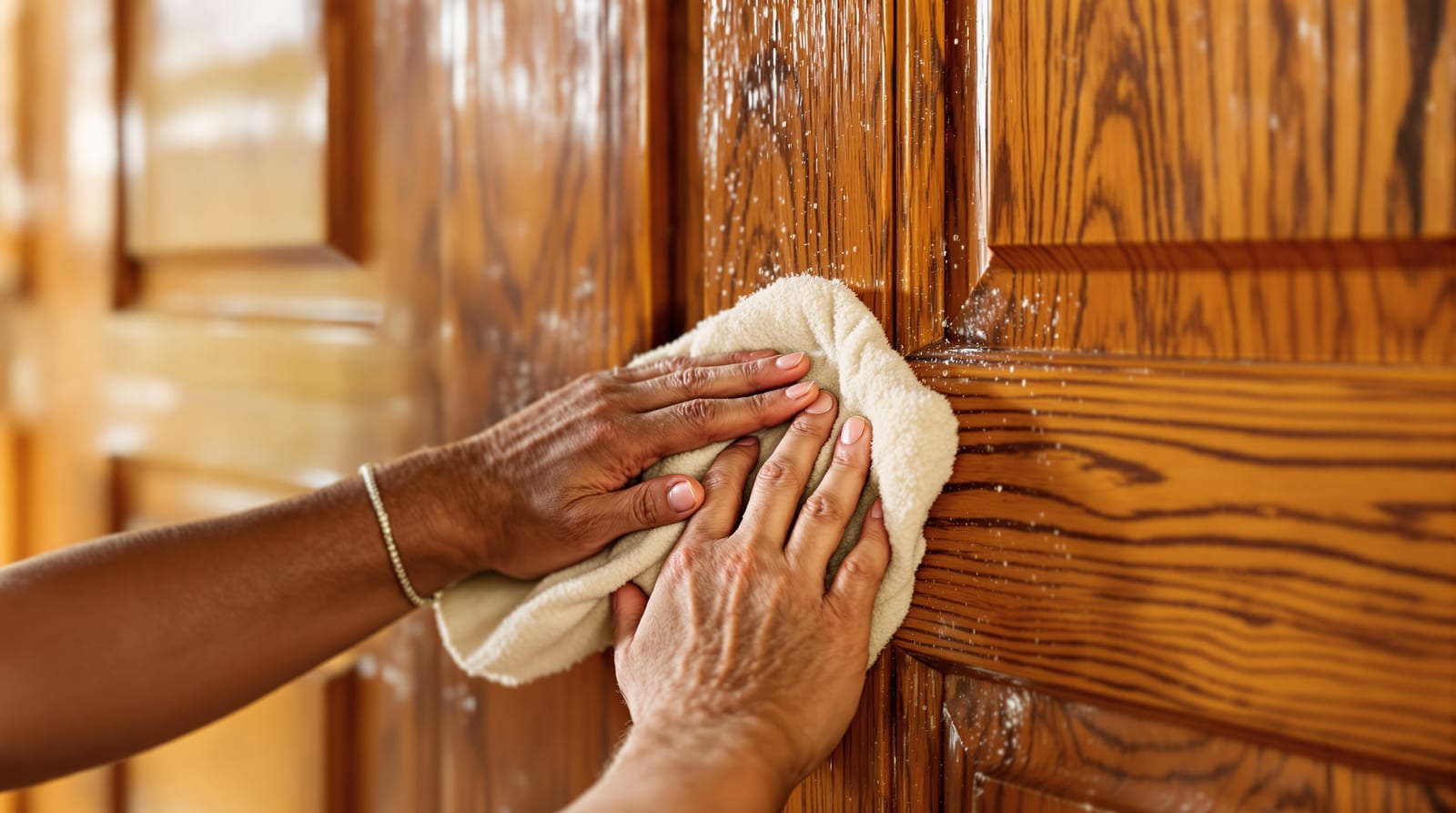
Wooden Door Maintenance: Teak & Solid-Wood Care India 2026
A season-by-season routine to keep solid-wood and teak doors swell-free, termite-safe and beautiful through India's monsoon and harsh sun.
A good solid-wood or teak door can last fifty years, but only if you treat it like the natural material it is. Wooden door maintenance in India is really about managing two enemies: moisture (which swells, warps and feeds rot) and pests (termites and borers). Get into a simple seasonal rhythm — wipe, feed the finish, seal the edges, watch the hinges — and your door stays tight, smooth and handsome for decades. This guide is wood-specific; for an all-materials overview see the door maintenance guide.
Difficulty: easy to moderate. Time: 20 minutes for a quick clean, half a day for a re-polish. When to stop and call a carpenter: structural sag, a leaf that has genuinely warped, soft spongy wood near the bottom, or active termite mud-tubes — those need a pro, not a polish.
Why wooden door maintenance matters in India
Wood breathes. In the monsoon it absorbs humidity and expands; in peak summer it dries and can develop hairline cracks. A sun-facing main door bakes all afternoon and the finish chalks and fades. Unsealed end-grain at the top and bottom of the leaf drinks water like a straw — which is exactly where rot and swelling start. Regular wooden door maintenance keeps the protective finish intact so moisture never reaches the timber in the first place.
The finish is the whole game. Teak has natural oils that resist water, but once the surface polish or oil wears thin, even teak is vulnerable. Re-feeding that finish on schedule is cheaper and easier than fixing a swollen monsoon door or a water-damaged door later.
Tools & materials you'll need
Nothing exotic — most of this is from your nearest hardware shop.
| Item | Use | Indicative ₹ (incl. 18% GST) |
|---|---|---|
| Soft cotton/microfibre cloths | Dusting, applying finish | ₹100–250 |
| Mild soap or wood-safe cleaner | Cleaning grime | ₹120–350 |
| Teak oil / linseed oil | Feeding oiled doors | ₹250–600 |
| Paste/furniture wax | Top-up sheen, water bead | ₹200–500 |
| Melamine or PU polish + thinner | Re-polishing | ₹400–1,200 |
| 220–400 grit sandpaper | Light scuffing before re-coat | ₹100–250 |
| Clear silicone/wood sealant | Sealing top & bottom edges | ₹150–400 |
| Wood filler/putty | Small dents, screw holes | ₹120–300 |
| Silicone spray / candle wax / graphite | Hinge & lock lubrication | ₹100–350 |
A year-round routine (with cadence)
Think of it as four habits at four different frequencies. Set a reminder, or use the home door maintenance planner to schedule each task by season.
| Task | Cadence | Difficulty | Why |
|---|---|---|---|
| Dust & dry-wipe | Weekly | Easy | Stops grit scratching the finish |
| Damp clean (mild soap) | Monthly | Easy | Removes oily handprints, kitchen grime |
| Wax / oil top-up | Every 3–6 months | Easy | Refreshes water beading & sheen |
| Inspect hinges, locks, edges | Quarterly | Easy | Catch loose screws & dry hinges early |
| Termite / borer check | Quarterly | Easy | Spot mud-tubes & fine sawdust early |
| Re-seal top & bottom edges | Yearly (pre-monsoon) | Moderate | Blocks end-grain water entry |
| Re-polish / re-coat finish | Every 2–4 years | Moderate–pro | Restores full protection |
The seasonal checklist
1. Pre-monsoon (May–June): Check that the top and bottom edges are sealed. Run a finger along the bottom of the leaf — if it feels bare or rough, brush on clear sealant or polish. Top up wax on the outer face. Confirm hinges are tight so a slightly-swelling door doesn't sag and start rubbing the frame.
2. Monsoon (July–Sept): Keep the door wiped dry. If it starts sticking, resist the urge to plane it immediately — swelling often reverses when humidity drops. Run a door swelling risk check if it happens every year. Don't force a tight door; that's how hinges strip.
3. Post-monsoon (Oct): Inspect for any water marks, lifted finish, or soft spots near the bottom. Re-oil or re-wax now that the wood has dried. Look for fresh borer dust on the floor.
4. Summer (Mar–May): Sun-facing doors get a UV check — chalky, faded finish means it's time to re-coat. Watch for hairline cracks from drying; fill early before they widen.
How to re-oil, wax or re-polish (step by step)
This is the core maintenance job. Difficulty: moderate. Time: 3–5 hours including drying.
1. Clean first. Wipe the door with a barely-damp cloth and mild soap, then let it dry fully. Polish never bonds over grime.
2. Scuff lightly. Go over the surface with 320–400 grit paper in the direction of the grain — just enough to dull the gloss, not strip it. Wipe off dust.
3. Choose your finish. Oiled door → use teak/linseed oil. Waxed door → use paste wax. Melamine/PU door that's gone dull → light melamine top-coat (this is closer to a pro job; see door polishing & refinishing).
4. Apply thin, even coats. Work along the grain with a lint-free cloth or soft brush. Two thin coats beat one thick one. Wipe off excess oil after 15 minutes so it doesn't go sticky.
5. Don't forget the edges. Coat the four edges — especially top and bottom end-grain. This is the single most-skipped step and the biggest cause of swelling.
6. Dry between coats. Oil: overnight. Wax: 20–30 minutes then buff. Melamine: 4–6 hours.
7. Buff & rehang hardware. Buff to an even sheen and re-fit any handles you removed.
Edge & bottom sealing detail
The diagram below shows where water actually attacks a leaf and where to focus your sealant.
Hinge, lock & hardware care
A wooden door's hardware needs care too, or it drags the timber down with it.
- Hinges: Every quarter, check screws are snug — a single loose hinge lets the leaf droop and rub. Lubricate with silicone spray, graphite or a rubbed candle; avoid heavy oils that attract dust. Squeak? See fix a squeaky door. Strip a screw? See stripped hinge screw fix.
- Locks: Use graphite or a dry lubricant in the keyway, never sticky oil. If the bolt won't seat, the issue is usually strike-plate alignment caused by seasonal movement.
- Handles: Tighten loose set-screws before they wallow the wood out — see loose door handle fix.
Termite, borer & rot watch
India's biggest silent threat to wooden doors. Inspect quarterly:
| Sign | What it means | Action |
|---|---|---|
| Mud tubes on frame/wall | Active termites | Treat immediately; see termite-proofing doors |
| Fine powdery sawdust at base | Wood borer | Treat & seal; see borer & fungus treatment |
| Hollow sound when tapped | Internal damage | Carpenter inspection |
| Soft, spongy bottom | Rot from water | May need bottom rot repair |
| Black/green patches | Fungus from damp | Dry out, treat, re-seal |
Honest note: a leaf with serious internal termite damage or rotted-through bottom rails usually needs replacement, not patching. Don't pour money into a door that's structurally gone — weigh it with the repair-vs-replace door calculator.
What it costs
Most wooden door maintenance is DIY-cheap. A re-oil costs ₹250–600 in materials and an afternoon. A full professional re-polish runs ₹500–1,500 per door including material (carpenter/polisher half-day ₹400–800). Edge re-sealing is under ₹400 in consumables. Compare that to a swollen-door plane visit (₹300–800) or, worse, replacing a rotted leaf (₹3,000–6,000) — prevention wins every time. For full numbers see the door cost guide, and for the cluster overview the complete door guide. If a door is actively misbehaving, start with door troubleshooting.
Frequently asked questions
How often should I re-polish a teak door?
Every 2–4 years for a sheltered indoor door; every 1–2 years for an exposed, sun-facing main door. The trigger is the look: when the finish goes dull, chalky or stops beading water, it's time. Light wax top-ups every few months stretch the interval.
Oil, wax or melamine — which is best for Indian conditions?
Oil (teak/linseed) is easiest to maintain and re-coat, ideal for solid teak. Wax adds quick water-beading and sheen but wears faster. Melamine/PU gives the toughest, most weatherproof film for exposed main doors but is closer to a pro job to apply. For an exposed outer door, a PU/melamine finish lasts longest.
My door swells and sticks every monsoon — should I plane it?
Not as a first move. Seasonal swelling usually reverses when humidity drops, and planing means a loose, gappy door in summer. First seal the edges and improve the finish. Only plane if it sticks year-round. See fix a swollen monsoon door.
Can I use ordinary cooking oil or furniture spray on the wood?
No. Cooking oils go rancid and sticky and attract dust and pests. Use proper teak oil, linseed oil or paste wax. For hardware, use dry lubricants like graphite or silicone, not sticky machine oil.
How do I protect a west-facing main door from harsh afternoon sun?
Use a UV-resistant exterior PU/melamine finish, re-coat it yearly, and keep a small chajja or canopy over the door if possible. A faded, cracking finish is the early warning — re-coat before bare wood is exposed.
When should I just call a carpenter instead of DIY-ing?
Call a pro for a genuinely warped leaf, soft/rotted bottom rails, active termite mud-tubes, a sagging door that won't sit square, or a full strip-and-re-polish you don't want to risk. These go beyond routine maintenance into structural repair.
Export this guide
Related Guides — Deep-dive reading
Door Maintenance Guide India: A Seasonal Care Routine to Keep Doors Smooth for Decades
Oil the hinges, tighten the screws, lube the lock, check the seals and re-coat the finish — a simple seasonal calendar that stops Indian doors from binding in the monsoon, sagging, tarnishing on the coast or falling to termites.
Home Doors & EntrancesDoor Repair Guide India: Fix Holes, Dents, Swelling, Hinges & Locks (2026)
A fix-it reference for Indian homes: every common door problem with a quick fix, a proper repair, a replace verdict, the materials needed, and indicative rupee costs.
Home Doors & EntrancesTermite & Moisture Protection for Furniture in India (2026)
The two great destroyers of Indian furniture are termites and monsoon damp. This is the homeowner's field guide to spotting both early, choosing materials that resist them, and running a simple pre- and post-monsoon routine that adds years to every piece you own.
FurnitureRelated Tools — Try Free
Window Hardware Cost Calculator
Estimate window hardware cost — hinges, handles, locks, rollers and multipoint gears.
Window CalculatorDoor Cost Calculator
Estimate the all-in cost of a door — leaf, frame, hardware, fitting and GST — by type, material and size.
Door CalculatorMaterial Schedule Generator
Generate a room-wise finish schedule — walls, floors, ceilings, trim, and joinery by location.
Material Schedule