
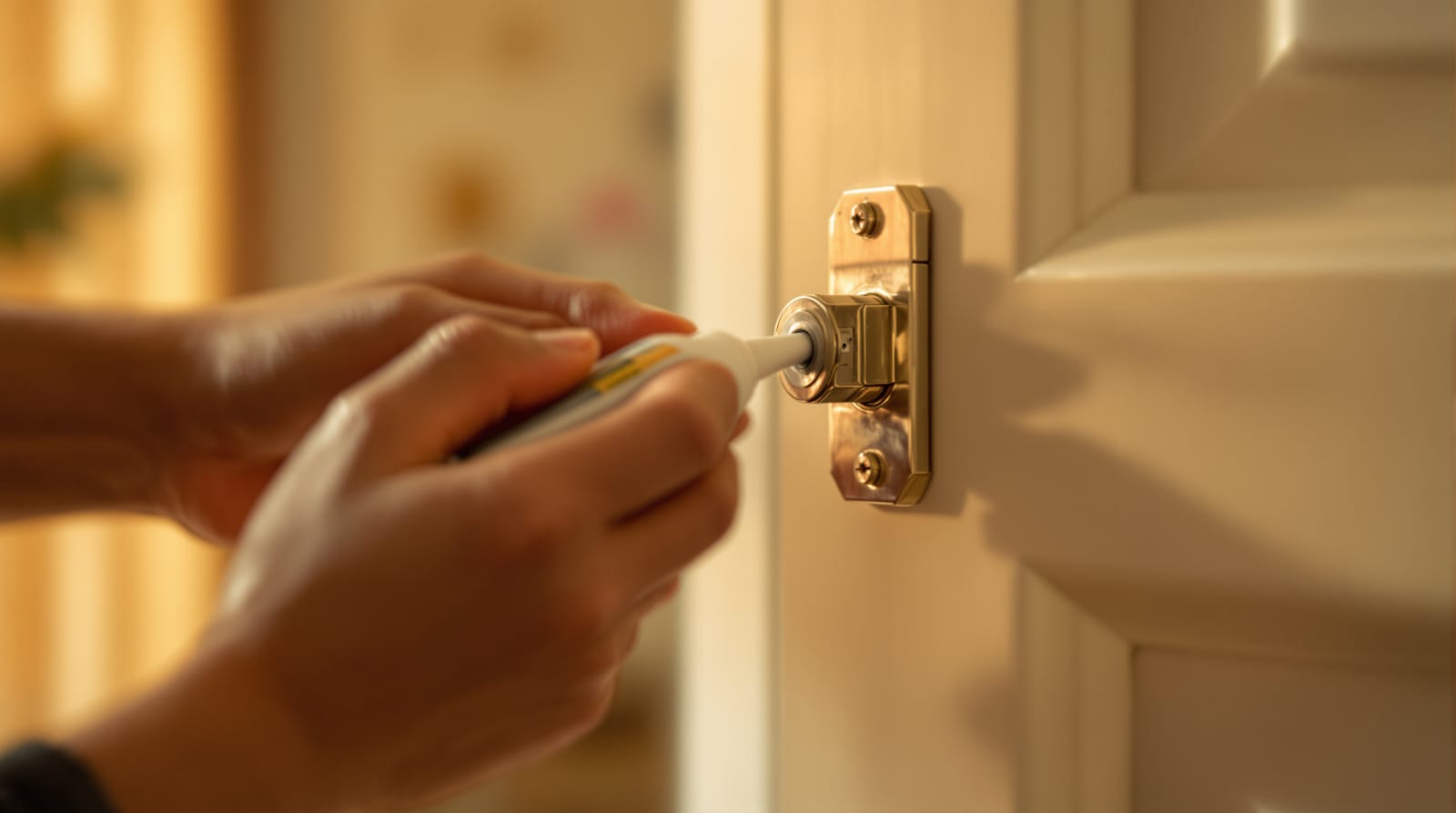
How to Fix a Squeaky Door India: Lubricate, Tighten, Sand — DIY in 15 Minutes
A quick DIY how-to for the creaky door every Indian home has — diagnose whether it is the hinge, the pin, or a rubbing leaf, then fix it with what is already in your house.
Every Indian home has one: the bedroom door that announces every late-night water trip, the pooja-room door that creaks the second you reach for the diya, the main door that wakes the baby. The good news is that a squeak is almost never a serious fault — it is metal rubbing on dry metal, and nine times out of ten you can silence it in ten to fifteen minutes with something already in your house. This guide shows you how to find exactly where the noise is coming from, the right fix for each cause, what to use, what to never use, and the one situation where a squeak is actually a warning you should not ignore.
Why doors squeak in the first place
A swinging door pivots on two or three hinges. Each hinge is two leaves joined by a knuckle, with a pin running down the middle. Every time the door opens or closes, that pin rotates inside the knuckle. When the thin film of grease between pin and knuckle dries out, wears away, or turns to gritty paste with dust, you get metal-on-metal contact — and that high-pitched eee is the sound of it. In India three things accelerate the drying: dust (which mixes with old grease into a grinding paste), the monsoon (humidity rusts cheap mild-steel hinges and swells the timber so the leaf rubs the frame), and time (a five-year-old flush door on builder-grade hinges is overdue).
But not every "squeak" is a hinge. Three very different problems make near-identical sounds, and the fix for one will not touch the other. Before you reach for the oil, spend thirty seconds diagnosing.
Step 1 — Diagnose the source (30 seconds)
Open and close the door slowly while you watch and listen:
- Squeak only as it swings, loudest mid-arc, coming from a hinge → hinge friction or a dry/rusty pin. The most common cause. Lift the door gently by the handle while someone swings it; if the noise changes, it is the hinge. Go to Step 2.
- Squeak plus a click or "drop," and the door tilts or scrapes the floor near the lock side → loose hinge screws, often the top hinge pulling out of the frame. Look for a visible gap behind the top hinge leaf, or screw heads standing proud. Go to Step 3.
- A scrape or groan, not a hinge squeak — the leaf rubs the frame or floor along its edge → a binding/rubbing leaf, usually from monsoon swelling or paint build-up. You will see a shiny rubbed mark or scuffed paint on the edge. Go to Step 4.
- A squeak from the lock or latch, not the hinge, when you turn the key or handle → dry latch mechanism. Fix is in Step 2 (use graphite, not oil, inside a lock).
Running your finger along each hinge knuckle and feeling for orange rust dust, or seeing a reddish stain, confirms a corroded pin — common on coastal and monsoon-heavy homes.
Step 2 — Lubricate the hinge (the 5-minute fix for most squeaks)
This solves the large majority of door squeaks. You have two levels: a quick top-up, or a proper clean.
Quick lubrication (no tools): Open the door so the hinges are accessible. Apply a small amount of lubricant to the top and bottom of the hinge knuckle so it can seep down into the pin. Swing the door back and forth a dozen times to work it in, then wipe the runs off the frame with a cloth so they do not stain the wall or catch dust. Often the squeak is gone before you finish.
Proper fix (remove and clean the pin): If the squeak comes back in a few weeks, the old grease has turned to grit and a top-up just sits on top of it. Tap the hinge pin up and out from below using a nail or thin screwdriver and a light hammer tap (do one hinge at a time so the door stays hung). Wipe the pin and inside the knuckle clean with a rag — old black paste, rust, and dust all come off. Wipe a thin film of fresh grease on the pin, drop it back in, and tap flush. Silent, and it lasts.
What to use — and what to avoid
| Lubricant | Good for | Notes / caution |
|---|---|---|
| Petroleum jelly (Vaseline) | Hinges — most homes have it | Excellent: thick, clings, does not drip or stain, cheap. The go-to Indian DIY fix. |
| Grease (lithium / bearing grease) | Hinge pin, the durable fix | Best longevity; apply to the cleaned pin. A small dab is enough. |
| WD-40 / penetrating spray | Rusty, stuck pins | Frees rust and quietens fast, but it is a penetrant, not a long-term lubricant — follow up with grease or jelly or the squeak returns. |
| Powdered graphite / pencil "lead" | Locks, latches, key cylinders | Use inside locks instead of oil; rub a soft pencil tip on the key, work the lock. Oil in a lock attracts dust and jams it. |
| Bar soap / candle wax | Emergency, rubbing edge | Rub on a binding leaf edge or hinge in a pinch; temporary. |
| Cooking oil, ghee, mustard oil | NOTHING — avoid | Quietens for a day, then oxidises into a sticky, smelly gum that traps dust and makes the squeak worse. Never use kitchen oils on hinges or locks. |
A ₹100-200 can of multipurpose grease or spray lubricant, or a ₹40 jar of petroleum jelly, will silence every door in the house for years.
Step 3 — Tighten loose hinge screws
If lubrication does not fully fix it, or the door also drops and scrapes, the hinge is loose. Over years of slamming, the screws — especially on the top hinge, which carries the most load — work free of the frame. A loose hinge lets the leaves shift against each other and squeak, and lets the door sag.
Tighten each screw firmly with a screwdriver (do not over-torque — you can strip the wood). The classic problem in older Indian frames is a screw that just spins and will not bite, because the hole has worn oversized. Two quick carpenter tricks fix it:
- Matchstick / toothpick trick: dip a few wooden matchsticks or toothpicks in a little Fevicol, pack them into the worn hole, snap them flush, let it set, then drive the screw into the fresh wood. Holds well for years.
- Longer / thicker screw: swap the stripped screw for one a size longer or fatter so it bites into solid timber behind the worn hole. On a sagging top hinge, replacing one screw with a long one that reaches the wall masonry behind the chowkat can pull the whole door back true.
For a worn hole that wood plugs will not save, see our door repair guide.
Step 4 — Free a rubbing or swollen leaf
If the noise is a scrape rather than a hinge squeak, the leaf is binding on the frame or floor. Find the contact point: close the door slowly and watch where it touches, or slip a strip of paper around the gap — where it grips is where it rubs. You will usually see a shiny or scuffed mark.
- Paint build-up: years of repaints thicken the edge until it binds. Sand the rubbing edge back with medium (120-grit) then fine sandpaper, or run a block plane along it, until the door closes with a thin, even gap (a 2-3 mm coin's thickness). Re-prime and paint the bare edge so it does not soak up moisture.
- Monsoon swelling (see below): if the door binds only in the wet months, treat the cause, not just the symptom.
Monsoon swelling squeaks — an Indian special case
Across most of India a door that is silent in summer can squeak, groan, or stick from June to September. Timber and many flush doors absorb humidity, swell a millimetre or two, and the leaf starts dragging on the frame — while damp also rusts cheap mild-steel hinges so the pins seize. Two layers of fix:
- Now: lubricate the hinges (Step 2) and, if the leaf is rubbing, sand the swollen edge lightly — but only take off the minimum, because the door will shrink back in winter and a heavily-sanded door will rattle with a big gap come December.
- Permanently: the real fix is to stop water getting into the timber. Seal the door's top and bottom edges and the rubbing edge with primer/paint or sealant (raw end-grain drinks moisture fastest), upgrade rusting hinges to stainless steel, and improve weather sealing. Coastal homes especially should fit SS or brass hinges. Our door maintenance guide covers the seasonal routine, and chronic swelling on solid doors is covered in the door repair guide.
When a squeak means the door is sagging — do not just oil it
A squeak that comes with the door dropping at the latch corner, scraping the floor, or refusing to latch is not a lubrication problem — it is a sagging door. The leaf has dropped on its hinges, the top hinge is overloaded or pulling out, and oiling it only masks the real fault. Squeaking and rubbing in that case is a symptom; tighten the hinges first (Step 3), and if the door is still out of true, follow the full procedure in our guide to fixing a sagging door.
A quick reference: cause, fix and time
| Symptom | Likely cause | Fix | Time | What to use |
|---|---|---|---|---|
| Squeak through the swing, from a hinge | Dry / dusty hinge pin | Lubricate knuckle; clean pin if it returns | 5-10 min | Petroleum jelly, grease, or spray + grease |
| Squeak + door drops or scrapes near lock side | Loose hinge screws | Tighten; matchstick or longer screw if stripped | 10-15 min | Screwdriver, matchsticks + Fevicol |
| Scrape / groan along the leaf edge | Rubbing leaf — paint or swelling | Sand or plane the rubbing edge, repaint | 20-40 min | Sandpaper / plane, primer, paint |
| Squeak in wet season only | Monsoon swelling + rusting hinges | Light sand + seal edges; SS hinges | 30 min + drying | Sealant/paint, SS hinges, grease |
| Stiff, squeaky lock or key | Dry latch mechanism | Graphite inside lock — never oil | 2 min | Powdered graphite / soft pencil |
| Squeak + door won't latch / clearly tilted | Sagging door | Tighten hinges, then realign — see sagging guide | 30-60 min | See fix-sagging-door guide |
A note on better hinges
If you are silencing the same door for the third time, the hinge itself may be the problem — thin, builder-grade mild-steel butt hinges rust and wear fast in Indian conditions. Upgrading to good stainless-steel or brass butt hinges (roughly ₹40-250 each, IS 1341), or to ball-bearing hinges on a heavy main door, is a cheap, permanent cure. The full picture on choosing and sizing hinges is in our door hinges guide, and routine care that prevents squeaks in the first place is in the door maintenance guide.
Frequently asked questions
What is the best thing to put on a squeaky door hinge?
For most Indian homes, petroleum jelly (Vaseline) is the easiest excellent fix — it clings, does not drip, and is in most houses. Lithium or bearing grease on a cleaned pin lasts longest. A penetrating spray quietens a rusty pin fast, but always follow it with grease or jelly, because the spray alone evaporates and the squeak returns. Never use cooking oil, ghee or mustard oil — they oxidise into a sticky, dust-trapping gum that makes things worse.
Why does my door only squeak in the monsoon?
Humidity does two things: it swells the timber so the leaf rubs the frame, and it rusts cheap mild-steel hinge pins so they seize. Lubricate the hinges and lightly sand any rubbing edge for now, but the lasting fix is to seal the door's edges against moisture and, on coastal or very damp homes, switch to stainless-steel or brass hinges.
Should I oil the lock if the key squeaks or sticks?
No — keep oil out of locks. Liquid oil attracts dust and eventually jams the mechanism. Use powdered graphite, or rub a soft (2B) pencil tip on the key and work it in the lock a few times. The graphite in the pencil lead lubricates the pins dry, with nothing for dust to stick to.
The squeak keeps coming back after I oil it. Why?
A top-up of fresh lube just sits on top of old, dried, gritty grease, so the metal-on-metal contact continues. Tap the hinge pin out, wipe the pin and the inside of the knuckle clean, apply fresh grease, and refit. If it still returns, the hinge is worn out or rusted through — replace it.
My door squeaks and scrapes the floor and won't latch. Is oiling enough?
Probably not — that combination usually means the door has sagged on its hinges, not that it is merely dry. First tighten the hinge screws (a loose top hinge is the usual culprit). If the door is still tilted and rubbing, it needs realigning; follow our fix a sagging door guide rather than masking the problem with lubricant.
Export this guide
Related Guides — Deep-dive reading
Door Maintenance Guide India: A Seasonal Care Routine to Keep Doors Smooth for Decades
Oil the hinges, tighten the screws, lube the lock, check the seals and re-coat the finish — a simple seasonal calendar that stops Indian doors from binding in the monsoon, sagging, tarnishing on the coast or falling to termites.
Home Doors & EntrancesDoor Repair Guide India: Fix Holes, Dents, Swelling, Hinges & Locks (2026)
A fix-it reference for Indian homes: every common door problem with a quick fix, a proper repair, a replace verdict, the materials needed, and indicative rupee costs.
Home Doors & EntrancesHow to Fix a Sagging Door in India: Diagnose, Tighten, Shim & Plane
A step-by-step repair sequence to fix a door that droops, binds on the frame, or won't latch — from a free five-minute screw fix to a last-resort plane.
Home Doors & EntrancesRelated Tools — Try Free
Door Security Rating Calculator
Score your main door out of 100 across leaf, frame, lock and hardware — and see the top upgrades.
Security ToolMonsoon-Readiness Checklist
Pre-rain home audit across 9 categories — terrace, drains, waterproofing, electrical, HVAC, pest, vehicles, documents.
Seasonal AuditDoor Paint Calculator
Estimate paint and primer litres and cost to paint your doors by size, number of doors, coats and paint type.
Door Calculator