
Door Strike Plate Alignment: Fix the Latch (India 2026)
A clean, step-by-step DIY guide to realigning a door strike plate so the latch catches every time, plus a security-strike upgrade.
When a door swings shut but the latch refuses to click home, the culprit is almost always door strike plate alignment — the latch bolt and the hole in the metal strike plate on the frame have drifted out of register. It is one of the most satisfying DIY fixes in the home: ten rupees of marker, a file, and twenty minutes usually beats calling a carpenter. This guide shows you exactly how to find where the latch is landing, then file, move, shim, or deepen the strike until the door latches with a clean, confident click. If your door swings shut but the bolt simply slides past without engaging, you are in the right place — and it pairs naturally with our sibling guide on a door not latching.
Difficulty: easy to moderate. Time: 15-45 minutes. DIY parts cost: ₹0-300 (you may already own everything). Carpenter alternative: a half-day visit ₹400-800.
What a strike plate does, and why alignment slips
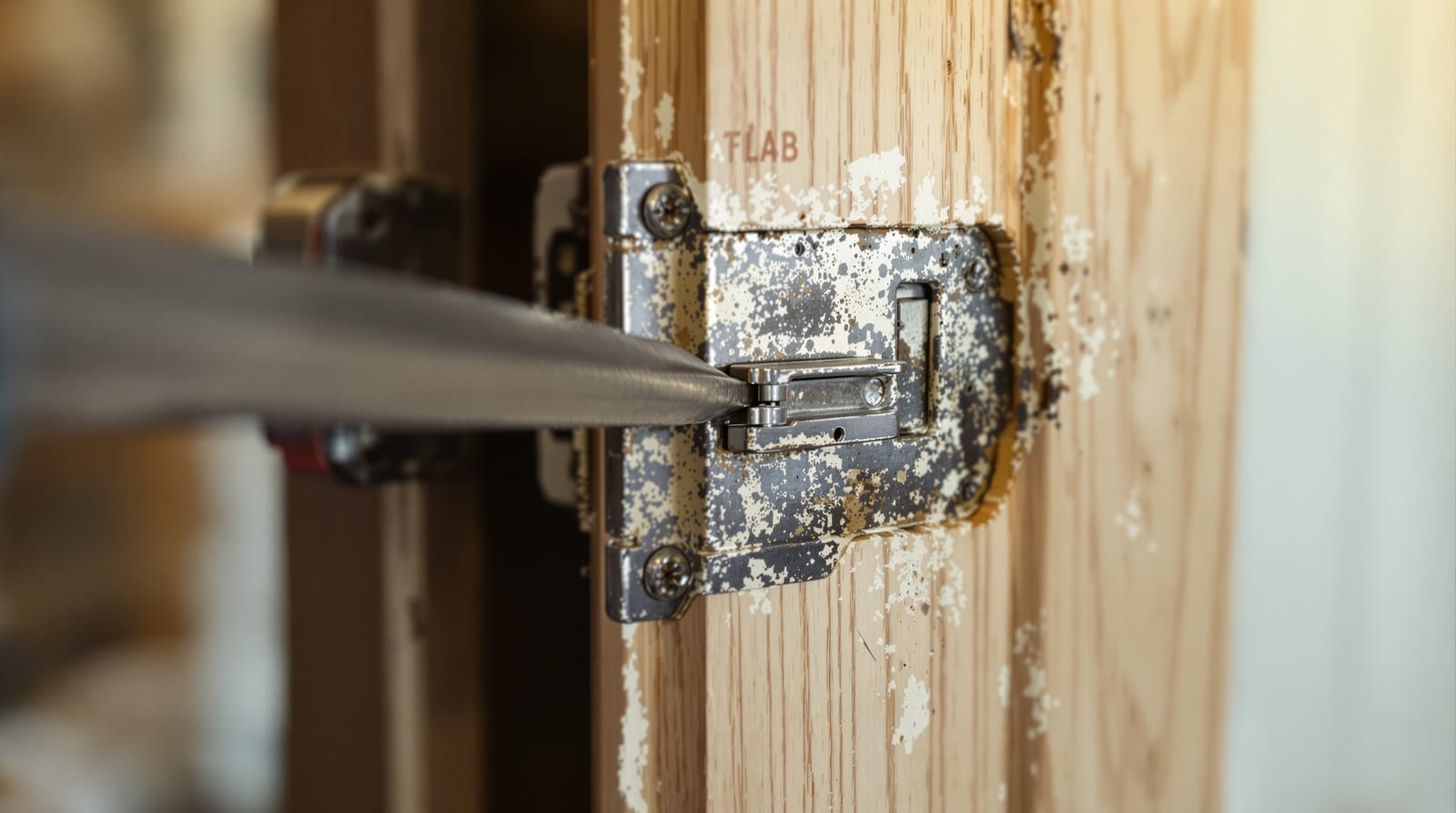
The strike plate is the slim metal plate screwed to the door frame (the jamb). Its hole receives the spring-loaded latch bolt and the deadbolt if you have a lock. When the door is hung correctly, the latch glides up the curved face of the plate, retracts, then springs into the hole. Alignment slips for very Indian reasons:
- Monsoon swelling and humidity shift a timber frame a few millimetres, so the latch now hits high or low.
- Hinge screws loosen over years of slamming, letting the leaf droop — the latch then sits below the strike hole (see fix loose door hinges).
- Settling of the building or a repaint that thickened the jamb edge.
- A new lock or handle was fitted but the strike was never re-cut to match (common after a door lock replacement).
Before touching the strike, rule out a sagging leaf. If the door visibly dips toward the handle side, tighten or repack the hinges first — moving the strike to chase a sagging door only hides the real fault. Our door troubleshooting hub walks through that triage.
Diagnose: find exactly where the latch is hitting
The whole job depends on knowing where the latch lands relative to the hole. Three quick tests:
The lipstick / marker test
Rub a child's lipstick, a wax crayon, or a dab of dark marker on the tip of the extended latch bolt. Pull the latch out with the handle, smear the colour on, release, then close the door normally and open it. The colour transfers to the strike plate exactly where the latch struck. Now you can read the offset.
The eyeball-and-torch test
Ungrip the handle, close the door slowly, and shine a torch from the latch side. Watch whether the bolt sits above, below, or short of the hole.
The paper-strip test
Close the door on a strip of paper at latch height; if it tears or jams, the leaf is binding before the latch even reaches the strike — that is a clearance problem, not a strike problem, so check uneven door gaps and door rubbing frame instead.
| Marker lands... | What it means | Fix |
|---|---|---|
| On the plate ABOVE the hole | Latch sitting high — door has risen or strike low | File top of hole up, or move plate up |
| On the plate BELOW the hole | Latch sitting low — door drooping or strike high | Tighten hinges first; else move plate down |
| On the latch-side FACE of plate | Latch not reaching the hole (door not closing far enough) | Deepen mortise / move plate inward, or check stop bead |
| Misses plate inward (toward room) | Door over-travels | Move plate outward or add shim |
| Lands centred but won't seat | Hole too shallow for full bolt throw | Deepen the mortise pocket behind the plate |
Tools & materials you'll need
- Half-round and flat metal file (the strike is steel or brass)
- Screwdriver (usually Phillips) — a hand driver gives more control than a drill here
- Lipstick / wax crayon / marker for the contact test
- Wood chisel (12-18 mm) and a mallet if you must deepen or relocate the mortise
- Wood filler / putty and matching touch-up for old screw holes
- Cardboard or thin metal shim (or a purpose-made strike shim)
- Pencil, steel rule, masking tape
- Optional upgrade: a security strike plate with 65-75 mm (2.5-3 inch) screws
| Item | Indicative ₹ (India 2026, +18% GST on goods) |
|---|---|
| Strike plate (standard steel/brass) | ₹80-300 |
| Security/box strike with long screws | ₹250-900 |
| Metal file | ₹120-350 |
| Wood filler tube | ₹60-180 |
| Wood chisel (single) | ₹150-500 |
| Carpenter half-day (if you'd rather not) | ₹400-800 |
Step-by-step: align the strike plate
Work in this order — try the smallest fix first.
1. Confirm the offset. Run the lipstick test above so you know exactly how far and in which direction the latch is missing.
2. Small miss (1-2 mm): file the hole. Unscrew the plate? Not yet. If the latch is just clipping the edge, keep the plate on and file the inside of the strike hole in the direction the latch needs to travel — file up if the latch hits high, down if low. Test after every few strokes. A slightly enlarged hole is invisible and fixes most cases.
3. Medium miss (2-5 mm): reposition the plate. Remove the two screws. Plug the old screw holes with wood filler or glued matchsticks (so new screws bite). Reposition the plate up/down or in/out to centre on the latch, mark fresh pilot holes with an awl, and re-screw. If the plate now overhangs the mortise, you'll cut the wood to match in the next step.
4. Deepen or extend the mortise. With the plate off, use the chisel to deepen the pocket behind the hole so the full bolt throw seats, or to extend the recess up/down if you moved the plate. Chisel in light paring cuts; the plate must sit flush with the jamb face, never proud (a proud plate stops the door closing).
5. Latch falls short of the frame: shim the plate or hinges. If the latch never reaches the strike, the door isn't closing far enough. Add a thin cardboard/metal shim behind the strike plate to bring the hole toward the latch, or shim a hinge to swing the leaf closer. Conversely, if the door over-travels, recess the plate or move it outward.
6. Test the click. Close the door gently a dozen times. The latch should drop in with no lift or push. Then test with the handle released — it should self-latch on a normal swing.
7. Upgrade while you're there (recommended for the main door): fit a security strike. Swap the thin plate for a heavy box-strike and drive 65-75 mm screws through it into the wall framing behind the jamb, not just the thin jamb timber. This single upgrade hugely improves kick-in resistance. Pair it with the wider thinking in our door security guide.
8. Tidy up. Fill any visible old holes, dab matching polish or paint, and wipe the plate clean.
Strike plate alignment diagram
When to stop and call a carpenter
Most strike jobs are firmly DIY. Call a professional when:
- The door sags structurally — a dropped leaf or a frame pulling away from the wall. Re-cutting the strike won't hold; the hinges or frame need work (see fix sagging door and door frame repair).
- The jamb timber is rotted or termite-eaten behind the strike, so screws won't bite. That's a frame-repair job, not an alignment one.
- The door is a glass, automatic, or sensor door — isolate power and call a specialist; never file or chisel a glass-door frame yourself.
- A warped leaf is causing the latch to twist away from the plate (warped door fix).
For a quick read on whether the whole door has had its day, our repair-vs-replace door calculator helps, and the door repair cost estimator prices a carpenter visit before you call one. For the full picture, see the complete door guide.
Frequently asked questions
Why won't my door latch even though the strike looks lined up?
The bolt may be reaching the plate but not seating fully because the mortise pocket behind the hole is too shallow. Remove the plate and chisel the pocket a few millimetres deeper so the full bolt throw drops in. Also check the latch isn't sticky — a drop of silicone or graphite frees a lazy spring.
Can I just file the strike hole bigger and leave it?
Yes, for misses of 1-2 mm. Filing the inside edge of the hole in the direction the latch needs is the quickest, cleanest fix and stays invisible. For bigger offsets, reposition the plate properly so you don't end up with an ugly, oversized hole that weakens security.
My latch hits below the strike hole — what's really wrong?
The door is usually drooping on tired hinges. Tighten the hinge screws or repack the top hinge first (fix loose door hinges). Only move the strike down if the leaf is genuinely square and the offset persists — chasing a sagging door with the strike just postpones the real repair.
Should I upgrade to a security strike while I'm at it?
For the main door, absolutely. A box-type security strike with 65-75 mm screws anchored into the wall framing dramatically raises kick-in resistance for ₹250-900. It's the single best-value security tweak you can DIY in fifteen minutes.
How much does a carpenter charge to realign a strike plate?
A simple visit runs ₹400-800 (half-day) in most Indian cities, more in metros, less in tier-2 towns. Since the parts cost almost nothing, the DIY saving is essentially the entire labour charge — and the skill carries over to every other door in the house.
The door over-closes and the latch misses inward — how do I fix that?
The leaf is travelling past the strike. Move the plate outward (toward the room) or add a thin shim behind it to bring the hole to meet the latch, and check your door-stop bead isn't worn. If the gaps around the door are also irregular, sort those via uneven door gaps first.
Export this guide
Related Guides — Deep-dive reading
Door Not Closing Properly? Fix It Step-by-Step (India 2026)
A clear decision tree for a door that won't shut — latch, hinge-bind, swelling, sag, warp or a moved frame — with DIY fixes and ₹ costs.
Home Doors & EntrancesUneven Door Gaps Fix: Even Out Tapered Reveals India 2026
Read the gap pattern around your door like a map, then close it to a clean even reveal with simple hinge and strike fixes.
Home Doors & EntrancesDoor Troubleshooting Guide: Fix Any Door Fault (India 2026)
Symptom to cause to fix for every common door problem in Indian homes, with difficulty, time, cost and when to call a carpenter.
Home Doors & EntrancesRelated Tools — Try Free
Door Security Rating Calculator
Score your main door out of 100 across leaf, frame, lock and hardware — and see the top upgrades.
Security ToolDoor Lock Selector
Answer a few questions and get the right lock type — mortise, multipoint, deadbolt, privacy or smart — for any door.
Door ToolDoor Paint Calculator
Estimate paint and primer litres and cost to paint your doors by size, number of doors, coats and paint type.
Door Calculator