
Lift Cabin Material Selection Guide (India): Steel, Glass, Wood, Laminate and Stone
A practical decision framework for choosing your home lift cabin material — compared on look, durability, maintenance, weight, cost and best-fit home style.
The lift in your home is a small room you step into several times a day. Unlike a corridor you walk past, you are inside it — surrounded on four sides and a ceiling by whatever material you chose. That makes the cabin one of the most felt design decisions in the whole house, and one of the most over-looked. Most homeowners agonise over the kitchen counter and then accept the lift cabin their vendor "usually does."
This guide is the decision framework. It walks through every cabin material on offer in India today — stainless steel, glass, wood veneer, laminate, stone and marble, mirror, and powder-coated colour — and compares them honestly on the things that actually matter: how they look, how long they last, how much cleaning they demand, how much they weigh (yes, weight matters), what cost tier they sit in, and which home style each one flatters. At the heart of the guide is a single comparison table you can use as a shortlist tool.
We stay deliberately in our lane. If you only want the head-to-head between the two most popular choices, read Stainless Steel vs Glass Lift Cabins in India. If you are chasing the showpiece finishes — brass, leather, fluted glass — see Premium Lift Finishes in India. This guide is the how to choose between all of them.
A cabin material is a 15-year commitment you touch every day. Choose for how it ages, not just how it photographs on day one.
Why the cabin material decision is bigger than it looks
Three things ride on this choice, and only one of them is "looks."
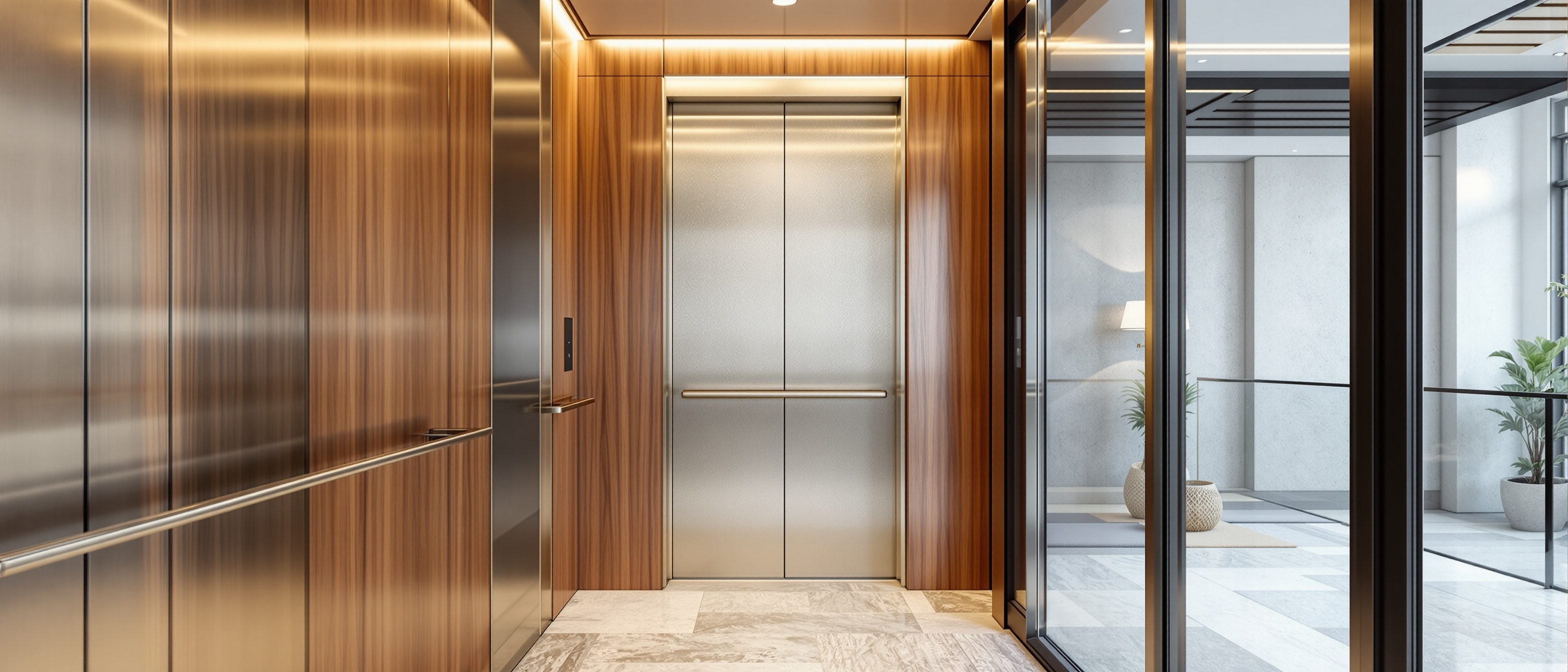
It sets the mood of every ride. A mirror-polished steel box reads sharp and clinical. A wood-veneer cabin with a warm LED ceiling feels like stepping into a small panelled study. Glass dissolves the walls and turns a 20-second ride into a moving view. The same lift mechanism behind all three — the experience could not be more different.
It interacts with your interiors. The cabin is glimpsed through an open landing door every time the lift arrives. If your home is all teak and travertine and the cabin is cold mirror steel, it jars. The most satisfying cabins echo a material already in the house — the floor, the staircase, the joinery.
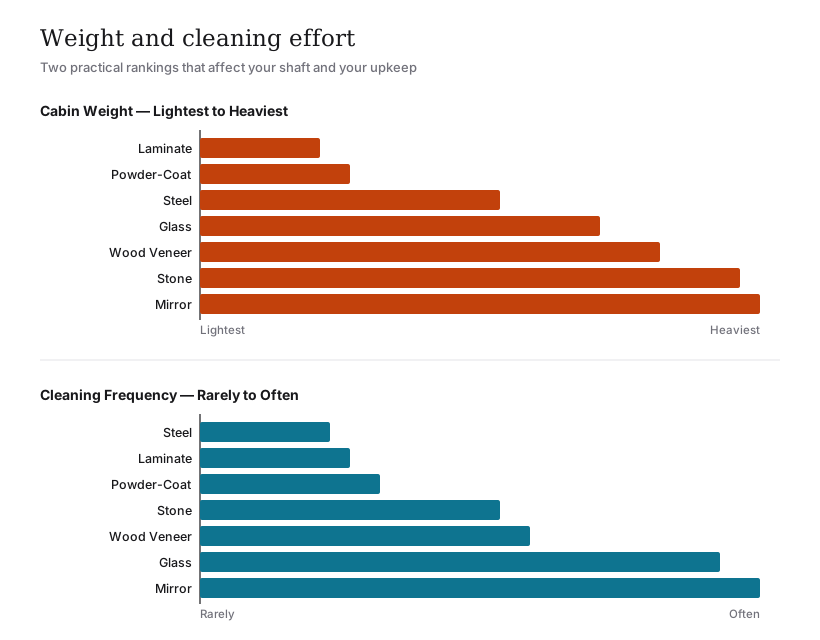
It has engineering consequences. Heavy materials — real stone, thick mirror, solid wood — add dead load to the car. Every kilogram of cladding is a kilogram less of rated passenger capacity, and a heavier car can push you into a larger drive and higher running cost. This is the part vendors rarely volunteer, and the reason a "marble lift" is usually marble flooring with lighter walls, not solid stone all round.
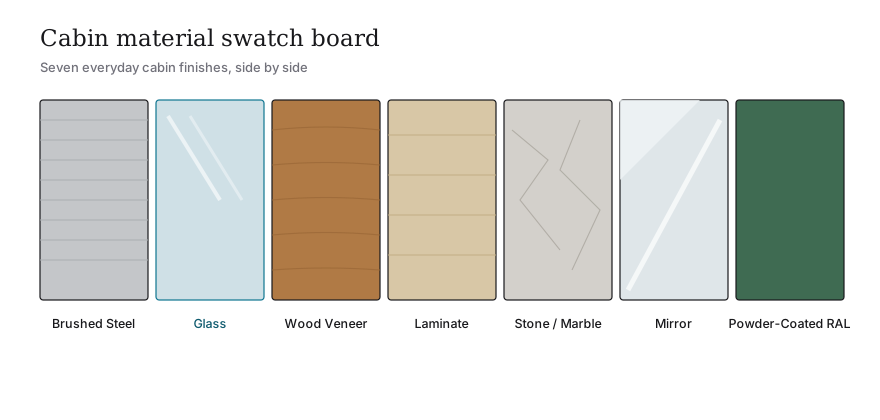
The six things to judge every material on
Before the table, here is what each column means and why it earns a place.
Look and feel. Cool and contemporary, warm and residential, or luminous and open. This is subjective, but the families are real.
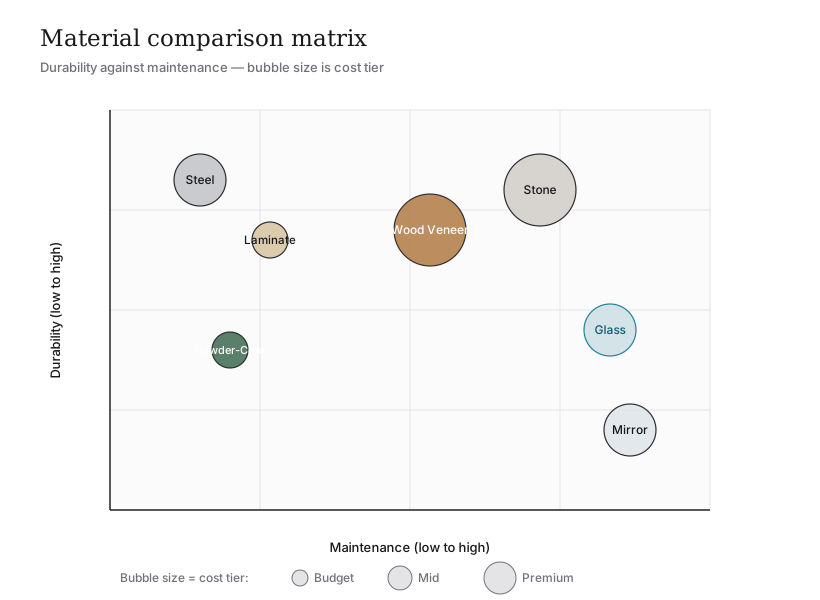
Durability. How it survives daily knocks — luggage, prams, the corner of a sofa being moved. Steel and laminate shrug it off; veneer and back-painted glass scratch; mirror chips.
Maintenance. How often it shows the day, and how fussy the cleaning is. Glass and mirror show every fingerprint and water spot. Hairline steel and matte laminate hide them. This matters more than people expect because a lift is touched with hands far more than any wall in the house.
Weight. The hidden engineering cost. Stone and mirror are heavy; laminate and powder-coated steel are light. Lighter cladding leaves more of your rated load for people and protects capacity.
Cost tier. We use bands, not numbers — the brief is clear that finish prices ride on top of the base lift and vary wildly by vendor. For real figures see Home Lift Cost in India 2026. Treat every band as indicative — confirm with your vendor.
Best-fit style. Which home it belongs in: minimalist, classic-luxury, traditional Indian, compact apartment, or villa.
The master comparison table
This is the heart of the guide. Read it once top to bottom, then come back and use it as a shortlist filter for your own home.
| Material | Look and feel | Durability | Maintenance | Weight (affects capacity) | Cost tier | Best-fit home style |
|---|---|---|---|---|---|---|
| Stainless steel — brushed / hairline / matte | Clean, neutral, contemporary; the modern default. Restrained, not mirror-flashy | Very high — resists knocks, no rust on quality grade | Low — fingerprint-resistant; wipe with a damp cloth | Moderate (thin sheet over backing) | Mid | Minimalist, modern apartment, almost anything |
| Stainless steel — mirror polished | Sharp, reflective, glamorous but can feel clinical | Very high | High — shows every fingerprint and smudge | Moderate | Mid | High-gloss luxury; use as an accent, not all four walls |
| Glass — laminated / tempered safety | Open, luminous; turns the ride into a view; makes small homes feel larger | High (safety glass), but edges can chip | High — shows fingerprints, dust, water spots | Moderate to high (thick safety glass) | Mid to premium | Panoramic, glass and PVE cabins, compact homes, modern villas |
| Wood veneer / solid wood | Warm, residential, premium; blends with wooden floors and joinery | Moderate — scratches and can mark with moisture | Moderate — dust gently; keep dry; occasional polish | Moderate to high (solid wood) | Premium | Classic luxury, villas, Japandi, panelled interiors |
| Laminate (decorative) | Huge range of patterns and textures, including convincing wood and stone looks | High — hard wearing, knock-resistant | Low — easy wipe-clean | Light | Budget to mid | Cost-conscious, apartments, family homes, busy households |
| Stone / marble | Rich, weighty, unmistakably luxurious | High surface, but porous stone can stain | Moderate to high — sealing, careful cleaners | Heavy — the big capacity cost | Premium | Grand entrance lifts; usually as flooring or accent, rarely full walls |
| Mirror | Adds depth and space; doubles the room visually | Moderate — can chip or crack; silvering can degrade | High — smudges and spots show instantly | Heavy (glass) | Mid | Compact cabins, accessibility (reverse a wheelchair), rear-wall accent |
| Powder-coated steel / RAL colour | Customisable colour; matt or satin; some brands offer 16+ RAL shades | High — tough baked finish | Low to moderate — wipe-clean; deep scratches show base | Light to moderate | Budget to mid | Playful or branded interiors, kids' homes, colour-led design |
Cost tiers are indicative and ride on top of the base lift price. They are not quotations — confirm every figure with your vendor and read the cost guide before you budget.
A few patterns jump out of the table once you sit with it.
Steel and laminate are the low-drama workhorses. Both are durable, both are easy to clean, both hide daily life. If you want a cabin you never have to think about again, you are choosing between these two — steel for the cooler contemporary look, laminate for warmth-on-a-budget and pattern choice.
Glass and mirror buy you space and light, at a cleaning cost. They are the right answer for a compact home or a stairwell you want to feel open — but accept that they will show every fingerprint and need wiping often.
Wood and stone buy you warmth and richness, at a weight and care cost. Gorgeous in a villa; demanding in a small car. This is why the smart move is almost always partial use — stone on the floor, veneer on one feature wall — rather than every surface.
The weight problem nobody mentions
Here is the quiet trap. Your lift is rated for a number of persons — say a 4-person, ~272 kg car. That rating assumes a certain cabin weight. Clad all four walls in real marble and thick mirror and you can add a meaningful slab of dead load before a single person steps in. That eats into usable capacity, and beyond a point forces a heavier drive, deeper structure, or a higher running cost.
The practical rules:
- Use heavy materials sparingly. Stone as flooring, mirror as one rear-wall panel, veneer as a feature — not the whole box. This is exactly how "marble lifts" are actually built.
- Keep the rest light. Laminate, powder-coated steel and thin steel sheet keep the car light and leave more rating for people.
- Tell your vendor your finish before they size the lift, not after. Capacity, drive and structure are designed around the loaded cabin weight. A finish change after sizing is the expensive kind of change.
- A heavier door counts too. Glass-clad and wood-clad doors add to the moving mass — factor them in.
Matching the cabin to your interiors
The best cabins do not shout their own style — they continue the house. Walk your home and find the move that already exists, then echo it inside the lift.
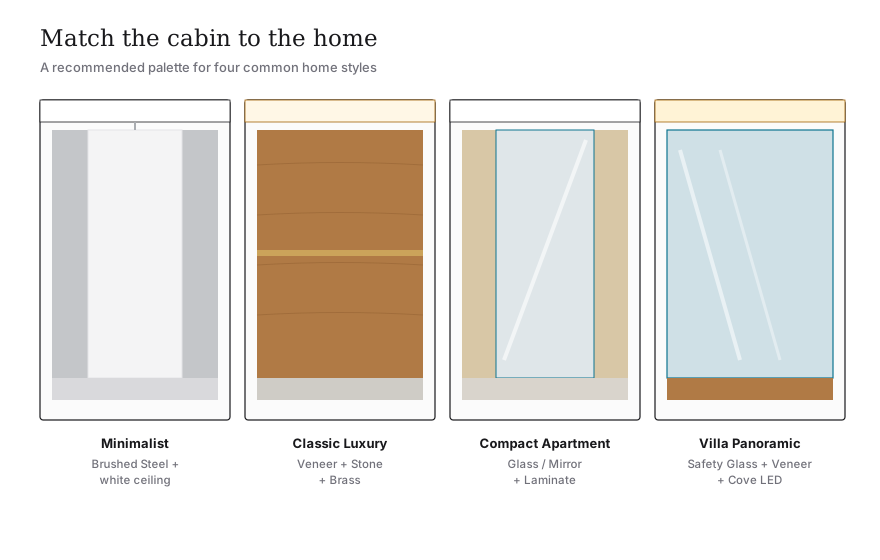
If your home is minimalist and modern — pale walls, large-format tile, handle-less joinery — go brushed or hairline stainless steel with an LED ceiling panel. Quiet, neutral, ages without dating. Add a single mirror panel only if the cabin is tight.
If your home is classic or luxury — stone floors, panelled walls, statement lighting — lead with wood veneer walls and a stone or stone-look floor, and add a brass or bronze trim if you are reading Premium Lift Finishes. Keep solid stone to the floor for weight.
If your home is traditional Indian — teak, jaali screens, warm tones — wood veneer is the natural fit; consider a fluted or back-painted glass accent that nods to a jaali without the weight. Warm ~2700–3000K lighting completes it.
If your home is a compact apartment — every cabin metre counts — glass or a mirror rear wall makes the car feel twice the size. Pair with light laminate side walls so cleaning stays sane and the car stays light.
If your home is a villa with a panoramic ambition — laminated safety glass on the panoramic face, a warm veneer or stone floor underfoot, and indirect cove lighting. See Glass Elevator Design in India and Luxury Home Elevator Interiors in India for the full treatment.
A four-step method to actually choose
Use this in order. It turns a wall of options into one shortlist.
Step 1 — Anchor to the house. Name the one material your home already loves — the floor, the staircase, the dominant joinery. Your cabin should echo it. This single move eliminates most options instantly.
Step 2 — Check the weight budget. Ask your vendor what cabin-weight allowance your chosen capacity gives you. If it is tight, rule out full stone and full mirror and reserve them for floor or accent only. Confirm capacity before finalising finish.
Step 3 — Set your maintenance tolerance honestly. A household with kids, pets and frequent guests will hate a mirror-and-glass cabin that shows every touch. Choose hairline steel or matte laminate and thank yourself weekly. A calm two-person home can enjoy glass.
Step 4 — Place it in a cost band, then confirm. Pick your tier from the table — budget (laminate, powder-coat), mid (steel, glass, mirror), premium (veneer, stone, polished steel) — and treat it as indicative. Get the real number from your vendor and sanity-check it against Home Lift Cost in India 2026. Finish always rides on top of the base lift.
Anchor, weigh, maintain, cost. Run any candidate cabin through those four and the wrong choices fall away on their own.
Don't forget the floor, the safety glass and accessibility
Material choice is not only walls. Two of these touch safety, not just looks.
- The floor must be anti-slip. Textured vinyl, honed granite or stone, wood-look planking or rubber — durable, non-slip, easy to clean. A glossy polished-stone floor looks beautiful and is a slip risk in a wet-footed Indian monsoon entry. Texture wins.
- Glass in a cabin must be laminated or tempered safety glass — never plain glass. This is a safety requirement aligned with the standards behind IS 14665, not a style preference. Confirm your vendor specifies safety glass for walls and doors.
- A rear mirror earns its place on accessibility grounds, not just depth — it lets a wheelchair user reverse out safely, in line with CPWD Harmonised Guidelines for accessible lifts. If anyone in the home may use a wheelchair now or later, see Accessible Home Design in India.
For the lighting and door finishes that sit alongside the material, read Home Lift Lighting Design in India and Designer Elevator Doors in India. For where all of this is heading, see Contemporary Elevator Design Trends in India and Smart Home Lift Design in India.
Where this fits in your project
A material decision is downstream of buying the right lift in the first place. If you are still at the buying stage, start with the Residential Elevator Buyer's Guide for India and the Lift Specification Checklist for India — get the capacity, drive and shaft right, then come back here to dress the cabin. For inspiration on the cabin as a statement within a luxury home, see Lift Design for Luxury Residences in India and the design ideas in Modern Home Lift Design Ideas, and browse Luxury Interiors.
Choose the material that continues your home, keeps the car light, and forgives daily life — and the small room you ride every day will feel like the rest of the house, not a service shaft bolted onto it.
References
- Brio Elevators — Custom elevator cabins: materials, finishes and lighting: https://brioelevators.com/blog/custom-elevator-cabins-materials,-finishes-lighting
- Elite Elevators — Top classic home elevator styles for Indian homes: https://www.eliteelevators.com/blog/top-classic-home-elevator-styles-for-indian-homes/
- Nibav — Best home elevators in India 2026: https://www.nibavlifts.com/blog/best-10-home-elevators-in-india/
- IS 14665 Part 1 (BIS) — Electric traction lifts, outline dimensions: https://law.resource.org/pub/in/bis/S05/is.14665.1.2000.pdf
- CPWD Harmonised Guidelines and Space Standards for a Barrier-Free Built Environment (2016): https://www.cpwd.gov.in/Publication/Harmonisedguidelinesdreleasedon23rdMarch2016.pdf
- BIS National Building Code 2016: https://www.bis.gov.in/standards/technical-department/national-building-code/
Export this guide
Related Guides — Deep-dive reading
Premium Lift Finishes Guide (India): Brass, Leather, Veneer and Stone
A curated catalogue of high-end home-lift cabin finishes — the look each gives, where to use it, how it ages in Indian conditions and its cost tier.
Home Lifts & AccessibilityHow to Choose a Wash Basin in India: Mount Type, Size, Tap Holes & Budget (2026 Buyer's Guide)
A buyer's decision guide to picking the right wash basin — matching the mount type to your vanity and space, sizing it to the room, getting the tap-hole config right for your faucet, judging material and durability, checking what's in the box, good/better/best rupee tiers, the IS 2556 vitreous-china mark, and how to spot seconds, hairline cracks and warranty traps.
BathroomsLift Cabin Materials Guide (India): Grades, Finishes and Properties
A technical materials reference for home-lift cabins — stainless-steel grades, finishes and the properties that decide durability, corrosion, fire and load
Home Lifts & AccessibilityRelated Tools — Try Free
False Ceiling Cost Estimator
Live ₹/sqft across 8 ceiling types — POP, gypsum, designer, metal, PVC, wooden — with cove and spot lighting for 20 Indian cities.
Cost CalculatorElevator Capacity Calculator
Pick the right home-lift capacity — 2 to 8 person — with car size and wheelchair fit.
Lift CalculatorHome Lift Cost Calculator
All-in home lift cost by floors, type, capacity and city — equipment, civil, GST and AMC, with a drive-type comparison.
Lift Calculator