
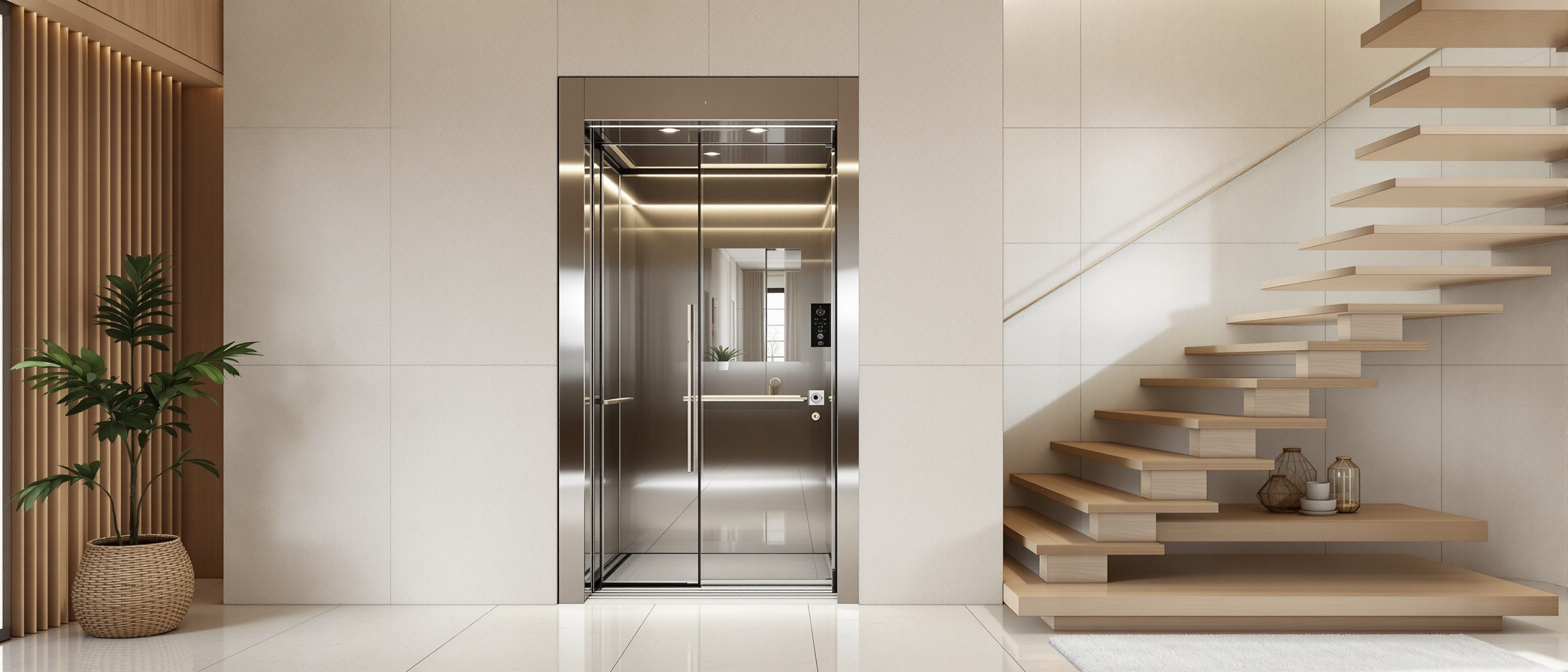
Modern Home Lift Design Ideas (India): Twelve Looks for a Contemporary Home
A catalogue of modern design directions for a home lift cabin — minimal brushed steel, full glass, Japandi warmth, mood lighting, colour, stone, biophilic and statement-foyer looks — with an at-a-glance ideas table.
A home lift used to be a piece of machinery you tucked behind a door and hoped nobody noticed. In the contemporary Indian home it has become the opposite — a vertical room that everyone passes through several times a day, often the most-touched, most-photographed object in the house. Treated well, it can do for a stairwell what a good light fitting does for a ceiling: turn a functional necessity into a moment.
This guide is a catalogue of design directions — twelve distinct looks you can ask a vendor for, from the restraint of brushed steel to a full panoramic glass capsule, from Japandi warmth to a colour-blocked statement piece. It sits at the front of our design cluster: think of it as the mood-board you flip through before you go deep on any one decision. When a look excites you, follow the links to the focused guides — glass cabins, cabin materials, premium finishes, lighting, doors and smart features — and the residential elevator buyer's guide for the engineering underneath the styling.
A lift is the only "room" in your home you stand inside while it moves. Design it like a room, not like a control panel.
One ground rule before we start. Everything here is about the cabin, the doors, the light and the surfaces — the visible 1.2 to 1.5 square metres you experience. None of it overrides the safety engineering: laminated or tempered safety glass, anti-slip flooring, automatic doors wide enough for a wheelchair (≥ 900 mm clear), and an ARD battery backup so a power cut never traps anyone are non-negotiable, whatever look you choose. Costs for finishes sit on top of the base lift price — we never quote design premiums here; treat any figure as indicative and confirm with your vendor and the cost guide.
The twelve looks at a glance
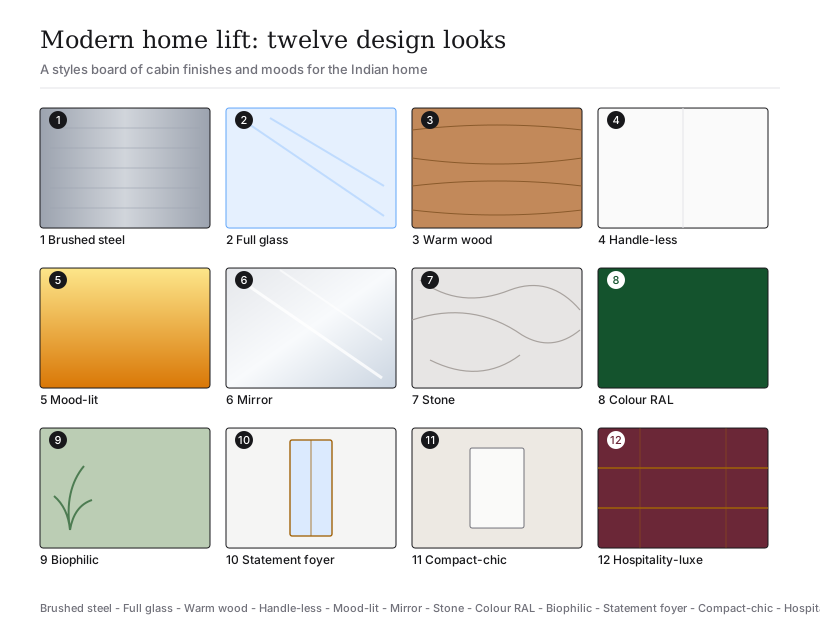
Use this table as a shortlist. Pick two or three that resonate, then read the matching deep-dive.
| Look | Signature materials / finish | Best for | Approximate feel |
|---|---|---|---|
| 1. Minimal brushed steel | Hairline / matte stainless, no ornament | Apartments, clean modern villas | Quiet, neutral, "just works" |
| 2. Full glass / panoramic | Laminated safety glass capsule, slim frame | Atriums, stair voids, retrofits (PVE) | Open, theatrical, weightless |
| 3. Warm wood / Japandi | Light oak or walnut veneer, matte black trim | Calm, natural, family homes | Soft, grounded, serene |
| 4. Handle-less / flush | Push-to-open panels, hidden joints, integrated COP | Designer interiors, minimalists | Seamless, gallery-like |
| 5. Mood-lit | Cove LED, backlit panel, dimmable scenes | Evening-led, entertaining homes | Atmospheric, lounge-like |
| 6. Mirror-accent | Rear-wall mirror or bronze-tint glass | Compact cabins, wheelchair turning | Spacious, glamorous |
| 7. Stone-accent | Marble / granite floor or one feature wall | Premium foyers, traditional-modern | Solid, luxurious, cool |
| 8. Colour / RAL | Powder-coated panels in a chosen RAL shade | Bold interiors, kids' wings | Playful, confident, bespoke |
| 9. Biophilic | Wood-look, planting niche, nature-tone palette | Wellness-led, green homes | Fresh, restorative |
| 10. Statement foyer | Bronze / brass trim, feature lighting, glass front | Double-height entrances | Arrival, drama, occasion |
| 11. Compact-chic | Light tones, mirror, slim doors, one accent | Tight shafts, narrow homes | Efficient, smart, uncluttered |
| 12. Hospitality-luxe | Upholstered or leather panels, fluted glass, gold trim | Luxury residences | Boutique-hotel polish |
Indicative groupings — most cabins blend two or three of these. Confirm material availability and weight limits with your vendor.
1. Minimal brushed steel — the contemporary default
If you want a lift that disappears into a modern home, this is it. The shift in 2026 is away from mirror-polished stainless (which screams "office building" and shows every fingerprint) toward brushed, hairline or matte finishes. They are fingerprint-resistant, hard-wearing, and read as warm grey rather than cold chrome. A brushed-steel cabin with a flush LED ceiling panel and a slim sliding door is the safest bet for resale and the easiest to live with.
Pair it with an anti-slip vinyl or stone-look floor and you have a cabin that suits almost any palette. It is also the most forgiving base to accent — a single mirror wall, a wood-veneer back panel or a strip of cove light lifts it instantly. See stainless steel vs glass cabins if you are weighing this against a glass capsule.
2. Full glass / panoramic — the ride as an experience
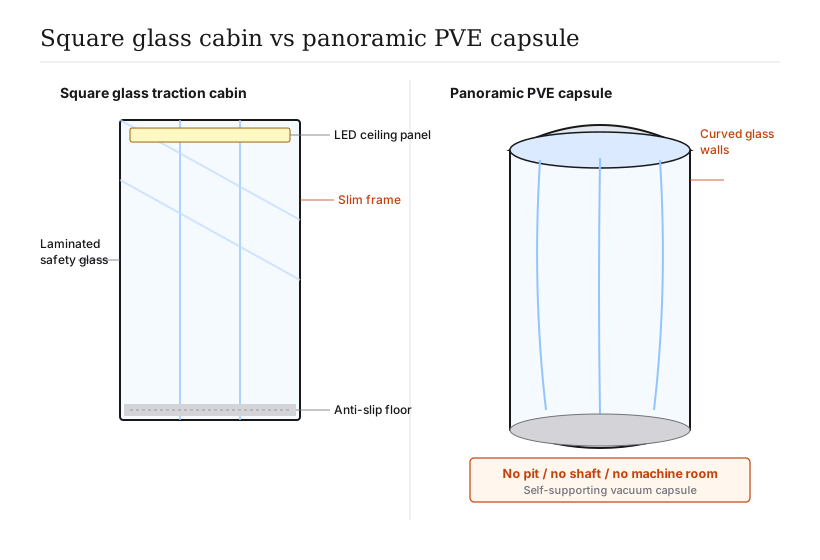
A glass cabin turns travel between floors into a view. Whether it is a square traction cabin with three glass walls or a cylindrical pneumatic vacuum (PVE) capsule — Nibav being the best-known India-grown brand — glass makes a compact home feel larger and a stairwell feel like architecture. It is the natural choice when the lift sits in an atrium, beside a feature staircase, or against a garden wall.
Two honest caveats: glass is laminated/tempered safety glass (never ordinary glass), and you trade some privacy and gain a cleaning chore. Tinted or frosted panels soften both. The PVE versions are also the easiest retrofit — no pit, no shaft, no machine room — which is why they show up so often in existing villas. Go deep in the glass elevator design guide.
3. Warm wood / Japandi — calm and grounded
The most-requested "soft modern" look. A light oak or pale walnut veneer (or a good wood-effect laminate, which is far more cost-effective) on the side walls, a matte black or bronze handrail, a warm 2700–3000K light — and the cabin feels like an extension of the home rather than a machine. It blends beautifully with wooden floors and joinery, which is why villas and family homes love it.
Japandi — the Japanese-Scandinavian crossover — pushes this further: restrained palette, natural textures, nothing shiny, one quiet accent. Laminates give you the pattern range cheaply; veneer and solid wood are the premium tier. Either way, keep the floor anti-slip. More material detail in the cabin material selection guide.
4. Handle-less / flush — the seamless cabin
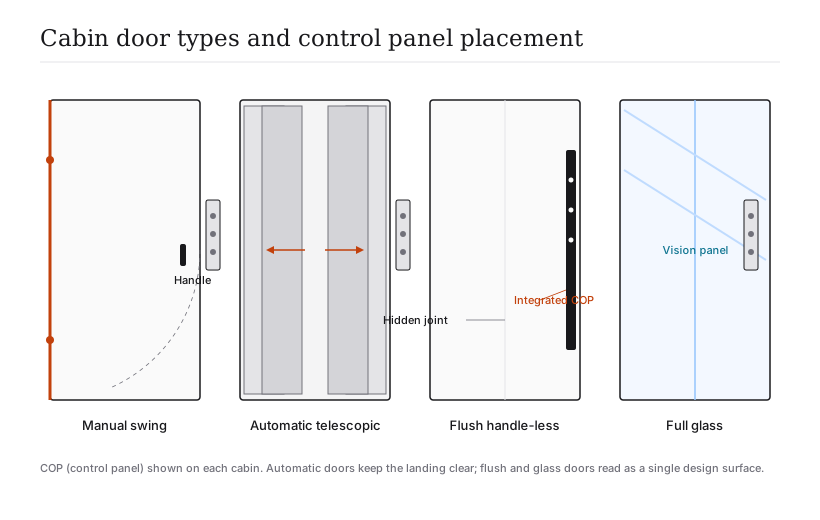
Borrowed from handle-less modular kitchens, this look removes visible hardware. Push-to-open or sensor doors, panel joints hidden, the call panel (COP) integrated flush into the wall or finished as a slim touch strip. The result is a quiet, gallery-like box where nothing interrupts the surface.
It pairs naturally with brushed steel or back-painted glass and rewards good lighting, because there is no ornament to carry the design — the light and the material are the design. Touch and touchless controls suit this aesthetic perfectly; see smart home lift design and designer doors.
5. Mood-lit — design with light, not just material
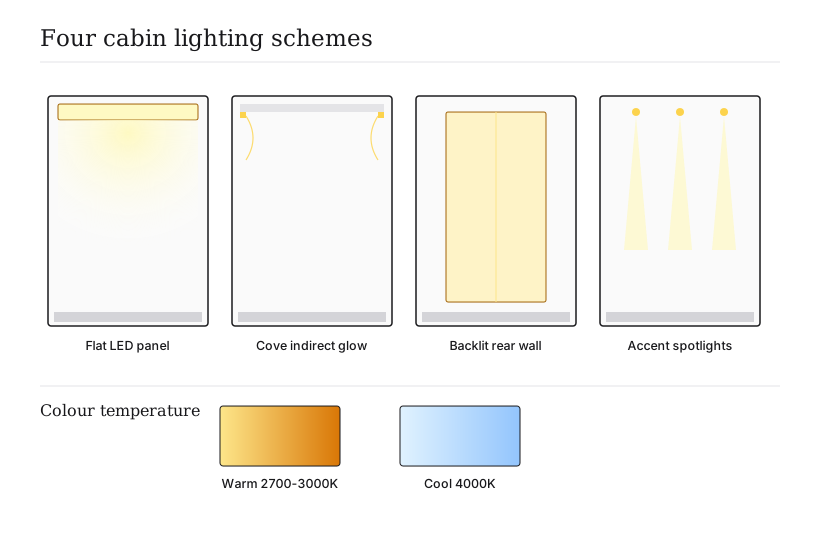
Lighting is the cheapest way to make a plain cabin feel expensive. Three moves, often combined:
- LED ceiling panel — the even, efficient, long-life default.
- Indirect / cove LED strips hidden along the panel or ceiling edges for a soft ambient glow.
- Backlit panels or spotlights for accent and drama.
Colour temperature decides the mood: warm (≈2700–3000K) reads cosy and residential; cool (≈4000K) reads crisp and clinical — most homes want warm. Premium cabins add dimming and scene control, so the lift can be bright by day and a soft lounge by night. The full toolkit is in the lighting design guide.
6. Mirror-accent — space and glamour
A mirrored rear wall does two jobs. It doubles the apparent depth of a small cabin — invaluable in tight Indian shafts — and it lets a wheelchair user reverse out safely, which is exactly why accessibility guidelines recommend a rear mirror. Bronze- or grey-tinted mirror reads more "boutique hotel" and hides smudges better than plain silver.
Keep it to one wall; a fully mirrored box can feel disorienting and shows every fingerprint. Done with restraint, it is the single most effective trick for a compact cabin.
7. Stone-accent — solid luxury
Marble or granite signals permanence and pairs a modern cabin with a more traditional foyer. Because stone is heavy — and weight eats into your rated capacity and loads the drive — it is almost always used as an accent: the floor, or a single feature wall, rather than the whole cabin. A polished granite floor with brushed-steel walls is a classic restrained-luxury combination.
Match the cabin stone to your foyer or staircase stone for continuity. Explore the upper tier in premium lift finishes and the whole-residence view in lift design for luxury residences.
8. Colour / RAL — the confident choice
Most homeowners default to steel and wood, but powder-coated steel opens the full RAL colour fan — some brands offer 16-plus shades. A deep forest green, a warm terracotta, a soft sage or a charcoal cabin can be the boldest design decision in the house, and it costs little more than a standard finish because powder-coating is a mainstream process.
Colour works best as a considered choice: one rich wall colour against neutral steel and a wood floor, rather than a fully saturated box. It is a favourite for children's wings, studios and anyone who wants the lift to feel bespoke rather than off-the-shelf.
9. Biophilic — bringing nature in
A growing 2026 direction. The biophilic cabin uses nature-tone palettes (sage, clay, sand, stone-grey), wood-look surfaces, soft warm light, and sometimes a slim planting niche or a framed botanical panel beside the lift entrance. The aim is calm and restoration — the lift as a small green pause rather than a hard machine.
It overlaps with the Japandi look but leans more on green and growth. It suits wellness-led homes and pairs naturally with daylight, which is one more reason a glass-fronted shaft beside a garden works so well.
10. Statement foyer — the arrival piece
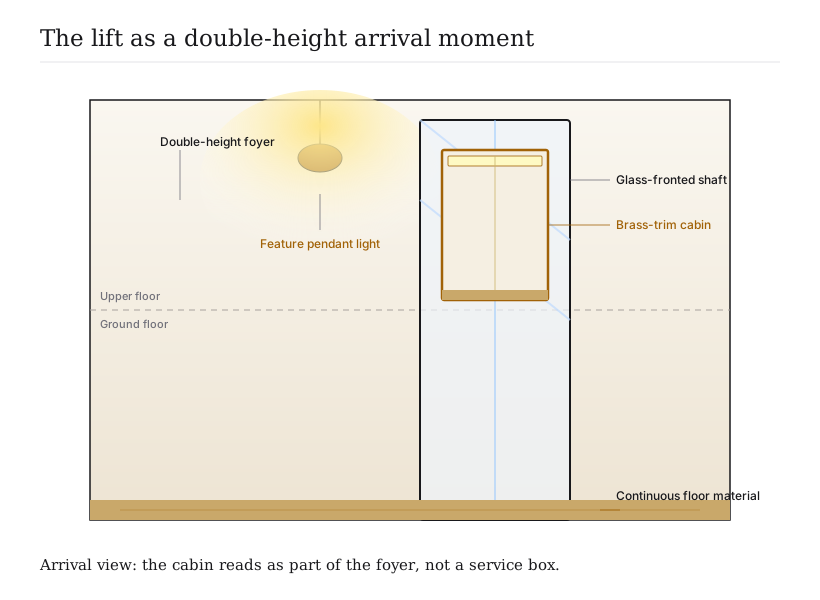
When the lift sits in a double-height entrance, lean in. Bronze, brass or champagne-gold trims, a glass front so the cabin is visible from the foyer, a dramatic feature light overhead, and a continuous material running from foyer floor into the cabin — these turn the lift into the centrepiece of arrival. This is the most "designed" end of the spectrum and the natural meeting point with lift design for luxury residences, which covers placement and the lift-as-statement at the whole-house scale.
11. Compact-chic — big look, tight shaft
Most Indian retrofits squeeze a lift into whatever space exists — sometimes a shaft as small as roughly 1219 × 1524 mm for a small home car. The compact-chic playbook makes that feel generous: light tones to bounce light, a mirror wall for depth, slim sliding doors that don't steal floor area, and exactly one accent (a wood back panel or a strip of cove light) so the eye has somewhere to rest. The discipline is restraint — clutter shrinks a small cabin, simplicity grows it.
12. Hospitality-luxe — boutique-hotel polish
At the top of the range, finishes move beyond hard surfaces: leather or upholstered wall panels, fluted or back-painted glass, bespoke mirror, designer handrails and integrated lighting, often with a custom RAL or gold trim. The reference is a boutique hotel lift — tactile, layered, quiet luxury. These choices push toward the upper cost bands, so confirm weight and maintenance implications (upholstery and stone both have upkeep) with your vendor before committing.
How to combine looks without going wrong
A few principles hold across every direction above:
- Pick a base, add one or two accents. A neutral shell (brushed steel, light wood, or back-painted glass) plus one mirror, stone or colour accent reads as designed; three competing materials read as busy.
- Let the light do the heavy lifting. Warm, even, dimmable light flatters every material. It is the cheapest upgrade and the one people notice most.
- Match the cabin to the foyer, not to a catalogue. Continuity of floor, tone and trim between the lobby and the cabin is what makes a lift feel built-in rather than bought.
- Never trade safety for style. Safety glass, anti-slip floors, automatic accessible-width doors and an ARD backup come first; the look is built around them, not instead of them.
Choose the feeling first — calm, open, glamorous, bold — then let materials and light serve it. The best home lifts are quietly confident, not loud.
When a look has won you over, go deep: glass and steel-vs-glass for the shell, materials and premium finishes for the surfaces, lighting and doors for the detail, smart design for the controls, and contemporary design trends for what is moving right now. For the engineering and budget under it all, start with the buyer's guide, the cost guide, the specification checklist and accessible home design.
References
- Elite Elevators — Top classic home elevator styles for Indian homes: https://www.eliteelevators.com/blog/top-classic-home-elevator-styles-for-indian-homes/
- Brio Elevators — Custom elevator cabins: materials, finishes and lighting: https://brioelevators.com/blog/custom-elevator-cabins-materials,-finishes-lighting
- Nibav Lifts — Best home elevators in India 2026: https://www.nibavlifts.com/blog/best-10-home-elevators-in-india/
- IS 14665 Part 1 (Electric traction lifts — outline dimensions), BIS: https://law.resource.org/pub/in/bis/S05/is.14665.1.2000.pdf
- CPWD / MoHUA Harmonised Guidelines and Space Standards for a Barrier-Free Built Environment (accessible-lift essentials — rear mirror, ≥ 900 mm door, handrail): https://www.cpwd.gov.in/Publication/Harmonisedguidelinesdreleasedon23rdMarch2016.pdf
- RPwD Act 2016 (accessibility benchmark for the built environment): https://ssepd.odisha.gov.in/sites/default/files/2024-01/RPWD%20ACT.pdf
Export this guide
Related Guides — Deep-dive reading
Premium Lift Finishes Guide (India): Brass, Leather, Veneer and Stone
A curated catalogue of high-end home-lift cabin finishes — the look each gives, where to use it, how it ages in Indian conditions and its cost tier.
Home Lifts & AccessibilityLift Cabin Material Selection Guide (India): Steel, Glass, Wood, Laminate and Stone
A practical decision framework for choosing your home lift cabin material — compared on look, durability, maintenance, weight, cost and best-fit home style.
Home Lifts & AccessibilityLift Design for Luxury Residences (India): Panoramic Cabins, Bespoke Finishes and Statement Placement
Treating the home lift as a design statement — panoramic glass and pneumatic cabins, bespoke wood/leather/stone/mirror/light finishes, prestige-scaled cars, double-height foyer placement and smart-home integration.
Home Lifts & AccessibilityRelated Tools — Try Free
Accessibility Compliance Calculator
Check a planned lift against the CPWD and RPwD accessible-lift benchmarks for a score.
Lift CheckerCross-Ventilation Analyzer
Estimate airflow and air changes per hour (ACH) from room size, window areas, layout, and local wind — with NBC 2016 Part 8 compliance check.
Ventilation CalculatorFalse Ceiling Cost Estimator
Live ₹/sqft across 8 ceiling types — POP, gypsum, designer, metal, PVC, wooden — with cove and spot lighting for 20 Indian cities.
Cost Calculator