
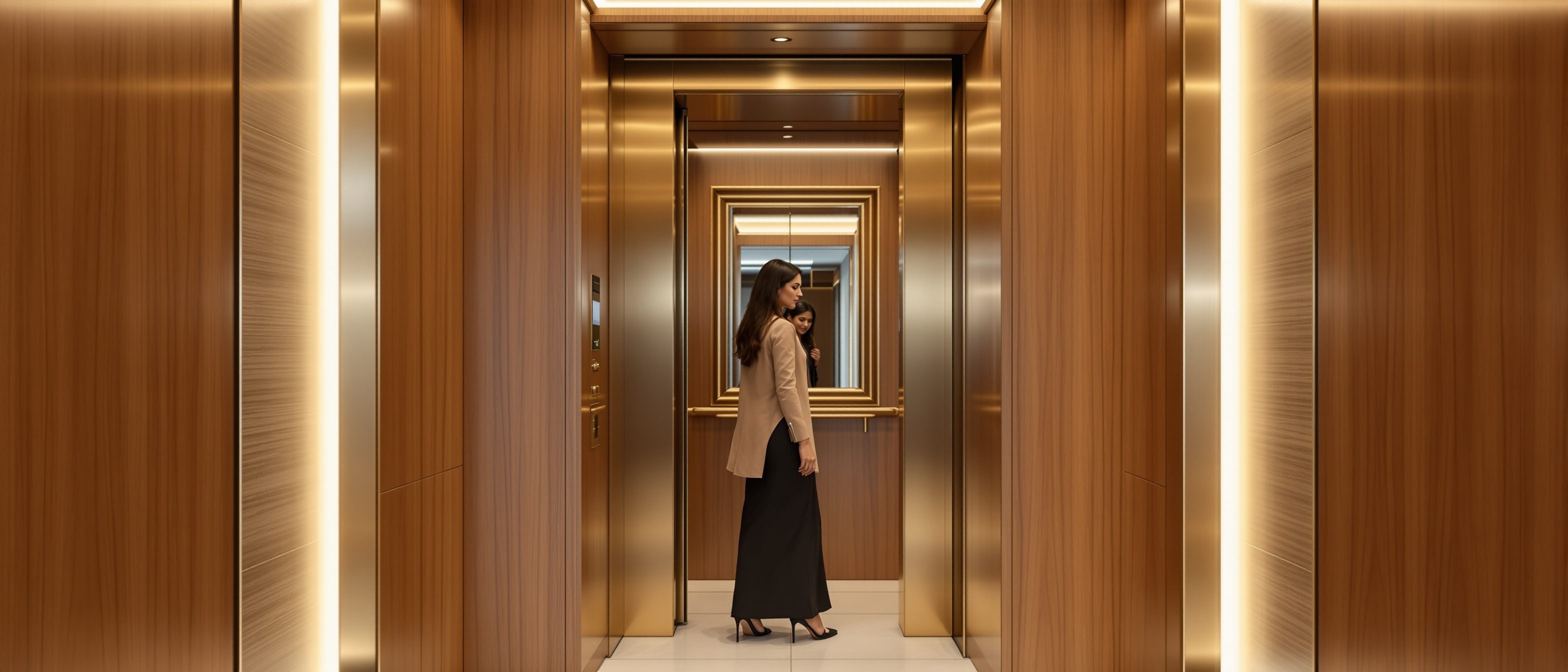
Luxury Home Elevator Interiors (India): Designing the Cabin as a Room
Compose the five surfaces, palette, lighting and touch of the smallest room in the house
A luxury home elevator is the smallest room in the house — and the one most people design last, or not at all. They choose the lift, then tick a finish off a brochure. The result is a beautifully engineered box that feels like a box. The cabins that linger in memory are the ones where someone treated the interior as a room: a composition of surfaces, proportion, light and touch, briefed with the same care you would give a powder room or a reading nook.
This guide is about that brief. Not the lift as a statement object in the home — our companion guide Lift Design in Luxury Residences covers placement, panoramic drama and automation at the architectural scale. Here we step inside and design the cabin from the skin in: the five surfaces, how a material palette resolves across them, the lighting that holds it together, and the handrail and mirror that quietly do the most work. For the component detail behind each choice — material durability, premium trims, lighting technique — we will point you to the specialist guides rather than repeat them.
Design the cabin as a fifteen-second room. You will stand in it longer, and more often, than you think — and you will always stand close to every surface.
The cabin as a room: think in five surfaces
A home lift cabin is roughly 1.0 to 1.4 metres on a side. At that scale every surface is within arm's reach and read at close range, so there is nowhere to hide a careless join, a cheap edge or a clashing tone. The discipline that makes a small bathroom feel resolved applies exactly: decide what each surface is doing before you decide what it is made of.
There are five: the floor, the ceiling, and the three solid walls (the fourth side is the door). One wall is the "feature" wall you face or flank; the other two are quieter. Treat them as a set, not five separate decisions.
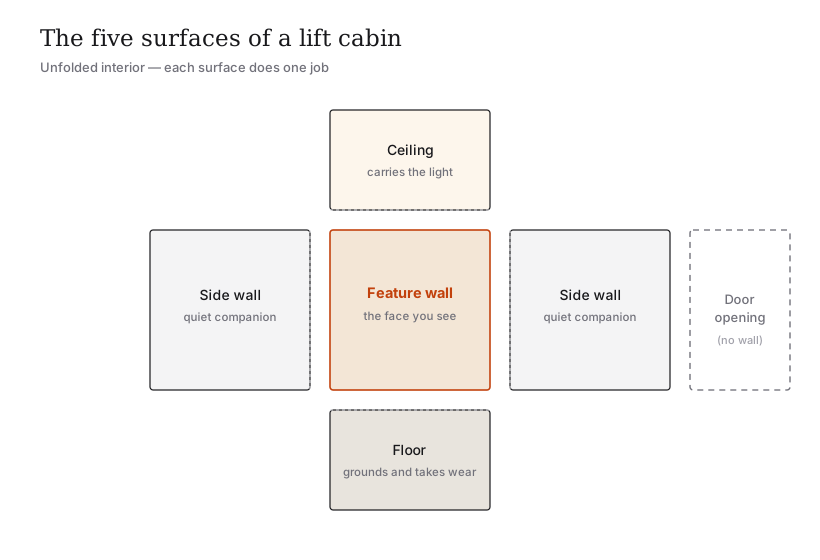
| Surface | Design role | Typical luxury treatment | Watch-outs |
|---|---|---|---|
| Floor | Grounds the room; takes all the wear | Anti-slip granite/stone, wood-look vinyl, or honed marble accent | Must be non-slip; heavy stone adds weight (affects capacity) |
| Ceiling | Carries the light; sets the mood | Backlit panel or cove-lit recess; warm metal or matte frame | Service access; even, glare-free light, not a bright square |
| Feature wall | The face you see; the cabin's "front" | Fluted/back-painted glass, wood veneer, leather or stone panel | Where you spend your budget; everything else supports it |
| Side wall (×2) | Quiet companions to the feature wall | Brushed steel, matte laminate, or a softer tone of the feature material | Resist a second hero material; let them recede |
| Handrail + mirror | The room's "furniture" — touch and depth | Designer rail in brass/bronze/steel; framed mirror as accent | Rail height and reach; mirror smudges, plan its cleaning |
Indicative treatments — confirm available finishes, weights and lead times with your vendor.
The single most common mistake in a small cabin is too many heroes: a marble wall, a fluted-glass wall, a brass ceiling and a patterned floor all shouting at once. In a room this size, choose one protagonist and let the rest play support. For how individual materials behave — wear, fingerprints, cleaning, weight — see Lift Cabin Material Selection and the Stainless Steel vs Glass Cabins comparison.
Composition and proportion
Because you read every surface at close range, proportion matters more here than in a large room. Three moves do most of the work.
Verticality. A cabin is taller than it is wide. Lean into it: vertical fluting, tall veneer panels, a slim full-height mirror or a vertical light slot make the cabin feel generous rather than cramped. Busy horizontal banding does the opposite — it chops the height and reads as "lift", not "room".
A clear datum. Run one horizontal line — the top of the handrail, the base of a backlit panel, a reveal between materials — consistently around the cabin at a comfortable height (the handrail sits around 800–1000 mm; align other lines to it). A shared datum is what makes disparate surfaces feel like one designed room.
Quiet corners. In a 1.2 m box the corners are everything. A slim shadow-gap reveal between wall panels reads as bespoke joinery; a clumsy butt-join with a fat trim reads as a kit. Spend your detailing attention on the joints and edges, not just the panel faces.
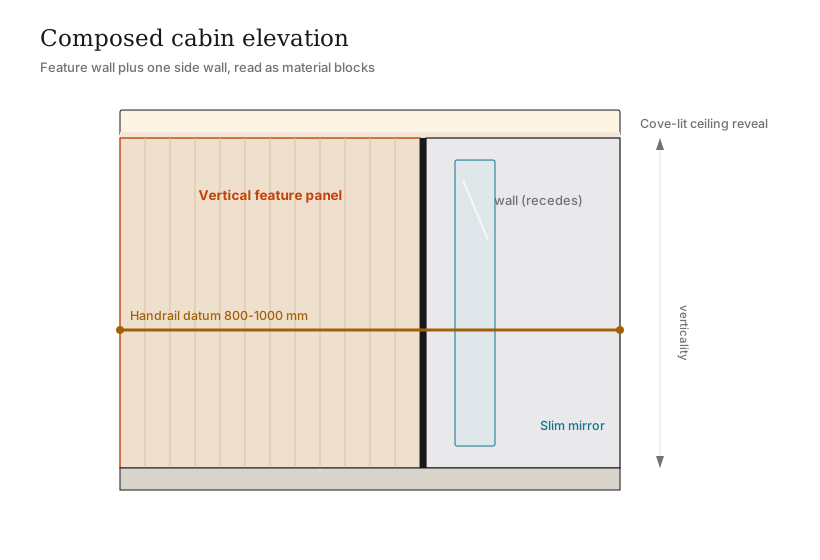
A small room rewards restraint and punishes excess. The luxury is in the proportion and the joints, not the number of expensive materials.
The material palette: how the surfaces work together
A palette is not a list of nice materials — it is a relationship between them. The reliable structure for a cabin is one hero, one neutral, one metal, one floor:
- The hero carries the character: warm wood veneer, fluted or back-painted glass, leather or upholstered panel, or a single stone slab. Used on the feature wall, sometimes wrapping one corner.
- The neutral calms the room: brushed stainless in a hairline or matte finish, or a matte laminate in a tone drawn from the hero. It clads the two side walls so they recede.
- The metal is the jewellery: the trim, handrail, button surround and ceiling frame in one consistent tone — brass, bronze, champagne-gold or steel. Pick one metal and repeat it everywhere; mixed metals in a small cabin look accidental.
- The floor is anti-slip and grounding: stone, granite, or a durable wood-look, in a tone that sits under the palette rather than competing with it.
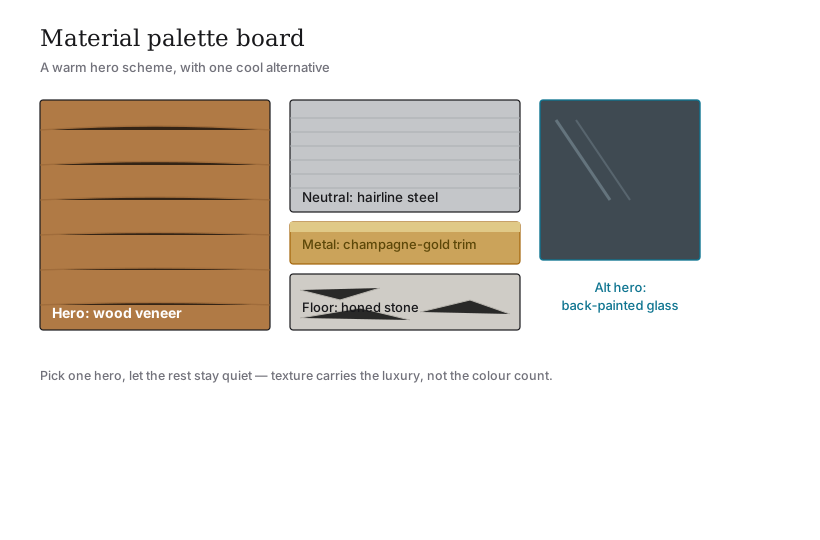
Two palettes that almost always read as luxury in an Indian home:
| Palette | Hero | Neutral | Metal | Floor | Mood |
|---|---|---|---|---|---|
| Warm modern (Japandi calm) | Walnut or teak veneer feature wall | Matte oat-toned laminate side walls | Bronze/antique-brass trim | Honed beige granite | Calm, residential, ages well |
| Cool gallery | Back-painted or fluted grey glass | Hairline stainless side walls | Brushed steel trim | Dark honed stone | Crisp, contemporary, gallery-like |
Indicative palettes — material availability, weights and finishes vary; confirm with your vendor.
Avoid mirror-polished mirror-finish steel as a wall: in a tight cabin it shows every fingerprint and turns harsh under spotlights. Modern luxury steel is brushed, hairline or matte — fingerprint-resistant and quietly expensive-looking. For the premium-trim end of this — brass, bronze, leather, fluted glass and bespoke finishes — see Premium Lift Finishes.
Lighting: the surface that holds the room together
Light is the fifth surface — it is what makes the other four look like a room or a box. Three principles:
1. Layer it. A single bright ceiling panel flattens everything. Combine an even ambient source (backlit panel or LED ceiling) with a grazing layer (a cove or slim strip washing down the feature wall) so the hero material's texture comes alive.
2. Get the colour temperature right. Warm white (around 2700–3000 K) flatters wood, stone, skin and brass and makes the cabin feel residential; cooler light (around 4000 K) suits a steel-and-glass gallery scheme. Keep one temperature throughout — mixed temperatures look like a fault.
3. Hide the source. Luxury lighting is felt, not seen. Use coves, reveals and backlit edges so you read glow, not glare. Premium cabins add dimming or scene presets; pair with auto cut-off so the lights idle down when the cabin is empty.
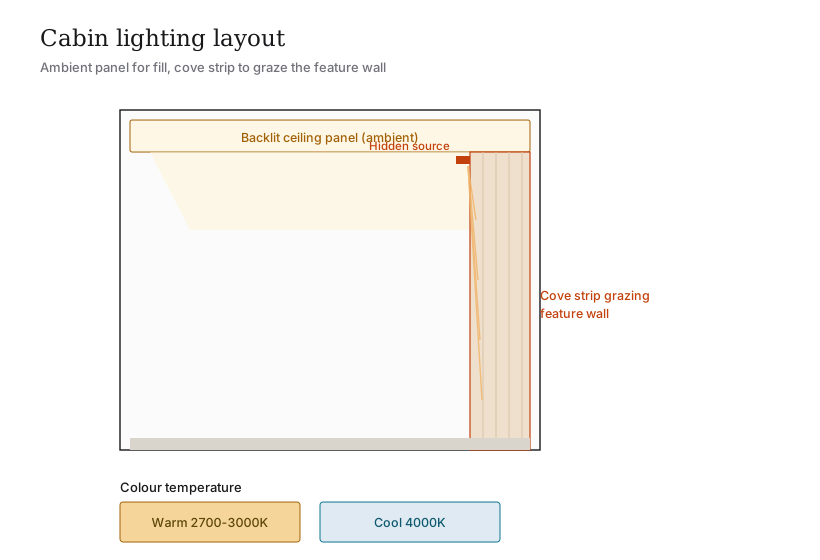
For the full technique — fixture types, cove detailing, dimming and scene control — see Home Lift Lighting Design.
Handrail and mirror: the room's furniture
These two elements punch far above their size, because they are the things your body actually touches and the surface your eye uses to judge depth.
The handrail is the cabin's one piece of "furniture" and your strongest jewellery moment. A slim designer rail in the palette's metal — bronze, brass or brushed steel — gives the hand something considered to hold and draws the horizontal datum around the room. Beyond looks, it is a genuine safety and accessibility element: a grab rail roughly 600 mm long, set about 800–1000 mm above the floor near the control panel, is exactly what the CPWD Harmonised Guidelines recommend for an accessible lift. Good design and accessible home design point the same way here.
The mirror does double duty. As design, a framed mirror — full-height, or a slim vertical panel — doubles the apparent depth of a tight cabin and bounces the cove light around. As function, a rear-wall mirror lets a wheelchair user reverse out without turning, a small courtesy that costs nothing to plan in. Frame it in the palette metal so it reads as an intentional element, not a bathroom afterthought, and plan how it will be cleaned — mirror and high-gloss surfaces show smudges in a space everyone touches.
The other senses: scent, sound, air
A cabin is sealed, small and used for short, repeated bursts — which makes it unusually responsive to the senses beyond sight. These are the finishing touches that turn a handsome cabin into one that feels luxurious:
- Air. Quiet, well-placed ventilation (a discreet fan or vent) keeps the sealed box fresh; specify it to be near-silent. A faint, clean signature scent — the way a good hotel lobby is subtly scented — can be introduced through the ventilation, kept very light.
- Sound. Soft-close doors, vibration-damped fixings and a genuinely quiet drive (MRL traction and screw drives run smooth and low-noise) make the ride feel expensive. Some premium cabins add a low ambient music option; keep it optional and gentle.
- Touch. This is where handrail metal, a leather or upholstered panel, and the floor underfoot do their work — every one is felt at close range, so finish quality matters more than area.
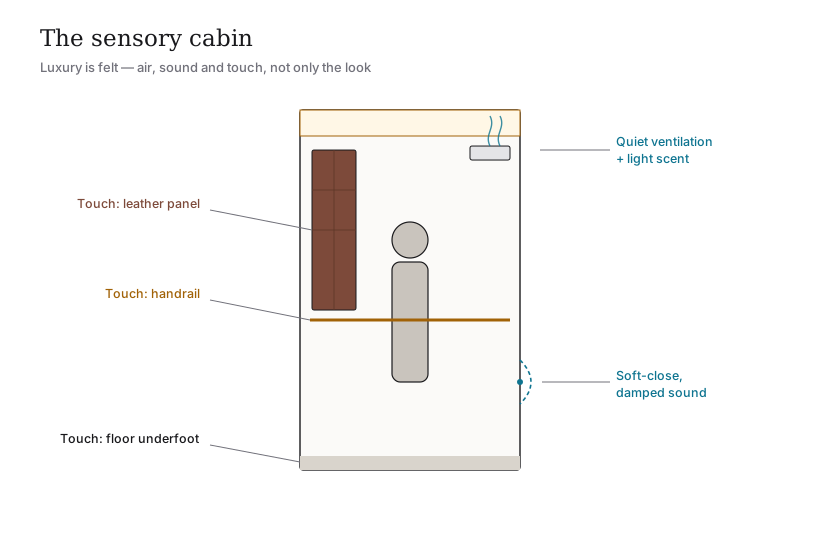
The eye decides whether a cabin is beautiful. The ear, nose and hand decide whether it feels luxurious.
A coherent design brief for the cabin
Pull it together before you talk finishes with a vendor. A good cabin brief answers, in order:
1. Character in one line. "Warm Japandi calm" or "cool gallery crisp" — a single intent everything serves.
2. The hero, the neutral, the one metal, the floor. Name them; resist a second hero.
3. The proportion moves. Verticality, a single handrail datum, shadow-gap corners.
4. The lighting layers and colour temperature. Ambient plus grazing; one temperature; hidden sources; dimming if premium.
5. Handrail and mirror. Metal, height (800–1000 mm rail), mirror placement and framing — design and accessibility in one decision.
6. The senses. Quiet air, optional scent, soft-close sound, tactile panels.
7. The non-negotiables underneath. Anti-slip flooring and laminated safety glass are design choices that are also safety choices; an ARD (Automatic Rescue Device) is essential in India so a power cut never traps anyone — see the Residential Elevator Buyer's Guide for the engineering brief.
Where this sits in the bigger picture: the cabin interior is the most personal layer of the lift, and it stacks on top of the base lift price. Premium finishes push you toward the upper cost bands rather than adding a fixed sum, so cost every choice against the Home Lift Cost in India 2026 guide and frame any figure as indicative — confirm with your vendor. For the wider design conversation — trends, smart features, doors and glass — see Contemporary Elevator Design Trends, Smart Home Lift Design, Designer Elevator Doors and Glass Elevator Design.
Design the smallest room in the house like a room, and it stops being the lift. It becomes the fifteen seconds of the day your guests remember.
References
- Brio Elevators — Custom Elevator Cabins: Materials, Finishes and Lighting: https://brioelevators.com/blog/custom-elevator-cabins-materials,-finishes-lighting
- Elite Elevators — Top Classic Home Elevator Styles for Indian Homes: https://www.eliteelevators.com/blog/top-classic-home-elevator-styles-for-indian-homes/
- Nibav — Best Home Elevators in India 2026: https://www.nibavlifts.com/blog/best-10-home-elevators-in-india/
- CPWD / MoHUA Harmonised Guidelines and Space Standards for a Barrier-Free Built Environment (handrail and accessible-cabin provisions): https://www.cpwd.gov.in/Publication/Harmonisedguidelinesdreleasedon23rdMarch2016.pdf
- IS 14665 Part 1 — Electric Traction Lifts, outline dimensions (BIS): https://law.resource.org/pub/in/bis/S05/is.14665.1.2000.pdf
- RPwD Act 2016 (accessibility benchmark): https://ssepd.odisha.gov.in/sites/default/files/2024-01/RPWD%20ACT.pdf
Export this guide
Related Guides — Deep-dive reading
Premium Lift Finishes Guide (India): Brass, Leather, Veneer and Stone
A curated catalogue of high-end home-lift cabin finishes — the look each gives, where to use it, how it ages in Indian conditions and its cost tier.
Home Lifts & AccessibilityLift Cabin Material Selection Guide (India): Steel, Glass, Wood, Laminate and Stone
A practical decision framework for choosing your home lift cabin material — compared on look, durability, maintenance, weight, cost and best-fit home style.
Home Lifts & AccessibilityHome Lift Lighting Design (India): LED Panels, Cove Light and Mood
How to light a home-lift cabin well — the even LED ceiling panel, soft cove glow, accent spotlights and backlit panels, warm-versus-cool colour temperature, dimmable scenes, and the safety layer that keeps the light on in a power cut.
Home Lifts & AccessibilityRelated Tools — Try Free
Accessibility Compliance Calculator
Check a planned lift against the CPWD and RPwD accessible-lift benchmarks for a score.
Lift CheckerHome Lift Cost Calculator
All-in home lift cost by floors, type, capacity and city — equipment, civil, GST and AMC, with a drive-type comparison.
Lift CalculatorFalse Ceiling Cost Estimator
Live ₹/sqft across 8 ceiling types — POP, gypsum, designer, metal, PVC, wooden — with cove and spot lighting for 20 Indian cities.
Cost Calculator