
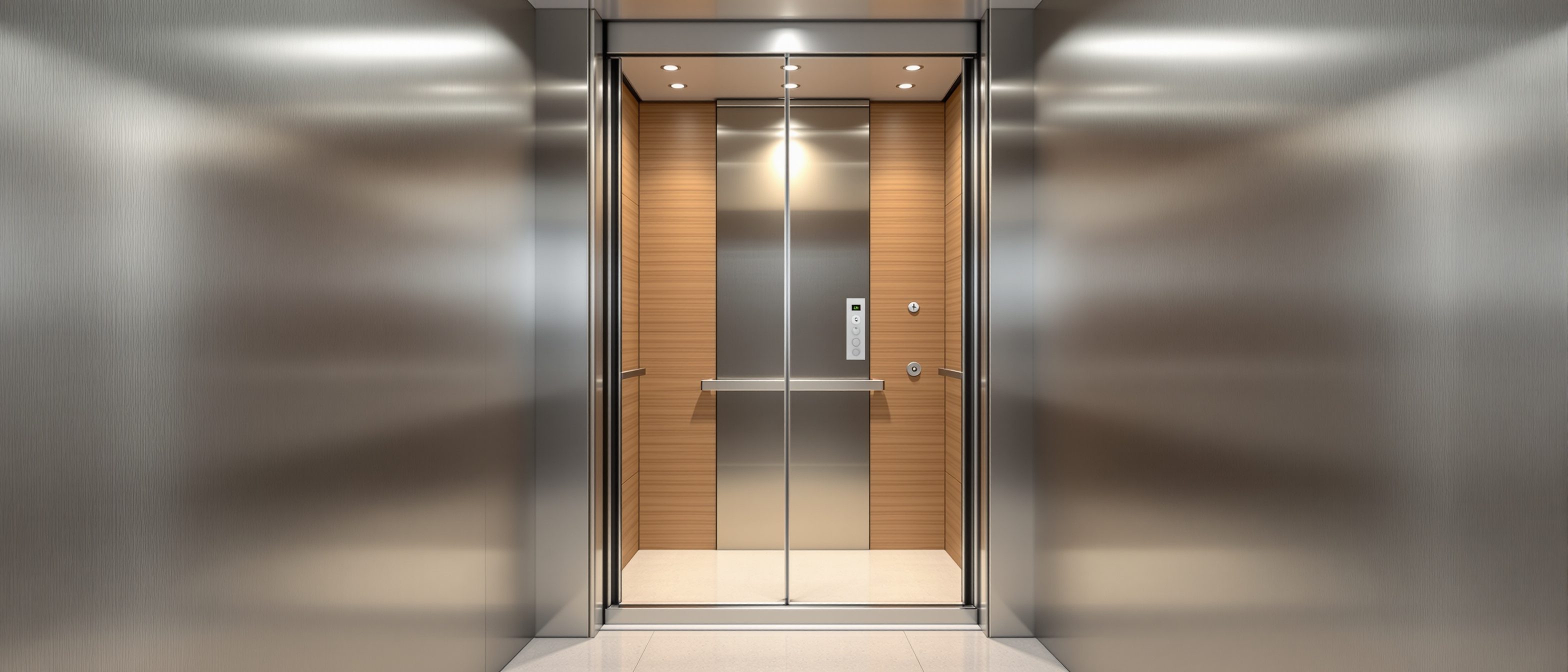
Lift Cabin Materials Guide (India): Grades, Finishes and Properties
A technical materials reference for home-lift cabins — stainless-steel grades, finishes and the properties that decide durability, corrosion, fire and load
The wall you lean against, the panel you touch a hundred times a day, the surface that has to look new after a decade of bags, prams and wet monsoon hands — that is the lift cabin material. Two homes can buy the "same" lift and end up with very different cabins: one a fingerprint magnet that rusts at a coastal address, the other a calm, durable enclosure that still photographs well years later. The difference is almost always the lift cabin materials and the grade and finish chosen, not the brand on the controller.
This is the technical materials reference for that decision. It catalogues the materials a home-lift cabin is actually built from — stainless-steel grades, the finishes applied to them, and the alternative surfaces (glass, wood veneer, laminate, stone, solid surface, powder-coated steel, mirror) — and the properties that matter: durability, scratch and dent resistance, corrosion, fire rating, weight (which eats into rated load), and cleaning. If you instead want help choosing a palette for your home and budget, read the companion design-cluster guide, Lift Cabin Material Selection (India) — this guide is the reference behind that decision.
Indicative throughout. Grades, finishes and properties are general engineering guidance; exact panel build-ups, fire certificates and load impacts vary by model. Confirm against the vendor's specification and the relevant standard before you sign.
How to read a cabin: walls, ceiling, the bits that move
A home-lift cabin is not one material. It is an assembly, and each part has a different job:
- Wall panels — the large vertical surfaces, the ones you see and touch most. This is where stainless steel, glass, veneer, laminate or solid surface lives.
- Return panels and front (entrance) wall — the panel carrying the car-operating panel (COP) and door frame, often the most "worked" steel.
- Ceiling — usually a lighter material with the light fitting and ventilation; weight here matters less but fire behaviour still counts.
- Skirting and handrail — high-wear, high-touch; durability and cleaning dominate.
- Floor — a separate decision with its own anti-slip and weight rules, covered in Lift Flooring Materials (India).
The car itself sits on a steel carframe and platform — a structural component governed by IS 14665 Part 4 — and what you choose for the visible panels does not change that frame, but it does change the dead weight the lift carries.
The property that quietly governs everything: weight versus rated load
Every lift has a rated load — the maximum it is certified to carry, set by the carframe, ropes or ram, motor and safety gear (see How Home Lifts Work (India) and the Elevator Safety Components (India) catalogue). That rating assumes a certain cabin weight. Heavy finishes — natural stone walls, thick mirror, stone floors — add dead weight to the empty car. Heavier cabin, fewer kilograms left for people.
A small home car may be rated for two to eight persons (a two-person car is roughly 150 to 204 kg of payload). Load a stone-clad cabin into that and you can lose the equivalent of a passenger before anyone steps in. This is why the materials decision is never purely aesthetic: it is a load decision the vendor must sign off against the certified rating.
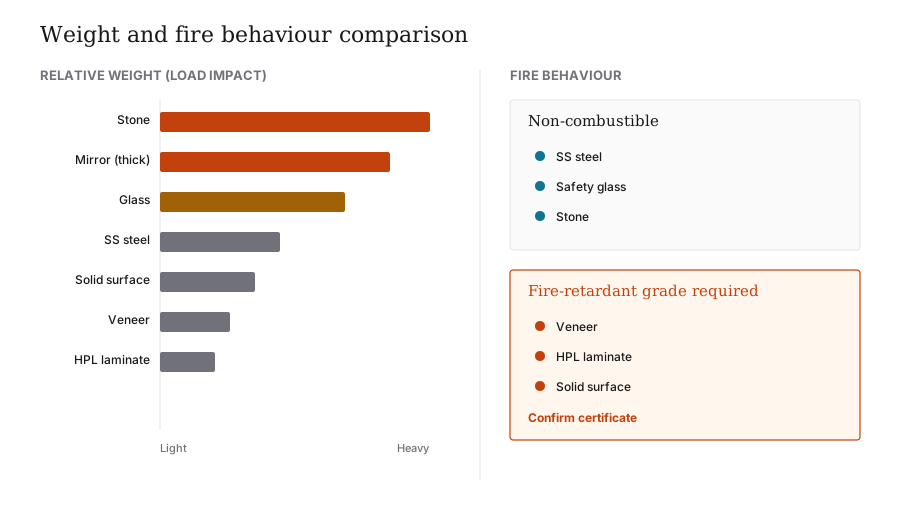
Rule of thumb: the heavier and more luxurious the surface, the more you must confirm the rated-load maths with the vendor. Lightweight steel, laminate, veneer and solid surface are kind to the load budget; thick stone and mirror are not.
Stainless steel: the default, and why the grade is the real question
Stainless steel is the most common home-lift cabin wall material in India, and for good reason — it is durable, broadly corrosion-resistant, hygienic, takes a wide range of finishes and is relatively light for its strength. But "stainless steel" on a quotation tells you almost nothing until you see the grade and the finish.
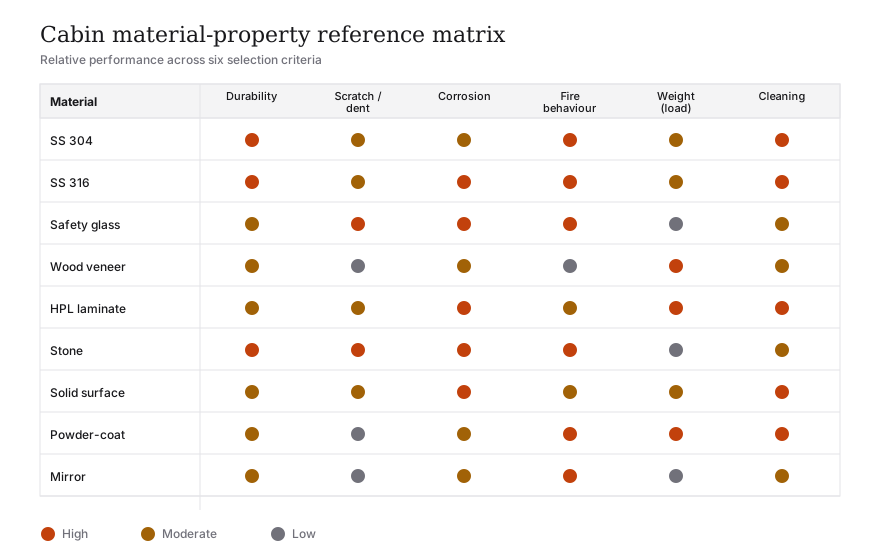
SS 304 versus SS 316
Two austenitic grades dominate cabin work:
| Property | SS 304 | SS 316 |
|---|---|---|
| Typical use | Standard interiors, most inland homes | Coastal, humid, pool/spa, high-salt air |
| Corrosion resistance | Very good in normal indoor air | Superior — resists chloride (salt) pitting |
| Key chemistry difference | Chromium-nickel | Adds molybdenum for chloride resistance |
| Cost | Lower (the common choice) | Higher (premium) |
| Magnetic | Essentially non-magnetic | Essentially non-magnetic |
| Where it can fail | Can pit/stain in salty, chloride-rich air over years | Far more forgiving in the same air |
The practical reading for a homeowner:
- Inland, normal indoor environment — SS 304 is the sensible, cost-effective default and what most residential cabins use.
- Coastal addresses, salt-laden or persistently humid air (Mumbai, Chennai, Kochi, Goa, coastal Gujarat/Odisha) — specify SS 316 for the touched and exposed panels. The molybdenum content resists the chloride pitting that makes cheaper steel develop tea-coloured stains near the coast. The cost premium buys you a cabin that still looks clean after years of salt air.
Do not let a vendor quote "stainless steel" without the grade. SS 304 and SS 316 look identical on day one and very different after five coastal monsoons.
The finishes applied to stainless steel
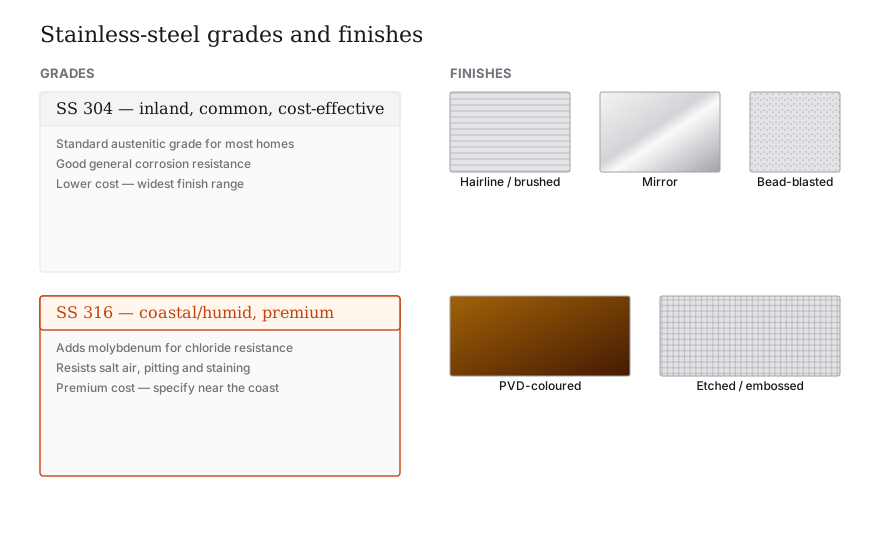
The same steel can wear a dozen faces. The finish changes both the look and the practical behaviour — fingerprints, scratch-visibility and cleaning:
| Finish | Look | Practical behaviour |
|---|---|---|
| Hairline / brushed | Fine parallel grain, satin | The workhorse — hides fingerprints and minor scratches well; easy to clean; most popular |
| Mirror (polished) | Bright reflective | Glamorous but shows every fingerprint, smudge and fine scratch; high cleaning effort |
| Bead-blasted | Soft uniform matte, fine texture | Even, low-glare; hides marks well; calm modern look |
| PVD-coloured | Steel tinted gold, rose, champagne, black, bronze | Colour bonded by physical-vapour deposition; durable thin coating over the base finish; premium |
| Etched / embossed | Patterned, textured relief | Decorative; the texture also disguises wear; harder to wipe in deep patterns |
| Anti-fingerprint coating | Any base finish, sealed | A clear nano-coating that resists smudges and eases cleaning — worth it over mirror and dark PVD |
The pairing logic matters: mirror and dark PVD show fingerprints most, so they benefit most from an anti-fingerprint coating; hairline and bead-blast are inherently forgiving and need less. PVD colour sits on top of a base finish (you can have hairline-PVD-black or mirror-PVD-gold), so you are choosing two things, not one.
The alternative cabin surfaces
Steel is the default, not the only answer. These materials are used as full walls or, more often, as feature panels combined with a steel frame.
Glass
Cabin glass is safety glass only — laminated (a PVB interlayer that holds shards together if broken) and/or tempered (toughened to break into blunt granules). Thickness and lamination are engineered to the panel size and code; this is not ordinary window glass. Clear, tinted, frosted, low-iron (ultra-clear) and even switchable PDLC privacy glass are all options. Glass gives the open, panoramic feel — and in pneumatic vacuum and panoramic lifts it is also part of the structure. Because glass behaviour is its own engineering topic, the full reference is Glass Elevator Technologies (India); for the look-and-feel decision see Glass Elevator Design (India).
Wood veneer
A thin slice of real timber bonded to a stable core. It brings genuine warmth and grain. The properties to interrogate are fire grade and moisture behaviour — interior-grade veneer in a damp shaft or coastal home can delaminate, and fire certification must be confirmed for an enclosed car. Veneer is light (kind to rated load) but needs care.
HPL laminate (and MDF-core panels)
High-pressure laminate over an MDF or ply core: a huge pattern range (wood-look, stone-look, solids, anti-bacterial variants), tough wearing surface, light weight and lower cost than real veneer or stone. The core's fire and moisture grade is the thing to verify — ask for fire-retardant grade for an enclosed cabin and moisture-resistant core in humid regions.
Stone
Natural stone (granite, marble) or engineered stone as wall cladding reads as luxury and is extremely durable and scratch-resistant. The catch is weight — stone is heavy and directly reduces usable rated load, and it is harder to fix safely to a moving car. Usually reserved for premium installations where the vendor has explicitly sized the carframe and load for it.
Solid surface (Corian-type)
A seamless acrylic/mineral composite. Warm to touch, repairable (scratches can be sanded out), hygienic with no joints, available in many colours — and lighter than stone, so kinder to rated load. A strong choice where you want a stone-like calm without the weight penalty.
Powder-coated steel (RAL colours)
Mild or stainless steel powder-coated to any RAL colour — a durable, even, matte or satin colour finish. It opens up bold and pastel colour palettes that bare steel cannot, at sensible cost. Durable against scuffs, easy to clean; the coating quality and edge protection are what separate good from cheap.
Mirror and anti-bacterial laminates
Mirror panels (typically a feature on one wall, often the rear, doubling as the accessibility mirror that lets a wheelchair user reverse out) add depth and light — but, like mirror-finish steel, they show every mark and add weight in thick sections. Anti-bacterial laminates are worth noting for clinics, elder-care homes and the health-conscious: the same HPL family with a hygienic, easy-clean surface.
The master material-property reference
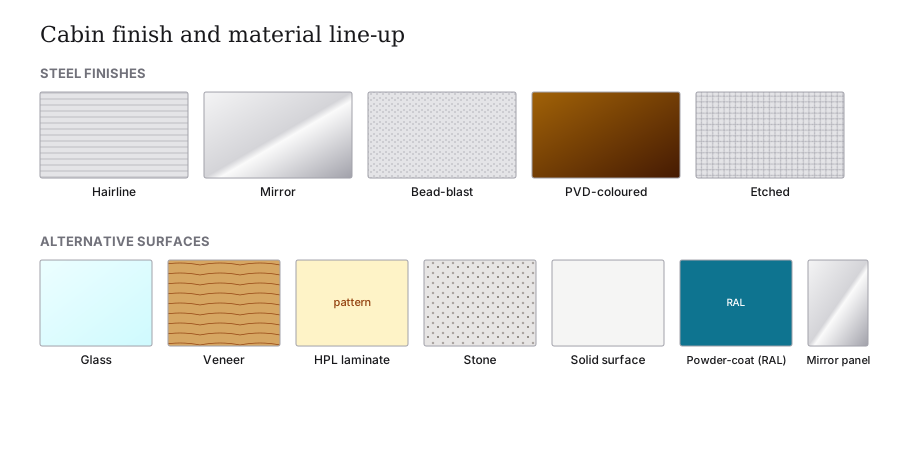
This is the table to keep. It scores each cabin material against the six properties that decide how a cabin lives — read across, not down, for any one material.
| Material | Durability | Scratch / dent | Corrosion resistance | Fire behaviour | Weight (load impact) | Cleaning ease |
|---|---|---|---|---|---|---|
| SS 304 (hairline) | High | Good (grain hides marks) | Good (inland) | Non-combustible | Light | Easy |
| SS 316 (hairline) | High | Good | Excellent (coastal) | Non-combustible | Light | Easy |
| SS mirror finish | High | Shows scratches | As per grade | Non-combustible | Light | Demanding (fingerprints) |
| PVD-coloured steel | High | Good; coat is thin | As per base grade | Non-combustible | Light | Easy with anti-fingerprint |
| Safety glass (laminated/tempered) | High | Good; shows smudges | Inert | Non-combustible | Moderate (thick) | Demanding (smudges) |
| Wood veneer | Moderate | Moderate (dents/marks) | N/A (moisture risk) | Needs fire-retardant grade | Light | Moderate (no harsh cleaners) |
| HPL laminate | High | Good (tough surface) | Good (moisture-grade core) | Needs FR grade core | Light | Easy |
| Natural stone | Very high | Excellent | Good (seal needed) | Non-combustible | Heavy (load penalty) | Easy but sealing |
| Solid surface (Corian-type) | High | Good; repairable | Good | Check rating | Moderate (lighter than stone) | Easy, seamless |
| Powder-coated steel (RAL) | High | Good (coat can chip) | Good (steel sealed) | Non-combustible base | Light–moderate | Easy |
| Mirror panel | Moderate–high | Shows scratches | Inert | Non-combustible | Heavy if thick | Demanding |
"Fire behaviour" here is general: bare metals, glass and stone are non-combustible, while veneer and laminate must carry the appropriate fire-retardant grade and certificate for an enclosed car. Always obtain the fire-rating documentation for organic-cored panels from the vendor.
Matching material to environment
Two homes, two right answers. Use the environment to filter before taste:
- Coastal / high-humidity — SS 316 for steel; moisture-resistant cores for laminate; seal stone; be wary of interior-grade veneer.
- Inland, dry, normal indoor air — SS 304 is fine; the full palette is open.
- Elder-care, clinic, hygiene-sensitive — anti-bacterial laminate or solid surface; matte, non-glare finishes; an accessibility mirror on the rear wall (a CPWD Harmonised Guidelines best practice, useful even in a private home).
- Tight rated load / small car — favour light surfaces (steel, laminate, veneer, solid surface) and treat stone and thick mirror as a deliberate, vendor-confirmed load trade.
- High-touch, low-fuss — hairline or bead-blast steel, or HPL laminate; avoid mirror as a primary wall unless you accept the cleaning.
What to put in the specification
When you brief or compare vendors, pin down the materials explicitly so two quotes are actually comparable. The full discipline is in the Lift Specification Checklist (India); for cabin materials specifically, name:
- Steel grade (SS 304 / SS 316) per panel, not just "stainless steel".
- Finish per panel (hairline / mirror / bead-blast / PVD colour / etched) and whether an anti-fingerprint coating is included.
- For glass, the safety type (laminated and/or tempered) and clarity (clear/tinted/low-iron).
- For veneer and laminate, the fire-retardant grade and certificate and the moisture grade of the core.
- For stone or thick mirror, the rated-load confirmation — written evidence the cabin weight is within the certified load.
- Cleaning and warranty terms for coatings (PVD, anti-fingerprint, powder-coat).
For where these surfaces sit in the wider purchase, and the indicative budgets attached to them, use the pillar Residential Elevator Buyer's Guide (India) and Home Lift Cost (India) 2026 rather than treating any figure here as a price — this guide deliberately quotes no prices.
Related references in this cluster
- Lift Door Types Explained (India) — the door mechanics and types reference.
- Lift Flooring Materials (India) — the floor's own anti-slip and weight rules.
- Lift Shaft Construction Materials (India) — RCC, steel and glass shaft enclosures.
- Glass Elevator Technologies (India) — safety glass types and structural glass.
- Elevator Safety Components (India) — the component catalogue behind the rated load.
- Lift Cabin Material Selection (India) — the homeowner choosing guide this reference supports.
References
- IS 14665 (Electric Traction Lifts), Part 1 — Outline dimensions (car and well): https://law.resource.org/pub/in/bis/S05/is.14665.1.2000.pdf
- IS 14665, Part 2 — Code of practice for installation, operation and maintenance: https://law.resource.org/pub/in/bis/S05/is.14665.2.1-2.2000.pdf
- IS 14665, Part 4 — Components (carframe, car, counterframe, suspension and safety gear) — names the car and carframe components the cabin sits on. (BIS, committee ETD 25.)
- IS 15259 — Hydraulic lifts (companion code, by name).
- IS 17900 / EN 81-20 and EN 81-50 — current lift safety concept aligning Indian and European safety requirements (by name), relevant where cabin and door safety components are specified.
- National Building Code of India 2016, Part 8 (Building Services), Section 5 — Installation of Lifts, Escalators and Moving Walks: https://www.bis.gov.in/standards/technical-department/national-building-code/
- BIS Guide for Using NBC 2016: https://www.bis.gov.in/wp-content/uploads/2022/08/Booklet-Guide-for-Using-NBC-2016.pdf
- CPWD / MoHUA Harmonised Guidelines and Space Standards for a Barrier-Free Built Environment (rear-wall mirror and accessible-cabin practice): https://www.cpwd.gov.in/Publication/Harmonisedguidelinesdreleasedon23rdMarch2016.pdf
Standards are cited by name and current best practice; clause numbers and certificates evolve. Verify the live edition with BIS and your licensed lift contractor before relying on any specification.
Export this guide
Related Guides — Deep-dive reading
Lift Cabin Material Selection Guide (India): Steel, Glass, Wood, Laminate and Stone
A practical decision framework for choosing your home lift cabin material — compared on look, durability, maintenance, weight, cost and best-fit home style.
Home Lifts & AccessibilityLift Flooring Materials (India): Anti-Slip, Durable and Accessible
A technical reference on home-lift cabin floor materials — textured vinyl, stone, wood-look, rubber and porcelain — and the safety, weight and accessibility rules that decide which is right.
Home Lifts & AccessibilityTypes of Home Lifts in India (2026): Complete Comparison and How to Choose
All seven home-lift options on one comparison table, plus a five-question decision framework to pick the right one
Home Lifts & AccessibilityRelated Tools — Try Free
Cross-Ventilation Analyzer
Estimate airflow and air changes per hour (ACH) from room size, window areas, layout, and local wind — with NBC 2016 Part 8 compliance check.
Ventilation CalculatorLift Safety Audit Checklist
Interactive checklist that scores your home lift on safety devices, compliance and upkeep.
ChecklistHome Lift Comparison Tool
Compare hydraulic, traction, pneumatic vacuum and screw lifts side by side for your home.
Lift Comparison