
Contemporary Elevator Design Trends (India 2026): What Is In Now
The directional 2026 trends in home-lift design — and how to adopt each one tastefully without buying a fad
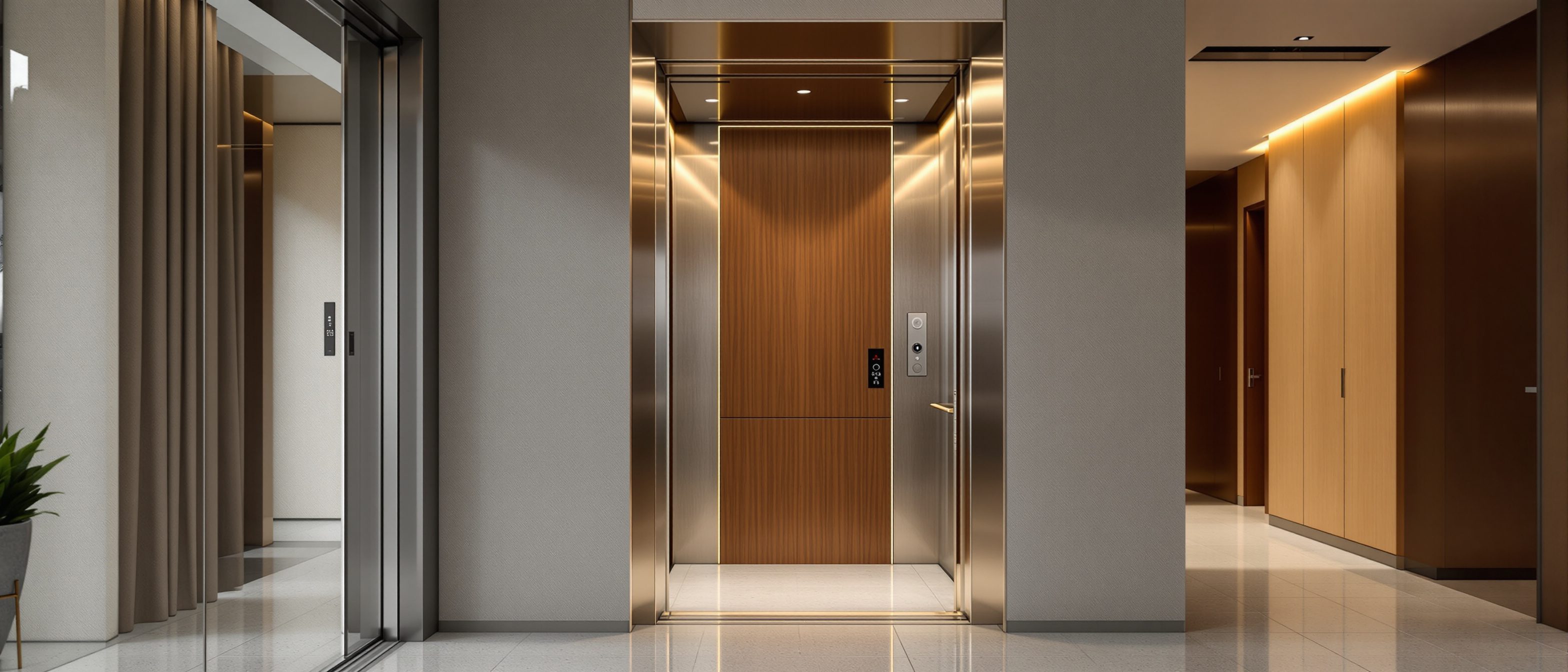
A few years ago the home lift in an Indian villa announced itself: mirror-polished steel, gold edging, a chandelier squeezed into a four-square-metre box. In 2026 the mood has flipped. The lift people now want is quieter, warmer and far more confident — a cabin that feels like an extension of a well-designed home rather than a hotel lobby in miniature. This guide is a directional read of what is actually in now in residential elevator design across India, and just as important, what is a passing fad you will regret by your next AMC renewal.
If you want a broad menu of looks to choose from, start with our modern home lift design ideas catalogue. This guide is the opposite of a catalogue — it tracks the current and the emerging, and tells you how to ride each trend tastefully. Costs throughout sit on top of the base lift price, so we never quote rupee figures for finishes here; see the home lift cost guide and always treat any number as indicative — confirm with your vendor.
The most contemporary cabin in 2026 is not the flashiest one. It is the one you stop noticing because it simply belongs to the house.
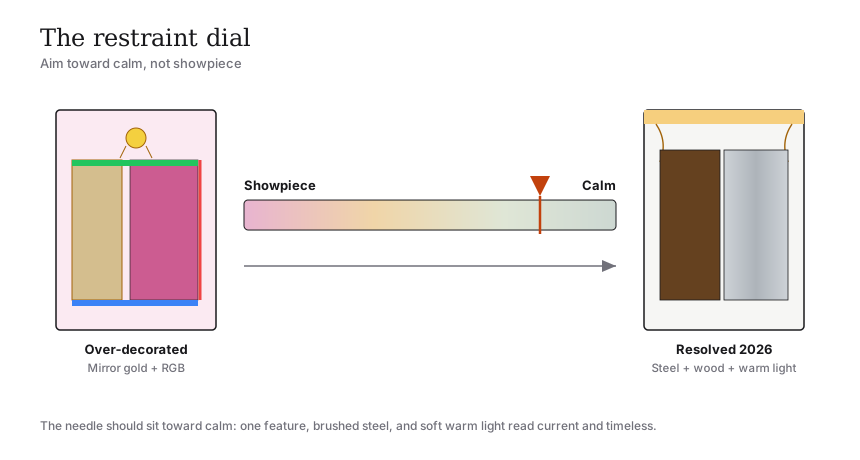
The big shift: from "showpiece" to "calm"
The single defining trend of 2026 is restraint. Indian homeowners, having seen lifts become common in three- and four-storey homes, no longer treat the cabin as a trophy. The aspiration has moved from expensive-looking to resolved-looking. Practically, that means brushed surfaces over mirror finishes, integrated lighting over fixtures, hidden controls over chrome buttons, and a material palette that talks to the rest of the home's interiors.
This is why the rest of this guide reads less like a fashion forecast and more like a set of judgement calls. Almost every trend below is good in moderation and tiring in excess.
The eight directional trends
1. Restrained brushed metal
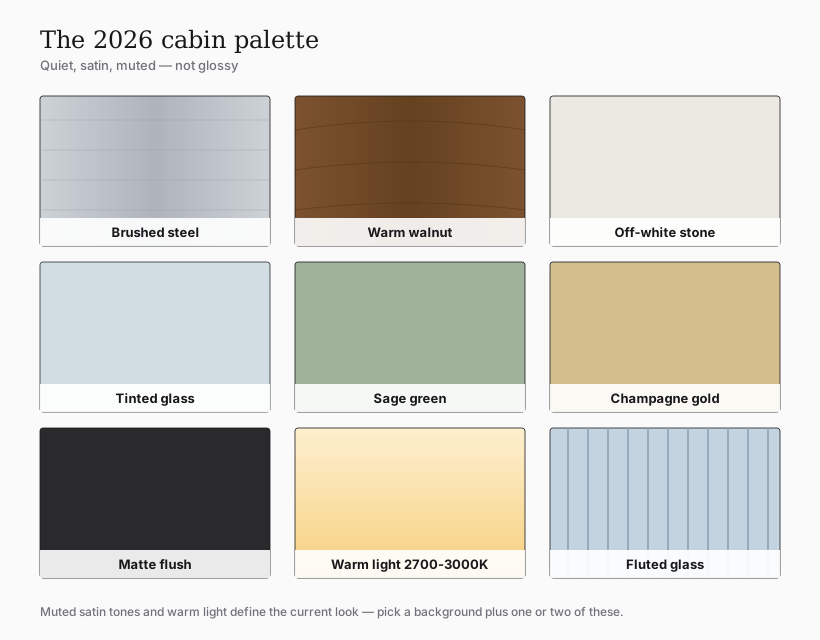
What it is. Stainless steel is still the backbone of the contemporary cabin, but the finish has changed. Brushed, hairline and matte stainless have replaced the mirror-polished steel of the 2010s. Soft, satin, fingerprint-resistant surfaces in cool greys.
Why it is rising. Mirror steel dates quickly, shows every smudge and every wheelchair scuff, and reads as "builder-grade luxury." Brushed steel is forgiving, neutral and timeless; it photographs well and ages gracefully. It is the safest "clean contemporary" default there is.
How to adopt it tastefully. Use brushed steel as the background — side walls and door frames — and let one other material (wood, glass, stone) be the feature. Avoid wall-to-wall steel on all four sides; it can feel clinical. For the deeper trade-offs, see stainless steel vs glass lift cabins.
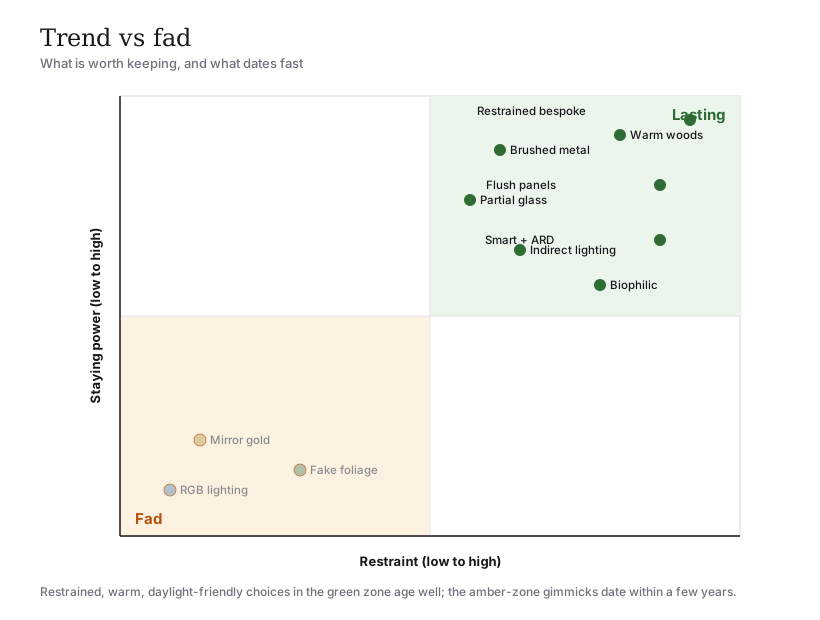
Fad check. Not a fad. This is the new baseline and will stay current for years.
2. Warm woods and Japandi calm
What it is. Wood-veneer or high-pressure laminate panels in warm oak, walnut and teak tones, often paired with off-white or stone surfaces and clean lines — the "Japandi" (Japanese + Scandinavian) sensibility of warmth plus minimalism.
Why it is rising. A steel-and-glass box can feel cold; a single wood feature wall makes the ride feel residential and inviting, and it ties the cabin to wooden floors and furniture elsewhere in the home. Laminates make the look affordable; veneer and solid wood make it premium.
How to adopt it tastefully. One wood feature panel (usually the rear wall) plus brushed steel sides is the most reliable contemporary recipe of 2026. Choose a wood tone that already appears in your home. Keep grain quiet — vertical, matte, low-contrast — rather than a glossy, heavily figured "showroom" veneer.
Fad check. Genuinely durable as a direction. The specific trendy wood tone will date; choosing one that matches your home's existing palette future-proofs it.
3. Glass and panoramic
What it is. Laminated safety-glass cabins — clear, tinted or frosted — and full panoramic capsules (common in pneumatic vacuum lifts). The ride becomes a visual experience and a compact home feels larger.
Why it is rising. Glass dissolves the "box," brings borrowed light into stairwells, and turns a vertical journey into a feature of the home. Retrofit-friendly pneumatic vacuum lifts have made the panoramic look attainable in existing houses without a full shaft.
How to adopt it tastefully. Use laminated/tempered safety glass only — this is a safety requirement, not a style choice (see IS 14665 on car construction). Decide privacy honestly: a fully clear cabin overlooking a living room is striking but exposing; frosted or tinted lower panels are a graceful compromise. Budget for cleaning. Our glass elevator design guide covers privacy, tint and structure in depth.
Fad check. Panoramic glass is a long-running trend, not a fad — but a fully transparent cabin can feel like over-exposure in a few years. Partial glass ages better than total glass.
4. Handle-less and flush panels
What it is. Doors and control panels with no protruding hardware — push-to-open or touch-activated, flush-mounted panels, recessed grips, and a continuous, seam-minimal wall surface.
Why it is rising. It is the lift translation of the handle-less kitchen: the cleaner the surface, the more contemporary it reads. Flush panels also wipe down easily and remove the "machine" look of bolted-on fixtures.
How to adopt it tastefully. Pair flush panels with a recessed or backlit control plate rather than a chunky button box. Make sure "flush" never compromises accessibility — buttons must still be reachable, tactile and Braille-marked for everyone in the household (CPWD Harmonised Guidelines). See designer elevator doors for door-and-handle detailing.
Fad check. Lasting, as long as usability is respected. Hidden controls that nobody can find at a glance are a fad worth avoiding.
5. Mood and indirect lighting
What it is. A move away from a single flat ceiling panel toward layered light: cove LED strips hidden along ceiling and panel edges, backlit features, and — on premium cabins — dimmable, scene-selectable warmth.
Why it is rising. Light does the heavy lifting in a small space. Indirect cove lighting makes a 1.5-square-metre cabin feel calm and expensive at almost no extra footprint, and warm colour temperatures (around 2700–3000K) read as "home" rather than "service lift."
How to adopt it tastefully. Layer one ambient source (cove strip) with one functional source (even ceiling light). Choose warm-white for living homes; reserve cool-white for clinical or gallery interiors. Dimmable is a lovely luxury but not essential. The full layout logic is in home lift lighting design.
Fad check. Indirect lighting is here to stay. Colour-changing RGB "party" lighting is the fad — striking in a showroom, exhausting at home.
6. Smart and touchless controls
What it is. Touch and capacitive panels, mobile-app and voice control, touchless/gesture call buttons, digital position displays, and IoT remote monitoring with predictive maintenance.
Why it is rising. Hygiene awareness made touchless call buttons mainstream, and the smart-home wave made app and voice control expected rather than exotic. Predictive maintenance — where the vendor is alerted before a fault strands the lift — is the genuinely valuable part.
How to adopt it tastefully. Prioritise the smart features that earn their keep: IoT monitoring, an Automatic Rescue Device (non-negotiable in India for power cuts), and auto standby/lighting cut-off for energy. Touchless and voice are nice; gimmicky gesture controls that misfire are not. Our smart home lift design guide separates the substance from the novelty.
Fad check. Smart monitoring and ARD are permanent. Voice "personalities" and elaborate gesture systems are the froth — buy them only if they reliably work.
7. Biophilic accents
What it is. Natural-material textures, soft greens and earth tones, stone-look surfaces, and — where the lift adjoins a garden or atrium — glass framing the greenery so the ride feels connected to nature.
Why it is rising. Biophilic design has moved from buzzword to mainstream interior expectation in India, and the lift is now included in that thinking rather than exempted from it. A glass cabin overlooking a planted courtyard is the dream version.
How to adopt it tastefully. Borrow nature, don't manufacture it: position a glass cabin to face existing greenery, use genuine stone or wood textures, and keep the palette muted. Avoid plastic "living walls" or artificial planters inside the car — they read cheap fast.
Fad check. The principle is durable. Literal fake foliage inside the cabin is a fad.
8. Deep customisation (RAL and bespoke finishes)
What it is. Colour and finish made to order — powder-coated steel in custom RAL colours (some brands offer 16-plus), fluted and back-painted glass, brass, bronze and champagne-gold trims, leather or upholstered panels, and bespoke handrails.
Why it is rising. As lifts become standard in premium homes, owners want the cabin to be theirs, not a default. Customisation is how a contemporary lift avoids looking like every other contemporary lift.
How to adopt it tastefully. Customise one element deeply rather than everything lightly — a single bespoke RAL colour or one fluted-glass feature wall does more than five competing materials. Warm metals (brass, bronze, champagne) have replaced bright chrome and gold as the premium accent of choice; use them as thin trims, not whole walls. See premium lift finishes for the full materials library and the cabin-level view in luxury home elevator interiors.
Fad check. Bespoke is the opposite of a fad if it is restrained. Heavy gold, leather everything and high-gloss colour are the dated luxury this whole shift is reacting against.
The 2026 trends at a glance
All choices below are indicative and sit on top of your base lift price — confirm specifics with your vendor.
| Trend | What it is | How to adopt it tastefully | Staying power |
|---|---|---|---|
| Restrained brushed metal | Matte/hairline stainless instead of mirror polish | Use as the neutral background; let one other material lead | Very high — the new baseline |
| Warm woods / Japandi | Oak/walnut/teak veneer or laminate, minimalist warmth | One wood feature panel matched to your home's tones | High — direction lasts; pick a tone that matches your home |
| Glass and panoramic | Laminated safety-glass or capsule cabins | Use safety glass; frost/tint for privacy; budget cleaning | High — but partial glass ages better than fully clear |
| Handle-less / flush panels | No protruding hardware; push/touch surfaces | Keep buttons reachable, tactile and Braille-marked | High — provided usability is respected |
| Mood / indirect lighting | Cove LED strips, backlit features, warm dimmable light | Layer ambient + functional; warm-white for homes | High — but skip RGB "party" lighting |
| Smart and touchless | Touch/app/voice, touchless call, IoT monitoring, ARD | Prioritise ARD + predictive monitoring; novelty optional | ARD/monitoring permanent; voice/gesture is froth |
| Biophilic accents | Natural textures, greenery framed by glass | Borrow real greenery; avoid fake foliage inside the car | Principle durable; fake plants are a fad |
| Deep customisation (RAL/bespoke) | Custom colours, fluted glass, warm-metal trims | Customise one element deeply; thin warm-metal trims | High if restrained; heavy gold/gloss already dated |
How to choose: a simple adoption rule
Most homeowners do not need all eight trends. The contemporary 2026 cabin is usually two trends, well executed: a calm material pairing plus considered lighting, with everything else kept quiet. Pick a background (brushed steel), a feature (wood, glass or one bespoke finish), and a light recipe (ambient cove plus even functional light). Add smart and accessibility features for function, not show.
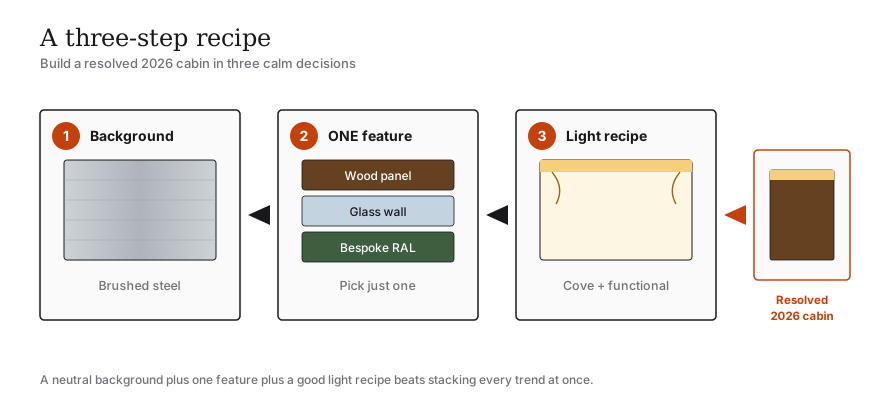
A useful filter: will this choice still look intentional in five years, after one wheelchair, two monsoons and a hundred fingerprints? Brushed steel, matched wood and warm cove light pass that test easily. Mirror gold, gloss colour and RGB do not.
Where trends meet safety (don't trade one for the other)
Several of these trends touch safety, and the trend must never win:
- Glass must be laminated or tempered safety glass — a style decision that is also a code expectation under IS 14665 for car construction.
- Flush, handle-less controls must keep buttons reachable, tactile and Braille-marked, with audio and visual floor indicators, per the CPWD Harmonised Guidelines — so a clean wall never excludes a family member.
- Flooring, however on-trend, must stay anti-slip (textured vinyl, stone or wood-look), not a glossy showpiece.
- Automatic doors with a clear width around 900 mm keep the cabin wheelchair-friendly; a stylish manual swing door does not. See accessible home design.
- An Automatic Rescue Device is non-negotiable given India's power cuts — the smartest cabin is useless if a cut strands it between floors.
For the full picture before you commit, work through the residential elevator buyer's guide, the lift specification checklist, and — if the lift is the centrepiece of a high-end home — lift design for luxury residences.
Trends tell you what is possible this year. Restraint, accessibility and good material sense tell you what will still look right in ten.
References
- Elite Elevators — classic and contemporary home elevator styles for Indian homes: https://www.eliteelevators.com/blog/top-classic-home-elevator-styles-for-indian-homes/
- Brio Elevators — custom elevator cabins, materials, finishes and lighting: https://brioelevators.com/blog/custom-elevator-cabins-materials,-finishes-lighting
- Nibav — best home elevators in India 2026: https://www.nibavlifts.com/blog/best-10-home-elevators-in-india/
- IS 14665 Part 1 (BIS), outline dimensions and car construction: https://law.resource.org/pub/in/bis/S05/is.14665.1.2000.pdf
- IS 14665 Part 2 (BIS), installation, operation and maintenance: https://law.resource.org/pub/in/bis/S05/is.14665.2.1-2.2000.pdf
- CPWD Harmonised Guidelines and Space Standards for a Barrier-Free Built Environment: https://www.cpwd.gov.in/Publication/Harmonisedguidelinesdreleasedon23rdMarch2016.pdf
- BIS National Building Code 2016 (Part 8, Building Services): https://www.bis.gov.in/standards/technical-department/national-building-code/
Export this guide
Related Guides — Deep-dive reading
Premium Lift Finishes Guide (India): Brass, Leather, Veneer and Stone
A curated catalogue of high-end home-lift cabin finishes — the look each gives, where to use it, how it ages in Indian conditions and its cost tier.
Home Lifts & AccessibilityLift Cabin Material Selection Guide (India): Steel, Glass, Wood, Laminate and Stone
A practical decision framework for choosing your home lift cabin material — compared on look, durability, maintenance, weight, cost and best-fit home style.
Home Lifts & AccessibilityHome Lift Lighting Design (India): LED Panels, Cove Light and Mood
How to light a home-lift cabin well — the even LED ceiling panel, soft cove glow, accent spotlights and backlit panels, warm-versus-cool colour temperature, dimmable scenes, and the safety layer that keeps the light on in a power cut.
Home Lifts & AccessibilityRelated Tools — Try Free
Home Lift Cost Calculator
All-in home lift cost by floors, type, capacity and city — equipment, civil, GST and AMC, with a drive-type comparison.
Lift CalculatorHome Lift Budget Planner
Full line-item budget for a home lift — equipment, finishes, civil, GST, AMC and contingency.
Lift PlannerLift Safety Audit Checklist
Interactive checklist that scores your home lift on safety devices, compliance and upkeep.
Checklist