
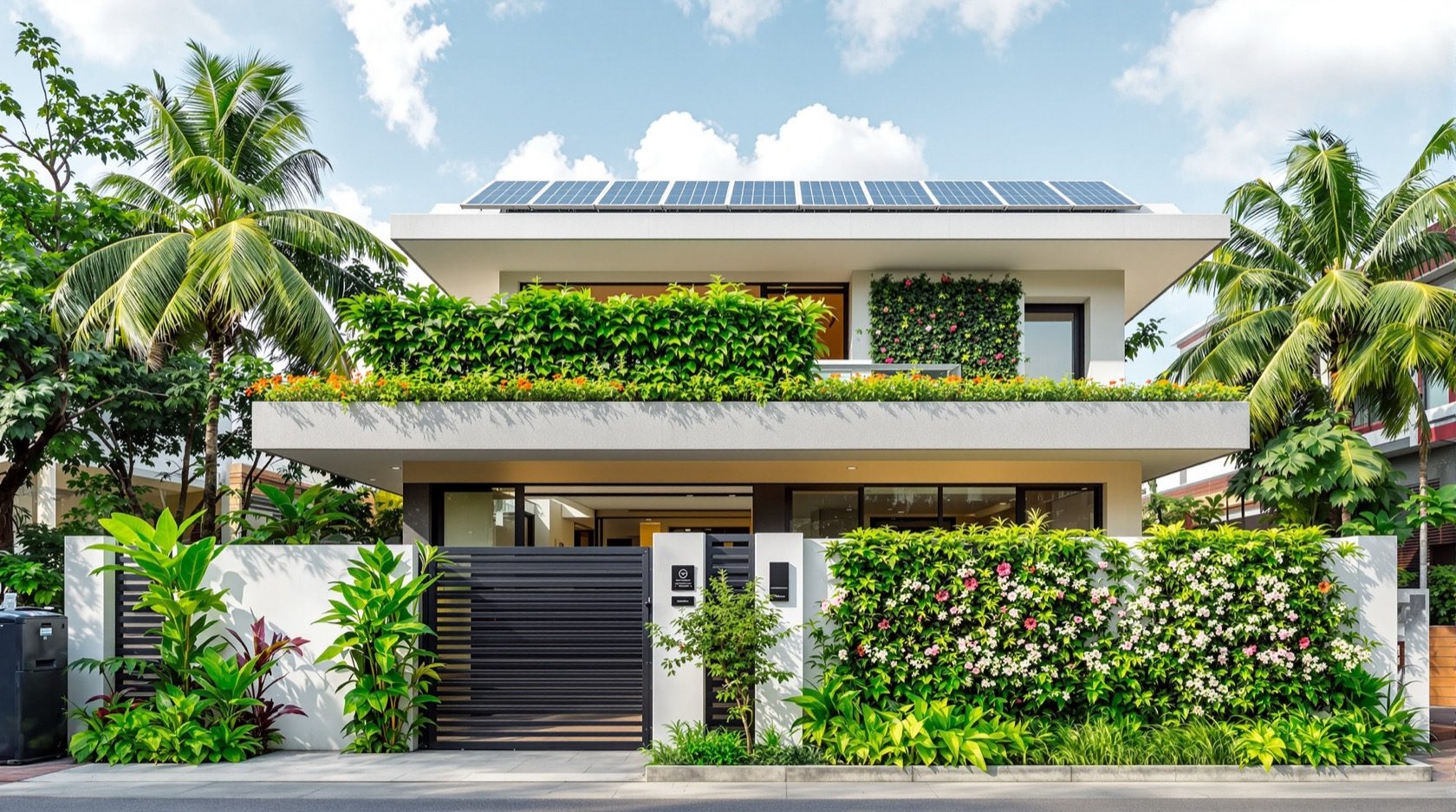
Green Building Ratings for Homes: IGBC, GRIHA & LEED Explained
What it means for a home to be 'green-certified' — the IGBC, GRIHA and LEED rating systems in plain language, how a home's electrical choices (efficiency, renewables, metering, controls) earn points, and whether certification is worth it for a homeowner.
You've seen buildings advertised as "IGBC Platinum" or "GRIHA-rated" — but what does a green certification actually mean, and what does it ask of a home's electrical design? Green-building rating systems score a home across energy, water, materials and health, awarding a certification level. Much of the energy score comes from electrical choices — efficiency, renewables, metering and controls. This guide explains the main rating systems in plain language, what a home's electrics contribute, and whether certification is worth it for a homeowner.
It is the green-rating guide of the sustainability set in the Electrical Knowledge Hub, the "certify it" companion to the sustainable electrical and efficient design guides.
The safety line. Certification is about design and verification, not a substitute for safe, standards-compliant work. All electrical and solar work remains a licensed professional's job to the relevant standards.
The three main rating systems
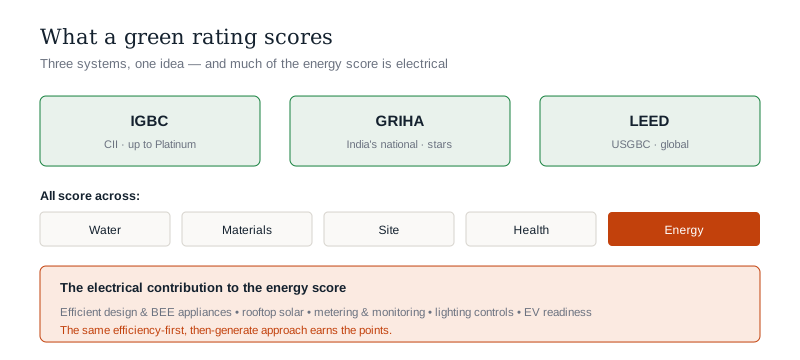
Three systems dominate green homes in India:
- IGBC (Indian Green Building Council) — a CII programme with rating systems including IGBC Green Homes; certification levels from Certified up to Platinum. India-developed and widely used.
- GRIHA (Green Rating for Integrated Habitat Assessment) — India's national rating system (TERI, endorsed by MNRE), with a star-based rating; a variant (GRIHA for existing/small buildings) suits homes.
- LEED (Leadership in Energy and Environmental Design) — the US Green Building Council's globally-recognised system, also used in India.
All score a building across energy, water, materials, site and indoor environment, and award a level (Certified/Silver/Gold/Platinum, or stars). Underpinning the energy side is the Eco Niwas Samhita residential energy code.
What a home's electrics contribute
A large share of the energy points comes from electrical decisions:
- Energy efficiency — efficient design (lower loads) and BEE-rated appliances, LED lighting and efficient HVAC.
- Renewable energy — rooftop solar generation on site.
- Metering & monitoring — energy monitoring and smart meters to measure and manage use.
- Lighting controls — daylight linking, sensors and zoning that cut waste.
- Efficient equipment — pumps, fans (BLDC) and motors chosen for efficiency.
- EV readiness & electrification — EV charging provision and electrifying fossil loads.
In short, the same efficiency-first, then-generate approach of a sustainable home is exactly what earns green points.
Is certification worth it for a homeowner?
An honest view:
- The real benefit is the outcome, not the plaque — a genuinely efficient, solar-powered, comfortable, low-bill home is worth having whether or not it's certified.
- Certification adds — third-party verification, a recognised label (useful for resale or apartment projects), a structured checklist, and sometimes incentives.
- Certification costs — documentation, fees and process effort, which matter more for a single home than a large project.
- The pragmatic path — build to green principles (efficiency, solar, monitoring, healthy design) whether or not you certify; pursue formal certification if you value the label, verification, or an apartment/community project requires it.
- Either way, the electrical roadmap is the same: reduce, be efficient, generate, monitor.
The one-line answer
Green-building ratings — IGBC (CII, up to Platinum), GRIHA (India's national star-based system) and LEED (the global USGBC system) — score a home across energy, water, materials and health, and a large part of the energy score comes from electrical choices: efficient design and BEE-rated appliances, rooftop solar, metering and monitoring, lighting controls and EV readiness — the same efficiency-first, then-generate approach of any sustainable home, underpinned by the Eco Niwas Samhita code. The honest take: the real prize is the efficient, low-bill, comfortable home itself; formal certification adds third-party verification and a recognised label worth pursuing if you value them or a project requires it — but build to green principles either way.
Where to go next
- The strategy: Sustainable Home Electrical Guide.
- The design that scores: Energy-Efficient Home Design Guide.
- The generation: Rooftop Solar Guide.
- The goal: Net-Zero Energy Home Guide.
References
- Indian Green Building Council (IGBC), CII — IGBC Green Homes rating: https://igbc.in/
- GRIHA Council (TERI / MNRE) — Green Rating for Integrated Habitat Assessment: https://www.grihaindia.org/
- Bureau of Energy Efficiency — Eco Niwas Samhita; U.S. Green Building Council — LEED: https://beeindia.gov.in/
Rating systems, criteria and levels are set by their respective bodies and change over time; verify current requirements with IGBC/GRIHA/USGBC. All electrical and solar work must be done by licensed professionals to the relevant standards.
Export this guide
Related Guides — Deep-dive reading
What Makes a Building Sustainable? A Plain-Language Guide for Indian Homeowners
The six dimensions that make a home genuinely sustainable, energy, water, materials, health, site and durability, and how to tell real green design from green-washing
SustainabilityGRIHA & IGBC Water-Efficient Bathroom India: How Bathrooms Earn Green-Building Credits
A professional's reference to how the bathroom earns points under India's two national green-building rating systems — IGBC (Green Homes / Green New Buildings) and GRIHA — through water-efficient fixtures, low-flow flush and flow-rate caps, metering, greywater and rainwater reuse, and low-VOC indoor-environment credits, and how to target them.
BathroomsResidential Electrical Systems: The Complete Guide for Indian Homes
How the electricity in an Indian home actually works — from the utility supply and meter through the distribution board, circuits, wiring, earthing and protection, to lighting, safety, energy efficiency, smart controls, solar and backup — written so a homeowner can understand, plan and judge it, and know exactly where a licensed electrician must take over.
Electrical & WiringRelated Tools — Try Free
Rainwater Tank Sizer
How big should your rainwater tank be? Computes annual harvest, recommended tank capacity in litres, water-bill savings, and payback — for 10 Indian cities.
RWH CalculatorMaterial Decision Framework (M-Score)
Score 30+ Indian construction materials across cost, durability, climate fit, maintenance, and sustainability.
MaterialsApartment Video Door System Planner
Enter flats, entrances, floors and guard desk for a first-pass building intercom plan — door stations, indoor monitors, guard station, the right architecture and an indicative cost band.
Building Planner