
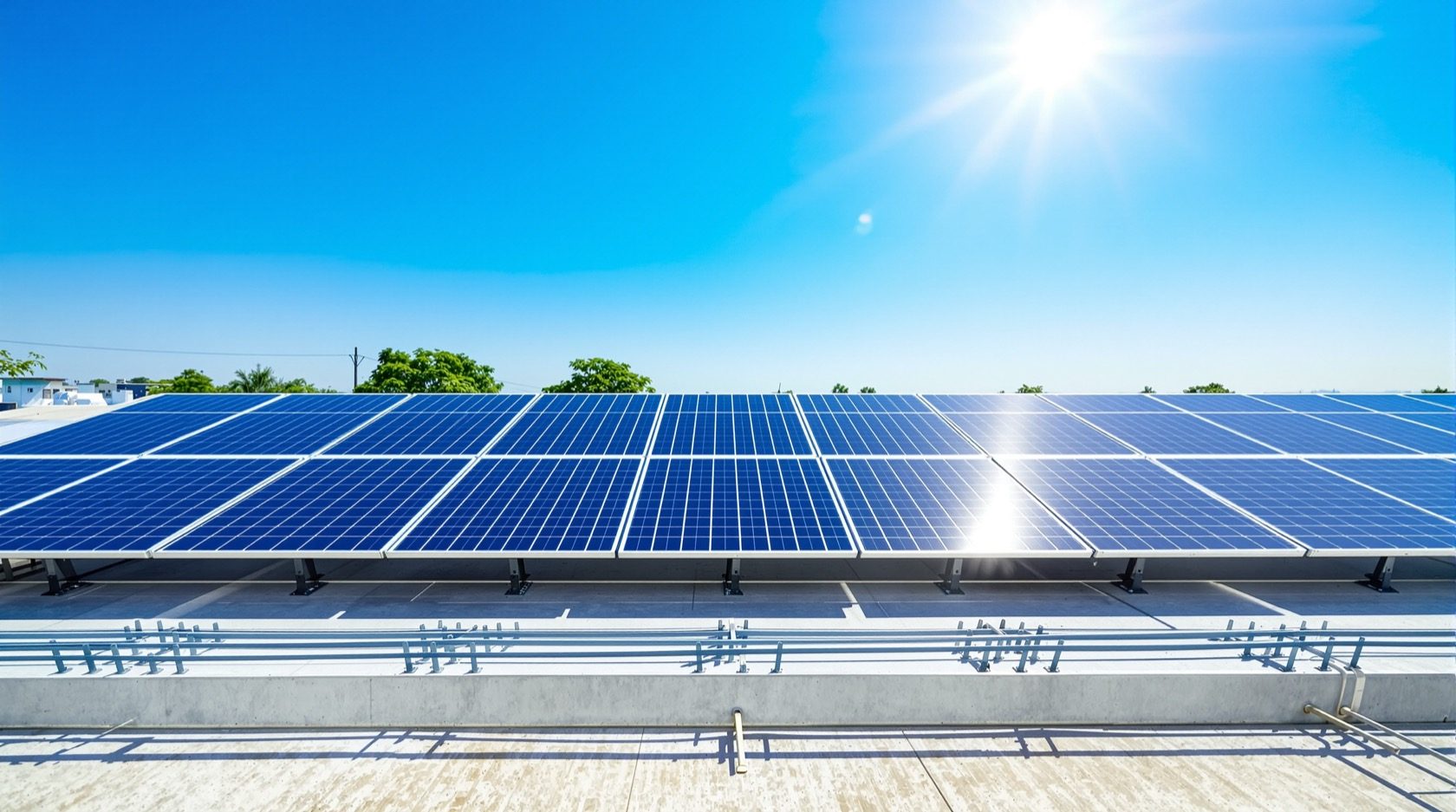
Rooftop Solar for Indian Homes: The Complete Guide
How rooftop solar actually works and pays back — the panels, inverter and net meter, the on-grid, off-grid and hybrid choice, how much roof and money a system needs, the PM Surya Ghar subsidy and net metering, and how to judge a good installation.
Rooftop solar has crossed a threshold in India: with falling panel prices, a government subsidy scheme, and net metering that lets you sell surplus back to the grid, a home solar system now pays for itself in a handful of years and then generates near-free power for two decades. But the details — on-grid versus off-grid, sizing, the subsidy, net metering, and choosing a good installer — decide whether you get those returns or a disappointing, oversized or badly-installed system. This guide is the complete, honest picture.
It sits under the residential electrical systems pillar and leads into the grid-tied vs off-grid guide and the solar battery storage guide.
The safety line. Solar design and installation — the panels, the inverter, the grid connection and the net meter — are done by a qualified, empanelled solar installer and a licensed electrician, to the module and inverter safety standards (IS 14286, IS 16221) and your DISCOM's rules. This guide helps you plan, size and judge; the rooftop wiring and grid interconnection are professional work.
How rooftop solar works
The system is simpler than it looks:
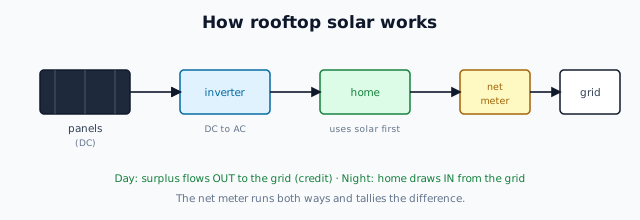
1. Solar panels (PV modules) on the roof turn sunlight into DC electricity.
2. A solar inverter converts that DC into 230 V AC your home can use, and (for grid systems) synchronises it with the grid.
3. Your home uses the solar power first; surplus flows to the grid through a net meter (which runs both ways), earning you credit.
4. When the sun isn't enough (night, cloud), the home draws from the grid (or a battery, in hybrid/off-grid systems) as normal.
So on a sunny day your home runs on solar and exports the excess; at night it imports from the grid, and the net meter tallies the difference. The panels are rated in kilowatts (kW); a typical Indian home system is 1–5 kW.
On-grid, off-grid or hybrid
The single biggest decision is the system type — covered in depth in the grid-tied vs off-grid guide, in brief:
- On-grid (grid-tied) — no battery; exports surplus to the grid and imports at night via net metering. Cheapest, most efficient, best payback — but does not work during a power cut (it shuts off for safety). The default where the grid is reliable and net metering is available.
- Off-grid — with batteries, no grid connection; runs independently. For places with no/poor grid; costlier because of batteries.
- Hybrid — grid-connected and battery-backed: exports surplus, and keeps running during outages. The best of both, at higher cost — increasingly popular where power cuts are common.
For a typical Indian home with a decent grid, on-grid gives the best return; hybrid adds outage backup for a premium.
Sizing a system
Solar is sized to your electricity consumption and your roof:
- By consumption: roughly, 1 kW of rooftop solar generates about 4 units (kWh) per day on average in much of India (~120 units/month). So to offset ~300 units/month you'd want roughly a 2.5–3 kW system. Size it to your usage, not bigger — oversizing wastes money (and net-metering rules may cap export).
- By roof: 1 kW needs roughly 7–10 m² (about 70–100 sq ft) of unshaded, well-oriented roof. So roof space can be the real limit.
- Shading and orientation: panels want unshaded, south-facing (in India) roof; shade from a tank, parapet or tree cuts output disproportionately.
Use the solar sizing calculator for a first estimate from your monthly units or roof area, then have an installer do a proper site assessment.
Cost, subsidy and payback
- Cost falls mainly on the panels, inverter and installation; it scales with system size, and prices have dropped a lot. Treat any figure as indicative and get quotes.
- Subsidy: the central PM Surya Ghar: Muft Bijli Yojana (launched 2024) provides a subsidy for residential rooftop solar through empanelled vendors and the national portal, on top of any state incentives — significantly improving payback for homes. Verify the current subsidy amounts, caps and eligibility on the official portal, as scheme terms change.
- Net metering turns your surplus into bill credit under your state DISCOM's net-metering policy (rules and caps vary by state).
- Payback: with the subsidy and net metering, residential payback is commonly a few years, after which the system generates for its ~25-year life — a genuinely strong return, though the exact numbers depend on your usage, tariff, state and system.
The honest headline: rooftop solar is now one of the best returns a homeowner can make on their roof — but the numbers depend on your consumption, tariff, state policy and a well-sized, well-installed system. Verify current subsidy and net-metering terms before committing.
Judging a good installation
- Empanelled, reputable installer registered under the subsidy scheme, with a proper site assessment, warranty and service.
- Quality panels and inverter conforming to standards (modules IS 14286; inverters IS 16221, grid-tied ones meeting anti-islanding IS 16169), with real efficiency and warranty figures.
- Right sizing to your consumption and roof — not an oversized system sold on commission.
- Sound mounting that withstands wind and monsoon and doesn't damage the roof/waterproofing.
- Proper grid interconnection and net meter approved by the DISCOM, with the right protection and earthing.
- Solar-ready wiring — if building, leave a conduit route from roof to the DB and space for the inverter (see the new-home design guide).
The one-line answer
Rooftop solar turns your roof into a power plant: panels make DC, an inverter converts it to AC your home uses first, and surplus flows to the grid through a net meter for credit — with the grid (or a battery, in hybrid systems) covering the night. Choose on-grid for the best payback where the grid is reliable, hybrid to also run through outages; size it to your consumption (~1 kW per ~4 units/day, ~7–10 m² of roof) rather than oversizing; and use the PM Surya Ghar subsidy and net metering — which now make residential payback a few years on a ~25-year asset. Verify current scheme terms, and use an empanelled installer to standards.
Where to go next
- The system-type choice: Grid-tied vs Off-grid vs Hybrid Solar.
- Storing solar energy: Solar Battery Storage.
- Charging an EV from solar: Home EV Charging Guide.
- Size a system: Solar Sizing Calculator.
References
- PM Surya Ghar: Muft Bijli Yojana (national rooftop solar scheme, 2024) — verify current terms: https://pmsuryaghar.gov.in/
- Ministry of New and Renewable Energy (MNRE), rooftop solar programme: https://mnre.gov.in/
- IS 14286 : 2010 (IEC 61215), Crystalline Silicon Terrestrial PV Modules — Design Qualification, Bureau of Indian Standards.
- IS 16221 (Parts 1–3, IEC 62109), Safety of Power Converters for Use in Photovoltaic Power Systems; IS 16169 : 2019, Utility-Interconnected PV Inverters — Islanding Prevention, BIS.
- Your State Electricity Regulatory Commission / DISCOM net-metering regulations (state-specific).
Costs, generation, subsidy and net-metering terms are indicative and vary by state, tariff, site and time; verify current scheme terms on the official portals. Design, installation and grid interconnection must be by a qualified installer and licensed electrician. Verify any standard's status via the BIS catalogue before relying on it.
Export this guide
Related Guides — Deep-dive reading
Rooftop Solar Approvals & Net Metering in India: The Permissions You Actually Need
The approvals side of putting solar on an Indian roof — not how solar works, but the permissions: the DISCOM net-metering application and feasibility, an empanelled installer, the structural load check, the electrical safety inspection, the PM Surya Ghar subsidy, and metering and commissioning. These are DISCOM, state and MNRE rules — not one national IS code — so amounts and caps change; always confirm the current rule locally.
RoofingThe Solar Roof Guide
Putting rooftop solar on an Indian home, made clear — the system types (grid-connected, off-grid and hybrid, plus BIPV and solar tiles), how to judge whether your roof is ready (area, orientation, tilt, shading, structure and age), how panels are mounted and waterproofed, the electrical and fire-safety essentials, cleaning and access, indicative cost and payback, and the permissions, net-metering and subsidy path. Plain language, India-grounded.
RoofingResidential Electrical Systems: The Complete Guide for Indian Homes
How the electricity in an Indian home actually works — from the utility supply and meter through the distribution board, circuits, wiring, earthing and protection, to lighting, safety, energy efficiency, smart controls, solar and backup — written so a homeowner can understand, plan and judge it, and know exactly where a licensed electrician must take over.
Electrical & WiringRelated Tools — Try Free
Rainwater Tank Sizer
How big should your rainwater tank be? Computes annual harvest, recommended tank capacity in litres, water-bill savings, and payback — for 10 Indian cities.
RWH CalculatorSolar CCTV Sizing Calculator
Enter cameras, sun-hours and backup days to get the solar panel wattage, battery Ah and an indicative kit cost for an off-grid camera.
Solar SizingSolar Sizing Calculator
Size a rooftop solar system from your monthly electricity use — the kW system, number of panels, roof area and yearly generation.
Solar